

Aera
AERA — open windows. keep what's free; close only what must be closed.
Listen along — Aera
Loading audio…
Press play to listen along. The line being read lights up as you go.
Show full transcript
Loading transcript…
Chapter 2 — Aera and the Window That Stays Open
The Youth Council hall had a hundred tall windows, and every single one was open.
Wind moved through the room in long, easy breaths. Papers rustled. Somewhere a kid was laughing too loud. A snowy owl named Aera stood at the front, small and cream-feathered, watching all of it with the calm of someone who had counted the windows on purpose.
A council member banged a little gavel. “I move that we close every window,” he said. “The wind keeps blowing our papers everywhere. It’s a mess.”
The room murmured. It did sound reasonable.
Aera didn’t argue. She just walked to the nearest window, the one letting a warm draft over the whole hall, and rested one wing on the frame like she was about to shut it. Then she stopped.
“Before I close this,” she said, “answer me. Whose window is it?”
”…Everyone’s.”
“And what does closing it cost?” She tilted her head toward the room, where the breeze was keeping forty kids from sweating through a long afternoon. “The papers, or the air?”
The council member opened his mouth, then closed it.
Aera reached down instead and picked up a single flat stone off the sill. She set it gently on top of the loose papers. They stopped fluttering. The wind kept moving. The window stayed open.
“There,” she said. “The papers were the real problem. Not the window.” She looked around the quiet, breathing hall. “So we fixed the papers, and we kept the air. That’s the whole job, mostly. Figuring out how small the fix can be.”
Aera learned to love open windows because of one that almost got shut on her.
When she was little, high in the mountains, a storm blew a shutter loose on her family’s roost and it banged all night. So the grown-ups made a rule: every shutter closed, always, dawn to dusk. Safer that way.
For a week, Aera sat in the dark.
She hadn’t known how much she loved the morning light until it was gone — the way it came in gold across the floor, the way she could watch the valley wake up. The roost was safer, sure. It was also small and stuffy and sad, and nobody had asked her whether the trade was worth it.
Her grandmother found her sitting by the shut shutter one afternoon, just staring at the crack of light along its edge.
“You miss the window,” her grandmother said. It wasn’t a question.
Aera nodded, her throat tight. “One shutter banged. So they closed all of them. Even the good ones. Even mine.”
Her grandmother was quiet a long moment. Then she reached up and eased just Aera’s shutter open — only that one — and the light poured back in like water.
“There,” she said softly. “The banging one, we latch. The rest, we leave. You don’t shut out the whole sky to stop one noise, little one.” She looked at the gold spilling across the floor. “Open is the ordinary thing. Closed is the rare one — and it should always cost you something to do it, or you’ll do it too easily.”
Aera sat in the returned light and felt her chest unclench. The word for what she’d lost, and then gotten back, was small and enormous at the same time: free.
She walked to the Youth Council at twelve, because a place that made rules for everyone ought to understand what a rule takes away.
Her mentor, an old owl named Liberty, met her at the door. She didn’t ask Aera to prove she was clever. She asked one thing. “A council can close any window it likes. Why shouldn’t it?”
Aera didn’t answer with a speech. She walked past Liberty into the hall, went to a shuttered window in the corner — the only closed one — and pushed it open. Light and wind spilled in.
“Because someone loved this one,” Aera said. “And nobody checked before they shut it.” She looked back. “You can close a window. But first you have to say whose it is, who it hurts, and whether the thing you’re afraid of is really that window’s fault.” She pointed at the corner. “That one was shut because of dust. But dust you sweep. You don’t need to take the light for that.”
Liberty looked at the open corner for a long moment. “You belong here,” she said.
Aera’s workshop was full of windows, some open, some cracked, some latched — and a boy who wanted to slam them all.
“There’s too much noise in the study hall,” he said, frustrated. “Everyone talking, all the time. We should just ban talking. Whole building. Done.”
Aera knew that feeling — the itch to fix a mess with one big rule. She’d felt it about a banging shutter once.
“Okay,” she said. “Let’s try your rule on. Who does ‘no talking, ever’ close a window for?”
He thought. “The… talkers?”
“And the kids working on a group project together? And two friends who only see each other at lunch? And someone asking for help?” She wasn’t scolding; she was just counting. “Your rule shuts all their windows to fix a few noisy ones.”
The boy frowned. “But some kids really can’t study with the noise.”
“Right — so there’s a real problem in there. Someone’s actually getting hurt: they can’t learn.” She nodded seriously. “That means closing something is fair. The question is how little.” She slid a card toward him. “Not ‘no talking ever.’ Maybe ‘quiet voices in the reading corner.’ Maybe ‘no talking during tests.’ The smallest crack that fixes the real thing.”
His eyes lit up. “And then… check if it worked?”
“And open it back up if it didn’t.” She grinned. “A rule you can undo is braver than one you can’t. Try it for a month. Keep what helped. Reopen the rest.” She spread her cards. “That’s the whole craft. Start open. Find who it costs. Fix only what’s really breaking. Close as little as you can — and leave the window able to open again.”
The boy went quiet, turning it over. “That’s… a lot more work than just banning it.”
“It is,” Aera agreed. “Freedom usually is.”
Later, when the workshop had emptied out, the boy came back with one more question. He was quieter now.
“How do you know,” he said, “when a window really needs closing? It always feels like either everything’s allowed or nothing is.”
Aera thought about the dark week, and the shutter, and the gold light coming back.
“You don’t get a bell that rings,” she said. “You get a pull. A tug both ways — you want to keep the room free, and you want to keep the scared kid safe, and both of those are good, and they don’t fit.” She pressed a wing lightly to her own chest. “That heavy, tight, pulled-apart feeling? That’s not you being bad at it. That’s you doing it right. The people who feel nothing are the ones who just slam every window, or leave them all open and let someone get hurt.”
She looked out the wide, breathing window toward the mountains.
“Sit with the tug,” she said. “It means you’re weighing something real. And when you finally choose — the smallest fix, the one you can undo — that tightness lets go, just a little. Like a held breath you finally get to let out.”
The boy nodded slowly, and Aera watched his shoulders come down from around his ears — the same way, years ago, hers had, the first time the light came back in.
She didn’t say the rest out loud, but she felt it, warm and settled and sure: the hardest rules to make are the ones worth pausing over. And a room full of open windows, breathing easy, is worth every ache it takes to keep it that way.
The CivicForge ensemble
Aera is part of CivicForge's distributed-narrative cast. Each character embodies a different curricular primitive; together they teach the full subject.
-

Verdis
Justice — the patient listener who weighs sides; bear with wooden scale + spectacles
-
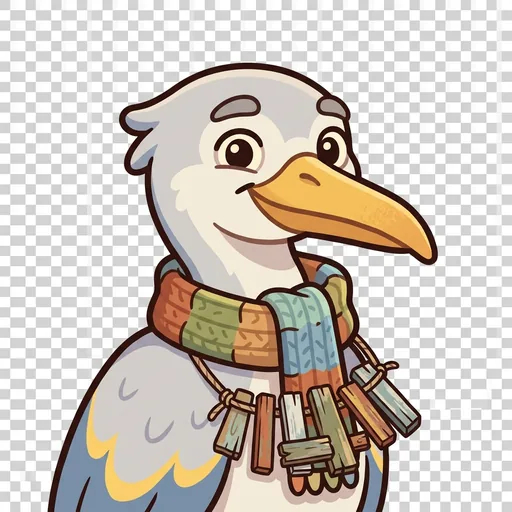
Span
Equity — the bridge-builder; heron with mismatched planks for mismatched riverbanks
-

Cordis
Civility — disagreement-without-disrespect host; striped badger with mismatched cups + bow tie
-

Kindle
Participation — the door-opener; prairie dog at a half-open door pointing outward
-

Tellus
Stewardship — the long-view caretaker; ancient tortoise planting trees they will never sit under
-

Level
Rule of law — the line reads level whoever holds it, even the one who set it; mountain goat with a stone level + plumb-bob
-
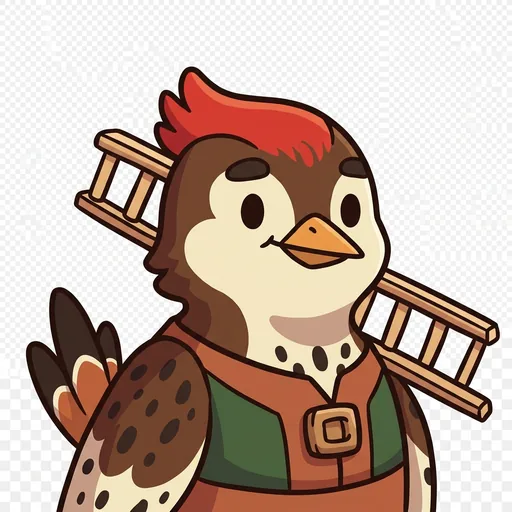
Rung
Due process — climb every step in order, never skip to the verdict; woodpecker climbing a trunk rung by rung
-

Muster
Consent of the governed — nothing proceeds until everyone's gathered and the yes is real; meerkat counting raised paws from the burrow-mound
-
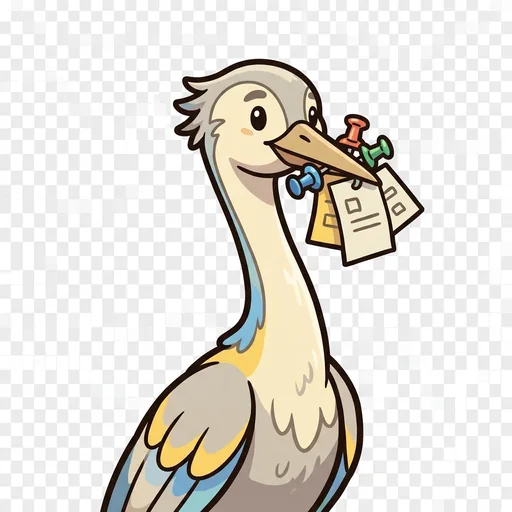
Herald
Transparency — a decision no one can see isn't finished; crane keeping an open notice-board in the square