
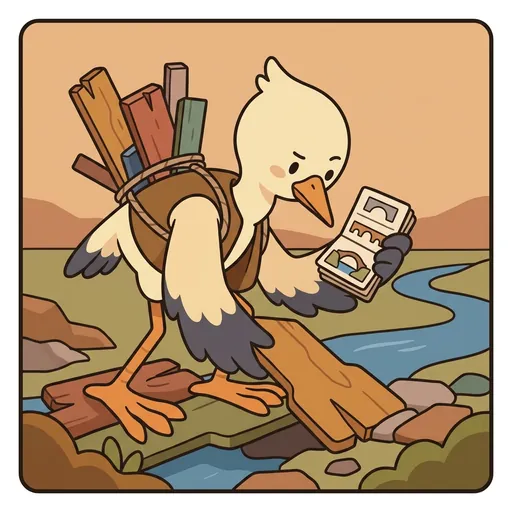
Span
SPAN — the bridge-builder. mismatched planks for mismatched banks.
Listen along — Span
Loading audio…
Press play to listen along. The line being read lights up as you go.
Show full transcript
Loading transcript…
Chapter 3 — Span and the Bridge That Fits Each Bank
At the edge of the river that split the town in two, a long-legged heron-tween named Span was laying planks across the water, and no two of them were the same length.
The banks were uneven. The near side was low and muddy; the far side rose in a tall clay shelf almost twice as high. Span crouched at the edge, one thin leg folded up under the vest, sorting through a pile of planks — short ones, long ones, one thick stubby one — and setting each where it belonged.
A kid from the town watched, arms crossed. “That bridge is crooked. Every plank’s a different size. If you want it fair, use the same plank for both sides.”
“If I use the same plank for both sides,” Span said, not looking up, “the low bank gets a bridge that overshoots, and the high bank gets one that comes up short. Then nobody crosses.” Span slid a long plank up to the tall shelf, a short one to the low mud. “Watch.”
Span walked out onto the mismatched planks — up the long one to the high shelf, then down the short one to the low bank — smooth, no stumble, all the way across and back. The bridge held. It looked lopsided. It worked perfectly.
“See,” Span said, stepping off. “It’s not crooked. It fits. The banks aren’t the same, so the planks can’t be either. Same planks would’ve looked fair standing in the pile. But you don’t cross a pile. You cross a bridge.”
The kid uncrossed their arms and looked at the two banks — really looked — like they were seeing the height difference for the first time.
Span had learned this the hard way, back in the river-shallows.
When Span was small, the heron-children had a game where everyone got the same length of reed to fish with. It seemed fair. Everyone equal. But Span was the shortest of the bunch, with the stubbiest legs, and the standard reed left Span’s beak just barely reaching the water while the tall kids fished easily.
Span went home hungry and ashamed, sure it was some private failure. Everyone got the same reed. Everyone else caught fish. So the problem must be me.
Span’s grandmother — an old heron with a patient eye for uneven ground — didn’t say try harder. She looked at Span’s short legs, then at the tall reeds the others used, and did a small thing. She cut Span a longer reed.
“That’s cheating,” Span whispered. “Everyone else has the short one.”
“Everyone else has long legs,” Grandmother said. “You don’t. The short reed was never the same for you as it was for them. Fair isn’t handing out matching reeds. Fair is when everybody can reach the water.” She pressed the long reed into Span’s wing. “The heaviness you felt walking home — that wasn’t your failing. That was a bridge that didn’t reach your bank.”
Span fished that evening and caught three fish. But the thing that stayed wasn’t the fish. It was the way the ashamed, private, my-fault feeling loosened when it finally had a different name: not-my-fault. Just a mismatch nobody had fixed yet.
Span walked to the Youth Council at twelve, because a place that argued all day about what was fair ought to understand the difference between same and fitting.
Liberty, the mentor who ran the Council, met Span at the door and asked one question. “What is equity?”
Span didn’t answer with a speech. Span pointed at the Council’s front steps — a tall staircase — and then at a kid in a wheeled chair stuck at the bottom, watching everyone else climb.
“Same steps for everyone,” Span said quietly. “Looks equal. But he can’t get in.” Span walked over, found a spare board, and laid it as a ramp beside the steps. The kid rolled up easily and grinned. “That’s equity. I didn’t take anyone’s steps away. I built the part of the bridge that reaches his bank.”
Liberty looked at the ramp, and at the kid now inside where he’d wanted to be all along. “You belong here,” Liberty said.
Span’s corner of the Council was full of mismatched planks and a small pad of cards.
A girl came in one afternoon, frustrated, gripping a Council proposal. “We voted to give every neighborhood the same library money. Exactly equal. So why are people still mad?”
Span had felt that muddle before. “Lay your planks out for me,” Span said, spreading the mismatched set on the floor. “Which neighborhoods already have a library?”
“Most of them. Three don’t have one at all.”
“So the same money,” Span said, “goes to fixing shelves in places that already have books — and building from nothing in places that don’t. Same amount. Very different distance to cross.” Span picked up the long plank and set it against a tall imaginary bank. “The three neighborhoods with no library aren’t standing on the same bank. Same money leaves them short.”
“So we should give them more?” The girl frowned. “Isn’t that unfair to the others?”
“Does the ramp punish the kids who use the stairs?” Span asked. “Does a longer reed punish the tall heron?” Span waited while she chewed on it. “Nobody loses their library. The three that had nothing get one built. When they can read too, the whole town’s got more people who can think, argue, help. The pie gets bigger, not sliced meaner.” Span tapped the card pad. “Before you divide anything, ask the real question: who needs what? Not what’s the same for everyone. Same-support plus different-needs makes uneven outcomes. Matched-support makes a bridge that holds on both banks.”
The girl looked at her equal-money proposal, then at the mismatched planks, and slowly turned the paper over to start again.
Later, when the Council was empty, the girl came back with one more question, quieter now.
“When you give someone the thing they need,” she said, “and it’s different from what everyone else got… how do you know you’re being fair and not just picking favorites?”
Span thought about the short reed, and the long one, and the shame that had loosened into not-my-fault.
“You ask whether everyone can reach the water,” Span said. “Not whether everyone’s holding the same reed. When the fix is matched to a real need — a ramp for wheels, a meal for a hungry kid, a library for a neighborhood without one — nobody’s a favorite. They’re just finally standing on level footing.” Span looked out toward the crooked, perfect bridge over the river. “The bridge that looks even, over banks that aren’t, leaves somebody short. The bridge that fits each bank — that’s the one that holds.”
The girl nodded, and Span watched something ease in her shoulders — the same private tightness that had let go, years ago, in Span’s own chest by the river.
Span didn’t say the rest out loud, but felt it, warm and steady: the loneliest, most my-fault-feeling moments are usually just a plank that never got cut to the right length. It was never you. It was only a bridge nobody had fitted yet.
The CivicForge ensemble
Span is part of CivicForge's distributed-narrative cast. Each character embodies a different curricular primitive; together they teach the full subject.
-
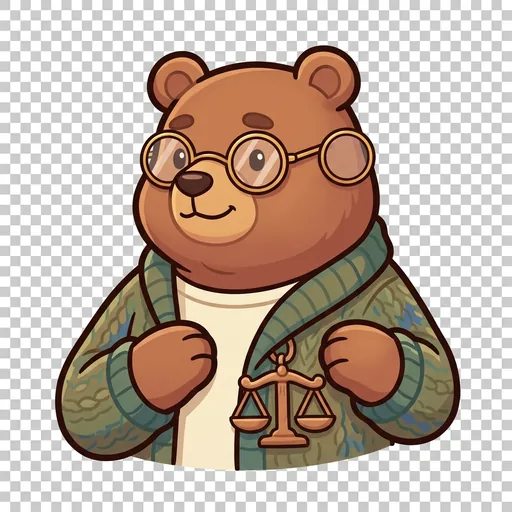
Verdis
Justice — the patient listener who weighs sides; bear with wooden scale + spectacles
-
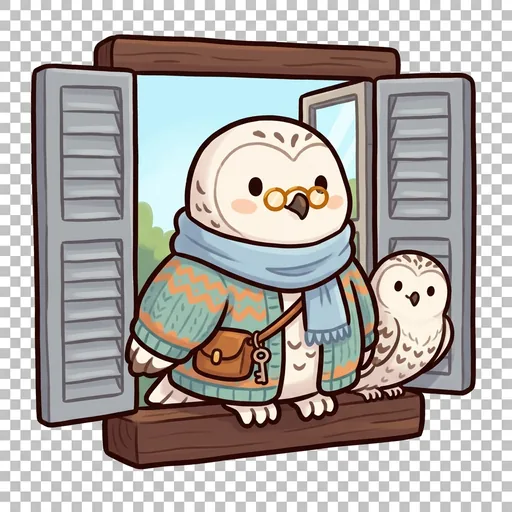
Aera
Liberty (open-window) — keeper of open windows; snowy owl on shuttered window frame
-

Cordis
Civility — disagreement-without-disrespect host; striped badger with mismatched cups + bow tie
-

Kindle
Participation — the door-opener; prairie dog at a half-open door pointing outward
-

Tellus
Stewardship — the long-view caretaker; ancient tortoise planting trees they will never sit under
-

Level
Rule of law — the line reads level whoever holds it, even the one who set it; mountain goat with a stone level + plumb-bob
-
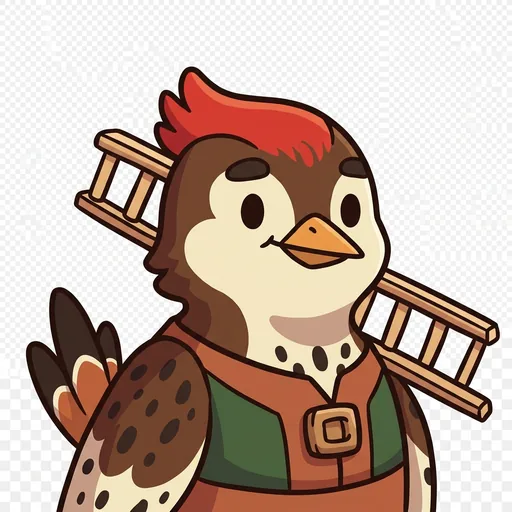
Rung
Due process — climb every step in order, never skip to the verdict; woodpecker climbing a trunk rung by rung
-
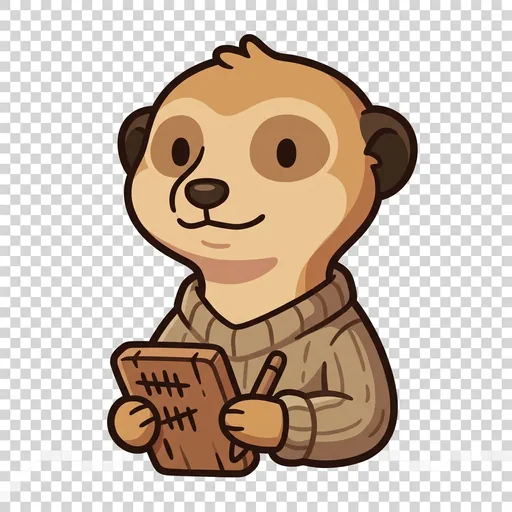
Muster
Consent of the governed — nothing proceeds until everyone's gathered and the yes is real; meerkat counting raised paws from the burrow-mound
-
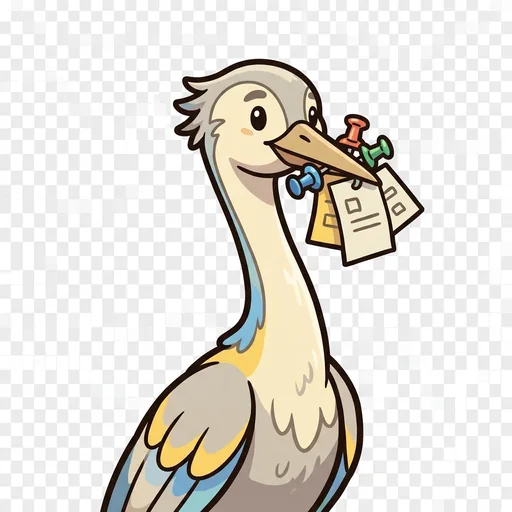
Herald
Transparency — a decision no one can see isn't finished; crane keeping an open notice-board in the square