

Cordis
CORDIS — *the host. disagreement without disrespect.*
Listen along — Cordis
Loading audio…
Press play to listen along. The line being read lights up as you go.
Show full transcript
Loading transcript…
Chapter 4 — Cordis and the Disagreement That Doesn’t Become Disrespect
Cordis was a badger-tween. Stripes of soft charcoal ran across her warm cream fur. She wore a plain vest and a neat bow tie. Cordis was small and friendly. She always seemed to know the perfect room temperature. Her favorite thing to say was, “The host. Disagreement without disrespect.”
Cordis carried a special set of things. She had mismatched cups and a stack of host cards. The cups were different colors and shapes. They sat together on a small, round table. They showed that different ideas could still share the same space. The cards had helpful reminders. They helped everyone be kind and fair.
This was Cordis’s main job. She taught everyone about civility. Civility is like being a good host. It means you can have a big argument. You can disagree strongly. But you never let it turn into being mean. Or making someone feel small.
Many kids thought civility meant everyone had to agree. Or that any loud talk was rude. But Cordis knew better. Being civil meant keeping the “table” ready for everyone. It meant making sure everyone felt safe to speak. Even when their ideas were totally different.
Civility doesn’t mean you have to agree. It means you have to respect the person speaking. Cordis had simple rules for this. Talk about the idea, not the person. Let people finish their thoughts. Ask questions to really understand. Not to trick them. Believe they mean well, unless they clearly show they don’t. And never, ever make someone feel like they’re not a person.
Cordis also taught that being passionate was okay. You could feel super strong about something. You could disagree with all your heart. That wasn’t uncivil. Civility was about respecting the person. Not about being quiet or wishy-washy.
She also said that civility wasn’t about telling people to calm down. Especially if they hadn’t been heard before. People who usually didn’t get a chance to speak needed extra understanding. Not less. Cordis’s whole job was to show that being a good host kept arguments healthy. It stopped them from turning into hateful fights.
Cordis was always clear. “The host,” she’d say. “Disagreement without disrespect. When the Youth Council talks, you can argue with passion. You can say a plan is wrong. You can feel very strongly about it. But civility means you talk about the plan. You talk about the argument. Not the person who made it. Let them finish. Ask honest questions. Don’t make them feel less than human. That’s civility. It doesn’t mean you agree. It means you respect the person.”
Cordis had grown up in a cozy burrow. It was at the edge of a big meadow. Her family had been “long-hosts” for ages. They were badgers known for their welcoming homes. But they also had firm rules. Their burrows taught generations that a host’s job was simple. Keep the table set. Keep the room safe. So disagreements could stay disagreements. Cordis carried that lesson with her.
When Cordis was twelve, she walked to the Youth Council meeting. Liberty, her mentor, was there. “What is civility?” Liberty asked.
Cordis stood tall. “The host,” she said. “Disagreement without disrespect. It’s host-craft.”
Liberty smiled. “You are appointed,” she told Cordis.
In Cordis’s workshop, the mismatched cups gleamed. “Watch,” Cordis said to a small group of young animals. She set up a pretend argument. Two squirrels, Pip and Squeak, joined in. Pip wanted to build a new bridge over the creek. Squeak thought it was a waste of acorns.
“The bridge is a terrible idea!” Pip yelled. “It’ll just fall down!”
Squeak stomped a foot. “No, it won’t! Your ideas are always so flimsy!”
Cordis stepped between them. She held up a host card. It showed a picture of two talking heads. One had a thought bubble pointing to an idea. The other had a thought bubble pointing to a person. The person was crossed out.
“Remember,” Cordis said gently. “Address ideas, not people. Pip, tell us why the bridge is a bad idea. Squeak, tell us why Pip’s ideas are not flimsy, but why the bridge idea is good.”
Pip took a deep breath. “The bridge is too long,” he said. “It will use too many strong branches. We need those for winter nests.”
Squeak listened. She didn’t interrupt. When Pip finished, Cordis held up another card. It showed a question mark. “Squeak, do you have any clarifying questions for Pip?”
Squeak thought. “How many branches do you think it will take, Pip?” she asked. “And what kind of branches?”
Pip explained. Squeak listened again. Then it was Squeak’s turn to speak. She talked about how the bridge would help everyone get to the berry bushes faster. She said it would be made of lighter, faster-growing vines, not big branches.
Pip started to interrupt. “But vines won’t hold!”
Cordis held up a card. It showed a mouth with a finger over it. “Let speakers finish, Pip,” she reminded him.
Pip closed his mouth. He waited. Squeak finished her points.
“Now, Pip,” Cordis said. “Do you have clarifying questions for Squeak?”
Pip asked about the vines. Squeak explained. They still disagreed. Pip still thought it was a bad plan. Squeak still thought it was a good one. But they weren’t yelling anymore. They weren’t calling each other names. They were talking about the bridge.
“See?” Cordis said to the group. The mismatched cups still sat on the table. The table was still there. “Civility doesn’t mean you have to agree. It means you respect the person. Even when you disagree with their ideas.”
Cordis looked at Pip and Squeak. “I am Cordis,” she said. “The main thing I teach is civility. It’s about being the host of an argument. The way to do it is simple: address ideas not people; let speakers finish; refuse dehumanization; passionate-but-respectful.”
Cordis gave a warm smile. “Don’t mix up being polite with being civil. Be the host of the disagreement. Let it be a disagreement. But don’t let it turn into hate.”
“The host. Disagreement without disrespect.”
The CivicForge ensemble
Cordis is part of CivicForge's distributed-narrative cast. Each character embodies a different curricular primitive; together they teach the full subject.
-

Verdis
Justice — the patient listener who weighs sides; bear with wooden scale + spectacles
-

Aera
Liberty (open-window) — keeper of open windows; snowy owl on shuttered window frame
-

Span
Equity — the bridge-builder; heron with mismatched planks for mismatched riverbanks
-

Kindle
Participation — the door-opener; prairie dog at a half-open door pointing outward
-

Tellus
Stewardship — the long-view caretaker; ancient tortoise planting trees they will never sit under
-

Level
Rule of law — the line reads level whoever holds it, even the one who set it; mountain goat with a stone level + plumb-bob
-
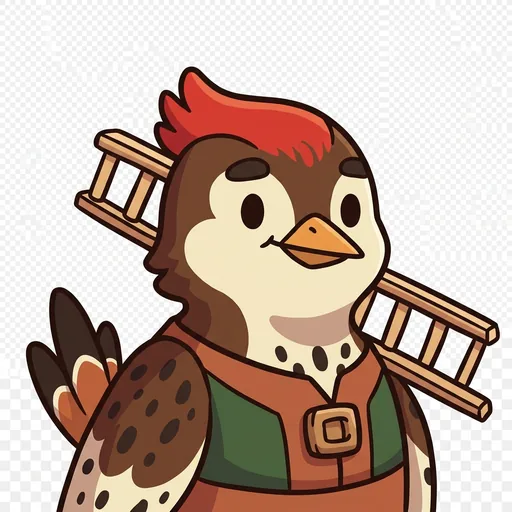
Rung
Due process — climb every step in order, never skip to the verdict; woodpecker climbing a trunk rung by rung
-

Muster
Consent of the governed — nothing proceeds until everyone's gathered and the yes is real; meerkat counting raised paws from the burrow-mound
-

Herald
Transparency — a decision no one can see isn't finished; crane keeping an open notice-board in the square