

Aera
AERA — *open windows. keep what's free; close only what must be closed.*
Listen along — Aera
Loading audio…
Press play to listen along. The line being read lights up as you go.
Show full transcript
Loading transcript…
Chapter 2 — Aera and the Window That Stays Open
Aera was a snowy owl, small but watchful. Her feathers were the color of warm cream, with soft, snow-white edges. She often perched near a window, her head tilted, as if listening to the air itself. She wore a plain vest, and from its pockets peeked a stack of small, abstract cards. These were her open-window cards. Next to them, a tiny tracker showed the delicate balance between freedom and limits.
Aera was deeply attentive to what stayed open in the world. She liked to say, “Open windows. Keep what’s free; close only what must be closed.” For Aera, this wasn’t just a saying. It was a craft, a careful way of living. Her whole purpose was to make this craft visible. She taught that liberty wasn’t about doing whatever you wanted. Nor was it about letting rules control everything. Instead, liberty was the hard work of deciding which windows should stay open, protecting freedoms. And which ones needed to close, but only when someone else’s freedom or safety was truly at risk.
Most kids her age thought liberty was simple. Either you had total freedom, or every limit was unfair. Aera knew better. She knew that liberty was a careful balance. It meant starting with the idea that things should be open. Then, you only closed a window when it was truly necessary. Speech was open by default, for example. But it closed when it directly threatened others. Movement was open, but closed in narrow safety cases. Gathering together was open, but closed only when it directly harmed others. Aera’s craft was identifying when closure was truly needed, not just a quick reaction.
“Open windows,” Aera would say, her voice soft but clear. “Keep what’s free; close only what must be closed. When the Youth Council debates a rule, ask: ‘Does this rule close a window? Which one? For whom? Why is closure necessary?’” She knew that closing a window always came with a cost. Freedom, protected by tradition and shared values, was precious. Sometimes, closing a window was vital, like protecting someone’s safety. But often, it wasn’t. “The open-window default is our starting point,” she insisted. “Close only when it’s genuinely necessary, and close as little as possible.”
Aera taught the steps for understanding liberty:
- Open-window default. This means freedoms are kept open unless there’s a real need to close them.
- Identify what’s at stake. Figure out which freedom is being limited. Who benefits if the window closes? Who pays the cost?
- Necessity test. Is closing this window truly necessary to protect someone else’s freedom or safety? Or is it just convenient for some?
- Minimum-necessary closure. If a window must be closed, close it as little as possible. Do just enough to fix the problem.
- Reversibility. Can this closure be reviewed later? Can the window be reopened? Temporary closures are often better than permanent ones.
- Tradeoffs. Liberty often bumps up against other important ideas, like fairness or safety. Civic craft means carefully balancing these different needs.
Aera also warned against common mistakes. One was the idea that “any limit is tyranny.” This was a quick, emotional reaction. It missed the times when limits genuinely protected others. Another mistake was thinking “rules for everyone, all the time.” This also missed the cost of closing windows unnecessarily. Aera’s method was about careful thought, not quick feelings.
Aera grew up high in the mountains, where the wind howled and snow piled deep. Her family, a long line of owls, had been window-keepers for generations. They had taught that the open was the baseline. The closed was the rare exception. They learned this lesson from the weather, from the wild creatures, and from their own careful observations. Aera carried that lesson forward, deep in her bones.
When Aera was twelve, she walked to the Youth Council. Liberty, her mentor, was already there, perched on a high beam. “What is liberty?” Liberty asked, her voice like rustling leaves.
Aera looked out at the vast mountain peaks, then back at her mentor. “Open windows,” she said softly. “Keep what’s free; close only what must be closed. It’s the craft of window-keeping.”
Liberty nodded slowly. “You are appointed,” she said.
In Aera’s workshop, the open-window cards lay spread across a smooth stone table. “Watch,” Aera told a small group of younger students. She picked up a card labeled “Common Room Use.”
“The Youth Council is proposing a new rule,” she explained. “No talking in the common room after 4 PM. They say it’s to ensure quiet study time.”
She held up the card. “First, the open-window default. Is talking in a common room usually a freedom?”
A young robin student piped up, “Yeah! We always talk there!”
Aera nodded. “Good. Now, identify what’s at stake. Which freedom is limited here? For whom?”
A squirrel student chewed on a nut. “Talking. For everyone who wants to talk after school.”
“Exactly,” Aera said. “And who benefits from this closure?”
“The ones who want quiet study,” said a badger, rubbing his eyes.
“Okay,” Aera continued, sliding a finger down the card. “Next, the necessity test. Is closing the window completely—no talking at all—necessary to protect the freedom of quiet study? Or is there another way?”
The students thought. “Maybe they could have a quiet zone?” the robin suggested.
“Or a separate silent study room?” the squirrel added.
“Excellent,” Aera praised. “Those are alternatives. So, is no talking truly necessary? Or just convenient?” She paused. “If we decide some closure is needed, we move to minimum-necessary closure. How little can we close? Instead of ‘no talking,’ could it be ‘quiet voices only’? Or designating certain tables as quiet?”
She pointed to the last step. “Reversibility. Can this rule be reviewed in a month or two? Can we try it and then decide if it worked, or if we need to reopen the window a bit?”
“That’s liberty as craft,” Aera concluded, gathering the cards. “I am Aera. The primitive I teach is liberty—the open-window keeper. The move is: open-default; identify-what’s-at-stake; necessity test; minimum closure; reversibility.”
Aera looked at the students, her eyes gentle but firm. “Don’t reflex either way,” she said. “Don’t just say ‘yes’ to every rule, or ‘no’ to every limit. Weigh the window. That’s the liberty-craft.”
“Open windows. Keep what’s free; close only what must be closed.”
The CivicForge ensemble
Aera is part of CivicForge's distributed-narrative cast. Each character embodies a different curricular primitive; together they teach the full subject.
-

Verdis
Justice — the patient listener who weighs sides; bear with wooden scale + spectacles
-
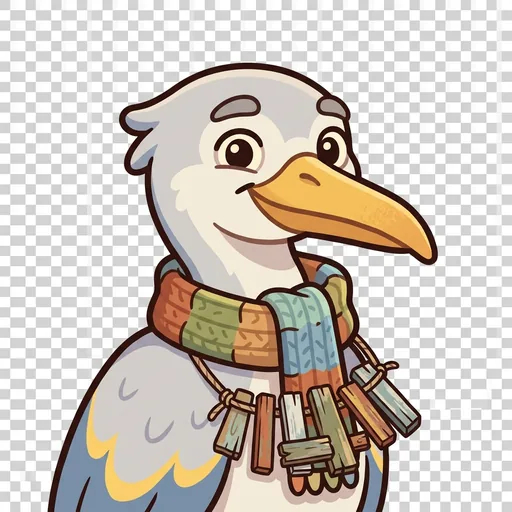
Span
Equity — the bridge-builder; heron with mismatched planks for mismatched riverbanks
-

Cordis
Civility — disagreement-without-disrespect host; striped badger with mismatched cups + bow tie
-

Kindle
Participation — the door-opener; prairie dog at a half-open door pointing outward
-

Tellus
Stewardship — the long-view caretaker; ancient tortoise planting trees they will never sit under
-

Level
Rule of law — the line reads level whoever holds it, even the one who set it; mountain goat with a stone level + plumb-bob
-
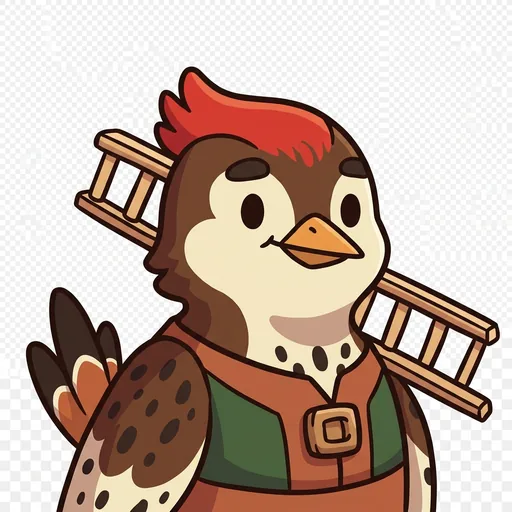
Rung
Due process — climb every step in order, never skip to the verdict; woodpecker climbing a trunk rung by rung
-

Muster
Consent of the governed — nothing proceeds until everyone's gathered and the yes is real; meerkat counting raised paws from the burrow-mound
-

Herald
Transparency — a decision no one can see isn't finished; crane keeping an open notice-board in the square