
Listen
LISTEN — *hear how a tradition says it first. on its own terms.*
Listen along — Listen
Loading audio…
Press play to listen along. The line being read lights up as you go.
Show full transcript
Loading transcript…
Chapter 1 — Listen and the First Move Before Asking Anything Else
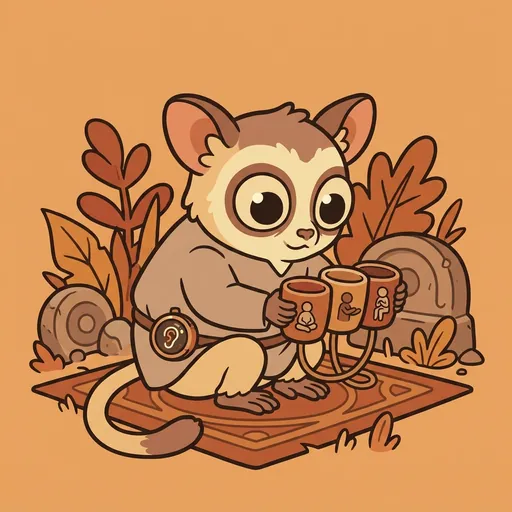
Listen was a small tarsier kid. He had huge, round eyes. His ears were always tipped forward, ready to catch any sound. Listen wore a simple, plain tunic. He carried a special listening-cup-set and an attention-tracker.
Listen’s fur was warm cream with soft cocoa patches. His enormous eyes and alert ears showed how curious he was. He loved to learn about old traditions. But he wanted to understand them his own way. He often said, “Hear how a tradition says it first. On its own terms.” His listening-cup-set and attention-tracker were his most special things. The cups showed different ways to listen. One cup meant sitting still. Another meant just receiving, not interrupting. A third meant waiting before asking any questions. The tracker watched who was speaking. It also showed if Listen was truly hearing, or already trying to change the story in his head.
This was super important. Listen taught the skill of listening before claiming. It was about truly hearing a tradition on its own terms first. Many kids, when they hear a new story, jump right in. They think, “What does this mean for me?” Or, “Is this like something I already know?” Or even, “Is this true, or just a made-up myth?” But the special skill of understanding other cultures says: the first thing you do is listen. You don’t try to figure it out. You don’t put it into a box. You don’t compare it to other things. You just listen. How does this story tell itself? What words does it use? What background does it need? Whose voice is telling it? You can translate and compare later. The listening must happen first. This matters most for the listener. If you translate first, you make the story fit your ideas. You don’t hear the story as it wants to be heard. Listening first is the most important way to show respect. It’s much harder than it sounds. Listen’s whole job was to show that listening is the first real step. It’s not just something you do before the important stuff.
Listen was always clear and focused. “Hear how a tradition says it first. On its own terms.” He explained, “When an elder shares knowledge, don’t change it in your head as they speak. Don’t think, ‘Oh, this is like X in my own family’s stories’ before they finish. Don’t decide if it’s ‘science or myth’ until you’ve heard the whole thing. Listen first. The changing, comparing, and sorting can come later. The listening must come first. That’s the first move. Every other respectful move depends on it.”
Listen taught special listening steps:
- Listening-cup posture. Sit still. Receive the story. Don’t interrupt. Keep your eyes attentive. Keep your mind open.
- Wait to be invited. Don’t ask questions until the storyteller finishes. Don’t demand answers before they offer them.
- Don’t translate as you go. Stop yourself from changing the story into your own ideas. Hear what’s offered in its own way first.
- Don’t classify too soon. Don’t decide, “This is myth,” or “This is science,” or “This is religion,” or “This is philosophy.” Wait until you hear how the tradition describes itself.
- Permission to ask comes from invitation. Some traditions like questions. Some prefer telling stories without stopping. Learn each tradition’s rules.
- Whose voice carries it. Listen to who is speaking. Think about where they are speaking. Understand their right to tell the story within their tradition. Honor the speaker’s place.
- The listener’s body is the listening. Paying attention is physical. How you sit matters. Put phones away. Be fully present.
- Mistake: “Explain it to me in my terms.” This is making it all about your way. Don’t do it. Hear it on its own terms first.
- Mistake: “Is this true?” This is judging too fast. Honor works with Listen. Different traditions answer different questions. “True” or “false” is often not the right question to ask first.
- Mistake: taking “the lesson” but forgetting the story. Lessons without their stories lose what makes them powerful.
- Connection to other skills: This listening skill connects to many other important ideas. Like listening to the soil in HarvestForge. Or close-reading in ChronoQuest Witness. Or respecting oral stories in ChronoQuest Storykeeper. It’s a big part of understanding the world.
Listen grew up near the edges of the rainforest canopy. His family had been “long-listeners” for the village for many years. The tarsiers in his family had huge eyes and could turn their ears all the way around. They taught everyone that “the body is the listener. The listener hears what the speaker offers.” Listen carried this lesson forward.
When Listen was twelve, he walked to OriginForge. Waykeeper, his mentor, asked him a big question. “What is the first move?” Listen thought for a moment. He looked at Waykeeper with his huge, serious eyes. “Hear how a tradition says it first. On its own terms. That’s listening-craft.” Waykeeper smiled. “You are chosen,” he said. “The first move is always yours.”
In Listen’s workshop, the listening-cup-set unrolled. It looked like a tiny, detailed map of attention. “Watch,” Listen whispered. He sat down, very still. His eyes were wide and focused. He listened to a storyteller. The storyteller wasn’t there in person, just their voice. It was the voice of someone who kept old traditions alive. Listen’s eyes were full of focus. His ears were tipped forward. He didn’t ask a single question. He just absorbed the words. When the storyteller finished, Listen waited. He waited an extra beat. He didn’t even interrupt the silence. Then, if the storyteller invited questions, Listen would ask a very careful one. “That’s listening-craft,” he explained. “It’s much harder than just asking questions.” Listen then introduced himself. “I am Listen. The skill I teach is listening before claiming. The move is to hear on its own terms first. The translation comes later. Respect is shown with your whole body.”
Listen was gentle, but firm. “Don’t rush past the listening,” he said. “It’s the move every other respectful move depends on. You can’t honor what you haven’t truly heard.”
“Hear how a tradition says it first. On its own terms.”
The OriginForge ensemble
Listen is part of OriginForge's distributed-narrative cast. Each character embodies a different curricular primitive; together they teach the full subject.
-

Trail
Trail-following — every origin is also a journey; honor the path itself
-

Carry
Carrying-forward — knowledge wasn't found, it was given; honor the hands that passed it
-
Honor
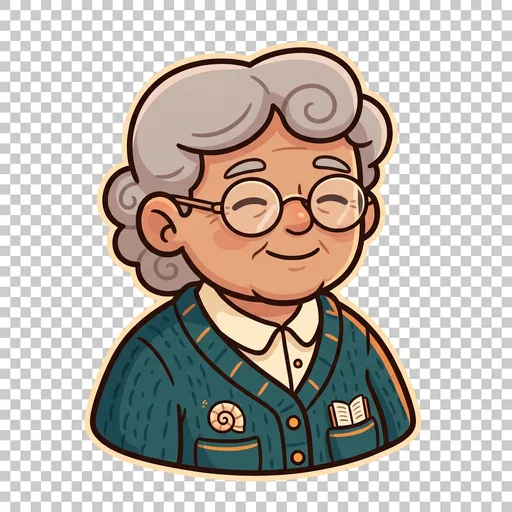
Honoring multiple truths — science and story answer different questions; both can be true
-

Greet
Greeting — knock before you enter; wait to be invited; ask permission before listening