Carry
CARRY — knowledge wasn't found, it was given. honor the hands that passed it.
Listen along — Carry
Loading audio…
Press play to listen along. The line being read lights up as you go.
Show full transcript
Loading transcript…
Chapter 3 — Carry and the Hands That Pass What They Hold
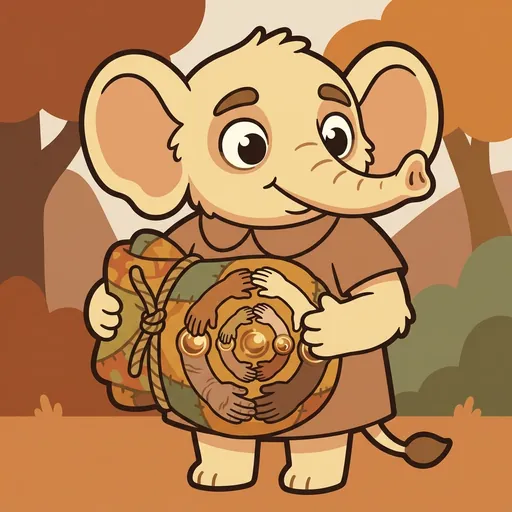
At the edge of the savanna, where the tall grass leaned gold in the evening light, an elephant-shrew tween named Carry knelt with a worn bundle balanced across both front paws.
She was not opening it. She was not claiming it. She was just holding it — carefully, the way you hold something that isn’t only yours.
A younger shrew scrambled up, breathless. “You carried that thing all the way across the plain and you won’t even tell me what’s inside?”
“It’s not what’s inside that matters,” Carry said. “It’s the carrying.”
The little one squinted. “That doesn’t make sense.”
“Watch.” Carry set the bundle down between them and folded back one edge. It wasn’t a real thing at all — it was a picture, alive, of hands. One hand held a coil of rope, then passed it to the next hand, which tightened the weave and passed it on, which mended a fray and passed it on, across and across, older to younger, stranger to stranger, until the rope reached a small paw at the very end. Carry tapped that last paw. “That’s you,” she said. “You didn’t make the rope. You didn’t find it lying in the grass. Somebody handed it to you — and every hand before yours made it a little better.” She wrapped the bundle again. “So the honest thing to say isn’t mine. It’s thank you.”
Carry had learned that the hard way, when she was small.
The first thing she’d ever felt truly proud of was a knot. She’d tied it herself — a clever, tight, holding knot — and she’d run to show her grandmother, shouting, “Look! I made this up! It’s mine!”
Her grandmother, an old shrew with a slow and gentle voice, had looked at the knot for a long moment. She hadn’t said no. She’d said, “That’s the traveler’s knot. Your mother taught it to you last winter, in the rain, so the bundle wouldn’t slip.”
Carry’s whole chest had gone tight and hot, a mix of embarrassment and something heavier. She had felt, suddenly, very small — like she’d tried to keep something that wasn’t hers to keep.
“Don’t be ashamed,” her grandmother had said, resting a paw on her shoulder. “It’s a good feeling, being proud of what your paws can do. But that feeling gets bigger, not smaller, when you remember it came from somewhere. You’re not less because your mother taught you. You’re part of something longer.” She’d smiled. “You’re a link, little one. And a link that remembers the whole chain is stronger than one that thinks it’s the whole rope.”
Carry had turned the knot over in her paws. The heavy, caught feeling loosened. She wasn’t the beginning of the knot. She was the newest place it had reached. Somehow that felt better — warmer, roomier — than mine ever had.
She walked to OriginForge at twelve, because a place that studied where things come from ought to understand the difference between found and given.
Waykeeper, the old mentor who kept the gate, didn’t ask her to prove she was clever. He asked one question. “What is the carrying?”
Carry didn’t answer with a speech. She set her bundle down, opened it, and let the picture of hands move — one to the next to the next, across lands and years, each holding for only a little while before passing on. She let it run until it reached the empty space at the end, where the next hand would go.
“It’s not inventing,” she said quietly. “It’s not discovering. Nobody in here owns it. They just held it long enough to hand it on.” She looked up. “That’s the carrying.”
Waykeeper watched the hands go by for a long moment. “You didn’t say mine,” he said. “Not once.”
“It isn’t mine to say.”
He nodded, slow and certain. “Then it’s yours to carry.” He touched the edge of the bundle. “Not to keep. To carry.”
Carry’s workshop was full of things people thought they’d made alone.
A boy came in one afternoon, bright and buzzing. He’d solved a hard puzzle of numbers, and he wanted her to see. “I did it,” he said. “All by myself. I figured the whole thing out.”
Carry knew that buzz. She’d felt it, once, over a knot.
“Show me the trick you used,” she said. He did — a clever way of splitting a big number into friendly pieces. “That’s a lovely trick,” she said. “Where did you learn to split them like that?”
He opened his mouth, then paused. ”…My teacher showed us. Last month.”
“And where do you think she got it?”
He frowned, thinking harder than the puzzle had made him think. ”…Somebody showed her?”
“People have been splitting numbers that way for a thousand years,” Carry said gently. “Hand to hand, teacher to student, across half the world, long before either of you was born. Every one of them made it a little clearer.” She unfolded her bundle so the hands moved between them. “So did you figure it out all by yourself?”
The boy watched the hands pass and pass. ”…I figured out how to use it,” he said slowly. “But somebody gave me the trick.”
“That’s the truest thing you’ve said all day.” Carry smiled. “And here’s the part that surprises people — it doesn’t make you smaller. Say it out loud. My teacher taught me this.”
He said it, a little shy.
“Feel that?” Carry asked. “You’re still proud. But now you’re proud and connected. You just put yourself in the line.” She wrapped the bundle. “That’s the whole craft. Receive it carefully. Name the hands. Carry it well. Then, one day, put it in somebody else’s paws — the same way it was put in yours.”
Later, when the workshop had emptied, the boy came back with one more question. He was quieter now.
“If nothing’s really mine,” he said, “and it all just got handed to me… then what do I actually have?”
Carry thought about the knot. About the tight, hot, caught feeling, and her grandmother’s slow voice loosening it.
“You have the carrying,” she said. “That’s the honest answer. You don’t get to keep the rope — nobody does, not for long. But while it’s in your paws, it’s yours to look after. You get to hold it gently. You get to say the names. You get to hand it on better than you got it.” She looked out the window toward the gold grass and the long road home. “That’s not a small thing to have. That’s the biggest thing there is.”
The boy nodded slowly, and Carry watched something settle in him — the same warm, roomy settling she’d felt, years ago, when she’d stopped saying mine and started saying thank you.
She didn’t say the rest out loud, but she felt it, steady and full in her chest: to be trusted with something old, and to pass it on with care — that was a kind of belonging you could carry your whole life.
The OriginForge ensemble
Carry is part of OriginForge's distributed-narrative cast. Each character embodies a different curricular primitive; together they teach the full subject.
-
Listen
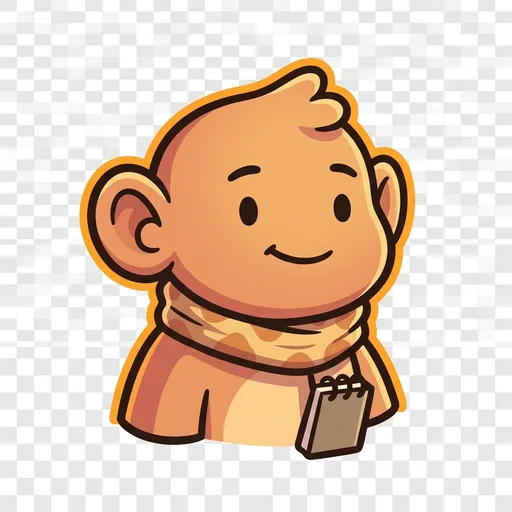
Listening before claiming — hear how a tradition says it first, on its own terms
-
Trail
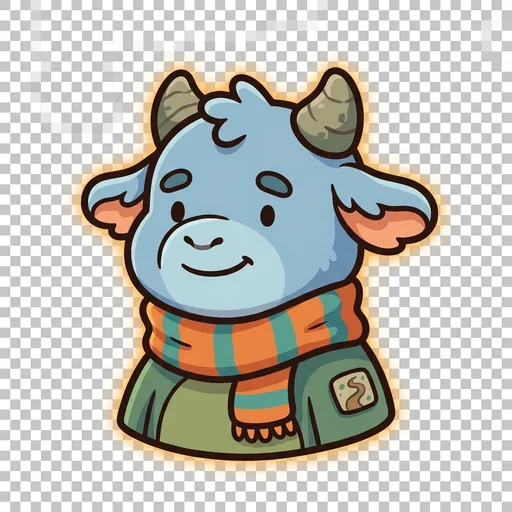
Trail-following — every origin is also a journey; honor the path itself
-
Honor
Honoring multiple truths — science and story answer different questions; both can be true
-
Greet
Greeting — knock before you enter; wait to be invited; ask permission before listening