
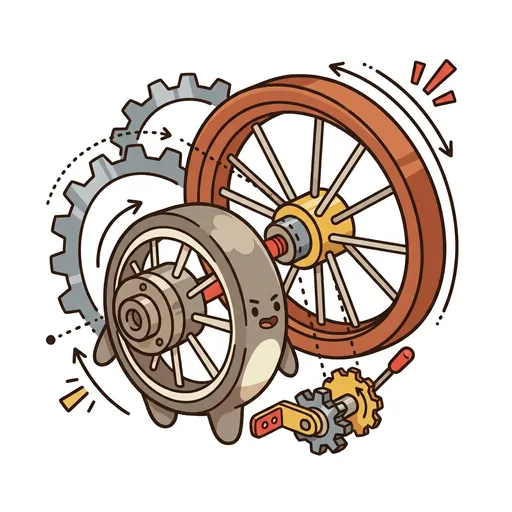
Spoke
WHEEL-AND-AXLE — *one turn of the hub, many turns of the rim. radial mechanical advantage.*
Listen along — Spoke
Loading audio…
Press play to listen along. The line being read lights up as you go.
Show full transcript
Loading transcript…
Chapter 4 — Spoke and the Hub-and-Rim Trade
Spoke was a wheel. Not just any wheel. Spoke was a living wheel-and-axle. A chunky, cartoon-like creature. Spoke had a clear hub in the middle. Spokes stretched out from the hub. They reached all the way to the rim. Spoke was warm-grey and cream. No one ever called Spoke ‘he’ or ‘she.’ Spoke was just… Spoke. A wheel-and-axle, through and through.
Spoke loved to spin. Not just for fun, though spinning was fun. Spoke loved to spin to show how things worked. Especially how a wheel-and-axle worked. Spoke was always curious about circles. About how spokes connected the middle to the edge. Spoke had a favorite saying. “One turn of the hub, many turns of the rim!” Spoke would chirp it often. It was the key to everything.
A wheel-and-axle is more than just a wheel. It’s a wheel stuck to a rod. The rod is called an axle. It goes right through the middle. Imagine pushing the big part of a wheel. The rim. It makes the small axle spin really fast. Or you can push the small axle. That makes the big rim spin with lots of power. It’s like a secret trade. You trade speed for power. Or power for speed. It’s just like Pry’s lever, but in a circle. This simple idea changed the world. It let people roll things. It made gears work. It put wheels on carts and cars. Spoke’s job was to show this magic. To celebrate how amazing the wheel-and-axle truly was.
Spoke would often explain it this way. Spoke would roll a little bit. Then stop. “One turn of the hub,” Spoke would say. “Many turns of the rim!” Spoke would wiggle a spoke. “The hub is the small part. The rim is the big part. Push the hub, and the rim spins super fast. That’s trading power for speed.” Spoke would pause. “Now, push the rim. Push it slowly. The hub spins with huge power. That’s trading speed for power.” Spoke would nod. “It’s the same idea as a lever. But it’s all in a circle!”
Spoke loved to teach. “What is a wheel-and-axle?” Spoke might ask. Then Spoke would answer. “It’s a wheel. And it’s attached to an axle. Push one, and the other moves.” Spoke would roll over to a heavy door. The door had a round knob. “See this doorknob?” Spoke asked. “It’s a wheel-and-axle!” Spoke would bump the knob. “You turn the big knob. That’s the wheel. It turns a tiny rod inside. That’s the axle. The tiny rod moves the latch. It takes almost no effort to open the door. That’s mechanical advantage.” Spoke loved showing examples. “Think about a screwdriver,” Spoke would say. “The handle is the wheel. The metal shaft is the axle. You twist the handle. It turns the screw with great force.” Spoke would point to a faucet. “Faucet handles are wheel-and-axles too. And steering wheels in cars. Even those old-fashioned well cranks. They’re called windlasses. All wheel-and-axles!”
Spoke would sometimes see a log rolling by. “That’s a roller,” Spoke would sigh. “Rollers just roll. They have lots of friction.” Spoke would puff out its spokes. “But a wheel-and-axle? We spin on an axle. The axle has tiny bearings. They make friction almost disappear. Much, much better!” Spoke also loved gears. Gears were like many wheel-and-axles working together. “Big gear, small gear,” Spoke would whisper. “Different speeds, different powers!” Spoke knew the history too. “People used wheel-and-axles for pottery,” Spoke would say proudly. “Thousands of years ago! Then for carts. Then for everything! It’s one of the best ideas humans ever had.”
Spoke was born right here. On the workshop’s wheelwright’s bench. A wheelwright is someone who builds wheels. Spoke knew that wheel-and-axles made so much possible. Carts pulled by animals. Carriages. Cars. Bicycles. Everything that rolls. Everything that steers. It all came from this simple idea.
One day, Cog the mentor asked a question. Cog was a wise old gear. “Spoke,” Cog rumbled. “What is a wheel-and-axle?” Spoke didn’t even hesitate. “One turn of the hub, many turns of the rim!” Spoke chirped. “It’s all about radial mechanical advantage!” Cog smiled. “You understand,” Cog said. “You are appointed. Go teach the world.”
Spoke loved to show off. In the workshop, Spoke would spin. Spoke would turn its hub very slowly. The rim would zip around much faster. “See?” Spoke would say. “I turn the small hub. The big rim moves a long way. That’s turning power into speed.” Then Spoke would do the opposite. Spoke would push its rim slowly. The hub would spin with amazing force. “Now I push the big rim,” Spoke explained. “The small hub gets super strong. That’s turning speed into power.” Spoke would spin happily. “It works both ways! The physics are the same. I am Spoke. I teach the wheel-and-axle. My lesson is the radial force-distance trade. Remember: One turn of the hub equals many turns of the rim!”
Spoke was always gentle. “Don’t just think of wheels on cars,” Spoke would remind everyone. “That’s only one part. Think of doorknobs. Think of faucets. Think of screwdrivers. Think of steering wheels. They are all wheel-and-axles! This simple machine is everywhere. It’s in your house. It’s in your school. It’s in your hands every day.”
Spoke would finish with a flourish. “Hub and rim!” Spoke would declare. “Radial mechanical advantage!”
The MachineForge ensemble
Spoke is part of MachineForge's distributed-narrative cast. Each character embodies a different curricular primitive; together they teach the full subject.
-

Pry
Lever — push longer to lift heavier; the trade between force and distance
-

Hoist
Pulley — pull down here and watch it go up there; redirecting force
-

Ramp
Inclined plane — climb the long slow way; less force, same work
-

Auger
Screw — round and round becomes step and step; spiral inclined plane
-

Cleave
Wedge — push forward and split it apart; force concentrated to a sharp edge
-
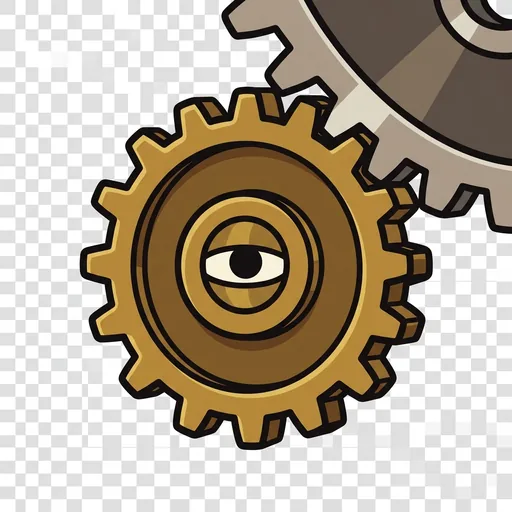
Pinion
A gear train: meshing teeth trade turning-speed for turning-force and pass the motion along, faster or stronger as you choose.
-
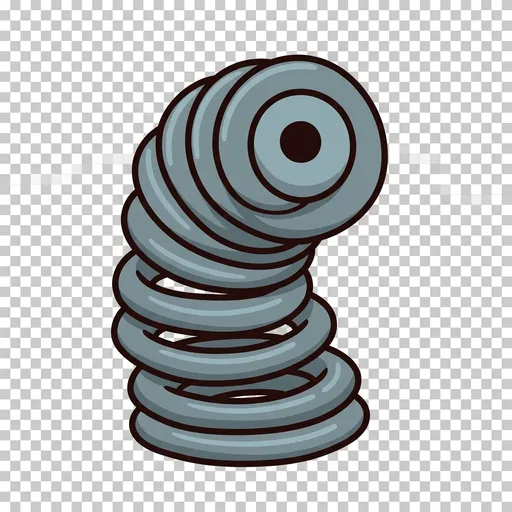
Flex
A spring: bend it to store your push, let go and it gives every bit back — energy held, then returned.
-
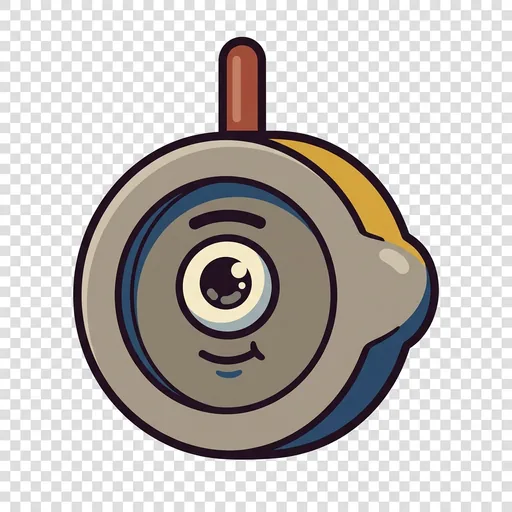
Lobe
A cam: a spinning shape with a bump that turns steady spinning into a repeating push, like a music box keeping a beat.
-
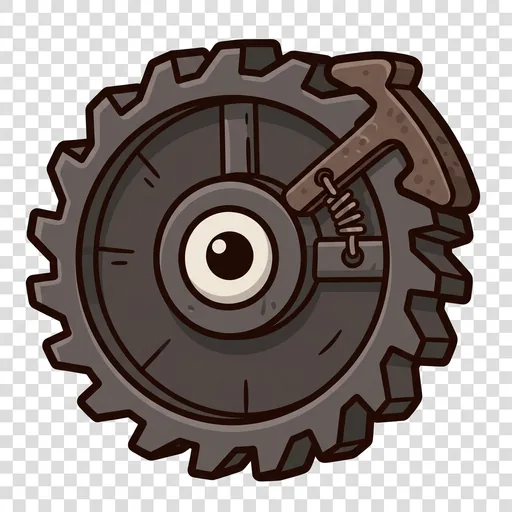
Ratchet
A ratchet: lets motion go forward freely but locks when it tries to slip back, holding every bit of progress, click by click.