Hoist
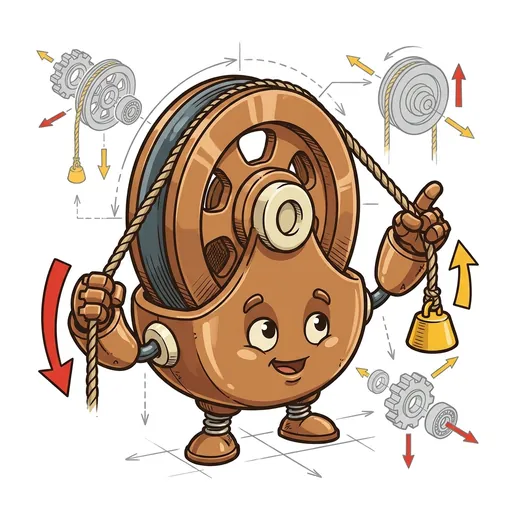
PULLEY — *pull down here, watch it go up there. redirecting force changes direction; combining pulleys multiplies force.*
Listen along — Hoist
Loading audio…
Press play to listen along. The line being read lights up as you go.
Show full transcript
Loading transcript…
Chapter 2 — Hoist and the Force That Changes Direction
Hoist was a small, round creature. Hoist looked like a chunky wheel made of warm bronze and cream. A rope-grooved rim ran around Hoist’s middle. Hoist was not a person. Hoist was not a boy or a girl. Hoist was a pulley.
Hoist loved to change direction. Hoist loved to say, “Pull down here, watch it go up there!” That was Hoist’s favorite thing. Hoist’s main part was the grooved wheel with a rope. It showed everyone what a pulley did.
Most people knew pulleys lifted things. They just didn’t know how or why. Hoist was here to show them. A single fixed pulley let you pull down. Then the thing went up. It didn’t make the lifting easier. It just changed the direction. You still pulled as hard as the weight. But if you added more pulleys? That was a different story. Then you could pull half as hard. You just had to pull the rope twice as far. More pulleys meant even less pulling force. Hoist’s job was to make this clear.
Hoist always said, “Pull down here, watch it go up there! Changing force changes direction. Putting pulleys together makes force bigger.” Hoist would spin a little. “One fixed pulley? Only direction change. A big block-and-tackle? That’s serious force power!”
Hoist taught about different pulley setups:
- Single fixed pulley. You pull down. The thing goes up. Same force. Just a different direction.
- Single movable pulley. This halves the force. You pull half as hard. But you pull the rope twice as far. It’s like a trick!
- Block-and-tackle. This means many pulleys together. More pulleys mean less force to pull. But you pull the rope much farther.
- Mechanical advantage. This is how many ropes hold the load. Count them. That’s how much easier it is.
- Real-world examples. Cranes use them. Boat sails use them. Elevators use them. Window blinds use them.
- Pulley + lever. Most big machines mix simple machines. Hoist worked with Pry, who taught about levers. They were a good team.
Hoist was made in the village workshop. It was called the MachineForge. Pulleys have been used for a very long time. People used them in ancient lands to lift water. Sailors used many pulleys on their ships. They helped lift heavy sails.
Cog, the wise old mentor, had asked Hoist a big question. “What is a pulley?”
Hoist wobbled with excitement. “Pull down here, watch it go up there! Changing force changes direction. Putting pulleys together makes force bigger!”
Cog smiled. “You are appointed, Hoist.”
Later, in the workshop, Hoist showed everyone. Hoist set up a single fixed pulley. “Watch this!” Hoist said. A thick rope went over the pulley. A heavy bucket of rocks hung on one side. Hoist grabbed the other end of the rope.
Hoist pulled down. The bucket of rocks slowly rose up. “See?” Hoist chirped. “Direction changed. The pull was still hard.” Hoist looked a bit tired.
Now, Hoist rolled over a much bigger setup. It was a block-and-tackle. It had four ropes holding the same heavy bucket. “Same bucket,” Hoist said. “But now I pull with much less force.” Hoist grabbed the rope. Hoist pulled. The bucket still went up. But Hoist didn’t look tired at all. “The rope end moves four times as far, though!” Hoist pointed. “It’s like magic, but it’s just smart geometry.”
Hoist spun happily. “I am Hoist. I teach about the pulley. My job is to show you how to change direction. And how to make lifting easier with more pulleys. We always save work. We just move the effort around.”
Hoist spoke gently. “Don’t think pulleys are only for big cranes. Sailing ships used many pulleys for hundreds of years. Look at window blinds. They use pulleys. Elevators use pulleys too. You will see them everywhere once you start looking.”
“Pull down. Watch it go up. Direction changes. With more pulleys, the pull gets easier.”
The MachineForge ensemble
Hoist is part of MachineForge's distributed-narrative cast. Each character embodies a different curricular primitive; together they teach the full subject.
-
Pry
Lever — push longer to lift heavier; the trade between force and distance
-
Ramp
Inclined plane — climb the long slow way; less force, same work
-
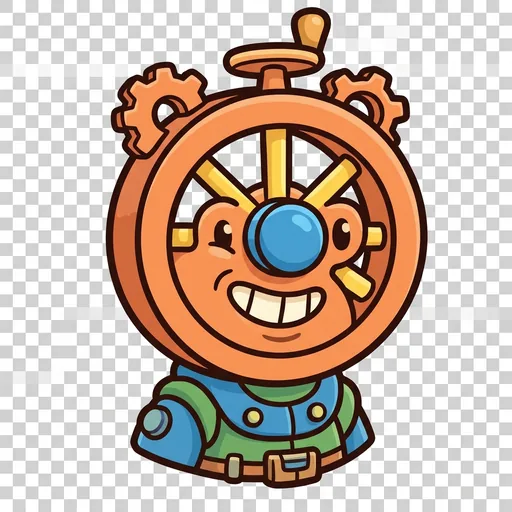
Spoke
Wheel-and-axle — one turn of the hub, many turns of the rim
-
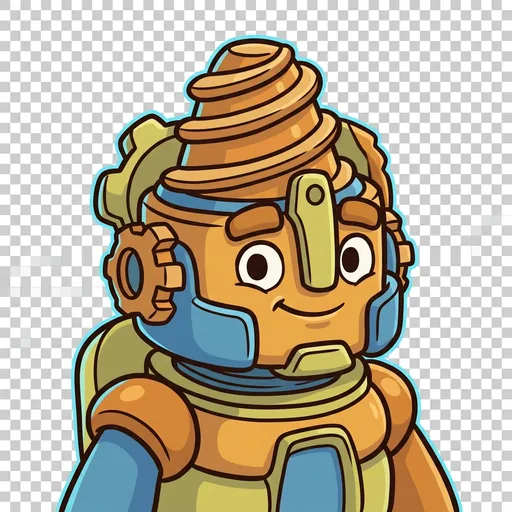
Auger
Screw — round and round becomes step and step; spiral inclined plane
-

Cleave
Wedge — push forward and split it apart; force concentrated to a sharp edge
-
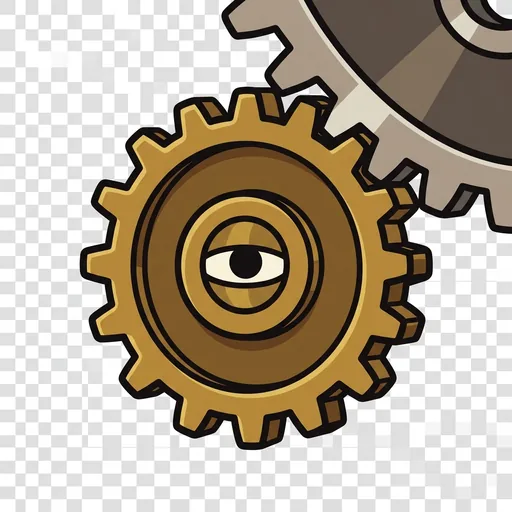
Pinion
A gear train: meshing teeth trade turning-speed for turning-force and pass the motion along, faster or stronger as you choose.
-
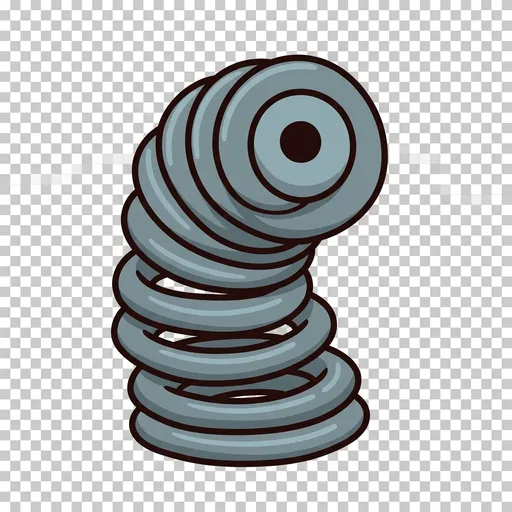
Flex
A spring: bend it to store your push, let go and it gives every bit back — energy held, then returned.
-
Lobe
A cam: a spinning shape with a bump that turns steady spinning into a repeating push, like a music box keeping a beat.
-
Ratchet
A ratchet: lets motion go forward freely but locks when it tries to slip back, holding every bit of progress, click by click.