

Ramp
RAMP — teach, test, vary, rest. difficulty is a love letter.
Listen along — Ramp
Loading audio…
Press play to listen along. The line being read lights up as you go.
Show full transcript
Loading transcript…
Chapter 5 — Ramp and the Difficulty Curve That’s Actually a Love Letter
In the little playtest room at the top of LevelForge, a cream-colored goat with soft grey hooves knelt on the floor and laid four cards in a neat row.
A kid named Dell watched over her shoulder, arms crossed, unimpressed. He’d just finished a game so brutal it had made him throw his controller. “Games are supposed to be hard,” he muttered. “That’s the whole point.”
“Watch first,” Ramp said. “Argue after.”
She tapped the first card — a small room, a single spike trap, no enemies anywhere. “You’re new here. So the game just lets you meet the spike. You can’t lose. You poke it, you hop it, you learn its rhythm.” She tapped the second. A room with the same spike and one slow, easy enemy. “Now it asks you to use what you just learned. Little stakes. You might trip. You try again in two seconds.” Third card: the spike was sliding back and forth now, and a door was closing. “Same skill — but the room’s alive. New shape, old move.” She rested a hoof on the fourth card: a quiet treasure room, no danger, soft light. “And then it lets you breathe. Find a coin. Look around. Feel like you climbed something.”
Dell stared at the four cards. “That’s it? Teach, then test, then change it up, then rest?”
“Teach, test, vary, rest,” Ramp said, like it was the most obvious thing in the world. “That’s not the game being easy on you. That’s the game caring whether you make it. A good difficulty curve is a love letter, Dell. It’s the game saying, I believe you can climb this, and here’s a good place to sit down.”
Ramp had grown up near the tall cliffs, in a family of climbers.
Her aunts and uncles were the ones the village sent when a path needed finding — up the sheer faces, around the crumbling ledges, to the high pastures nobody else could reach. When Ramp was small she thought the climbing was the whole job. Faster hooves. Braver leaps. Just push through.
Then one autumn she followed her grandfather up the worst face on the mountain, and halfway up she started to shake. Her legs burned. The ground swam far below. She wanted to cry and she wanted to quit and she couldn’t do either without letting go, and letting go was the one thing she could not do.
Her grandfather stopped on a wide flat ledge she hadn’t even noticed him aiming for. “Here,” he said. “Sit.”
“We’re not at the top.”
“No. But you can’t reach the top from where your legs are right now.” He settled beside her, chewing a bit of grass, unbothered. They sat until her heartbeat slowed and her legs stopped trembling. And she noticed — the ledge wasn’t an accident. Her grandfather had known it was there. He’d been climbing toward the rest the whole time.
“A climb isn’t just the path,” he told her. “It’s the path plus the rests. Skip the rests and the mountain wins — not because you’re weak, but because nobody made you a place to stand.” He nudged her gently. “Whoever finds those places is being kind to whoever climbs next.”
Ramp reached the top that day. What stayed with her, though, was the ledge — that a hard climb becomes a possible one the moment someone shapes a place to breathe into it.
She walked to LevelForge when she was twelve, because a place that studied games ought to understand the difference between a mountain that’s hard and a mountain that’s cruel.
Pixel, the old mentor who ran the workshops, met her at the door and asked just one thing. “What is difficulty?”
Ramp didn’t answer with a definition. She knelt and set out four cards on Pixel’s desk — teach, test, vary, rest — the same shape she’d learned on the cliff. Then she set out four more in a jagged mess: teach, and then straight into a moving spike and a timed door and two enemies, all at once.
“This one’s a climb with rests built in,” she said, pointing at the first row. “This one’s a cliff with no ledges.” She looked up. “Difficulty isn’t how much it hurts. It’s whether someone shaped a way through.”
Pixel was quiet a long moment. “You belong here,” she said.
Ramp’s workshop filled up with kids who’d quit games — and blamed themselves for it.
Dell was one of them. He came back the afternoon after the four-card lesson, still half-defensive. “Okay, but that game I rage-quit? Maybe I’m just bad at it.”
Ramp pulled up the level he’d quit on and set her cards beside it. “Show me where you died.”
He pointed. Right after a calm stretch, the game had thrown a triple threat at him with no warning — a new enemy, a collapsing floor, and a jump he’d never been taught.
“Which of these four things did the game teach you before this room?” Ramp asked.
Dell looked. ”…None of them.”
“So it tested you on a lesson it never gave.” She didn’t say it unkindly. “That’s not a hard level, Dell. That’s a level that skipped straight to the exam.” She tapped the screen. “When a game gets somebody so frustrated they walk away — that’s not the player breaking. That’s the curve breaking. Frustration is just information. It’s the level telling its maker, you left out a ledge.”
Dell was quiet. “So it wasn’t me.”
“It was never you.” Ramp handed him the vary card. “And here’s the part people always miss. When a player says ‘this is too easy,’ they almost never mean ‘make it harder.’ They mean ‘make it interesting.’ So you don’t crank the pain — you change the shape. Same skill, new room.” She smiled. “Hard modes are fine. But they should be a door you choose to open, not the only door in the building. A game that’s only cruel is a game that says you’re not welcome here. And that’s a terrible thing to say to somebody who just wanted to play.”
Later, when the workshop had emptied out, Dell lingered at the door with the four cards still in his hand.
“When I quit,” he said, not quite looking at her, “I thought it meant I wasn’t a real gamer.”
Ramp thought about the ledge on the mountain — the trembling legs, the way possible had felt so far away until her grandfather made a place to stand.
“You know what a love letter actually is?” she said. “It’s somebody paying enough attention to you to build the hard thing so you can reach it. Ledge by ledge. Room by room. It’s the opposite of a wall.” She watched his shoulders come down from around his ears — the same way hers had, years ago, on the flat grey stone. “You’re not less of anything for needing a place to breathe. Everybody who ever climbed anything needed one. The good games just remember to put it there.”
Dell nodded slowly, and left lighter than he came.
Ramp gathered up her cards. She didn’t say the last part out loud, but she felt it, warm and steady in her chest: the kindest thing you can build for somebody is a hard climb they’re allowed to make.
The LevelForge ensemble
Ramp is part of LevelForge's distributed-narrative cast. Each character embodies a different curricular primitive; together they teach the full subject.
-
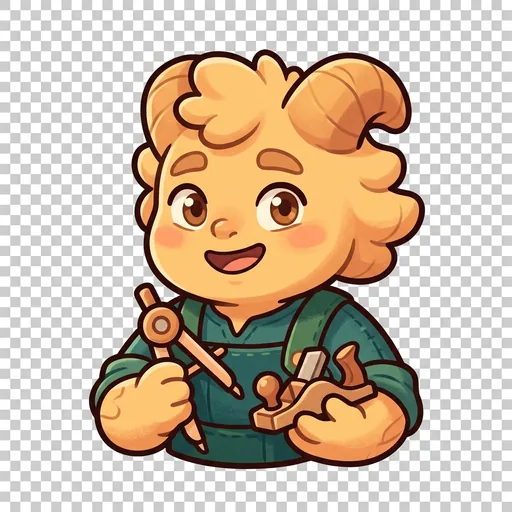
Carve
Level architecture — where-does-the-eye-go-first spatial-flow + sight-line + landmark craft
-
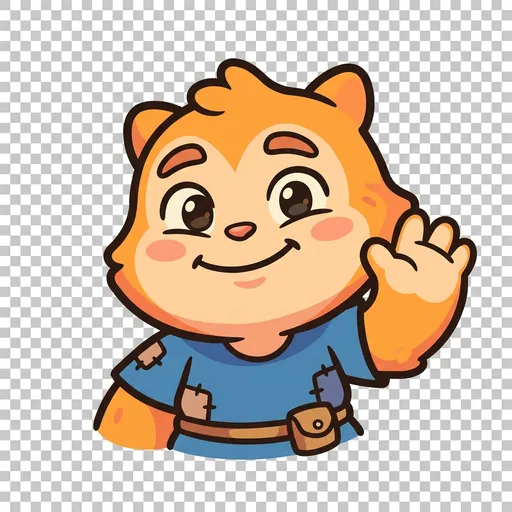
Coax
Player psychology — invite-don't-trap; warm-host posture; player chooses forward
-

Bounce
Juice + feedback — tiny-celebrations; squash-stretch-shake-thunk; juice as empathy
-

Probe
Playtesting + iteration — what-they-DID-not-SAID listening-discipline; playtester-over-designer-taste