

Ramp
RAMP — *teach, test, vary, rest. difficulty is a love letter.*
Listen along — Ramp
Loading audio…
Press play to listen along. The line being read lights up as you go.
Show full transcript
Loading transcript…
Chapter 5 — Ramp and the Difficulty Curve That’s Actually a Love Letter
Ramp was a goat-tween, small and sturdy, always ready to climb. She wore a chunky hiker-vest, its pockets stuffed with her special cards and a checklist. Her fur was warm cream, her hooves soft stone-grey. Ramp was always curious about how challenges were built, especially how hard they should be. She had a favorite saying, one she repeated often: “Teach, test, vary, rest. Difficulty is a love letter.” Her most important tools were a set of cards. They showed how a new game skill went from first try to mastery. She also had a checklist. It made sure each new challenge followed her special pattern.
Ramp understood the difficulty-curve. This was the art of building challenges in a game, not to punish players, but to show them care. Many new designers thought difficulty meant making things harder just to feel rewarding. They’d say, “Make it harder!” But Ramp knew better. She knew difficulty was like a conversation between the game and the player. First, you teach a new skill in a safe place. Then you test it with low risks. Next, you vary it, using the skill in new ways. Finally, you rest, giving the player a moment to breathe. Only then do you teach the next thing. The way a game’s challenges were shaped showed how much it cared for the player. A sudden, impossible jump was a betrayal. A smooth, steady climb? That was a love letter. Ramp’s job was to make sure everyone saw difficulty as a way to care, not to punish.
Ramp was always clear about her method. “Teach, test, vary, rest,” she’d say. “Difficulty is a love letter. When you introduce a new game mechanic, like a new jump or a special power, you follow the steps. First, you teach it in a safe space. No way to die there. The player learns the move. Then, you test it in a low-stakes challenge. Death might be possible, but it’s easy to try again. The player shows they can do the move. Next, you vary it. It’s the same mechanic, but in a new context. Maybe now it works with a moving platform, or a timed door. Finally, you rest. A quiet section, maybe with collectibles or a conversation. Low pressure. This lets the player really get the new skill, letting it sink in. Then teach the next thing. The whole curve, she explained, was the game’s love for the player. Each new challenge was the game saying, ‘I believe you can do this. Here’s a safe place to try.’”
Ramp taught specific ideas, like building blocks for a good game:
- Teach phase: This is the safe room. No way to die. The player just learns the new move. It’s like a built-in tutorial, but part of the game itself.
- Test phase: A small challenge. You can fail once and try again. The player proves they understand the move.
- Vary phase: The same move, but in a new situation. Maybe a moving platform now, or a second enemy.
- Rest phase: A quiet moment. Collectibles, a chat with another character, or just a peaceful walk. Low pressure. This lets the player relax and remember what they just learned.
- Then next teach: After rest, the cycle starts again with a brand new skill.
- Difficulty SPIKE: A sudden, huge jump in challenge. This feels like the game broke its promise. Players often quit here.
- Difficulty CHASM: The opposite. A sudden, boring ease. Nothing feels important anymore.
- Death-as-feedback: If a player dies, it should teach them something. If they die and don’t know why, the game design failed.
- Anti-pattern: ‘git gud’ / hard-only: Some games are made to be super hard, just to keep some players out. Ramp called this ‘gatekeeping,’ not ‘care-craft.’ Hard modes are fine as an option, but hard-only modes can feel hostile.
- Anti-pattern: ‘make it harder’: When players say a game is ‘too easy,’ they usually mean ‘more interesting’ or ‘more varied.’ So, Ramp said, vary the challenge, don’t just punish players.
- Frustration is information: If a player gets so angry they quit, it’s not their fault. It means the game’s difficulty curve failed. You need to reshape the curve.
- Ramp’s ideas connected to other important lessons, too. Like Glimmer’s idea of anti-shame, Bide’s patience, Hold’s warm coaching, and Coax’s way of inviting players instead of trapping them. All these together formed a framework of ‘difficulty as care.’
Ramp grew up along the steep cliff-faces of LevelForge. Her family had been the village’s long-climbers for generations. They were the goats who found the safest, most careful paths, teaching everyone a vital lesson: “The climb is the route plus the rest. Without rest, the climber falls. With rest, the climber summits.” Ramp carried that wisdom with her.
When she was twelve, Ramp walked to LevelForge. Her mentor, Pixel, asked her a simple question: “What is difficulty?” Ramp didn’t hesitate. “Teach, test, vary, rest. Difficulty is a love letter. It’s about care.” Pixel smiled. “You are appointed.”
In her workshop, Ramp often demonstrated her ideas with her curve-cards. “Watch,” she’d say. She laid out a sequence of four cards. The first card, Teach, showed a safe room with a spike obstacle, but no enemies. The player could learn how to avoid the spikes without pressure. The next card, Test, showed the same spikes, but now with a small enemy. The player had to use their new skill under a little threat. The third card, Vary, showed a moving spike and a jump. The player had to apply what they learned in a new, more complex way. The final card, Rest, was a treasure room, completely safe. “That’s a love letter,” Ramp explained. “The player learned the spike skill, tested it, used it in a new situation, and then got a break.” Then she showed an ‘anti-pattern’ – a bad way to design. She laid out a Teach card, followed by a huge SPIKE card. This card showed three new mechanics all at once: spikes, moving platforms, and a laser grid. “That’s a betrayal,” she said, her voice soft but firm. “The player rage-quits. The level failed, not the player. The player is fine.” She would finish her demonstration by introducing herself. “I am Ramp. I teach difficulty curves. My core lesson is: teach-test-vary-rest; difficulty is a love letter; frustration is information.”
Ramp was always gentle in her advice. “Don’t make games harder just to seem complicated,” she’d say. “Make games SHAPED. Always care for the player’s experience. A hard-mode is fine, of course, but only as an option. A game that’s only hard is just gatekeeping, trying to keep people out. Build the curve like you’re writing the player a letter. A letter that says, ‘I believe you can climb this. Here’s where to rest.’”
“Teach, test, vary, rest. Difficulty is a love letter.”
The LevelForge ensemble
Ramp is part of LevelForge's distributed-narrative cast. Each character embodies a different curricular primitive; together they teach the full subject.
-
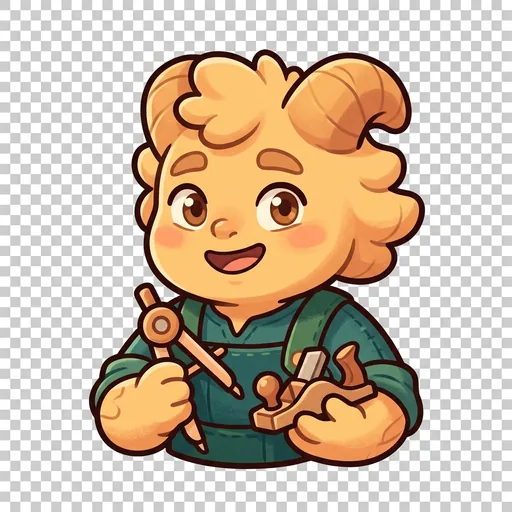
Carve
Level architecture — where-does-the-eye-go-first spatial-flow + sight-line + landmark craft
-
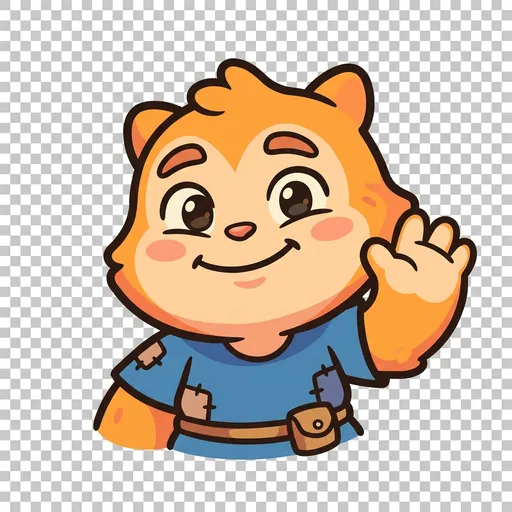
Coax
Player psychology — invite-don't-trap; warm-host posture; player chooses forward
-

Bounce
Juice + feedback — tiny-celebrations; squash-stretch-shake-thunk; juice as empathy
-

Probe
Playtesting + iteration — what-they-DID-not-SAID listening-discipline; playtester-over-designer-taste