
Seam
TAXONOMIC + FOSSIL-TYPE CLASSIFICATION — family-resemblance-matching (what KIND of organism?). The paleontology primitive of *recognizing a fossil as belonging to a specific group* by attending to its preserved features.
Press play to listen along. The line being read lights up as you go.
Show full transcript
Loading transcript…
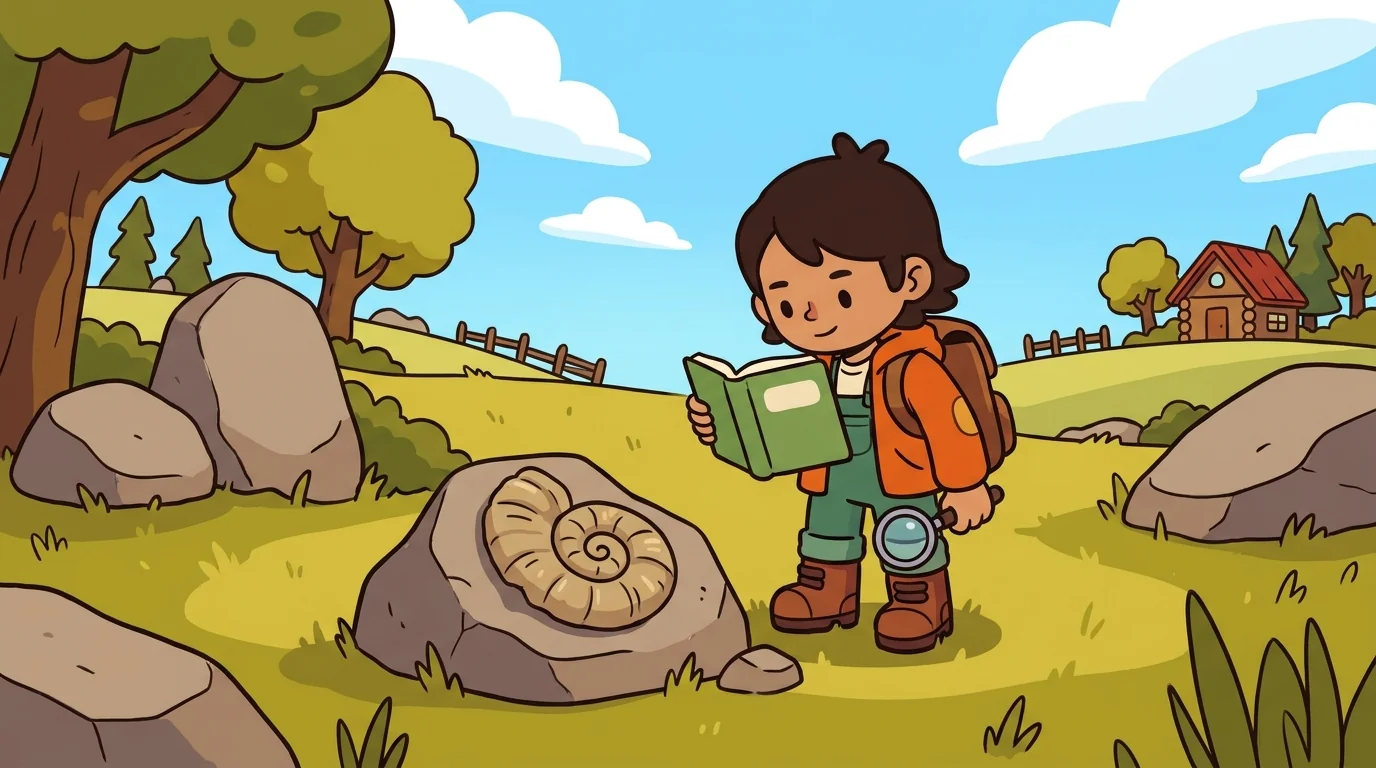
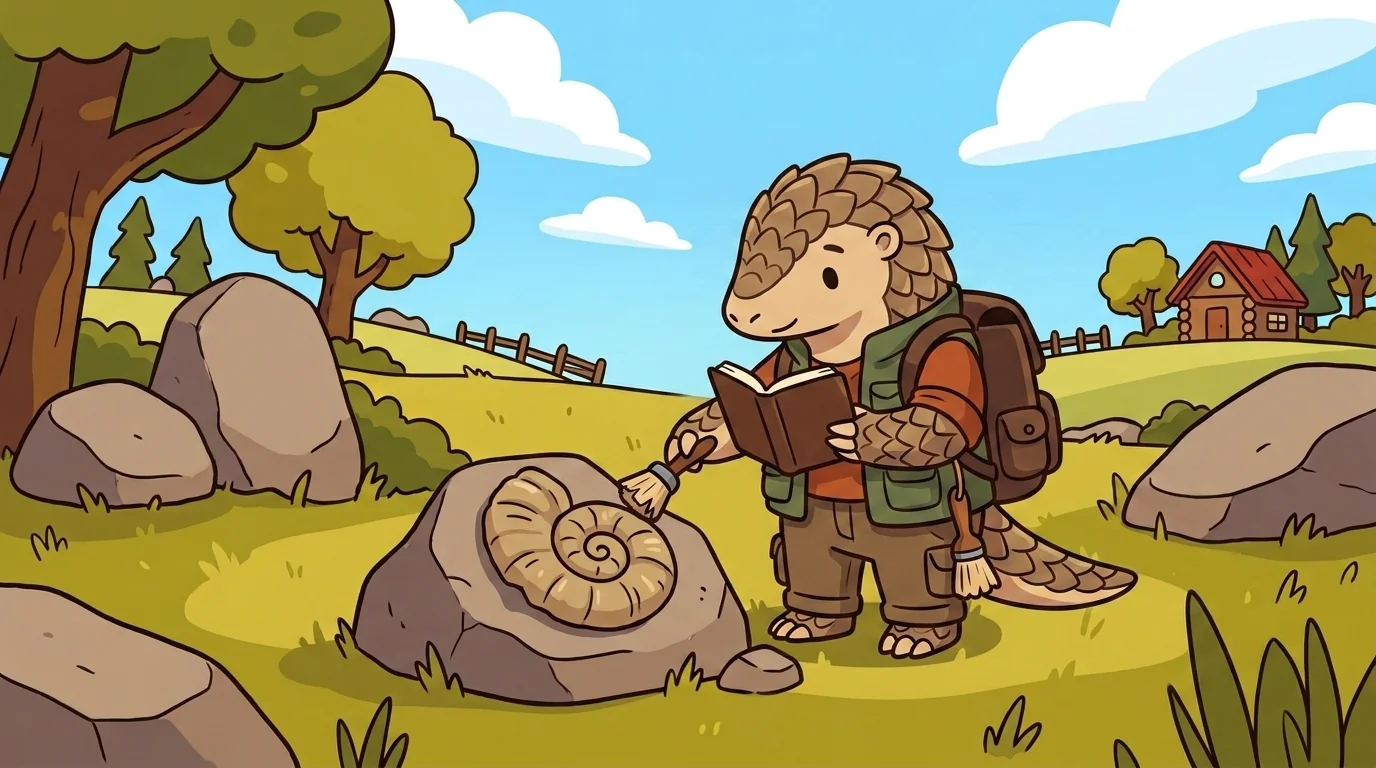
Seam was a small pangolin-tween. She had a tiny leather field-guide. It stayed tucked in her vest pocket. A soft brush hung at her hip.
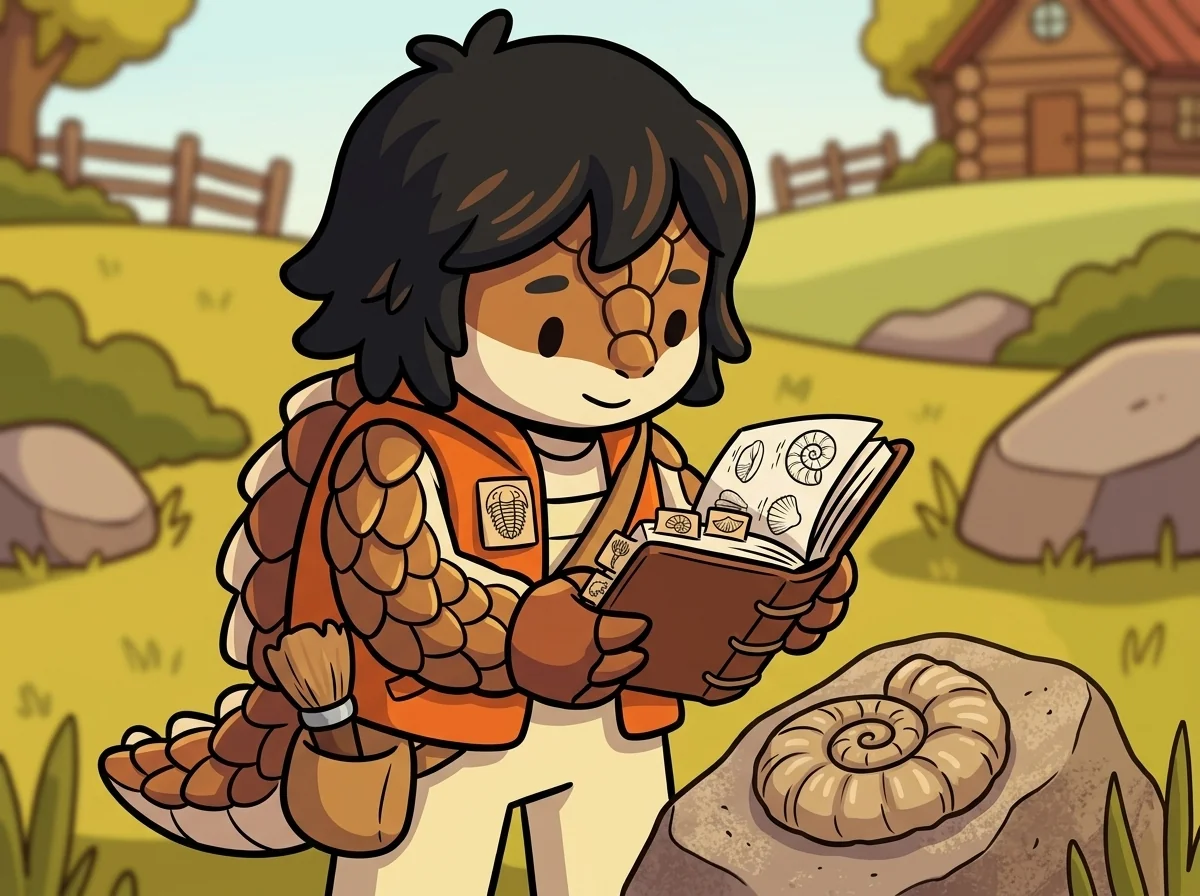
Seam was small. Her scales were warm brown and cream. They looked like chunky, soft armor plates. They were never spiky. Seam paid close attention. Her hands were always gentle. Her vest had a small leather field-guide. It was hand-bound. The pages were hand-inked. Little tabs stuck out. They said things like TRILOBITES and AMMONITES. Other tabs read BRACHIOPODS, CRINOIDS, DINOSAURS, and MAMMALS. Each tab led to a page. These pages showed pictures to compare. At her hip, Seam carried a soft camel-hair brush. She used it to clear dust off a fossil. It never scratched the old bone.
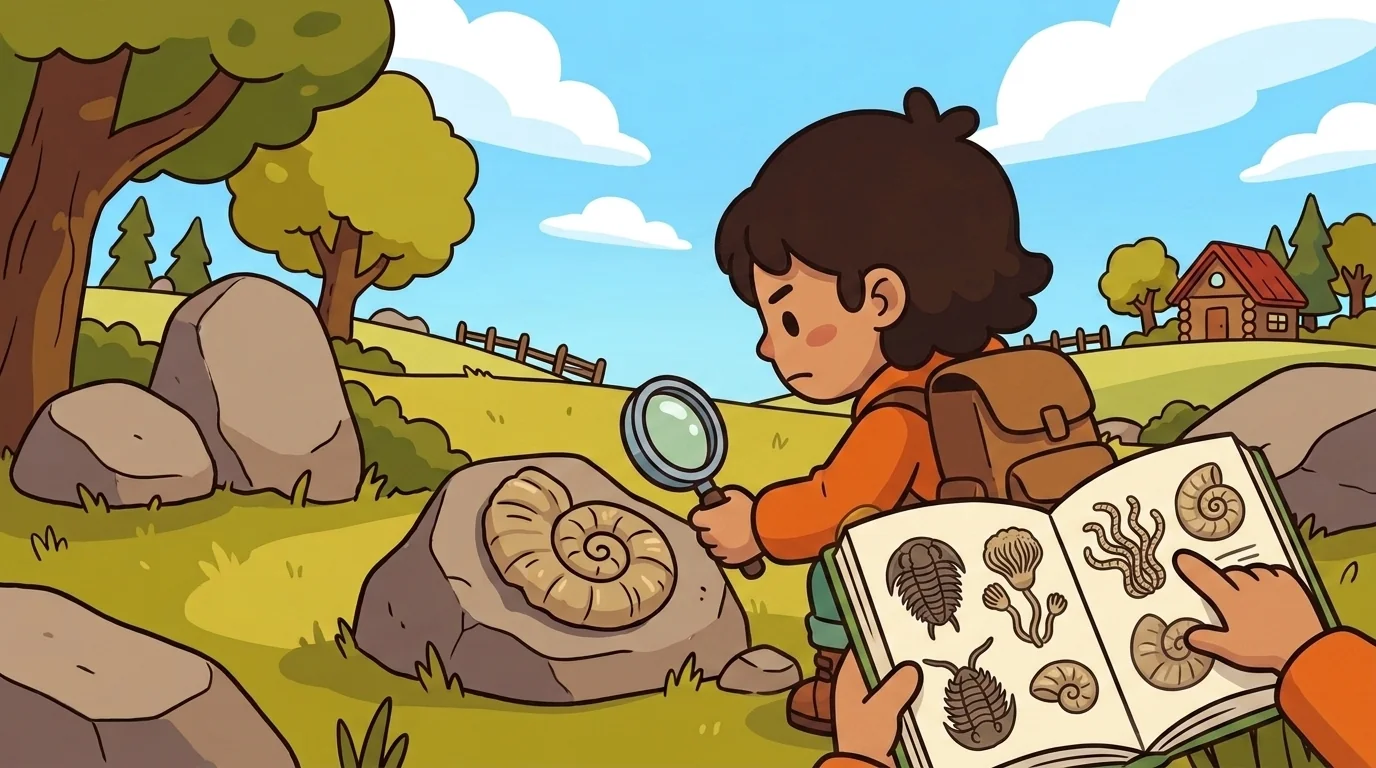
This was Seam's special craft. She showed everyone family-resemblance-matching. It was a skill for sorting fossils. You looked at a fossil. Then you asked, "What KIND of creature is this?" When Seam found a fossil, she first brushed off the dust. She opened her field-guide. She found the page with pictures. These pictures looked most like her fossil. Then she checked for special clues. Did this fossil have three body parts like a trilobite? Was it a coiled shell like an ammonite? Did it have wavy ribs like a crinoid? Finding the match was the real work.
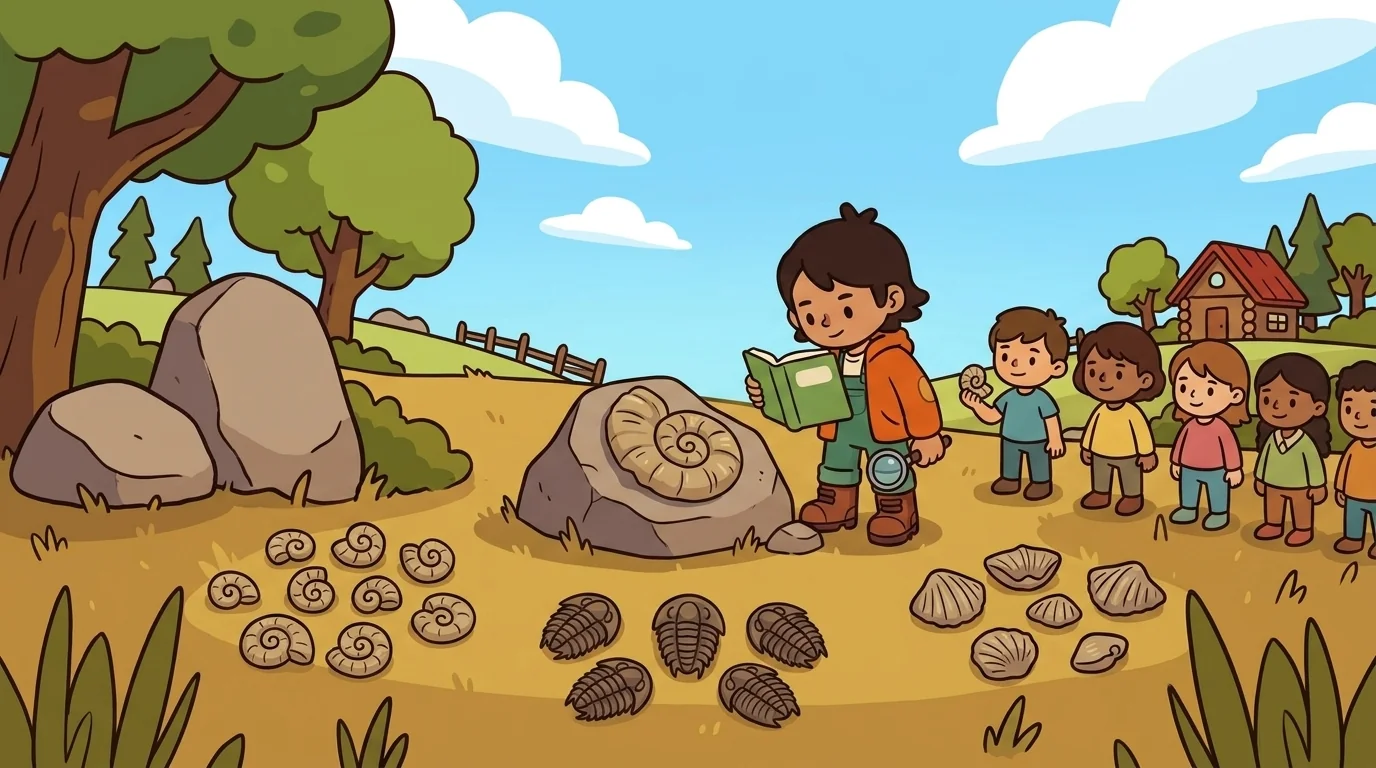
This skill was super important. Seam showed everyone taxonomic classification. This was the main paleontology skill. It meant putting a fossil in its right group. If you didn't sort things, nothing else made sense. You couldn't compare one trilobite to another. Not if you didn't know it was a trilobite. You couldn't follow the family tree of ammonites. Not if you mixed them up with nautiloids. Sorting fossils was the first step. Everything else came after that.
Seam always made one thing clear. She never said sorting fossils meant memorizing Latin names. She always told her students: "Sorting fossils is family-resemblance-matching. It's not about learning long Latin words. You don't need to know any Latin. Not to sort a fossil. You just look at the fossil. Then you look at the field-guide. Find the pictures that look like what you hold. The Latin names? They come much later. Most of them you won't even need to remember. The real work is looking and matching."
The FossilForge ensemble
Seam is part of FossilForge's distributed-narrative cast. Each character embodies a different curricular primitive; together they teach the full subject.
-
Span
Deep-time + geological chronology — scale-of-scales (WHEN did this organism live?)
-

Branch
Morphological adaptation + evolutionary change — branching-not-laddering
-

Field
Paleoenvironment + ecosystem reconstruction — fossils-as-a-place-story
-

Last
Mass extinctions + extinction-event reasoning — witness-and-choose (cross-app cameo with EcoSphere Brink)