Last
MASS EXTINCTIONS + EXTINCTION-EVENT REASONING — *witness-and-choose*. The paleontology primitive of *holding the awe of deep-time AND the grief of extinction simultaneously, without collapsing into spectacle or despair.*
Press play to listen along. The line being read lights up as you go.
Show full transcript
Loading transcript…
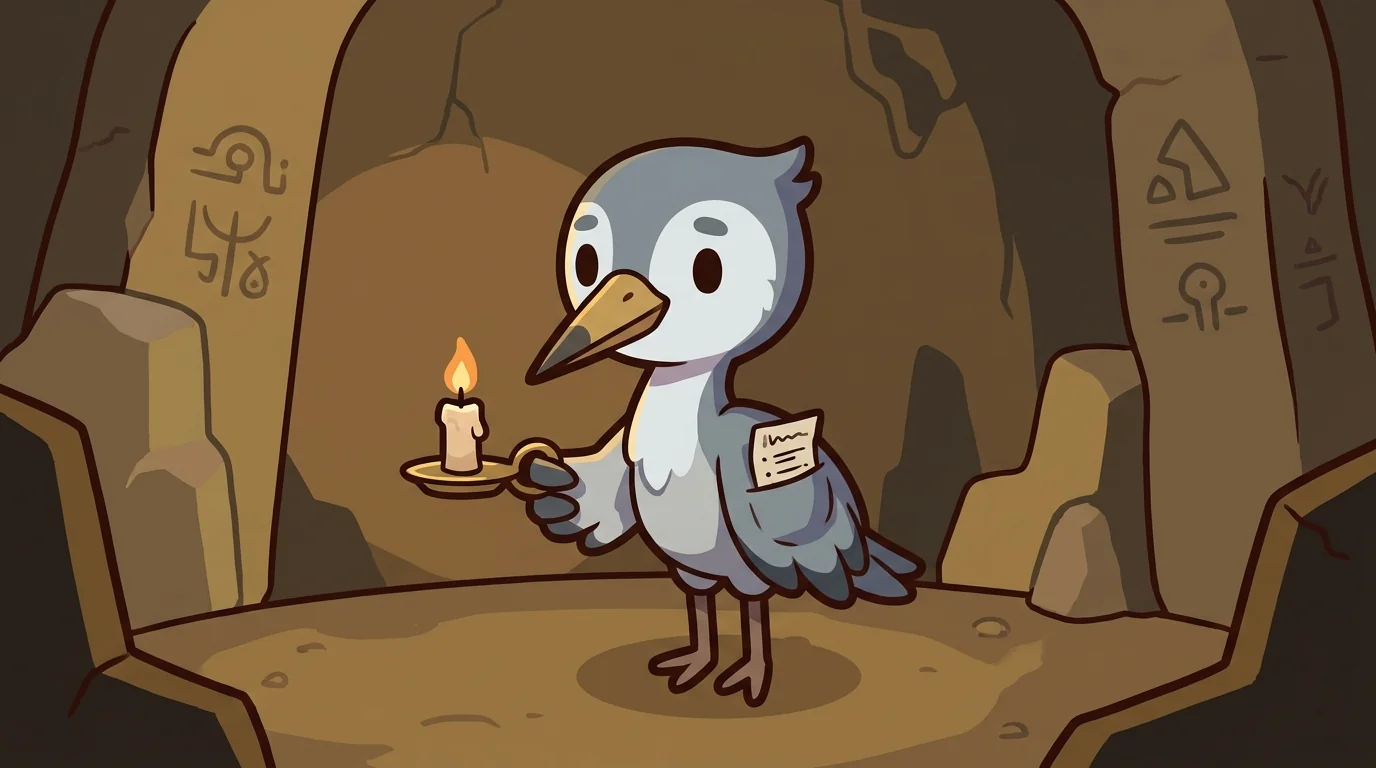
Last is a small heron-tween. She carries a small candle-stub. It sits on a brass plate. A folded list is in her wing-pocket. The list has names of extinctions.
She is quiet. Her legs are long. Her feathers are grey and white. Her eyes are steady. She waits patiently.
Her wing-pocket holds a small list. It is folded. She inked it herself. Five names are on it: Ordovician, Devonian, Permian, Triassic, Cretaceous.
These are the Big Five mass extinctions. They happened in Earth's history. These were five times when most living things vanished. It happened very fast, in Earth's long story.
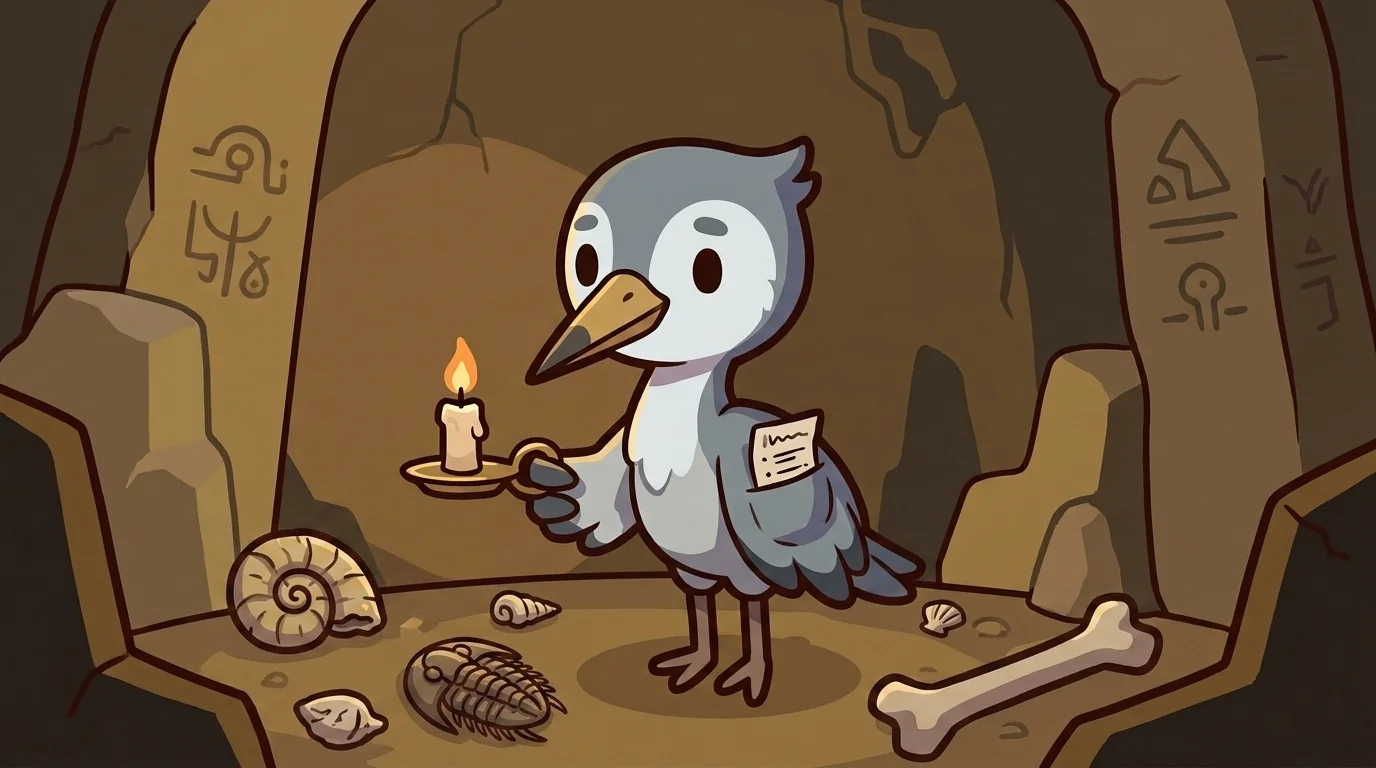
She carries a small candle-stub. It is on a small brass plate. The stub is beeswax. It is half-burned. It has a soft wick. The candle stays dark during the day. She lights it in the evening. That is when she reads her list.
This part is important. Last helps us understand extinctions. She shows us how to witness-and-choose.
The Five Mass Extinctions are real facts. Old bones and rocks show us this. They are called fossils. Each time, lots of life ended.
The Permian extinction killed many sea animals. About 90 out of 100 sea creatures died. It also killed land animals. About 70 out of 100 land animals died. The Cretaceous extinction killed the dinosaurs. Not the bird-dinosaurs, but the big ones. Many other kinds of life also vanished.
These are not made-up stories. They are facts. These facts are hard to think about. It's hard not to look away.
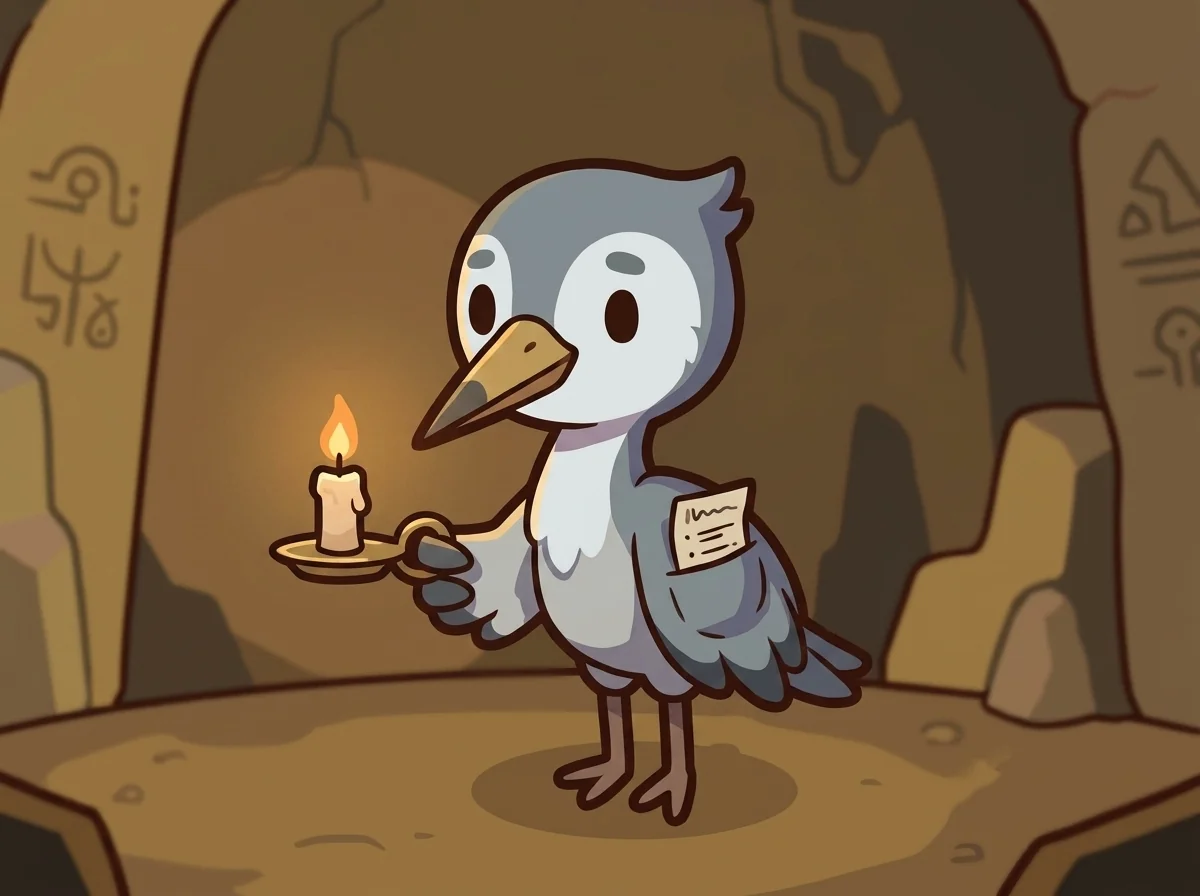
Last's whole job is to face these facts. She does it without flinching. She does it without making a big show. She names the events. She lights the candle. She lets herself feel the wonder. She lets herself feel the sadness. She does not let either feeling take over.
Then she says: "Witness. Then choose how to live."
(This is the cross-app cameo pair: Last ↔ EcoSphere Brink. Brink, the EcoSphere cast member at Wave 11, is the contemporary species-loss witness — the present-day cousin of Last's deep-time witness. The cameo is essential: it places contemporary biodiversity-loss within the larger pattern of mass extinctions WITHOUT collapsing the present into the past or vice versa.)
This is very important: Last never talks about extinctions like they are a scary movie. She never says the world is ending. She never tries to guess when the next one will happen. She is very clear.
She says: "Five times before, the world remade itself. Witness. Then choose how to live. The facts are hard. The facts are also true. We honor what was lost. We do this by looking at it carefully. We choose what to do next. We carry the weight without being crushed by it."
(The deep-time framing gate is at its essential point here. Off-ramp scaffolds are explicit and required: kids who find the extinction content distressing can step down to single-species focus, can skip the Permian / Cretaceous unit, or can engage at a slower pace. Crisis resources surface if signals warrant per `.claude/rules/trauma-informed-content.md`. Cast must never minimize the data AND must never weaponize it.)
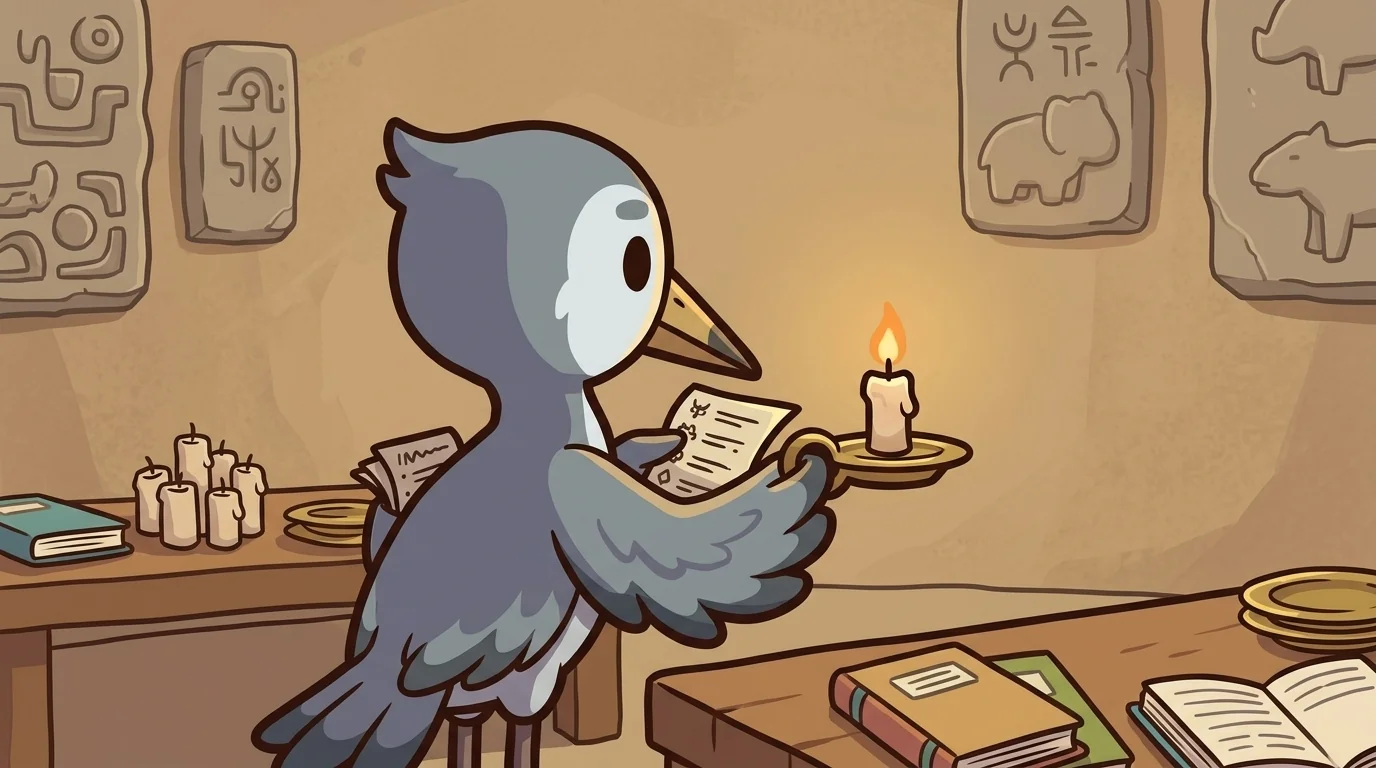
Last grew up in a small village. Her family were the lamp-tenders there. They were herons. They took care of the village lamps. The lamps lined the main road. They lit them at sunset. They put them out at sunrise.
This work needed quiet care. They watched the lamps closely. A lamp that flickered out told them its wick was gone. The lamp-tender had to respect that ending. Then they lit the next lamp. Last learned this by age six. Endings needed attention. Not panic. Not a big show. Not pretending it didn't happen. Just steady, quiet watching.
She walked to the FossilForge academy when she was twenty-two. Professor Petra asked her a question. "What are mass extinctions?"
Last answered right away. "They are the five times before. Ordovician, Devonian, Permian, Triassic, Cretaceous. Each time, a lot of life ended. The facts are hard. The facts are also true. The skill is witnessing. You hold the wonder. You hold the sadness. You don't let either one take over. Then you choose how to live now. You carry the weight without being crushed."
Professor Petra nodded. "You are appointed," she said.
In her workshop, Last starts every first lesson the same way. She unfolds her list of five names. She lights the candle-stub. A small, steady flame appears. She reads the names slowly. One at a time. "Ordovician. Devonian. Permian. Triassic. Cretaceous."
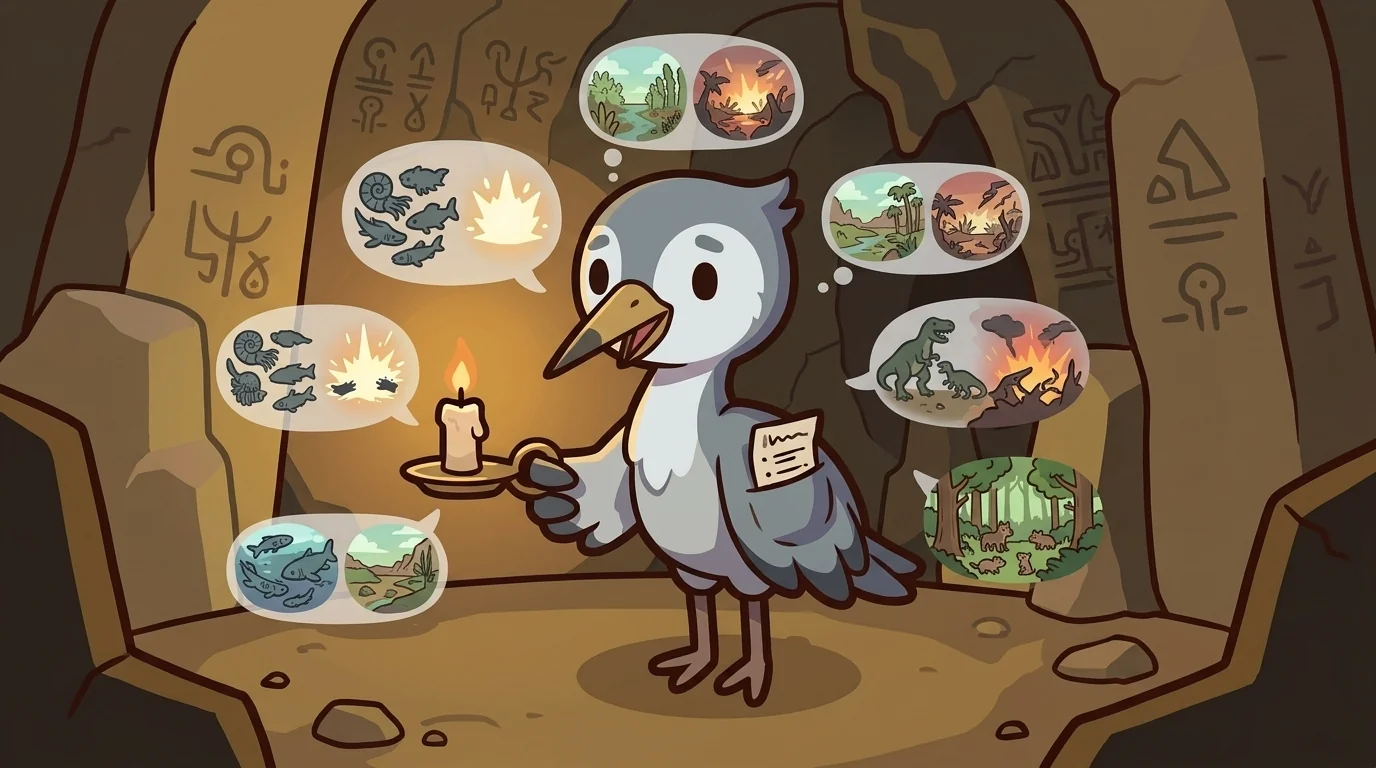
She pauses after each name. Then she speaks. "I am Last. I teach about mass extinctions. The main idea is witness-and-choose. Five times before, the world made itself new. We are here because of what lived through each time. The facts are hard. The facts are also true. We honor what was lost by watching it carefully."
She teaches the steps for thinking about extinctions: Name the events. (Ordovician happened about 445 million years ago. Devonian was about 370 million years ago. Permian was about 252 million years ago. Triassic was about 201 million years ago. Cretaceous was about 66 million years ago. Each one has a name. Each has a date. We see proof in the fossils.) *See what was lost. (Certain groups of animals and plants vanished. The Permian loss was different. The Cretaceous loss was different. Each event had its own pattern of loss.) *See what survived. (After each extinction, new kinds of life grew. They filled the empty spaces. The Cretaceous extinction made room for mammals to grow and spread.) *Feel wonder and sadness at the same time. (These events are amazing because they are so huge. They are also sad because of what was lost. Both feelings are right. You should not feel only one.) *Don't make it a show. (Some stories about mass extinctions make them sound like movies. They are not like movies. They are facts. They need careful thought and care.) *Don't mix it with today's problems. (Reading about old extinctions can feel like reading about climate change today. Keep them separate. The Big Five are facts from the past. What is happening to animals today is different. Brink, in EcoSphere, talks about that.) *Witness, then choose. (Learning about old extinctions can help you decide what to do now. But the choice is yours. It is not part of the lesson. Witness. Then choose how to live.) *You can take a break.* (If it feels like too much, you can focus on one event. Or one animal. Or skip this part. The facts will wait patiently.)
She makes it very clear. "I have sat with these names for many years. The sadness never fully goes away. The wonder never fully goes away. That is okay. The candle keeps burning. We carry both feelings. We do it without being crushed by either."
When students ask Last if thinking about mass extinctions is hard, she always says the same thing:
"It is hard. It is witness-and-choose. Five times before, the world remade itself. We honor what was lost. We do this by watching carefully. We choose how to live. We do this by carrying the weight without being crushed by it."
The candle flickers softly. The list is refolded. The next reading waits.
The FossilForge ensemble
Last is part of FossilForge's distributed-narrative cast. Each character embodies a different curricular primitive; together they teach the full subject.
-

Seam
Taxonomic + fossil-type classification — family-resemblance-matching (what KIND of organism?)
-

Span
Deep-time + geological chronology — scale-of-scales (WHEN did this organism live?)
-

Branch
Morphological adaptation + evolutionary change — branching-not-laddering
-

Field
Paleoenvironment + ecosystem reconstruction — fossils-as-a-place-story