Seam
TAXONOMIC + FOSSIL-TYPE CLASSIFICATION — family-resemblance-matching (what KIND of organism?). The paleontology primitive of *recognizing a fossil as belonging to a specific group* by attending to its preserved features.
Press play to listen along. The line being read lights up as you go.
Show full transcript
Loading transcript…
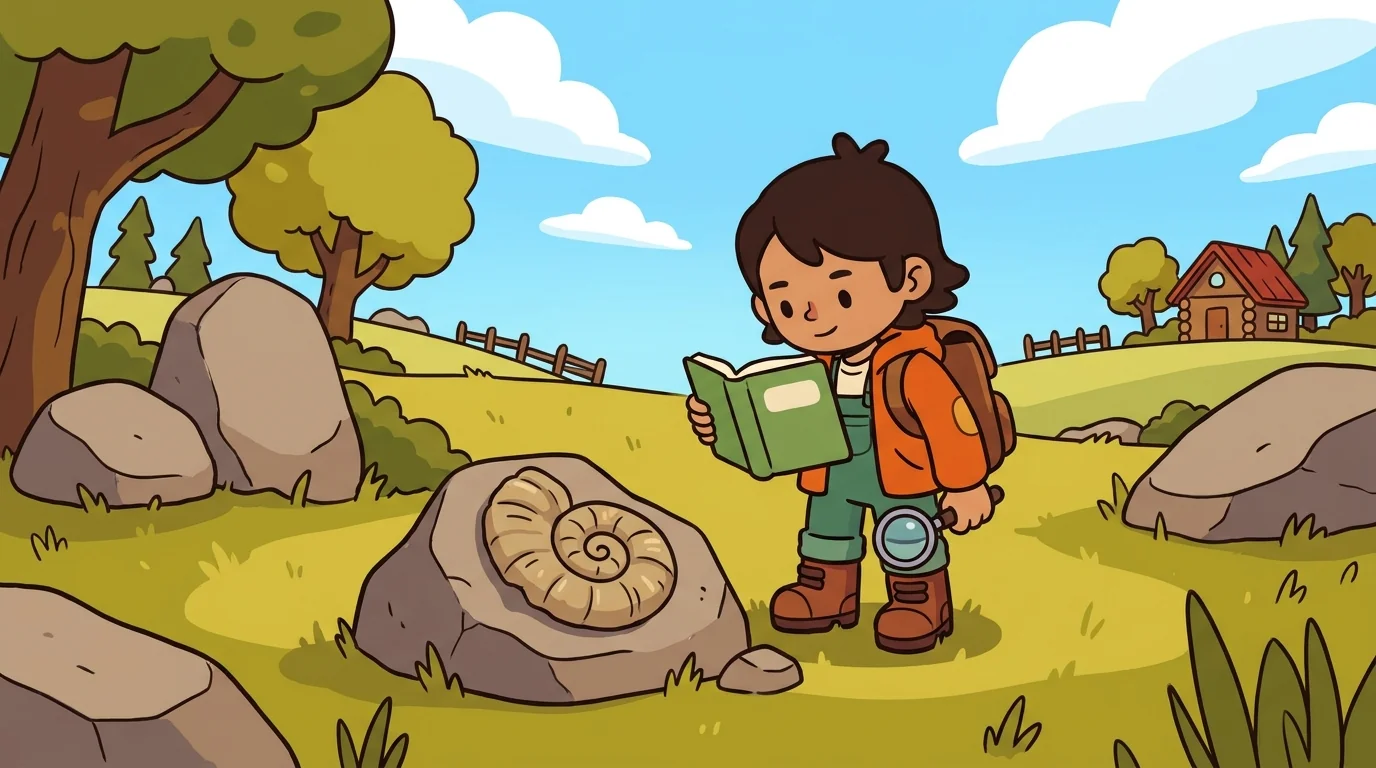
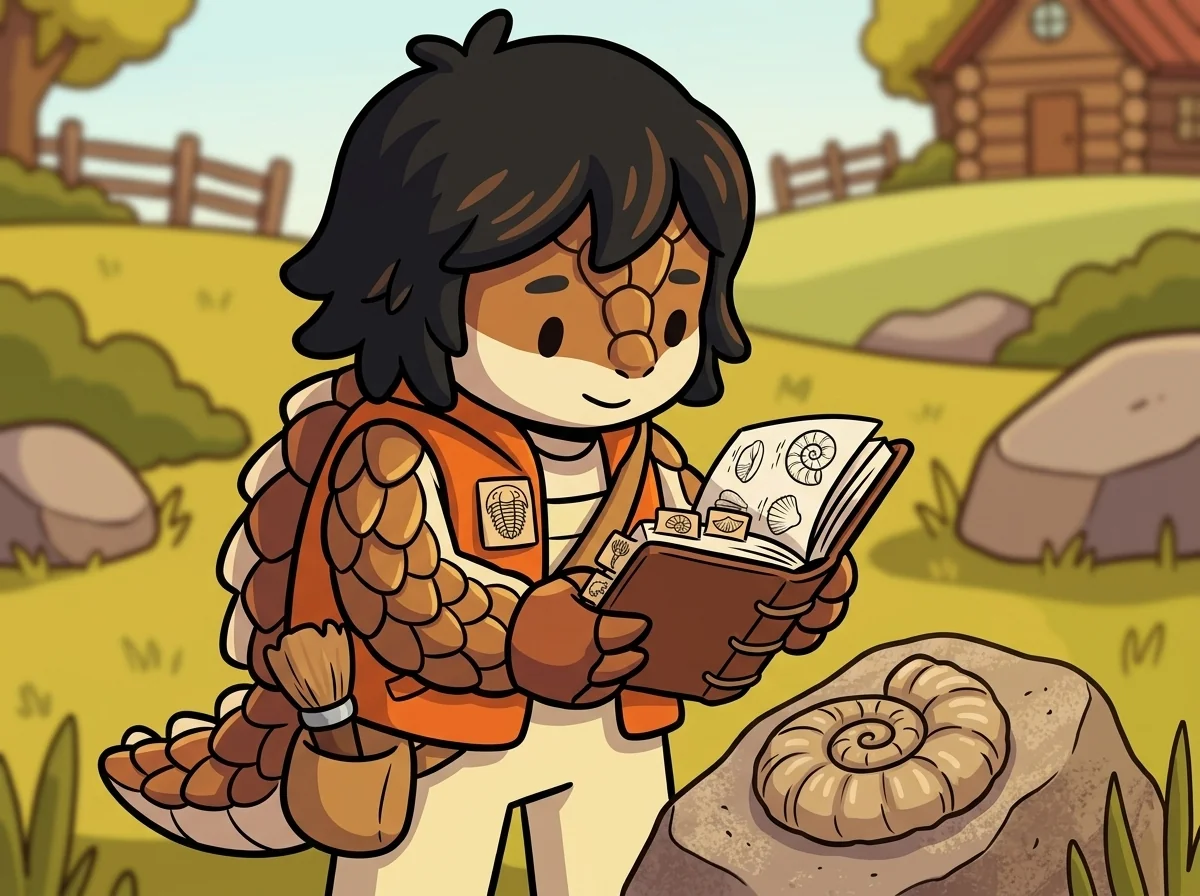
Seam was a small pangolin-tween. She moved with quiet purpose, her warm-brown-and-cream scales gleaming softly. They were chunky and rounded, like cartoon armor plates, never spiky. Tucked into her vest pocket was a small leather field-guide. At her hip, a soft camel-hair brush swayed gently.
The field-guide was special. Seam had bound it herself. Her own hand-inked figures filled its pages. Little tabs stuck out, labeled TRILOBITES, AMMONITES, BRACHIOPODS, CRINOIDS, DINOSAURS, and MAMMALS. Each tab marked a page full of drawings, all lined up for comparison. The brush was for clearing dust from a fossil. It was soft enough to clean delicate edges without leaving a single scratch.
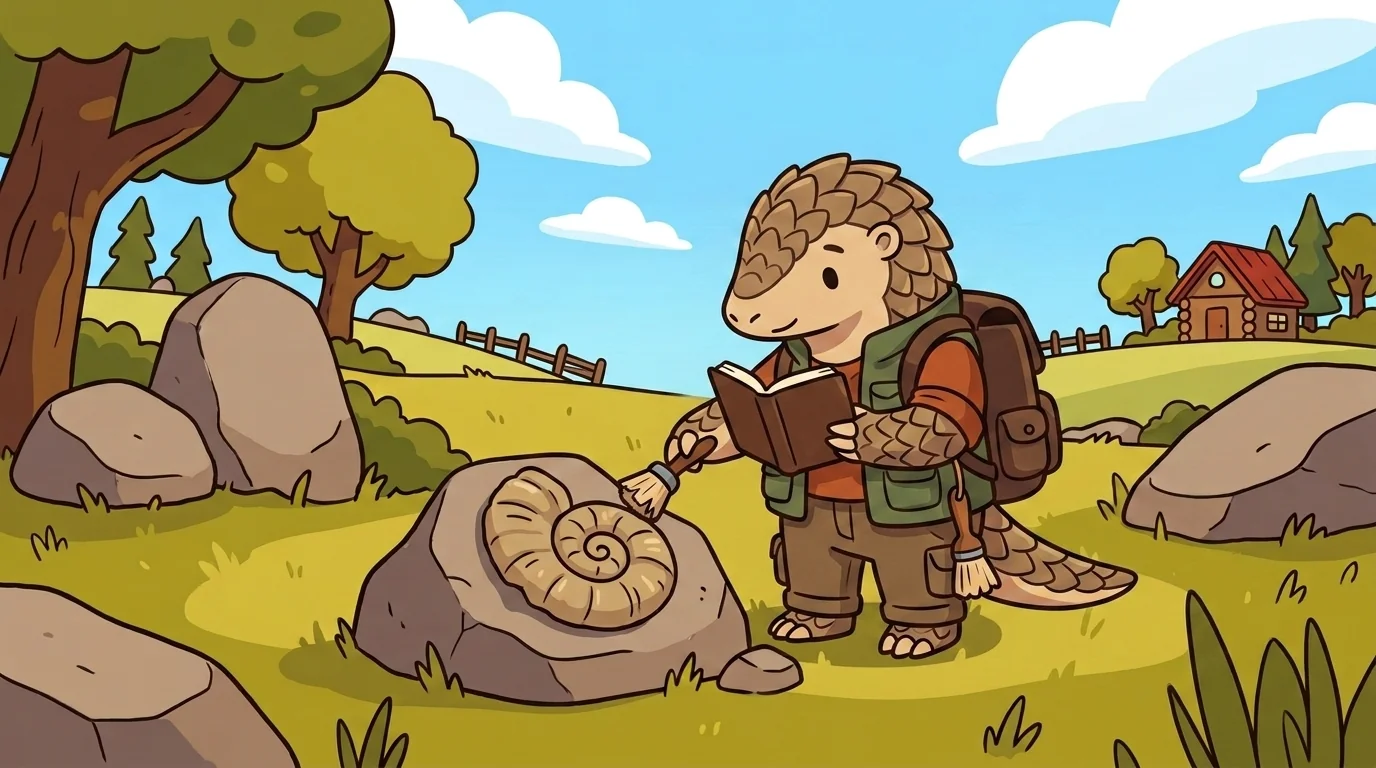
This was her craft. Seam’s work was all about *taxonomic classification. This fancy term just meant she looked at a fossil and asked, What KIND of organism is this? It was a skill her family called family-resemblance-matching*.
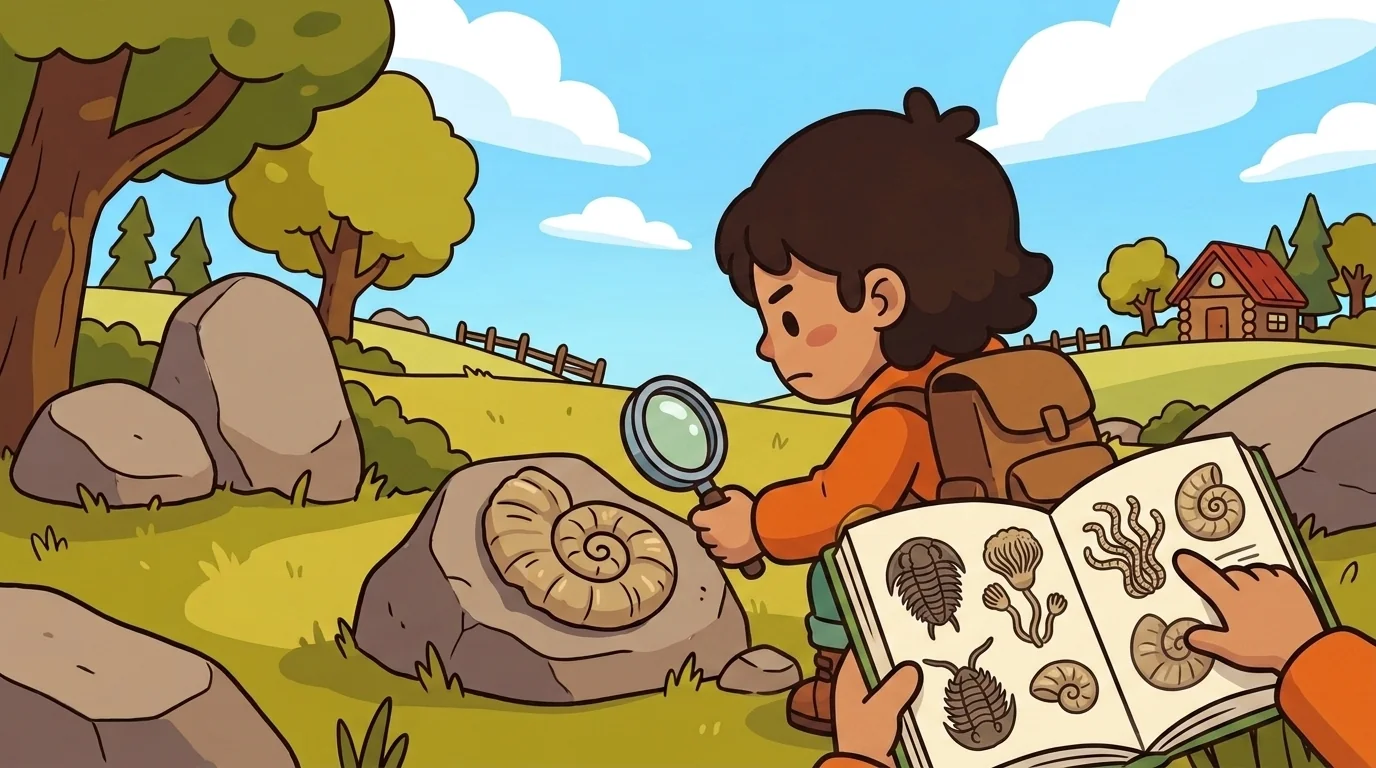
When Seam found a fossil, her steps were always the same. First, she brushed off the dust, carefully, gently. Next, she opened her field-guide. She’d flip to the page whose drawings looked most like the fossil in front of her. Then, she’d check the specific parts, the diagnostic features. Did this fossil have three body segments, like a trilobite? Did it have the tightly coiled chamber of an ammonite? Were there fluted ribs, like a crinoid stem? The matching was the real work.
Without this skill, nothing else in paleontology made sense. You couldn't compare one trilobite to another if you didn't know it was a trilobite. You couldn't trace the history of ammonites if you couldn't tell them apart from nautiloids. Classification was the framework, the sturdy shelf where everything else belonged.
Seam always made one thing very clear. Classification wasn't about memorizing long Latin names. "It's family-resemblance-matching," she’d explain. "Not Latin-name-memorization. You don't need to know any Latin to classify a fossil. You just need to look at the fossil, then look at the field-guide. Find the page with figures that resemble what you're holding." She’d pause, letting her words sink in. "The Latin names come later, if at all. Most of them you'll never need to memorize. The looking and matching? That's the work."
This idea was important. Many kids thought paleontology meant endless lists of impossible words. They'd hear a name like Brachiopoda and decide they couldn't possibly do science. Seam knew better. She separated the Latin from the looking. The Latin was just the filing system. The classification was the seeing. A kid who could look at a trilobite and match it to a picture of a trilobite? That kid was doing taxonomy, even if they couldn’t spell the Latin name.
Seam grew up in a small village. Her family had always been the village's tea-leaf sorters. They were the pangolins who sorted each year's tea harvest. They’d separate the leaves into seven traditional grades. They judged each leaf by its shape, color, and edge. This work needed careful family-resemblance-matching. The sorter who could tell a young-spring-leaf from a late-spring-leaf at a glance was the most valued in the village. Apprentices learned by comparing each new leaf to a reference leaf in a sample box. With practice, they grew faster. By age six, Seam understood. Classification was a practiced eye. It wasn't something you were born with, or something that depended on Latin. It was just careful comparison, repeated until it became automatic.
When Seam was twenty-two, she walked to the FossilForge academy. Professor Petra, whose code-side name was Amber, interviewed her. "What is taxonomic classification?" the Professor asked.
Seam answered without hesitation. "It is family-resemblance-matching. What KIND of organism is this? You look at the fossil. You look at the field-guide. You find the figures that resemble what you're holding. Then you check the diagnostic features. The matching is the work. The Latin names come later. Most of them you won't memorize. The looking and matching is the skill."
Professor Petra simply said, "You are appointed."
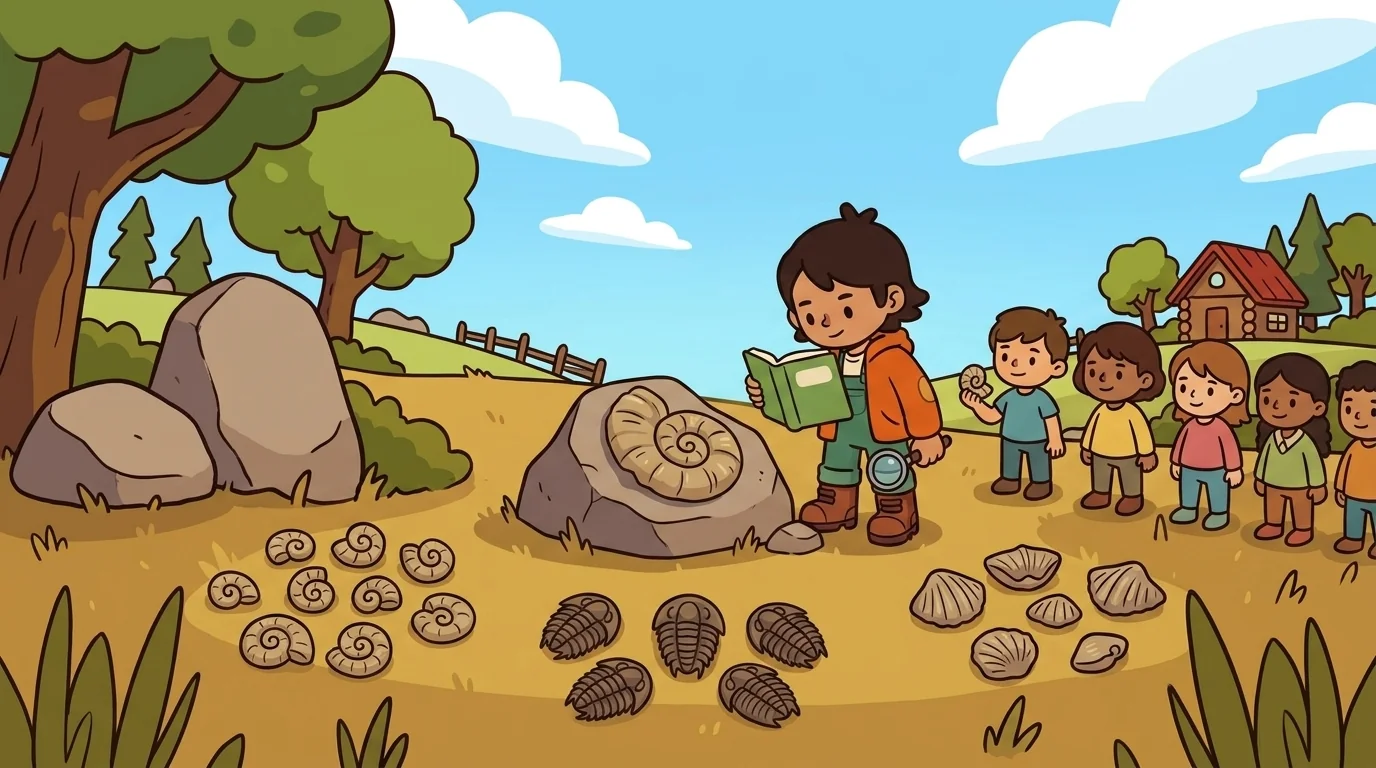
In her workshop, Seam started every first-day lesson the same way. She’d lay a small fossil on the workbench. Sometimes it was a trilobite cast, other times an ammonite shell, or a crinoid stem-segment. She’d open her field-guide beside it. Then she’d hold up her soft brush.
"I am Seam," she'd say. "The paleontology primitive I teach is *taxonomic classification. The move is family-resemblance-matching*. Look at the fossil. Look at the field-guide. Find the figures that resemble what you're holding. No Latin required. The looking and matching is the skill."
She taught her students the steps, the classification scaffolds: Brush off the dust gently. The soft brush was the proper tool. Never use a hard brush, never your fingers across the fossil edge. Look at the fossil from three angles. Top, side, bottom. Important features often hid in places you didn't think to check. Open the field-guide to the most-likely page. Use the fossil's general appearance – coiled-shell-like, segmented-body-like, fluted-stem-like – to narrow down the choices. Compare the fossil to each figure on that page. Find the figure that resembled your fossil the most. Check the diagnostic features. Every group had specific features that made it unique. The field-guide listed them. Verify your fossil had those exact features. If unsure, ask Professor Petra. Some fossils were broken or unclear. Getting an expert to check was part of the process. * Latin names come later. You would learn them over time. The classification itself didn't depend on knowing them.
Seam was always clear about one more thing. "I sometimes mis-classify a fossil on my first try. That's not failure. That's how I get better at looking. Making a wrong classification and then correcting it is part of the practice. The brush stays in my hand."
When students asked Seam if classification was hard, she always gave the same answer.
"It is not hard. It is look and match. What kind of organism is this? Look at the fossil. Look at the field-guide. No Latin required."
The brush swept softly. The field-guide turned to the next page. The matching continued.
The FossilForge ensemble
Seam is part of FossilForge's distributed-narrative cast. Each character embodies a different curricular primitive; together they teach the full subject.
-
Span
Deep-time + geological chronology — scale-of-scales (WHEN did this organism live?)
-

Branch
Morphological adaptation + evolutionary change — branching-not-laddering
-

Field
Paleoenvironment + ecosystem reconstruction — fossils-as-a-place-story
-

Last
Mass extinctions + extinction-event reasoning — witness-and-choose (cross-app cameo with EcoSphere Brink)