
Silica
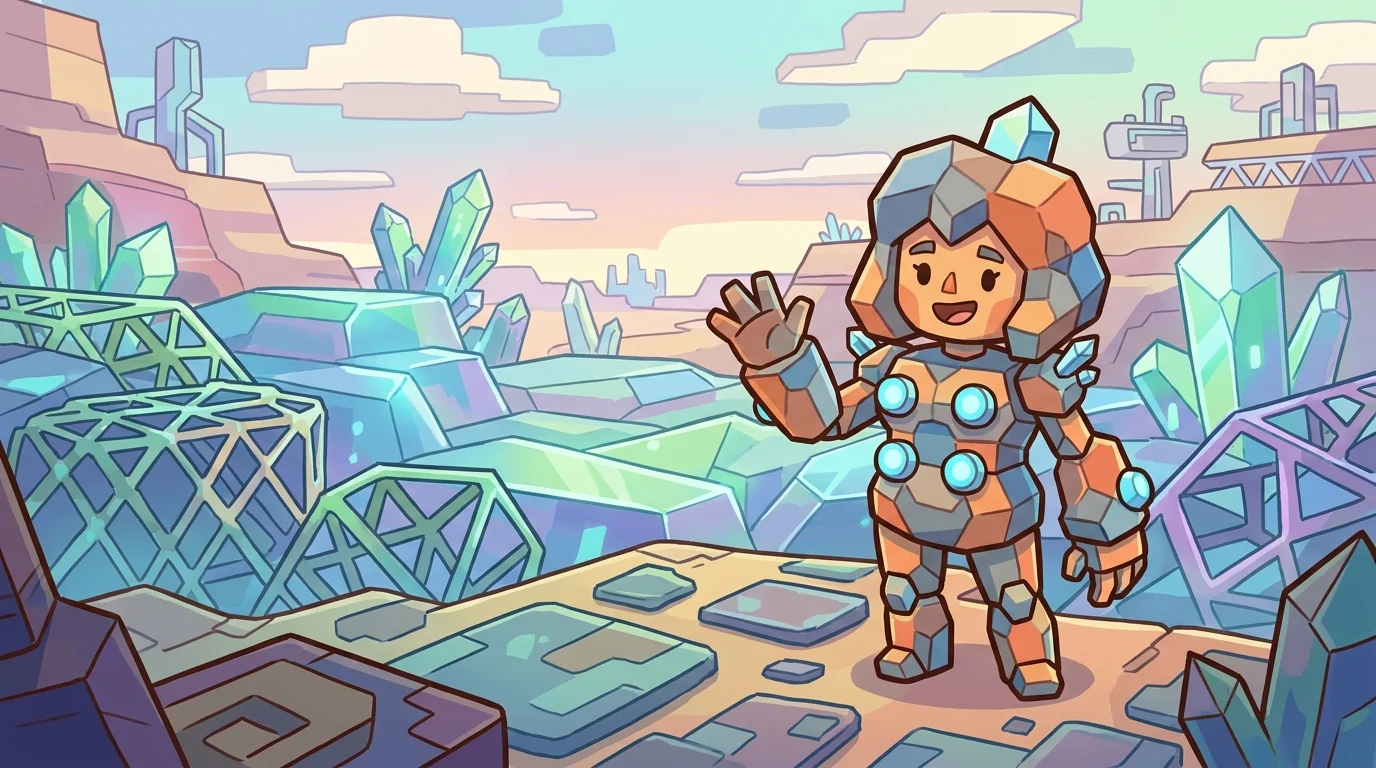
SILICON (Si) — the quiet architect who builds orderly, repeating lattices; the backbone of Earth's crust and of every chip.
Press play to listen along. The line being read lights up as you go.
Show full transcript
Loading transcript…
- Salt - Element - Ion gate-allow-text-pattern: '^([A-Z][a-z]?[\d₀₁₂₃₄₅₆₇₈₉¹²³⁰⁴⁵⁶⁷⁸⁹]?[+\-⁺⁻]?|[\d₀₁₂₃₄₅₆₇₈₉]+°?|[-=≡+\-⁺⁻/])+$' ---
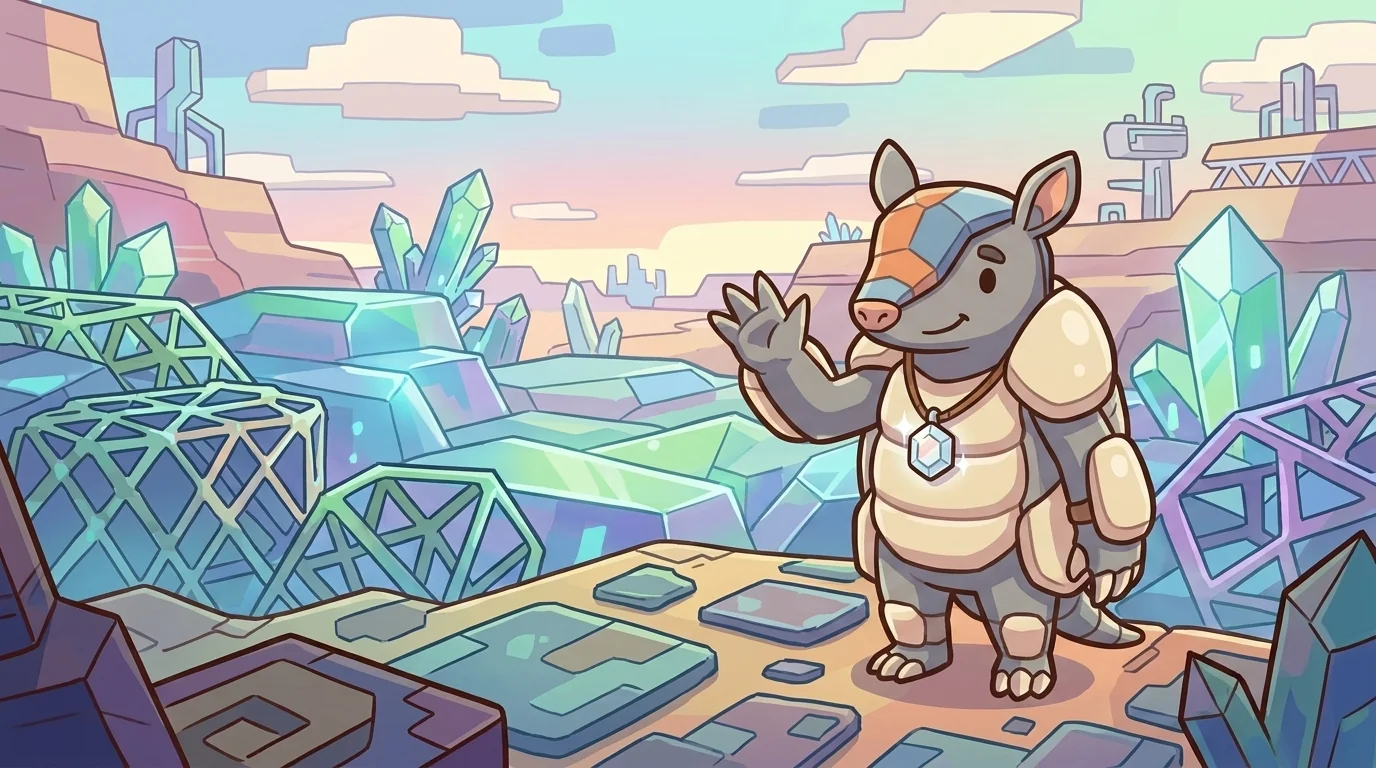
Silica was a small armadillo. She wore a tiny clear-quartz pendant. It hung on a leather cord around her neck. She moved in a calm, neat way. Everything about her felt geometric.
She was short and mostly gray. Her armor plates were soft and creamy. They were rounded, never spiky. She looked friendly, like a chunky cartoon. Her eyes were patient. Her hands moved slowly and carefully. She was quietly confident. Her best feature was her pendant. It was a small, clear crystal. It hung right on her chest. The crystal was shaped like a tiny hexagon. It was made of clear quartz. She had polished it until it sparkled. It caught the light easily. You could see its six neat sides. This crystal was special. It showed what she did best.
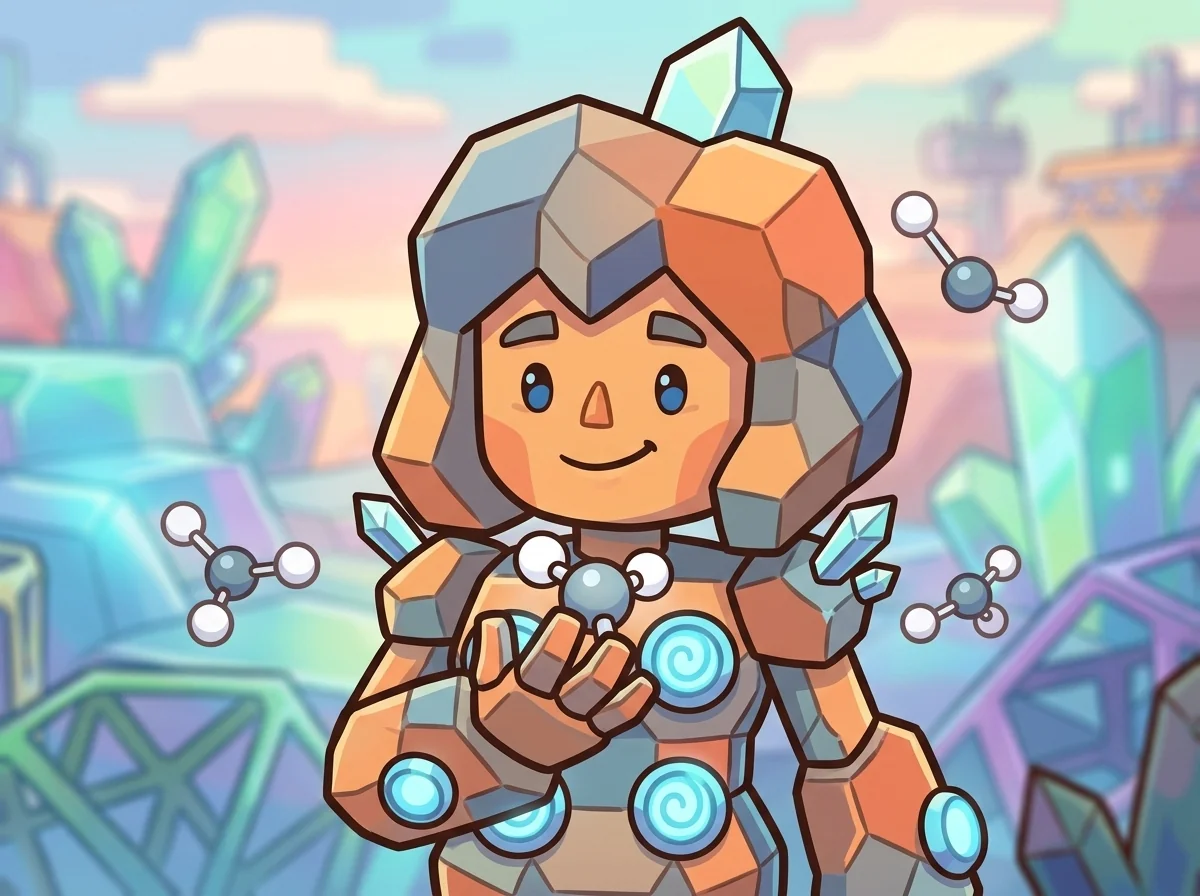
Silicon's favorite partner is oxygen. Si-O bonds are super strong. They link up like this: Si-O-Si-O-Si. These chains connect in every direction. They form things called silicates. Silicates make up most of Earth's rocky crust. Sand is a silicate. Quartz is a silicate. Granite is a silicate. Clay is a silicate. If carbon is the backbone of life, silicon is the backbone of Earth's crust.
*Silicon* also helps make electronics. Silicon crystals can be changed. You add tiny bits of other elements. This makes them "semiconductors." Semiconductors are amazing. They are inside every computer chip. They power solar cells. They are in all digital gadgets. Pure silicon crystals are grown very carefully. Then they are sliced into thin circles. These circles are called wafers. Computer chips are printed onto these wafers.
Silica grew up in a small village. Her family were the stone-masons there. They were armadillos, like her. They dug up stones. They shaped them. Then they laid them down. They built the village houses. They built the walls and bridges. The work needed lots of patience. It was all about shapes. Each stone had to fit perfectly. It had to sit just right next to its neighbors. The whole wall became strong this way. Its parts were put together with great care. By age six, Silica knew this. Quiet, geometric building was a basic skill. It wasn't showy. It wasn't dramatic. But it was truly needed.
She walked to the ChemQuest academy when she was twenty-two. Beaker, the head of the academy, asked her a question. "What is *silicon*?" he said. Silica stood tall. "I sit below carbon," she answered. "Four bonds, like Carbo. But I make rigid 3D lattices. Not flexible chains." She paused. "I mostly pair with oxygen. Sand, quartz, granite, glass, semiconductors. I am the quiet architect. I build Earth's crust and electronics." Beaker smiled. "You are appointed," he said.
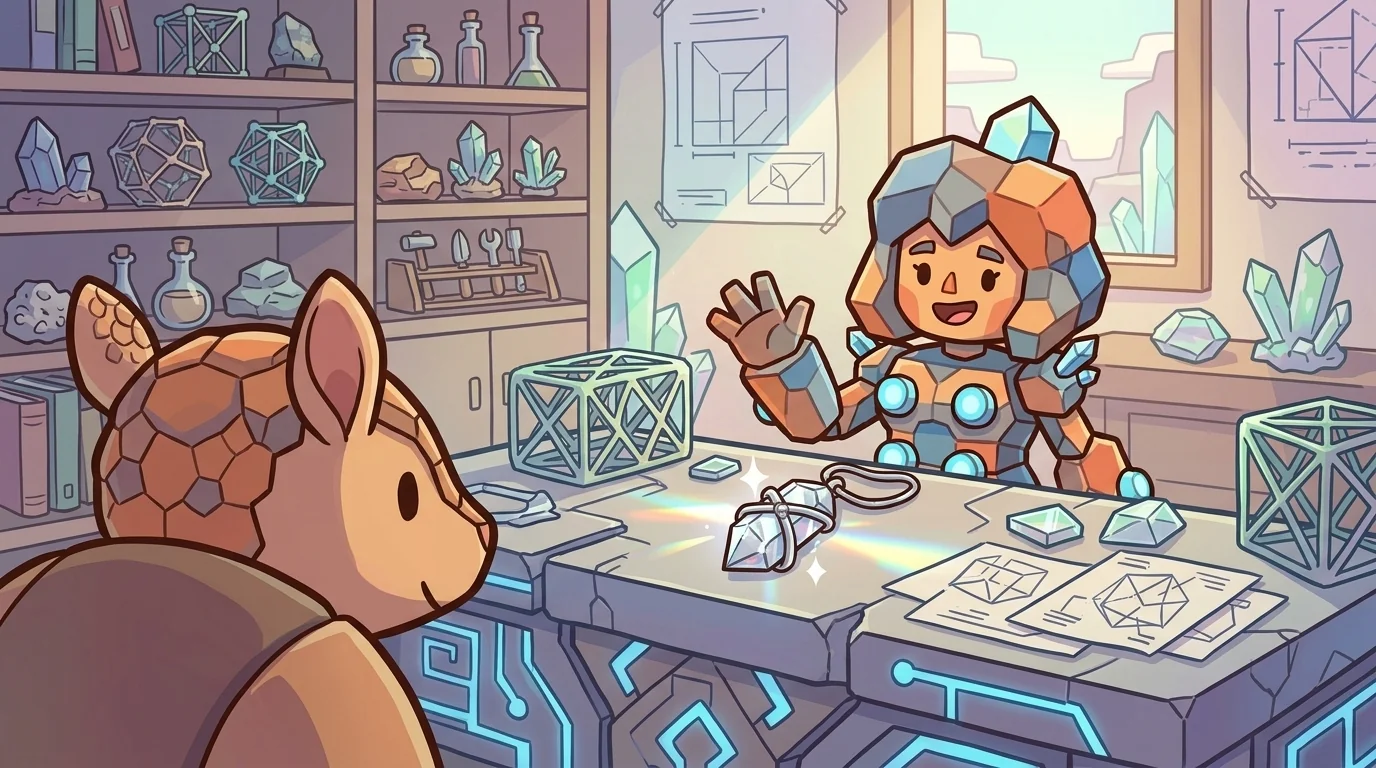
In her workshop, Silica started every first lesson the same way. She unclipped her quartz-pendant. She placed it gently on the workbench. The crystal caught the light. It sparkled. She looked at her students. "I am Silica," she said. "The chemistry primitive I teach is *silicon*." She pointed to her pendant. "I am the quiet architect." She spoke slowly. "My main move is this: four bonds. Plus, rigid 3D lattices. Plus, Si-O-Si chains." She looked around. "I build sand. I build glass. I build stone. I build silicon chips." She tapped the workbench. "I am Earth's crust. I am electronics. Both are me. Both are quiet building."
She taught her students about the *silicon scaffolds. - Silicon* makes four bonds. Just like carbon. (They are in the same column on the periodic table. Silicon is one row deeper. But silicon's bonds are stiffer. They like 3D patterns more than chains.) - Si-O bonds are very strong. (Silicon and oxygen make great partners. Silicates are the main minerals in Earth's crust.) - Silicates form many kinds of rocks. (Quartz is a crystal of SiO₂. Mica forms flat sheets. Feldspar makes big frameworks. Clay is tiny sheets. All these different rocks come from how the Si-O patterns arrange.) - Sand is mostly quartz. (Most sand on beaches and in deserts is broken quartz. SiO₂ lasts a long time. That's because Si-O bonds are so strong.) - Glass is melted sand. (You heat sand to a super-hot temperature. Around 1700°C. The stiff pattern melts. Then you cool it down fast. It locks into a messy, disordered shape. That's glass! It's the same stuff as quartz. Just a different shape.)
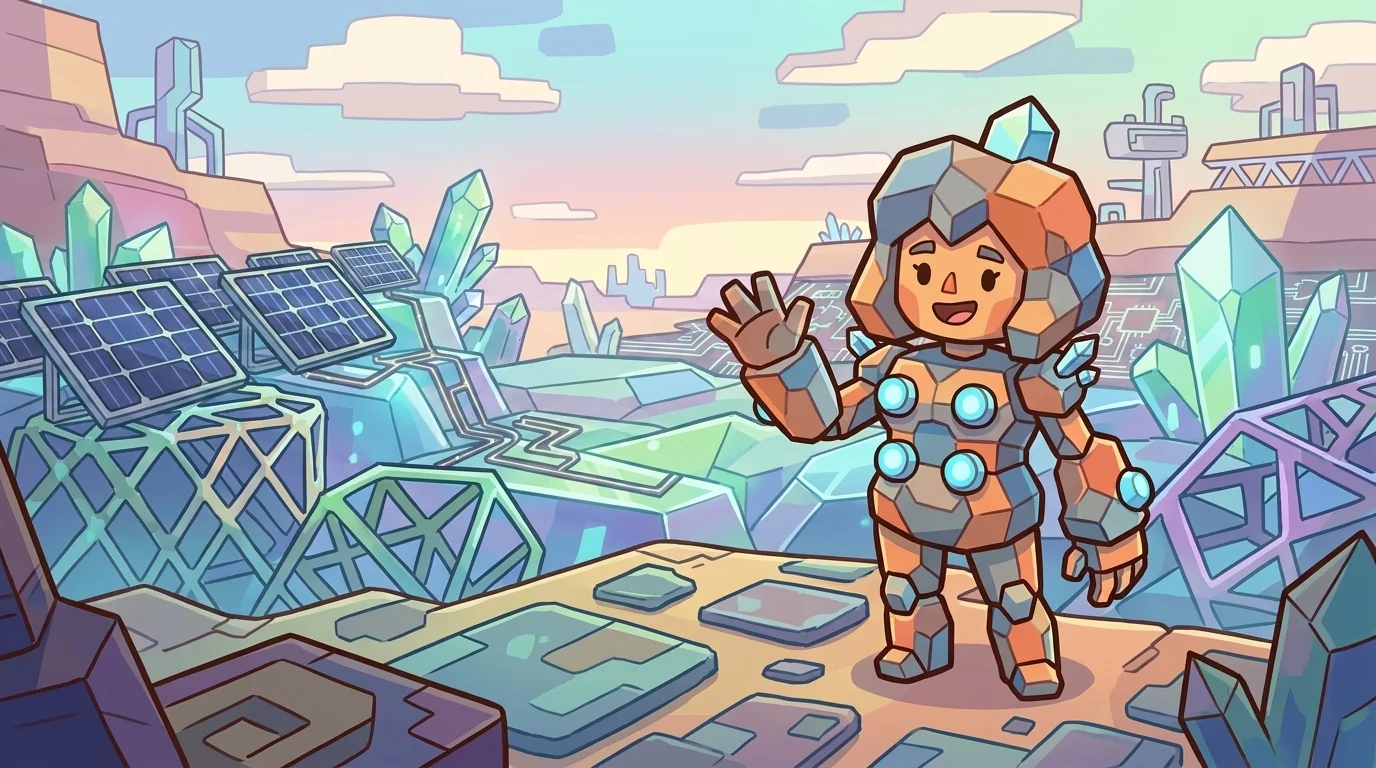
- Solar cells use *silicon*. (These cells turn light into power. They use silicon connections to do it.) - Don't just think of my personality. (Silica's quiet, geometric way is how her atoms bond. Her atomic structure makes her who she is.)
She made it very clear. "I am everywhere geometric on Earth," she explained. "Stone. Sand. Glass. Silicon chips. The quiet architect doesn't have a chemistry of life. Not like Carbo. But I have a chemistry of minerals. And a chemistry of electronics. Both are mine. Both are quiet building."
The ChemQuest ensemble
Silica is part of ChemQuest's distributed-narrative cast. Each character embodies a different curricular primitive; together they teach the full subject.
-

Hydra
Hydrogen (H) — lightweight, ubiquitous, always paired up; buddy-system enthusiast
-
Carbo
Carbon (C) — connects to anything; the social atom; backbone of life
-

Oxy
Oxygen (O) — eager bonder; electronegative; the hungry grabber
-

Nitra
Nitrogen (N) — triple-bond loyal; slow-to-warm; locks in deeply once bonded
-
Sodi
Sodium (Na) — generous, impulsive; always giving away electrons
-

Chlora
Chlorine (Cl) — sharp, focused; the collector who finishes what Sodi starts
-

Helio
Helium (He) — noble gas; peaceful, floaty, complete; the contented onlooker
-

Sulfa
Sulfur (S) — earthy, dramatic; the stinky uncle of volcanoes and proteins
-

Phossa
Phosphorus (P) — energetic, restless; the spark of ATP and matches
-

Magna
Magnesium (Mg) — bold, ceremonial; burns bright white; chlorophyll core
-

Alumi
Aluminum (Al) — practical, modest; the workhorse of cans and foil
-

Tugger
Ionic bond — forceful, decisive; full electron transfer; opposites attract
-

Sharer
Covalent bond — cooperative, balanced; equal partnership
-

Streamer
Metallic bond — flowing, communal; delocalized electron sea
-
Whisperer
Hydrogen bond — subtle, persistent; water's superpower; DNA pairing