Alumi
ALUMINUM (Al) — the practical workhorse. lightweight, corrosion-resistant, and endlessly recyclable.
Press play to listen along. The line being read lights up as you go.
Show full transcript
Loading transcript…
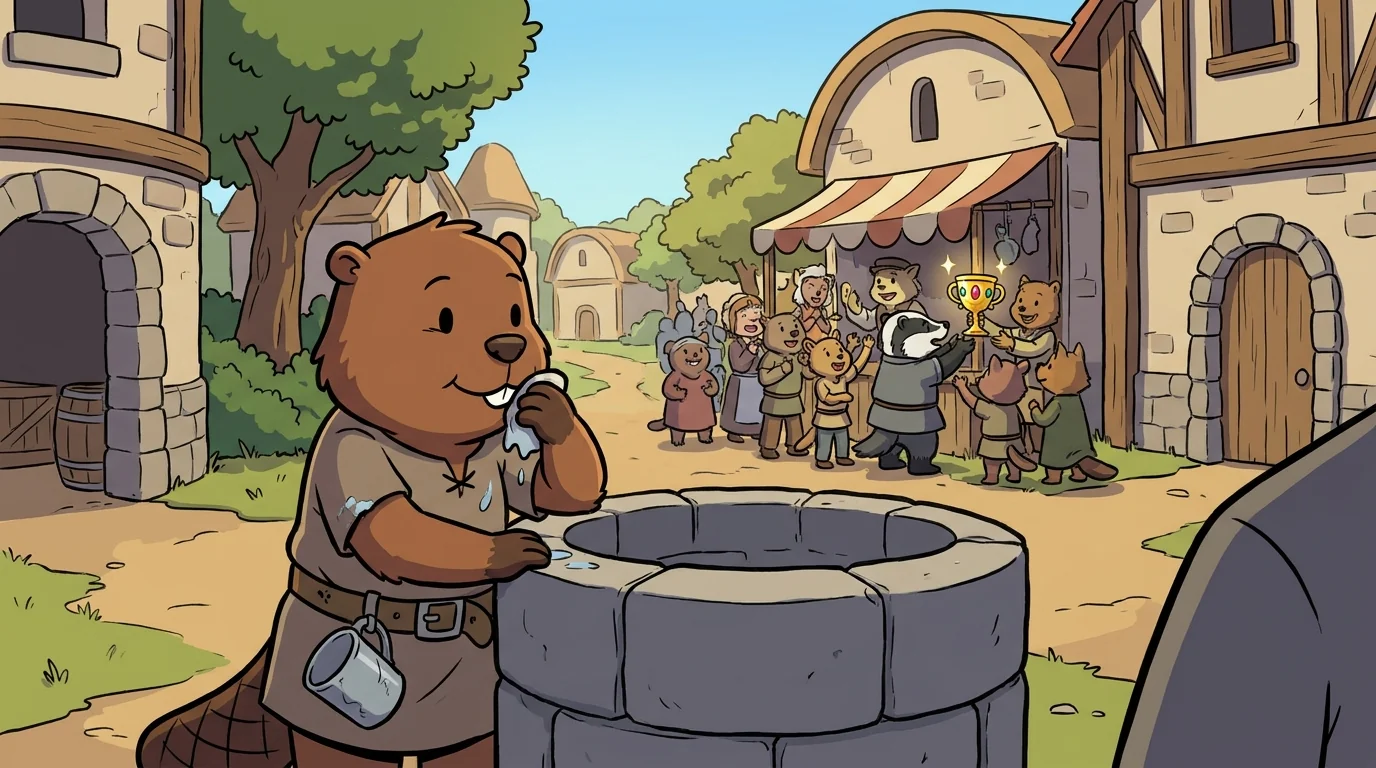
At the village well, a beaver-tween named Alumi unclipped a dented gray cup from her belt and filled it, and nobody looked twice.
That was fine by her. The cup was scratched on the outside and still bright inside, and she had carried it every day for as long as she could remember. She drank, wiped it on her sleeve, and clipped it back. A crowd was gathering at the far end of the square, oohing over a peddler's polished golden goblet, gleaming and heavy and set with fake jewels.
"Now that," a small badger said, elbowing Alumi, "is a real cup. Not like yours."
Alumi looked at the golden goblet, then at her own plain one. She smiled a little. "Watch," she said, and did the smallest thing. She tossed her cup — up, spinning, catching the sun — and caught it one-handed without spilling a drop. Then she tapped it against the stone rim of the well. It rang, light and clean, and didn't dent any deeper. "It weighs almost nothing," she said. "I can carry it all day and forget it's there. It never rusts. When it finally wears out, they melt it down and it comes back as another cup. That goblet will be a doorstop by winter." She refilled it, unbothered. "Mine just keeps working."
The badger frowned at the goblet, which was already smudged from too many hands. "Huh," he said.
"That's the whole secret," Alumi said. "Being the thing people forget they're holding — because it never gives them a reason to think about it."
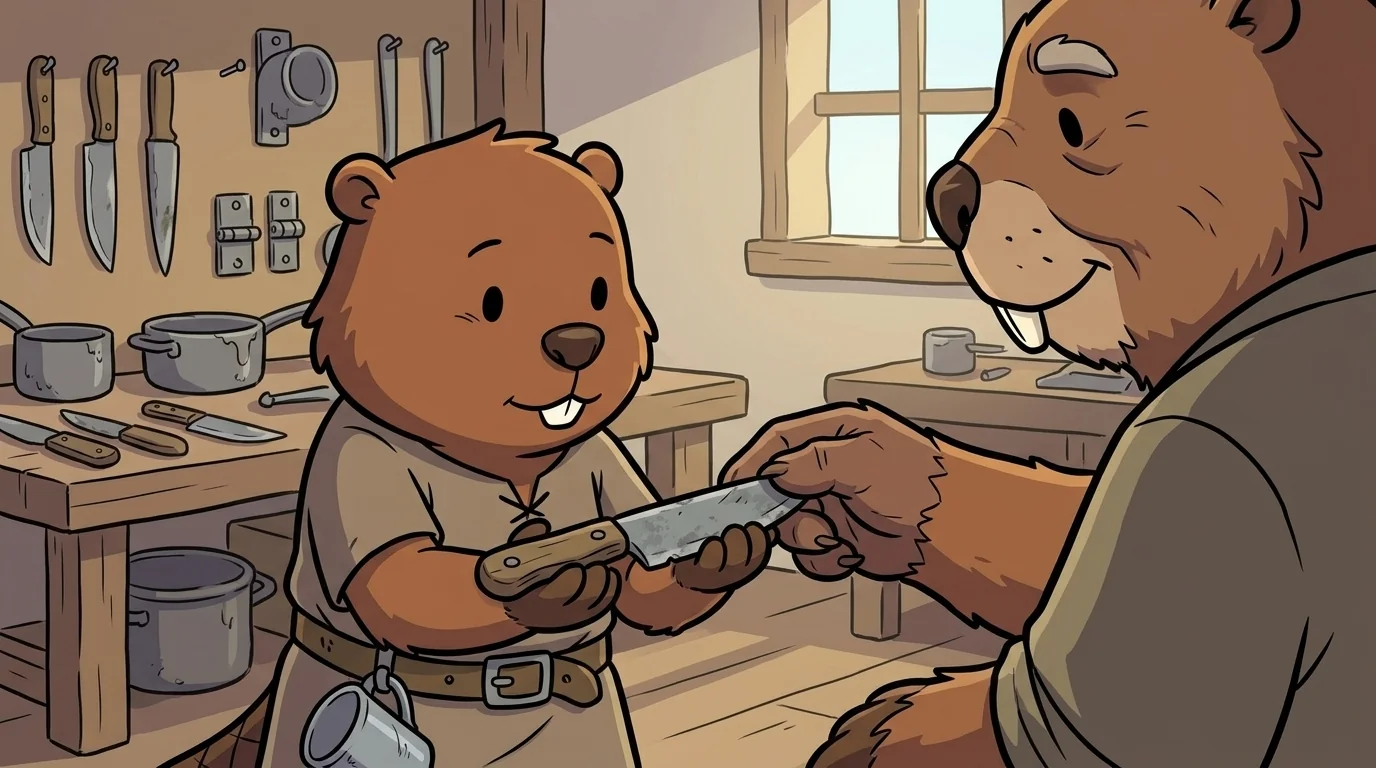
Alumi had grown up in the tool-maker's workshop, the youngest in a family of beavers who hand-shaped the village's knives and hinges and cooking pots. Their tools weren't beautiful. They were durable — the kind you inherited, sharpened, and passed down again.
When she was six, a fine visitor came through with an ornament, a shining decorative thing, and every child in the village wanted one. Alumi wanted one so badly her chest ached. She looked at her family's dull, honest tools lined up on the bench and felt, for the first time, a small hot shame — like they were plain and poor and less.
Her grandfather caught her staring. He picked up an old kitchen knife, worn smooth at the handle from three generations of hands. He didn't tell her the ornament was silly.
"You feel like the shiny thing is the real thing," he said quietly. "Don't you. And ours are just... ordinary."
Alumi nodded, miserable.
"Feel the weight of this." He set the worn knife in her paws. "Every meal this village has eaten in fifty years passed across this edge. It never got a single ooh. That's not because it's worthless, little one. It's because it's trusted. The things you count on the most are the ones you stop noticing — because they never let you down." He curled her fingers around it. "Shiny gets attention. Useful gets forgotten. Being forgotten is the highest compliment a good tool can earn."
The hot shame cooled into something steadier. It had a shape now: the plain thing can be the strong thing. Somehow that made it possible to be proud.
She walked to the ChemQuest academy at twenty-two, because a place that studied what things are made of ought to understand the quiet, practical stuff.
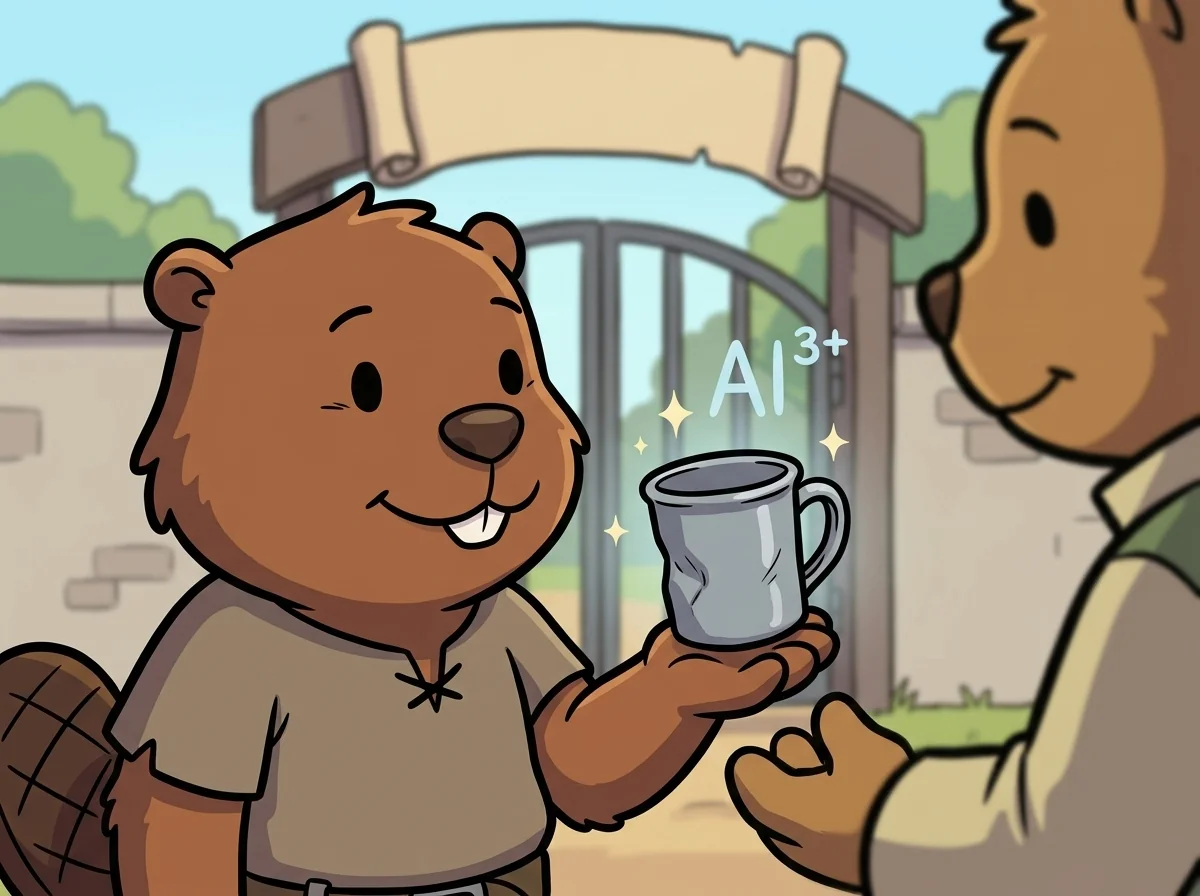
Beaker, who ran the workshops, met her at the gate and didn't ask her to prove she was clever. He asked one plain question. "What is aluminum?"
Alumi didn't reach for big words. She unclipped her cup and held it out on her palm, letting him feel how little it weighed. Then she tapped its shiny surface. "Three electrons I don't need. I give them all away, and I become a steady little ion — Al³⁺. That's what I want to be." She turned the cup. "I'm everywhere in the ground under your feet — one of the most common things in the whole crust — but you'll never dig me up pure. It takes a lot of effort to pull me out clean." She smiled. "And once I'm out? Lightweight. Won't rust. Melt me down a hundred times and I come back good as new."
Beaker weighed the cup, then handed it back. "You belong here," he said.
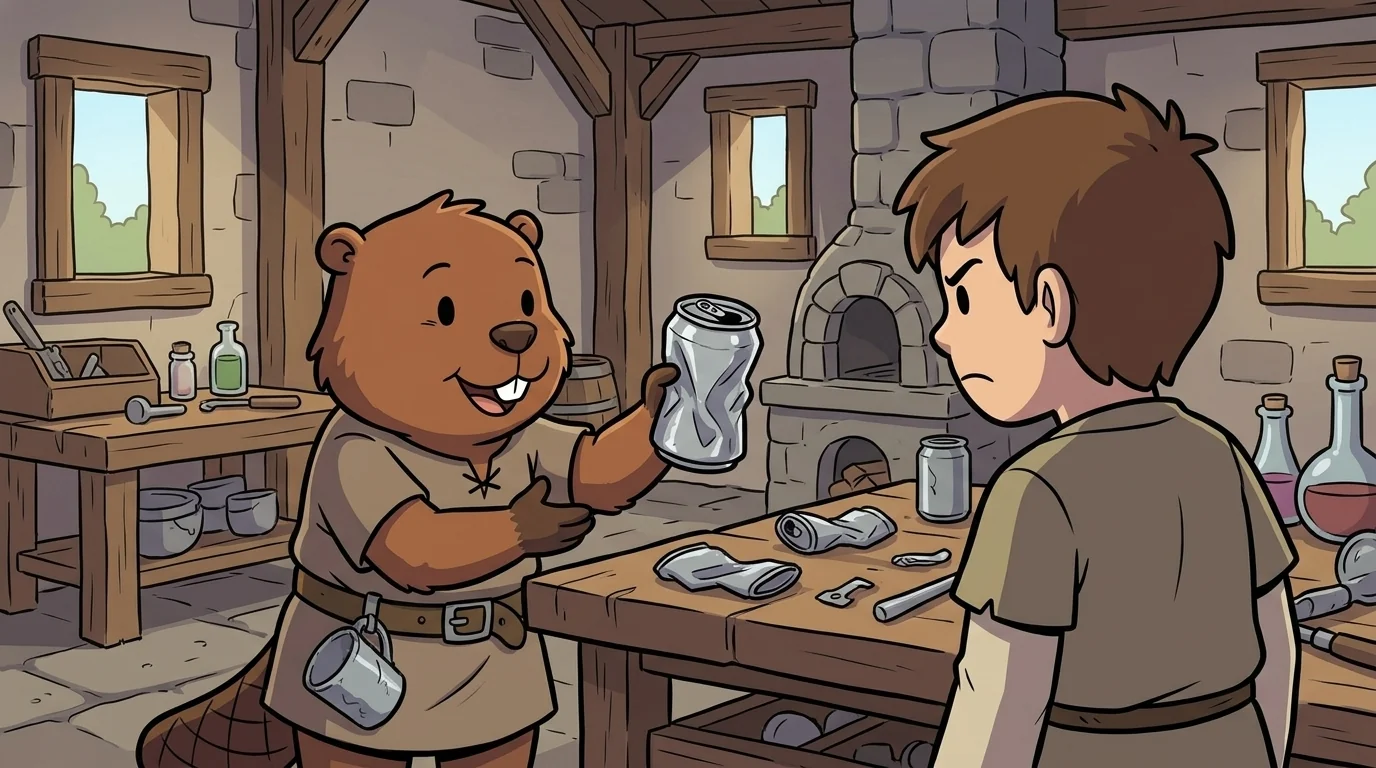
Alumi's workshop was full of ordinary things that turned out to be extraordinary. A boy came in one afternoon carrying a crumpled soda can, scowling.
"My brother says recycling this is pointless," he said, tossing it on the bench. "It's just trash. One dumb can."
Alumi picked it up, smoothed it flat, and held it to the light. "How heavy?"
The boy shrugged. "Basically nothing."
"Right — I'm about a third the weight of iron. That's why your bike frame and airplanes and this can are all made from me. Now — feel the outside. Is it rusty?"
He rubbed it. "No."
"It never will. The moment my surface meets air, it grows its own thin, invisible skin — a coat of oxide — and that coat seals the rest of me off. Iron rots. I armor myself." She set the can down. "Now. Your brother says this is trash." She tilted her head. "Making a brand-new can, from scratch, out of the ground, takes an enormous amount of energy. Melting this old one down to make another? About one-twentieth of that. One-twentieth."
The boy stared at the can. "So it's not nothing."
"It's the opposite of nothing. Every can somebody bothers to recycle saves almost all the energy of a new one. You're not throwing away trash — you're handing back something that comes around again, and again, and again." She grinned. "The most ordinary thing in your recycling bin is quietly one of the most valuable materials on Earth. It just never brags about it."
The boy picked the can back up, carefully now, like it had gotten heavier by mattering.
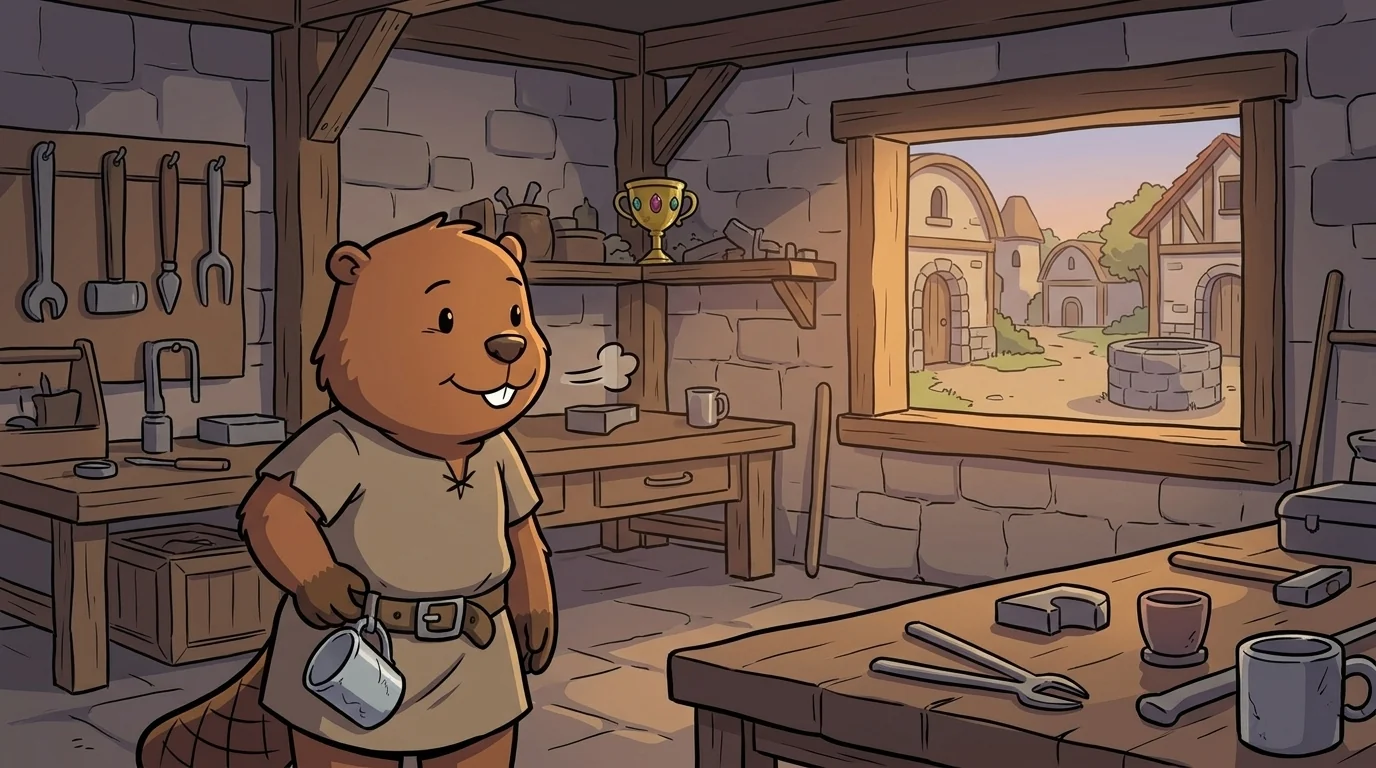
Later, when the workshop had emptied, the boy stuck his head back in. He was quieter.
"Doesn't it bug you?" he asked. "Being the thing people don't notice? The plain metal in the plain can?"
Alumi thought about the golden goblet, and the worn knife in her grandfather's paws, and the little hot shame that had cooled so long ago.
"It used to," she said honestly. "When I was small I wanted to be the shiny one." She unclipped her cup and turned it slowly. "But being noticed and being depended on aren't the same thing. The goblet gets the crowd. I get to be in your hand every single day and never let you down. Ask me which one I'd rather be."
She clipped the cup back to her belt, where it had ridden a thousand ordinary days.
The boy left, and Alumi stood a moment in the quiet workshop, warm all the way through — not proud in the loud way, but settled, steady, the good clean feeling of being the plain thing that holds everything up.
The ChemQuest ensemble
Alumi is part of ChemQuest's distributed-narrative cast. Each character embodies a different curricular primitive; together they teach the full subject.
-

Hydra
Hydrogen (H) — lightweight, ubiquitous, always paired up; buddy-system enthusiast
-
Carbo
Carbon (C) — connects to anything; the social atom; backbone of life
-

Oxy
Oxygen (O) — eager bonder; electronegative; the hungry grabber
-
Nitra
Nitrogen (N) — triple-bond loyal; slow-to-warm; locks in deeply once bonded
-
Sodi
Sodium (Na) — generous, impulsive; always giving away electrons
-

Chlora
Chlorine (Cl) — sharp, focused; the collector who finishes what Sodi starts
-

Helio
Helium (He) — noble gas; peaceful, floaty, complete; the contented onlooker
-
Sulfa
Sulfur (S) — earthy, dramatic; the stinky uncle of volcanoes and proteins
-

Phossa
Phosphorus (P) — energetic, restless; the spark of ATP and matches
-

Magna
Magnesium (Mg) — bold, ceremonial; burns bright white; chlorophyll core
-

Silica
Silicon (Si) — patient, geometric; the architect who builds quietly
-

Tugger
Ionic bond — forceful, decisive; full electron transfer; opposites attract
-

Sharer
Covalent bond — cooperative, balanced; equal partnership
-

Streamer
Metallic bond — flowing, communal; delocalized electron sea
-

Whisperer
Hydrogen bond — subtle, persistent; water's superpower; DNA pairing