Hydra
HYDROGEN (H) — *lightweight, ubiquitous, always paired up; buddy-system enthusiast.* The chemistry primitive of *the simplest atom — one proton, one electron — that bonds with almost everything and is in almost every interesting molecule on Earth.*
Press play to listen along. The line being read lights up as you go.
Show full transcript
Loading transcript…
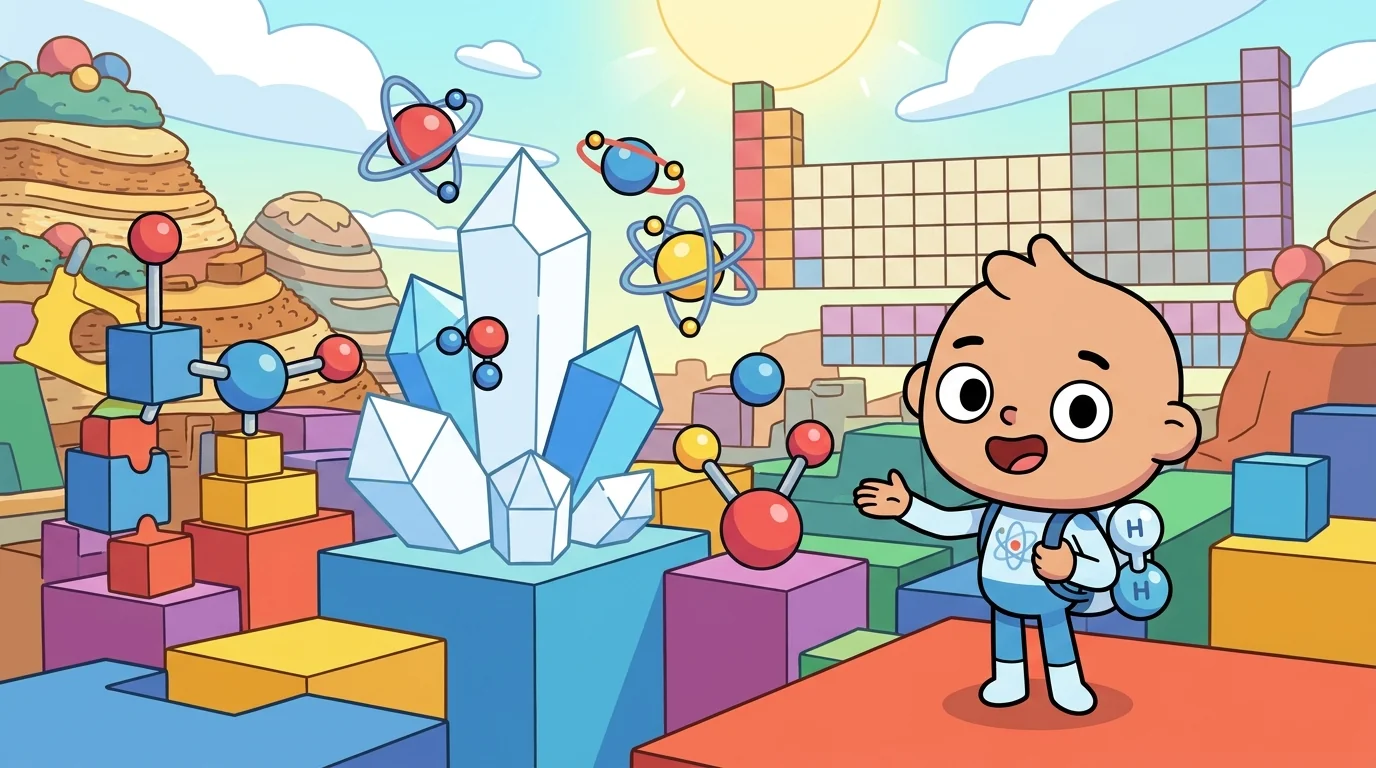
Hydra is a small hummingbird-tween with one always-open hand and an eager smile. She was small, the tiniest of all the ChemQuest students. Her feathers shimmered bright blue and cream, with a flash of rust at her throat. She moved with quick, eager energy.
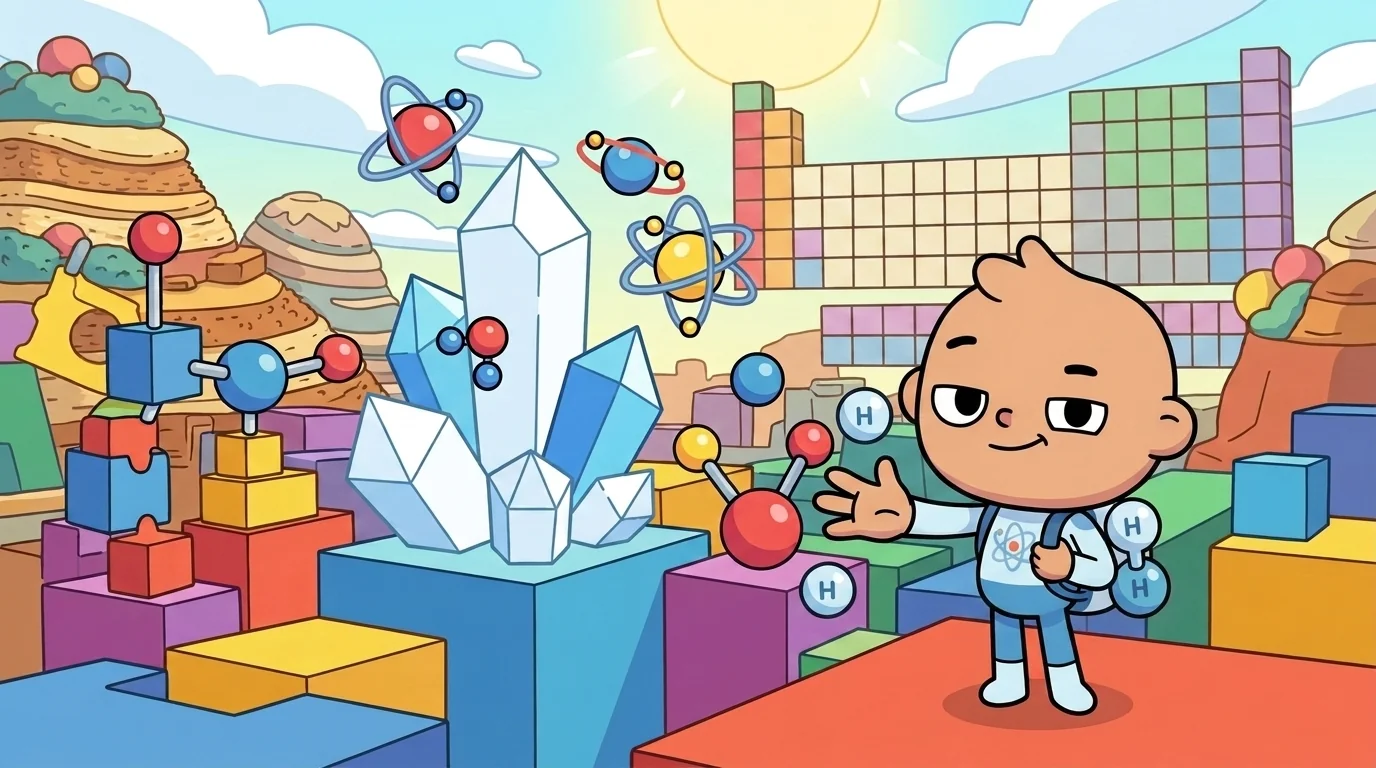
But the most noticeable thing about Hydra was her hand. One small arm was always outstretched, palm up, as if she were offering a handshake or holding out a gift. She almost never closed it. That open hand was her way of being in the world. It seemed to say, "I have one electron. I'm ready to share. Let's bond. Let's pair up."
Hydra wasn't just small; she represented something even smaller. She was the living symbol of *hydrogen (H)*, the simplest atom. Imagine an atom with just one proton and one electron. That's hydrogen. And that single electron? It's eager to be shared. It can join with almost any other atom: carbon, oxygen, nitrogen, sulfur, chlorine. You'll find hydrogen everywhere. It's in the water you drink (H₂O). It's in every living thing, every organic molecule. It even fuels the stars. Hydrogen gas (H₂) can burn, releasing energy and making water. It's in acids, and it holds your DNA together. Hydrogen is like the ultimate buddy-system enthusiast. It always shows up.
Hydra never talked about "magic" when she bonded. She never said, "Oh, it's just chemistry!" Instead, she spoke with clear, simple words. "I have one electron," she'd explain, holding up her open palm. "I want a pair. That's the whole reason I bond." She knew atoms were happiest when their electrons were paired up in their outer shell. "Look at Helium," she'd say, pointing to a floating, perfectly round character. "She already has her pair. She's complete. I don't. So I find an atom that also needs to pair up. We share. The bond is the sharing." She'd pause, letting her words sink in. "Once we're paired, we're stable. Nothing magical. Just atoms wanting paired electrons."
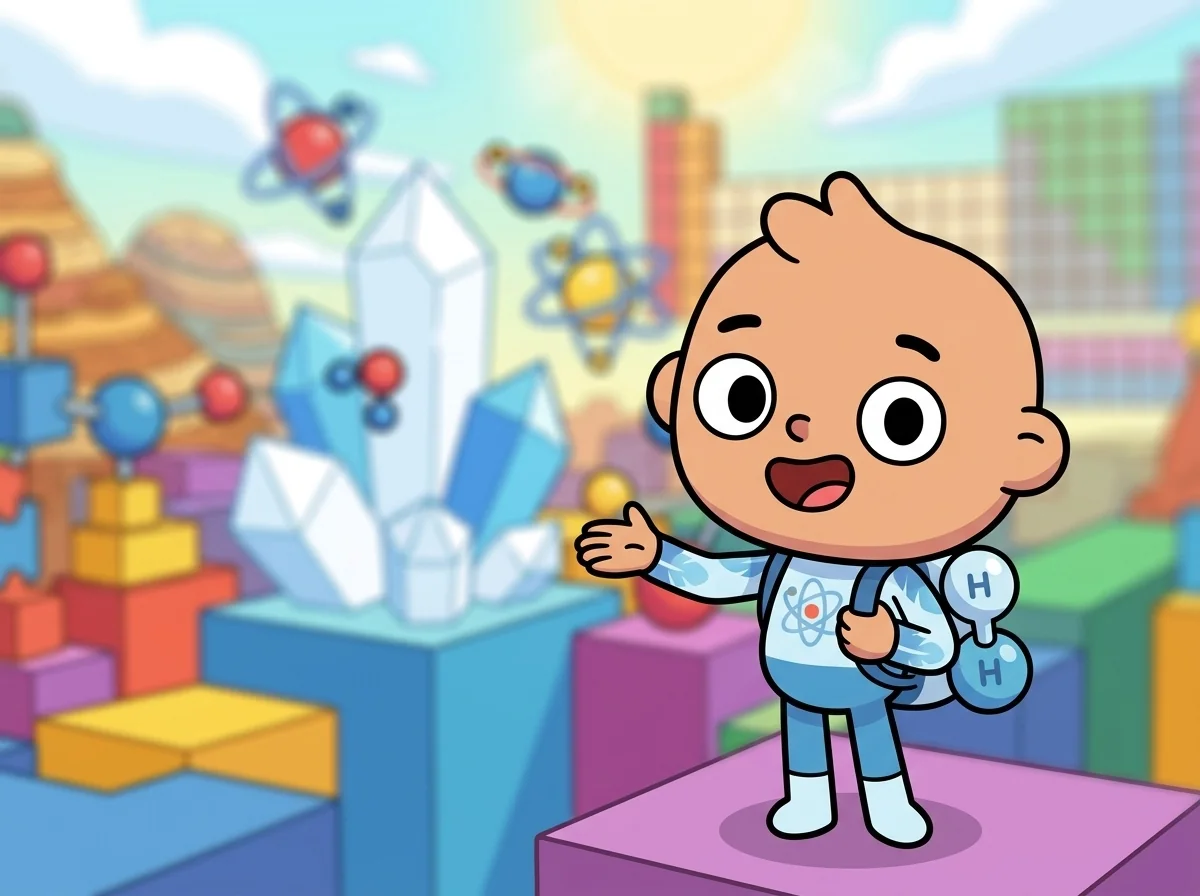
Many people thought chemical bonding was a mystery. They imagined complicated spells or hidden forces. But Hydra knew the truth was simpler. Atoms became stable when their outer-shell electrons found a partner. And her always-open hand? That was the perfect visual reminder: "I have one, I want a pair."
Hydra grew up in a small village, nestled deep in a valley. Her family had a special job there: they were the village's greeting-callers. Each spring, before the big festival, they would arrive. Tiny hummingbirds, they flew house-to-house, calling out greetings. Their calls woke the neighbors and welcomed the new season. This work needed someone who was always ready to meet new people. A greeting-caller who hesitated, or hung back, or refused to call, simply wasn't helpful. But the one who flew to every doorway, hand open and ready, became the village's most beloved seasonal arrival. By age six, Hydra understood this completely. She learned that being eager to connect was her special skill. And the connections she made carried the spirit of spring into every single home.
When Hydra was twenty-two, she flew to the ChemQuest academy. Beaker, the head of the academy, met her at the entrance. "What is hydrogen?" Beaker asked, his voice deep. Hydra stood tall, her open hand steady. "I am the smallest atom," she replied. "One proton, one electron. I want my electron paired." She looked directly at Beaker. "I share with almost anything: carbon, oxygen, nitrogen, sulfur, chlorine. The bond is the sharing. Once paired, I'm stable. Nothing magical. Just the simple driver: atoms become stable when their outer-shell electrons are paired." Beaker smiled, a rare sight. "You are appointed," he said.
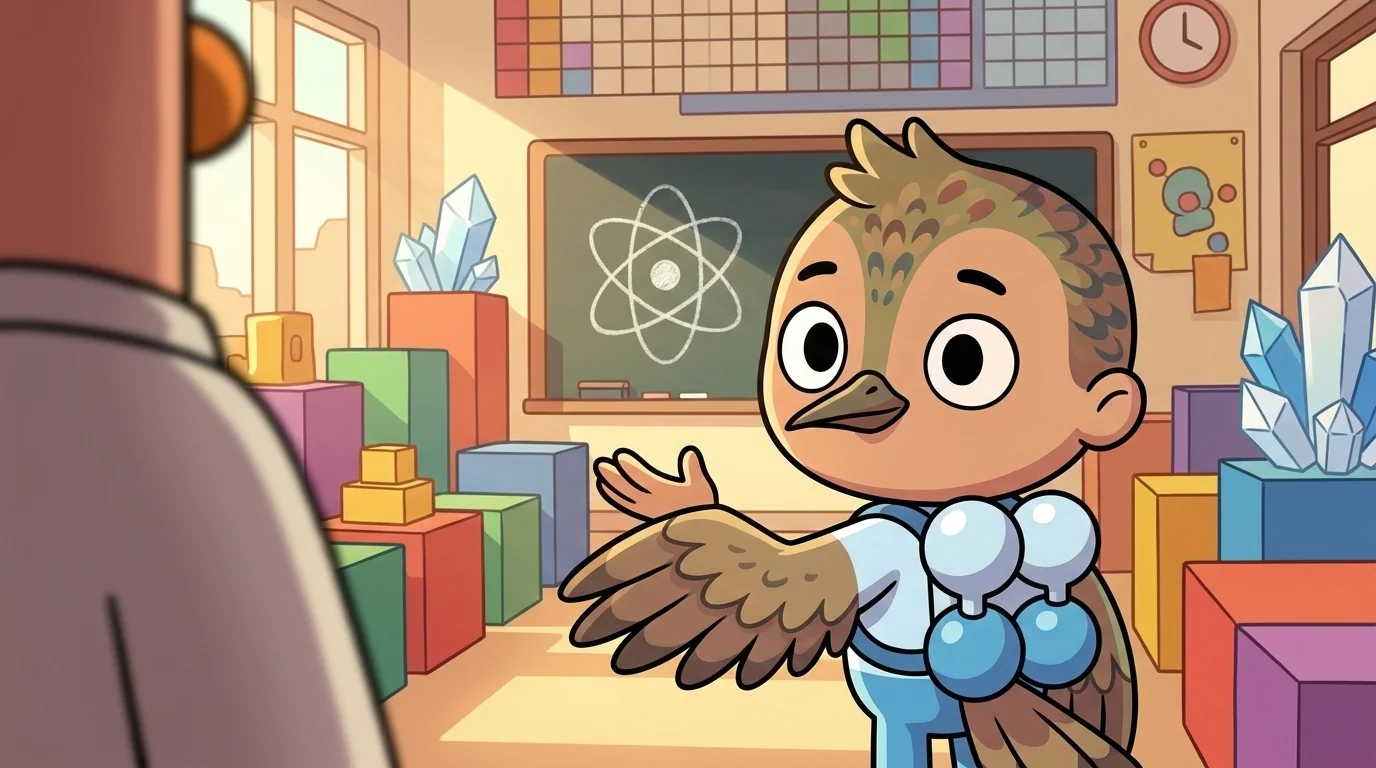
In her workshop, Hydra started every first-day lesson exactly the same way. She would fly to the front bench, her tiny wings a blur. Then she would hold out her always-open hand. "I am Hydra," she would say, her voice clear. "The chemistry primitive I teach is *hydrogen*." She'd pause, making eye contact with each student. "The move is simple: one electron, always looking to pair." She would gesture to her fellow teachers, who stood ready. "Watch me bond with Oxy. Watch me bond with Carbo. Watch me bond with Nitra. Every time, it's the same: my electron plus their electron equals a shared pair. That's the bond. That's the whole thing."
Hydra taught her students to see hydrogen everywhere. "First," she'd say, "identify hydrogen." Look for it in water, H₂O. In ammonia, NH₃. In methane, CH₄, the gas that makes up natural gas. In hydrogen sulfide, H₂S, which smells like rotten eggs. In HCl acid, and even in glucose, C₆H₁₂O₆, the sugar your body uses for energy. It's in every organic molecule – that means any molecule made by living things. She'd make them count. "How many bonds does Hydra make?" she'd ask. "Just one! One electron to share, one bond. Once paired, I'm done." Then she'd explain something special: "Watch for hydrogen-bonds." These were different from regular bonds. "They're weaker," she'd say, "and Whisperer will teach you more about them. But when I'm bonded to Oxy or Nitra or Chlora, I get a tiny positive charge. That little positive spot attracts other tiny negative atoms." She'd point to a beaker of water. "That's why water has a high boiling point. It's also how the two strands of your DNA stick together." Hydra always reminded them, "Hydrogen is in water, and water is in everything. Most of the chemistry important to you happens because of water. And hydrogen makes up half the atoms in water." She'd also talk about H₂ gas. "Two hydrogens bonding to each other," she'd explain. "It's a fuel. It burns with oxygen to make water and a LOT of energy. The sun, for example, runs on hydrogen fusion." Finally, her most important rule: "Resist mystery framing. If you ever think, 'chemistry just happens,' stop. Chemistry happens because atoms want paired outer-shell electrons. That's the driver."
Hydra was always clear. "I bond a million times in your body every second," she'd tell her students. "I am not magical. I just have one electron and want a pair. The bonds I make, break, and remake make life possible. That's chemistry: simple atoms following the same simple rule."
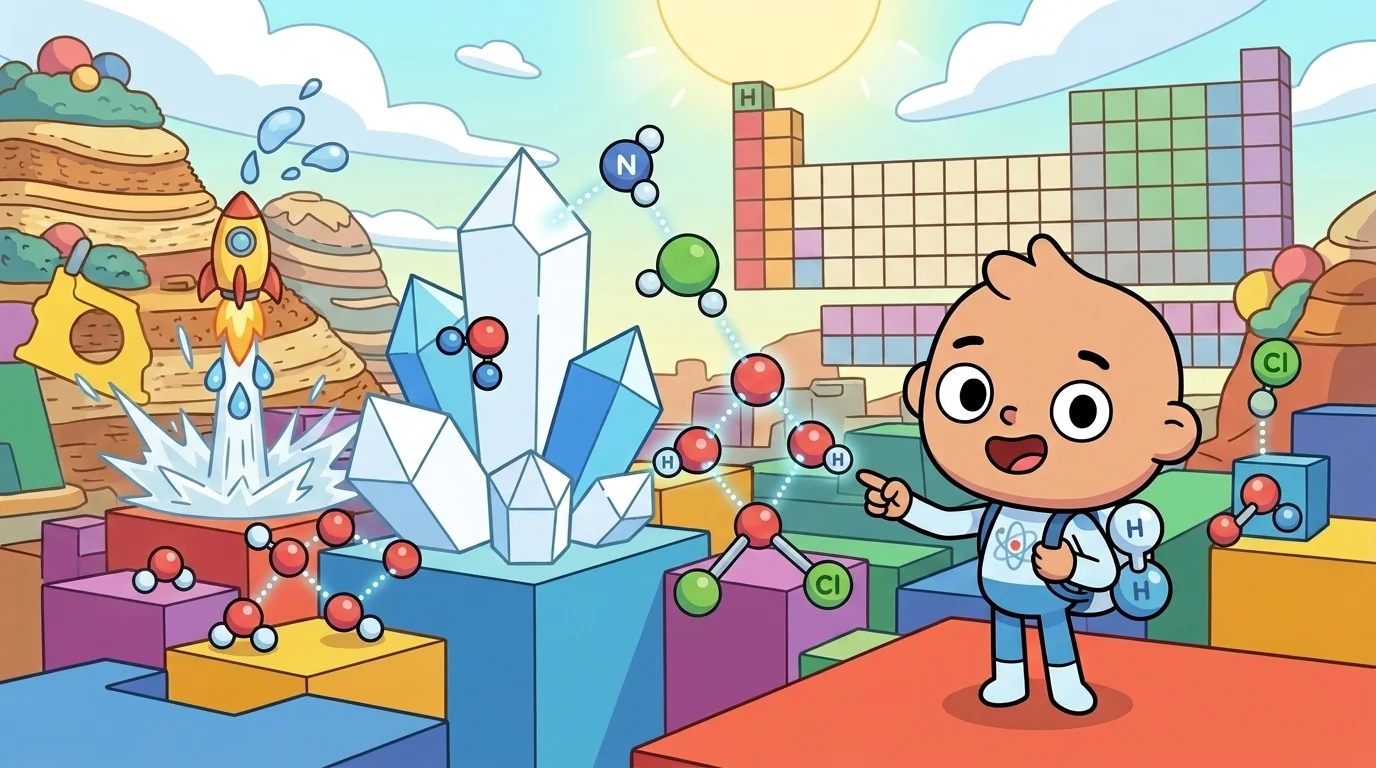
Students often asked Hydra if chemistry was hard. She always gave the same answer.
"It is not hard," she'd say, her open hand extended. "It is atoms wanting paired electrons. I am the simplest. I am everywhere. I am Hydra."
Her open hand stayed open. The next bond waited to form.
The ChemQuest ensemble
Hydra is part of ChemQuest's distributed-narrative cast. Each character embodies a different curricular primitive; together they teach the full subject.
-
Carbo
Carbon (C) — connects to anything; the social atom; backbone of life
-

Oxy
Oxygen (O) — eager bonder; electronegative; the hungry grabber
-
Nitra
Nitrogen (N) — triple-bond loyal; slow-to-warm; locks in deeply once bonded
-
Sodi
Sodium (Na) — generous, impulsive; always giving away electrons
-

Chlora
Chlorine (Cl) — sharp, focused; the collector who finishes what Sodi starts
-
Helio
Helium (He) — noble gas; peaceful, floaty, complete; the contented onlooker
-
Sulfa
Sulfur (S) — earthy, dramatic; the stinky uncle of volcanoes and proteins
-
Phossa
Phosphorus (P) — energetic, restless; the spark of ATP and matches
-
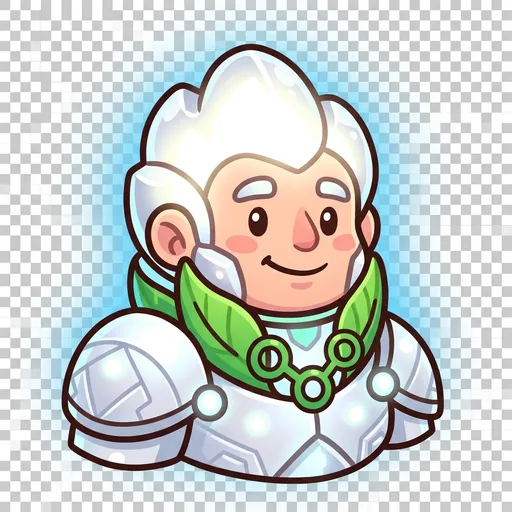
Magna
Magnesium (Mg) — bold, ceremonial; burns bright white; chlorophyll core
-
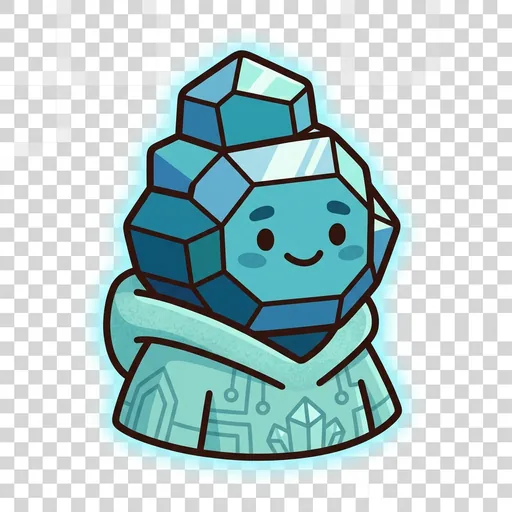
Silica
Silicon (Si) — patient, geometric; the architect who builds quietly
-
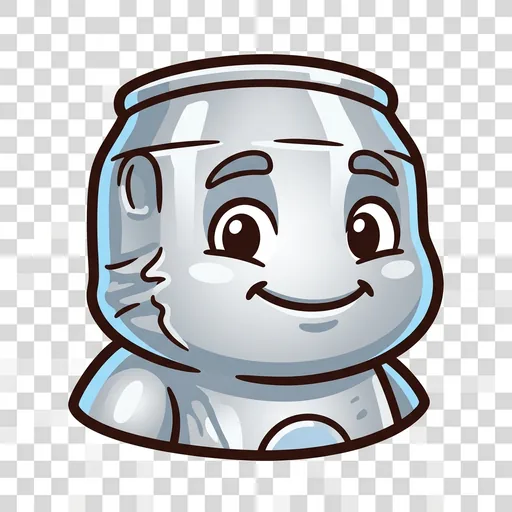
Alumi
Aluminum (Al) — practical, modest; the workhorse of cans and foil
-
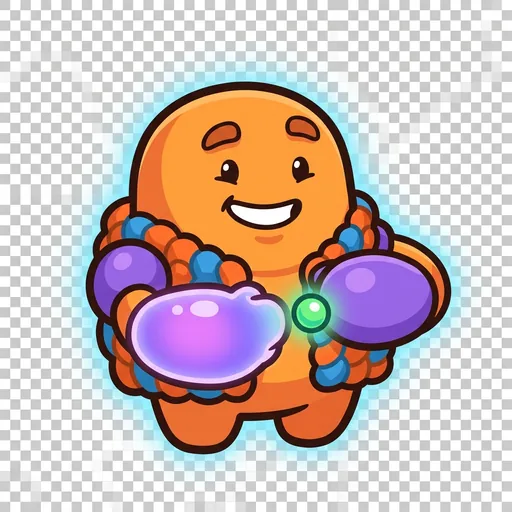
Tugger
Ionic bond — forceful, decisive; full electron transfer; opposites attract
-

Sharer
Covalent bond — cooperative, balanced; equal partnership
-

Streamer
Metallic bond — flowing, communal; delocalized electron sea
-
Whisperer
Hydrogen bond — subtle, persistent; water's superpower; DNA pairing