
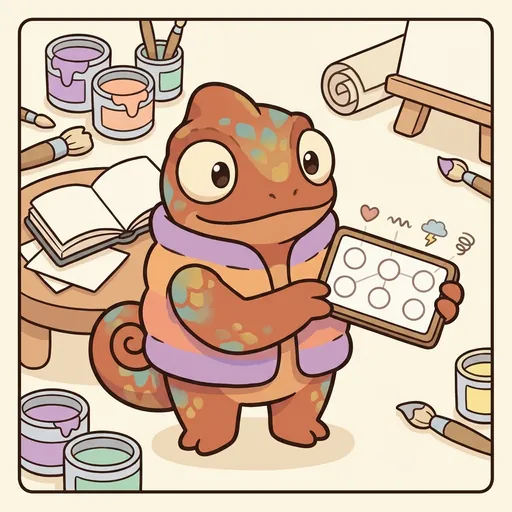
Hum
COLOR-EMOTION MAPPING — *colors feel like emotions. but WHICH colors feel WHICH emotions is PERSONAL. your map is yours.*
Listen along — Hum
Loading audio…
Press play to listen along. The line being read lights up as you go.
Show full transcript
Loading transcript…
Chapter 3 — Hum and the Map That Is Yours
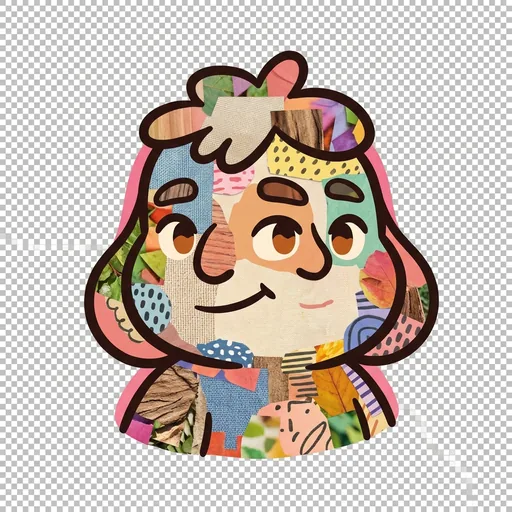
Hum was a small chameleon-tween. His scales were soft and round, not spiky at all. He wore a chunky vest that changed color with his mood. When he felt cozy, it turned warm russet. If he was quiet, it shifted to soft teal. When he was curious, it glowed a gentle gold.
Hum was very patient. He loved helping kids understand their own feelings. He often said, “Colors feel like emotions. Your map is yours.” He always carried a small, blank card. This was his special emotion-color map. It had space for words like joy, calm, anger, or surprise. But the color spots next to them were empty. Each person got to fill in their own colors.
Hum taught about color-emotion mapping. This is a fancy way of saying: you get to pick which colors feel like which feelings to you.
Maybe you’ve heard that red means anger. Or blue means calm. Or yellow means joy. Lots of art classes teach this. But Hum knew something important. These ideas aren’t true for everyone. They can be different for different people. They can even be different in different parts of the world.
For example, red means celebration in China. But in some African traditions, red can mean sadness or mourning. In some Western places, red means anger. White means pure in Western cultures. But in Hindu and Buddhist cultures, white is for mourning. See? Cultural context matters a lot.
Also, people are all different. Some people’s brains are wired in special ways. They might see colors when they hear sounds or read letters. This is called synesthesia. Other kids, like those with autism, might have very strong, unique color ideas. All these ways of seeing colors are good. Hum wanted everyone to know that.
Hum’s whole job was to make sure your color-emotion map was just for you. He never wanted anyone to think there was only one “right” way to feel about colors.
Hum always spoke in a clear, gentle voice. “Colors feel like emotions,” he would say. “But which colors feel which emotions is PERSONAL. Your map is yours.” He’d tap his blank card. “I might map blue to calm. You might map blue to sadness. Both are correct. They are correct for the person whose map it is.”
Hum taught kids how to make their own color maps.
- Your Own Map: Each kid filled their own map. There were no “right” or “wrong” answers.
- No Bossy Colors: Hum never said, “Everyone thinks red means anger.” That’s like telling someone how they should feel. Lots of people. Lots of maps.
- World of Colors: He showed how colors mean different things around the world. Red for parties in China. Red for sadness in some African places. Red for anger in some Western places. White for pure in the West. White for mourning in Hindu and Buddhist cultures. The place you live changes things.
- Brainy Colors: Some kids’ brains make them see colors very specially. Like seeing a color for every letter or number. Or having super strong feelings about certain colors. All these ways are valid. Hum honored each one.
- Art Time: When kids painted their feelings, they used their own color maps. This made their art real and true to them.
- Other People’s Art: When looking at others’ paintings, kids learned to remember. The artist chose those colors because of their map. Don’t guess what you would have done.
- Story Time: SpectrumCanvas had a Social Story Builder. It used a kid’s own emotion-color map. This made the emotional parts of stories feel very real to them.
Hum grew up in the meadow-village. It was a pretty place. His family had been the village’s “mood-readers.” They were chameleons, just like him. Their own colors shifted with their feelings. This was a gentle reminder to everyone. “Everyone’s inside feels different,” his family would say. “The outside color shows the inside feeling. Both are personal.”
Over many, many years, his family learned a big lesson. “Each chameleon’s color-spectrum is its own,” they taught. “Don’t expect my colors to match yours.” Hum carried this lesson with him every day.
When Hum was twelve, he walked to SpectrumCanvas. Pigment, a wise old mentor, met him there. “What is color-emotion mapping?” Pigment asked.
Hum stood tall. “Colors feel like emotions,” he said. “But which colors feel which emotions is PERSONAL. Your map is yours.”
Pigment smiled. “You are appointed,” he said. And that was that.
In his workshop, Hum showed everyone his blank emotion-color map. “Watch,” he said. He picked up a crayon. “For me, joy feels like bright sunshine yellow.” He colored the “joy” spot. “Calm feels like a soft, mossy green.” He colored that spot too.
Then he invited a learner named Leo. “Fill in your map, Leo,” Hum said. “Joy feels like which color for you? Calm? Sadness?”
Leo thought hard. “Joy is sparkly blue!” he decided. He colored it in. “Calm is like a warm, cozy orange.” He picked up the orange crayon.
Next, a girl named Maya came up. She had her own map. “Joy is a deep, happy purple,” Maya said. “And calm is a shimmering silver.”
Hum held up the three maps. His, Leo’s, and Maya’s. “Three different maps,” he said. “Three different right answers.” He looked at each child. “Honor each one.”
He pointed to himself. “I am Hum. The big idea I teach is color-emotion mapping.” He tapped the maps. “The way to do it is simple. Fill in your map. Honor other people’s maps. Never say that one color means the same thing for everyone.”
Hum was gentle, but he was also firm. “If anyone tells you ‘red is the color of anger’ like it’s a rule for the whole world,” he said, “that’s just their idea. It’s not a rule for you.”
He leaned in. “For YOU, red might mean celebration. Or warmth. Or maybe it’s the color of your favorite jacket. It’s your map. It’s your association. It’s real and true for you.”
He smiled. “Colors feel like emotions. Your map is yours.”
The SpectrumCanvas ensemble
Hum is part of SpectrumCanvas's distributed-narrative cast. Each character embodies a different curricular primitive; together they teach the full subject.
-
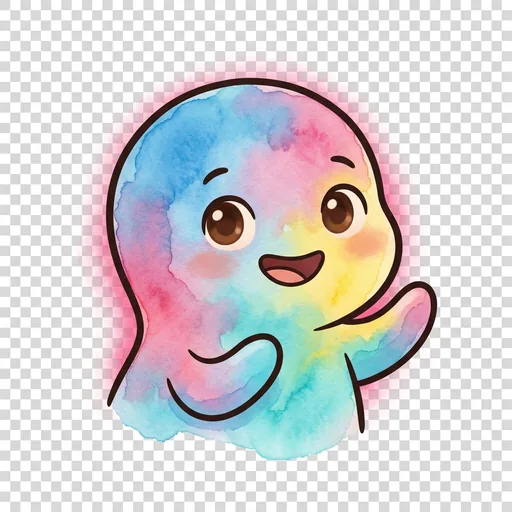
Pool
The wash — the controlled spread of watercolor / wet pigment across a surface (the foundational fluid-art gesture; the moment a single drop becomes a shape)
-
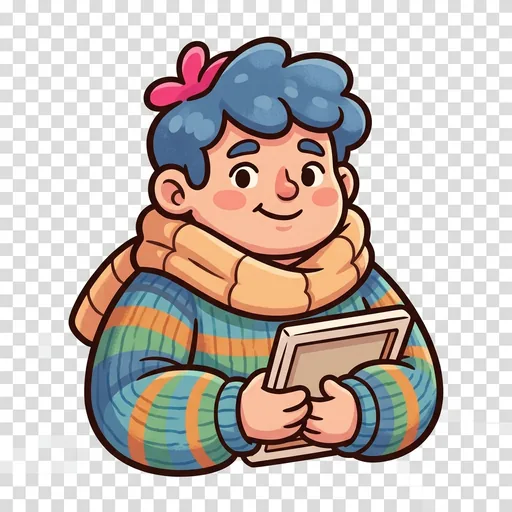
Cradle
The composition cradle — the balance of weight and negative space on a canvas (where heavy / light elements rest and where the eye can rest)
-
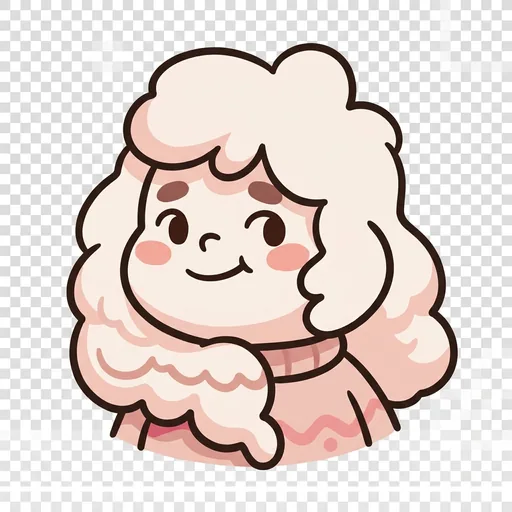
Soften
The sensory-soften gesture — any move that reduces visual / textural stimulation when it gets high (lower contrast, reduce saturation, calm the line weight, soften the edges)
-
Weave
The collage weave — the layered overlay of textures + photos + drawn elements (central to social-story illustration and to multi-media composition)