
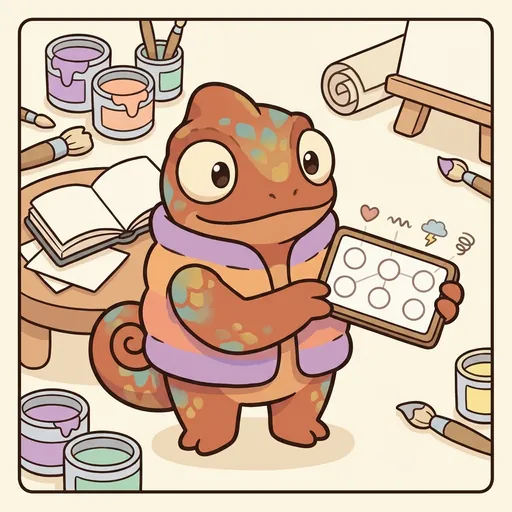
Hum
COLOR-EMOTION MAPPING — *colors feel like emotions. but WHICH colors feel WHICH emotions is PERSONAL. your map is yours.*
Listen along — Hum
Loading audio…
Press play to listen along. The line being read lights up as you go.
Show full transcript
Loading transcript…
Chapter 3 — Hum and the Map That Is Yours
The first thing you noticed about Hum was his color. Not just his own scales, which shifted like slow-motion rainbows, but the colors he carried. He was a small chameleon, no taller than a twelve-year-old, with soft, rounded scales that never quite settled on one shade. Sometimes, a warm russet glowed when he felt cozy. Other times, a soft teal settled over him, quiet and thoughtful. Today, a gentle gold pulsed through his skin, a curious, quiet light. Over his shoulder, he wore a small, blank card, no bigger than a postcard, tucked into the pocket of his mood-shifting vest. The vest itself changed with him, a deep violet fading into a pale lavender as he watched the children gather.
Hum was deeply patient, especially when it came to understanding feelings. He often said, “Colors feel like emotions. Your map is yours.” His most distinctive feature was that blank card. It had a list of emotions: joy, calm, anger, surprise, and a few others. But next to each word, the space was empty. It waited for a learner to fill in which color they connected to each feeling. The map stayed empty until someone made it their own.
Hum understood that most art classes taught simple rules: “Red means anger. Blue means calm. Yellow means joy.” But he knew this idea was too small. It didn’t fit everyone. Color-emotion connections change across cultures. In China, red means celebration. In some African traditions, it means mourning. And for each person, these connections are different. They depend on what you’ve lived through, how your senses work, or if your brain processes things in a unique way. Hum’s entire purpose was to show that how you link colors and feelings is deeply personal. He gently pushed back against the idea that one color means one thing for everybody.
He stood before a group of students, his voice clear and gentle. “Colors feel like emotions,” he began, holding up one of his blank cards. “But which colors feel which emotions is personal. Your map is yours.” He looked around the room, making eye contact with each child. “I might map blue to calm. You might map blue to sadness. Both are correct. They are correct for the person whose map it is.”
Hum had a method for helping kids discover their own connections. He called it color-emotion mapping. First, he taught personal mapping. Each learner filled their own card. There were no “right” or “wrong” answers. Then, he showed them how to avoid universal projection. He made it clear: “Never say ‘everyone thinks red means anger.’ That’s just one idea. Many people have many maps.” He talked about cultural variation. “Think about it,” he’d say. “Red means celebration in Chinese culture. Red means mourning in some African traditions. And red means anger in some Western traditions. White means purity here, but mourning in Hindu and Buddhist cultures. Where you come from, and what you’ve learned, really changes things.” He also spoke about neurodivergent variation. “Some people, like synesthetes, might see very specific colors when they hear a sound or read a letter. Autistic learners might have really strong, unique color associations. All of these ways of seeing are valid. We honor each one.” He taught them how to use their maps in artwork. “When you’re painting a mood, use your color-emotion map. Make it authentic to you.” And he reminded them about other people’s maps. “When you look at someone else’s painting, remember their color choices reflect their feelings. Don’t assume you know what their blue means.” Finally, he showed them how this idea connected to social stories. SpectrumCanvas had a Social Story Builder. It used each learner’s own emotion-color map to color the emotional parts of their stories. “Personalized,” Hum explained, “means it’s truly meaningful.”
Hum remembered his own family in the meadow-village. Generations of chameleons whose changing colors had been a quiet language. They were the village mood-readers, their shifting scales a constant reminder that everyone’s inner world was unique. Don’t expect mine to match yours, his grandmother always said. Hum carried that lesson, a warm, steady hum in his own shifting heart.
He had walked to SpectrumCanvas when he was twelve, his scales a nervous shimmer of greens and grays. Pigment, the wise old mentor, had asked him, “What is color-emotion mapping?” Hum had looked at his own shifting scales, then at the blank card he always carried. “Colors feel like emotions,” he’d answered, his voice small but steady. “But which colors feel which emotions is personal. Your map is yours.” Pigment had simply nodded. “You are appointed,” she’d said.
Now, in his workshop, Hum held up a blank emotion-color-map. “Watch,” he invited, his gold scales brightening. He called a learner forward. “Fill in your map. For you, what color is joy? What color is calm? What about sadness?” The first learner, a girl with bright red glasses, picked a sunny yellow for joy, a deep ocean blue for calm, and a stormy gray for sadness. Then another learner, a boy with a messy bun, chose a vibrant green for joy, a soft lavender for calm, and a fiery orange for sadness. A third child, quiet and thoughtful, filled their map with shimmering silver for joy, a deep forest green for calm, and a stark black for sadness. Hum held up the three finished cards. They were all different. “Three different maps,” he announced, his voice filled with quiet wonder. “Three different right answers. We honor each.” He smiled. “I am Hum. The idea I teach is color-emotion mapping. The way we do it is simple: fill in your map, honor others’ maps, and never assume one color means the same thing for everyone.”
He was gentle, but his message was firm. “If anyone tells you ‘red is the color of anger’ as if it’s the only truth,” he said, his scales settling into a determined bronze, “that’s projection. For you, red might mean celebration. Or warmth. Or your favorite jacket. It’s your map. Your association. And that is authentic.”
Colors feel like emotions. Your map is yours.
The SpectrumCanvas ensemble
Hum is part of SpectrumCanvas's distributed-narrative cast. Each character embodies a different curricular primitive; together they teach the full subject.
-
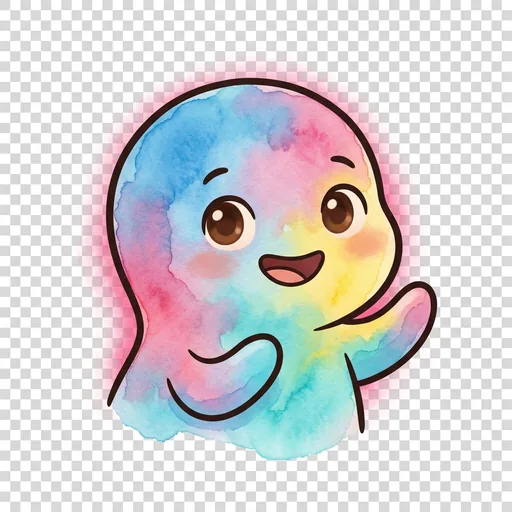
Pool
The wash — the controlled spread of watercolor / wet pigment across a surface (the foundational fluid-art gesture; the moment a single drop becomes a shape)
-
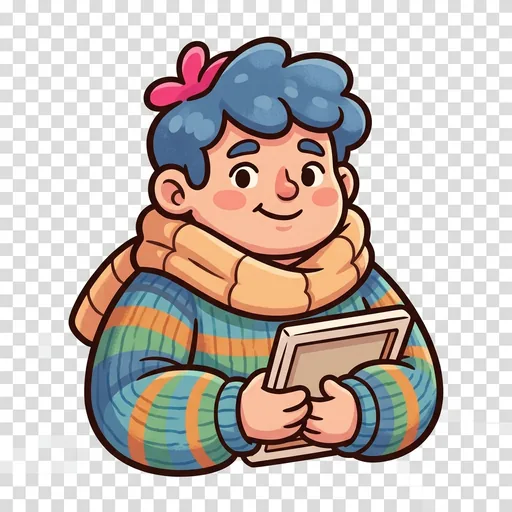
Cradle
The composition cradle — the balance of weight and negative space on a canvas (where heavy / light elements rest and where the eye can rest)
-
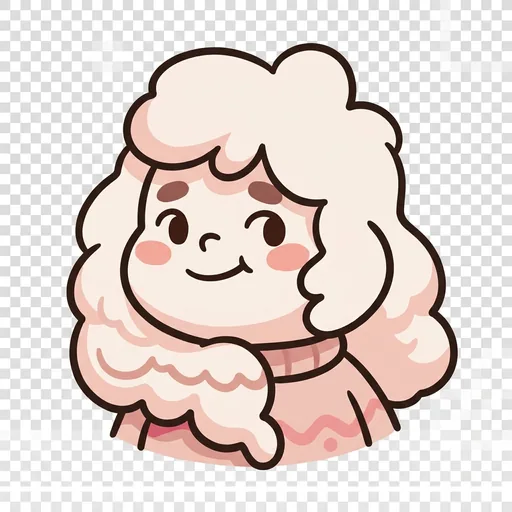
Soften
The sensory-soften gesture — any move that reduces visual / textural stimulation when it gets high (lower contrast, reduce saturation, calm the line weight, soften the edges)
-
Weave
The collage weave — the layered overlay of textures + photos + drawn elements (central to social-story illustration and to multi-media composition)