Aim
AIM — *where the camera stands changes the story.*
Listen along — Aim
Loading audio…
Press play to listen along. The line being read lights up as you go.
Show full transcript
Loading transcript…
Chapter 2 — Aim and the Camera Position
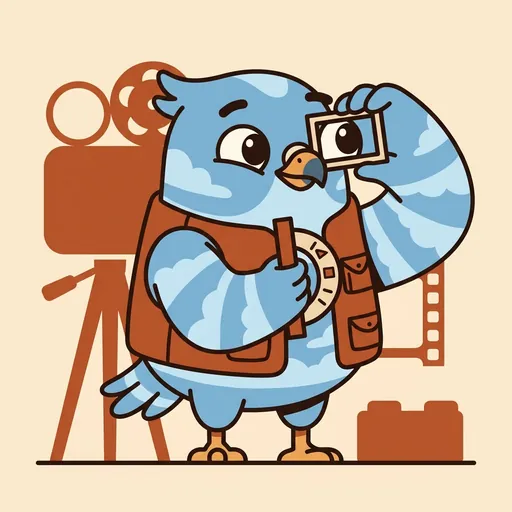
Aim crouched, a small, focused shape in a director’s vest. It was a cool sky-blue, striped with soft clouds. She peered through a small, rectangular viewfinder card held to one eye. Her other eye, a keen, observant blue, scanned the empty studio space. A tiny angle-tracker, no bigger than a watch, was clipped to her vest pocket. It showed a digital readout of the camera’s tilt.
Aim was always watching, always choosing. She moved with the quiet intensity of a falcon spotting its prey. She wasn’t looking for a bird, though. She was looking for the perfect shot. “Where the camera stands changes the story,” she often said. It was her favorite phrase.
Today, Aim was teaching about camera angles and framing. This was the filmmaking craft of understanding how position creates meaning. She wanted to show us that the same scene, filmed differently, could tell wildly different stories.
“Think about it,” Aim began, her voice clear and calm. “A wide shot shows a person alone in a big world. A close-up, though? That makes their feelings the whole world right now. The camera’s position isn’t just technical. It’s emotional.”
Draft, who was always sketching out storyboards, nodded slowly. Bright, who loved experimenting with light, looked thoughtful. Even Slate, our mentor, watched with a quiet smile.
“I am Aim,” she said, stepping into the center of the room. “The primitive I teach is camera angles and framing. The move is where the camera stands changes the story.” She held up her viewfinder card. “Angle equals emotion. Pick the angle the scene needs.”
She had set up a simple scene. A tall, cardboard cutout of a knight stood on one side of the room. Across from it, a much smaller cutout of a squirrel held a tiny, painted acorn.
“Default shot is eye-level medium,” Aim explained. She demonstrated, holding her viewfinder at her own eye height, showing how it framed the knight from the waist up. “This is how we usually see people. It’s neutral. It doesn’t push any feeling.”
“But this scene,” she continued, “needs the squirrel character to feel small. It needs the knight to feel huge and powerful.” She paused, letting the idea settle. “So, we change the angle.”
Aim moved to the knight’s side. She knelt, placing her camera on a low tripod, almost on the floor. She peered through the lens, looking up at the cardboard knight. “This is a low angle,” she announced. Her voice carried easily in the quiet room. “The camera is below their shoulders, looking up.”
On the small monitor beside the camera, the knight loomed. Its cardboard armor seemed to gleam. The painted sword looked impossibly long. It truly towered. The audience would feel its power instinctively, without a single word being spoken. It was a simple trick, but incredibly effective.
Next, Aim moved to the squirrel’s side. She climbed onto a small step stool, positioning the camera high above the tiny cutout. She looked down through the lens. “And this is a high angle,” she said. “The camera is above, looking down.”
Now, on the monitor, the squirrel looked tiny, almost insignificant. The acorn in its paws seemed heavy. The ground around it stretched out, vast and empty. The high angle made the squirrel appear small and vulnerable. The difference was striking. The audience would immediately feel the size difference. They would understand the power dynamic without needing any dialogue.
“See?” Aim asked, gesturing between the two camera setups. “The audience feels the size difference. They feel the power, or the vulnerability. We didn’t say anything. We just chose the right angle.”
Draft quickly sketched the two angles in his notebook. Bright, ever the light-master, murmured, “And if we added dramatic lighting to the knight from below…” Aim nodded, a small smile touching her lips. Slate, the mentor, clapped softly. “Angle is emotion,” he said. “Aim names it.”
The way Aim worked, it wasn’t about fancy equipment. It was about seeing the world, then choosing how to show that world. It was about making the audience feel exactly what the story needed them to feel. She showed us that understanding perspective—whose view we take—was a powerful tool, not just in film, but in understanding any story. It was like blocking actors on a stage, but for the camera itself. Every choice mattered.
The ReelForge ensemble
Aim is part of ReelForge's distributed-narrative cast. Each character embodies a different curricular primitive; together they teach the full subject.
-
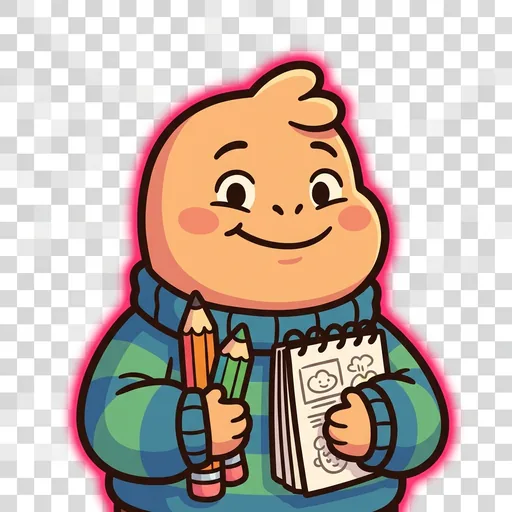
Draft
Storyboarding — pre-visualization; 'Draw it first. Then film it.'
-

Bright
Lighting design — 'Three lights. Different feelings.'
-

Buzz
Sound design — foley + ambient + dialogue — 'Sound is the other half.'
-
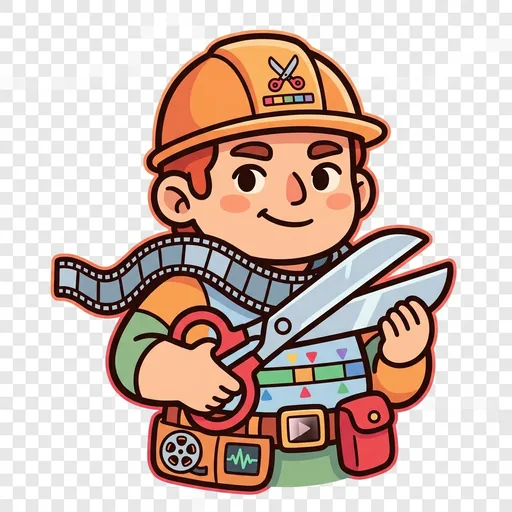
Snip
Editing — timeline + transitions + pacing — 'Cut here. Not there.'
-

Whole
Multi-scene narrative — 'Beginning. Middle. End.'