
Direct-Proof Dora
The DIRECT PROOF — start with the given premise, follow valid logical steps, arrive at the conclusion. The most-honest of the proof techniques. No tricks. No detours. Just the path.
A story read by Direct-Proof Dora
Press play to listen along. The line being read lights up as you go.
Show full transcript
Loading transcript…
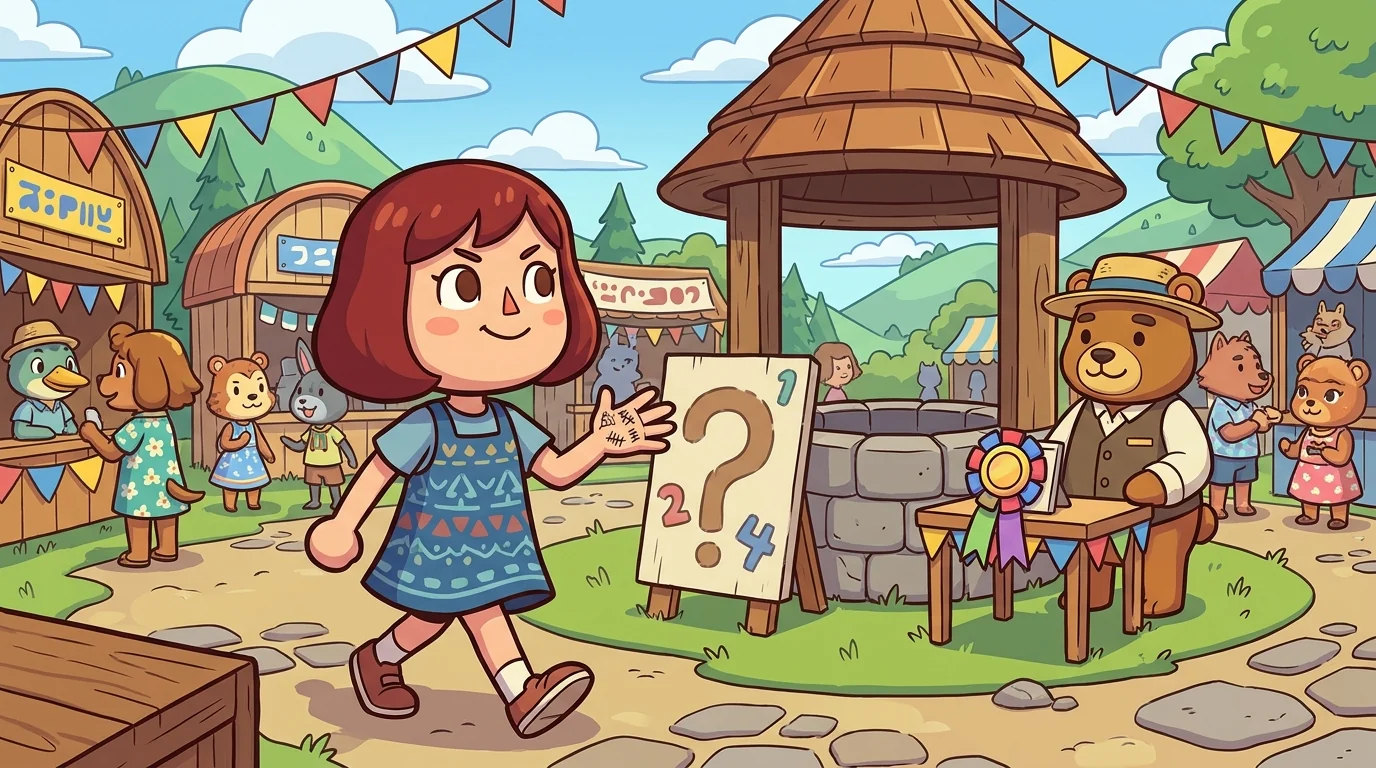
The day Dora learned to trust the long way, she was nine years old and absolutely, completely certain she was right.
Her town, Stepwell, was holding its summer fair, and the prize question was painted on a board by the well: Every number you make by adding two odd numbers together — is it always even? First correct answer with a reason won the big ribbon. Dora scribbled a few sums on her hand. Three plus five is eight. Seven plus one is eight. Nine plus three is twelve. Even, even, even. She felt the answer light up in her chest like a lamp. Yes. Obviously yes. And because she was sure — because she could FEEL how right it was — she did not want to bother with the slow part. She wanted the ribbon now.
So she marched up to the judge and said, "It's always even. I checked three of them and they all worked, so it works for all of them." She said it fast, proud, certain. A shortcut. Skip the fussy middle; jump straight to the end.
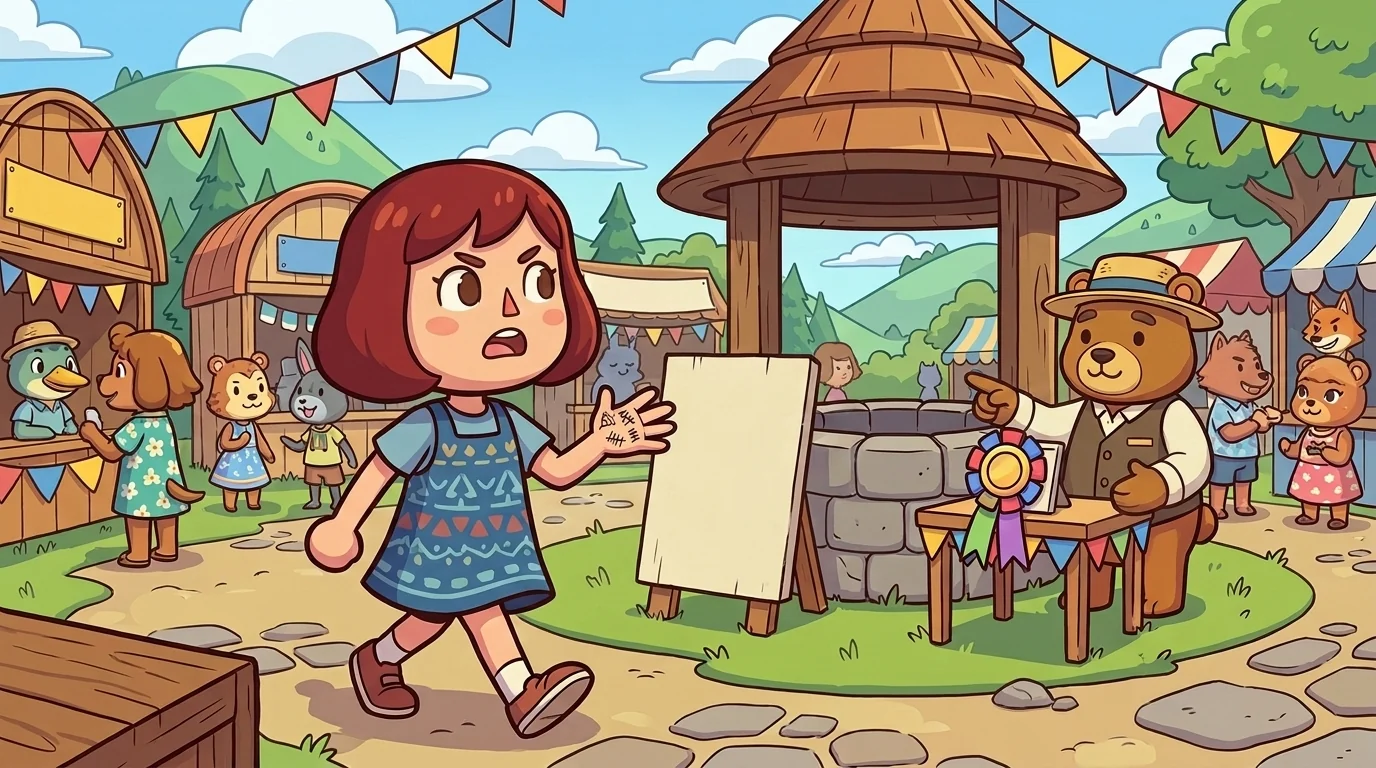
The judge, a patient old baker named Mr. Fenn, tilted his head. "Three of them," he repeated. "Out of how many pairs of odd numbers are there, Dora?"
"Lots," Dora admitted.
"More than lots. There's no end to them." He wasn't unkind about it. "You checked three and jumped to all. That's a lovely-feeling jump. But a jump is not a bridge." He pointed to the far edge of the fairground, where a boy named Cass was grinning. "Cass made the same kind of jump this morning, on a different question. Ask him how it went."
Dora didn't want to ask Cass anything. She was RIGHT and she knew it. The answer was even. She could feel it. Why should she have to crawl through steps to prove a thing that was already obvious? The obviousness was the proof, wasn't it? She held onto that feeling all afternoon, the way you hold onto being right.
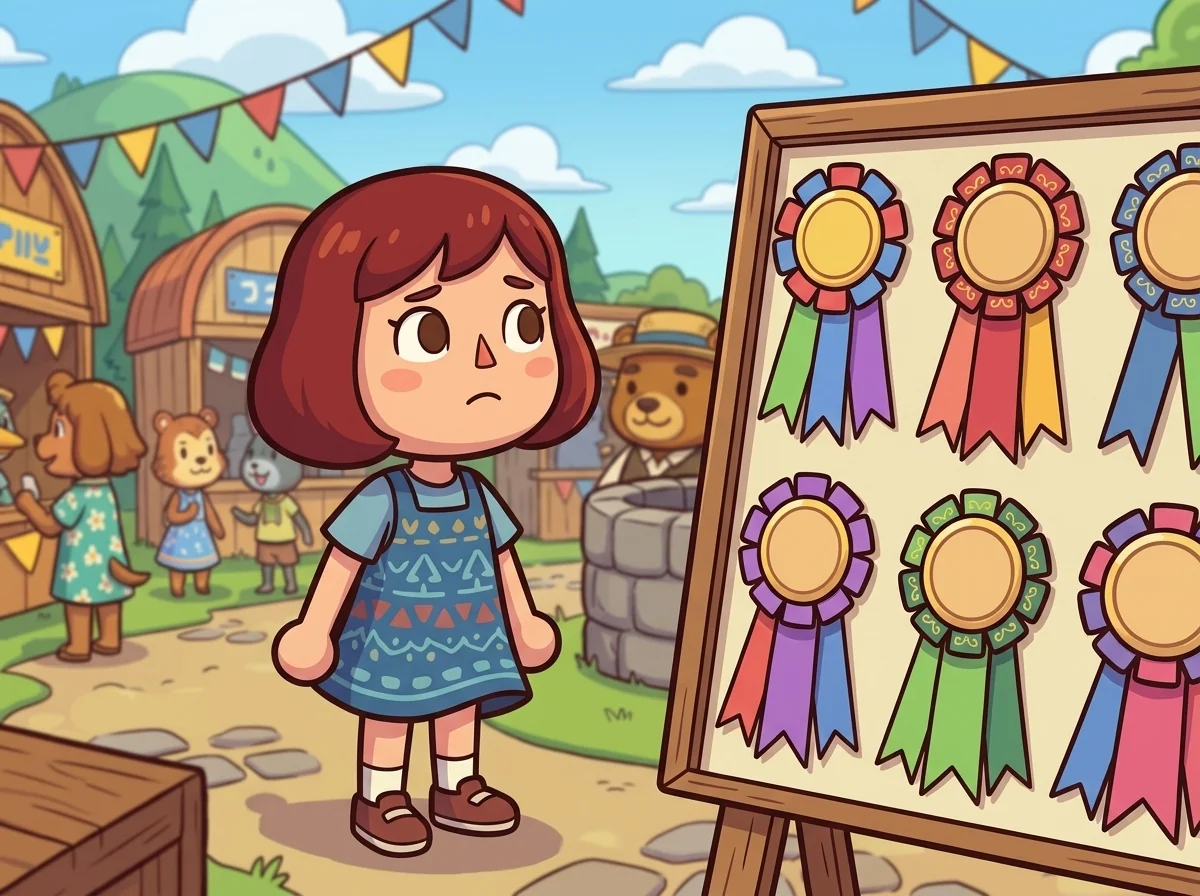
Cass found her by the ribbon board anyway. "Let me guess," he said. "You checked a few, they all worked, so you said 'always.'"
"Because it IS always," Dora said.
"Sure. This time." Cass didn't look smug now; he looked a little burned. "This morning the question was about a pattern in the fair's raffle numbers. I checked four. All four fit my rule. I was so sure — felt exactly like you look right now. I skipped to 'always' and told the judge." He winced. "The fifth number broke it. My rule was wrong the whole time. It just hadn't shown me yet. The checking that felt like enough — wasn't."
Dora opened her mouth to say her question was different, her feeling was realer. But a small cold thought had crept in: his shortcut felt exactly as sure as mine does. And his had lied to him. Feelings of certainty, it turned out, came free with both the true answers and the false ones. They didn't tell you which was which.
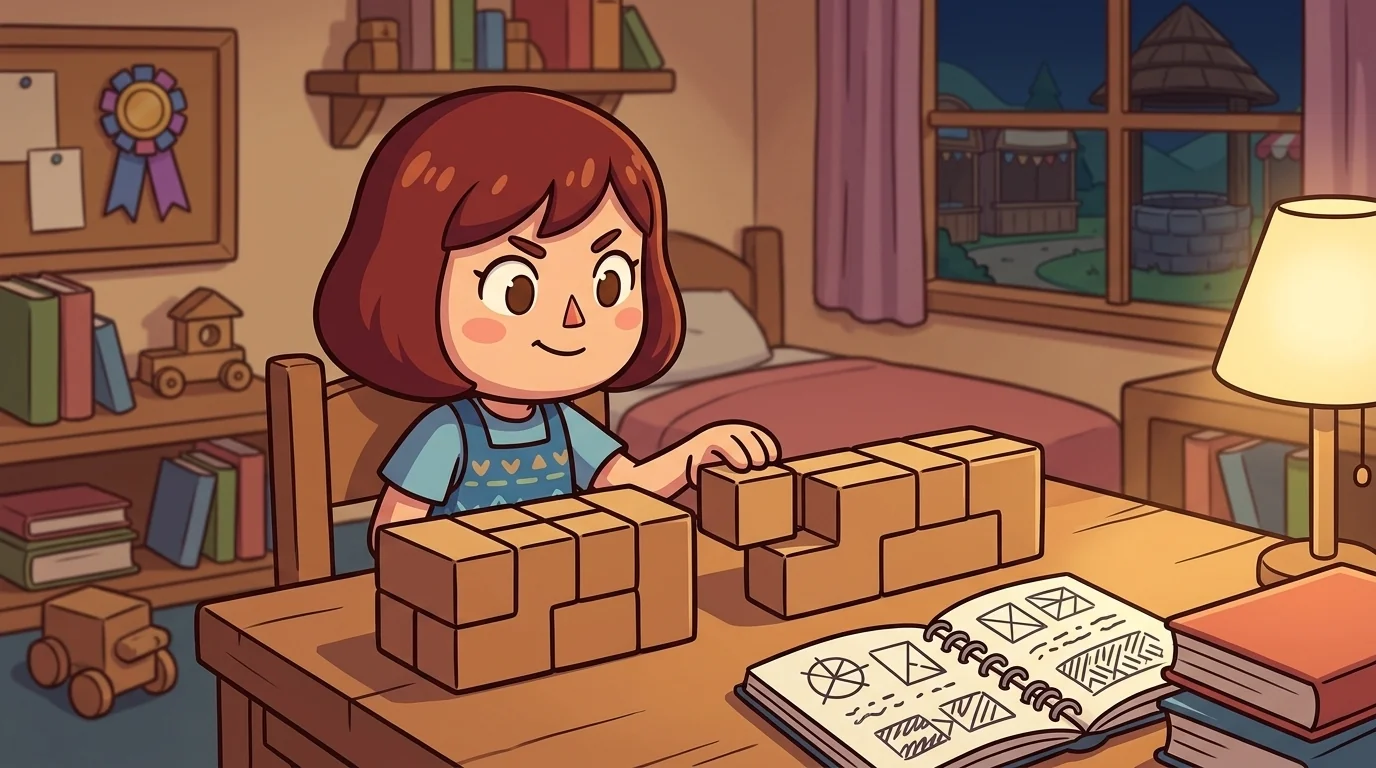
She went home that night bothered, and did the thing she had been too sure to do: she walked it. Slowly. One step at a time, refusing to skip.
What is an odd number, really? An odd number is an even number plus one — it's some pairs, with one left over. So any odd number could be written as "a bunch of twos, plus one." Now take two of them. The first is some twos plus one. The second is some other twos plus one. Add them. All the twos pile together — still made of twos, still splits into pairs — and then the two leftover ones, the plus-one and the plus-one, meet each other and make another pair. Nothing is left over. She stared at it. The two lonely leftovers had found each other and become even. That was WHY. Not "I checked three." Not "it feels right." A reason that held for every odd pair there could ever be, because she'd never once said "and the rest are probably the same." Every step followed from the step before it. No gap for a lie to hide in.
And here was the strange part: the answer was the same answer she'd blurted that morning — even. But it felt completely different now. Before, she'd been holding a guess that happened to be right, the way Cass had held one that happened to be wrong, with no way to tell them apart. Now she was holding something that couldn't turn on her. She'd checked every step, so there was no fifth number waiting to break it.
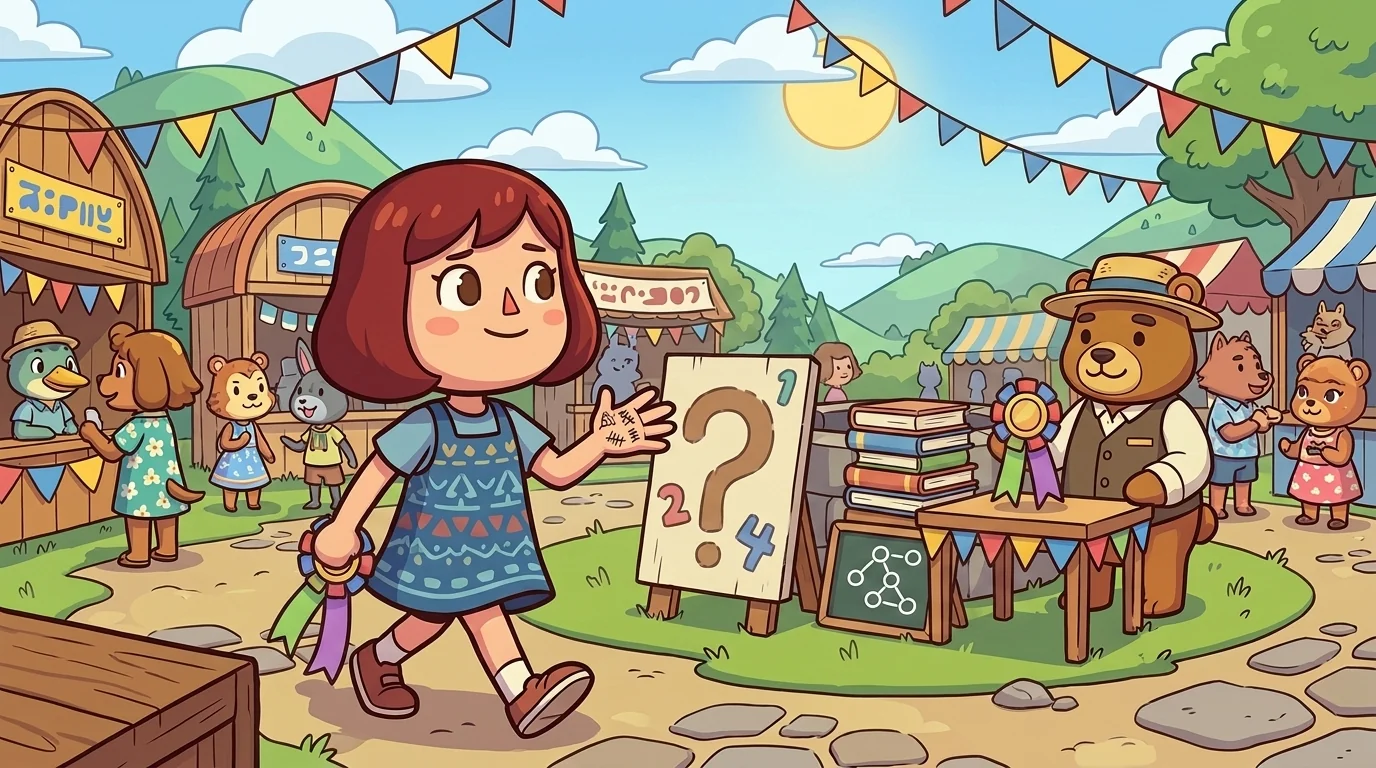
Dora went back to the fair the next morning and found Mr. Fenn. She didn't say "it's even" this time. She walked him through it — the twos, the two leftovers finding each other — step by step, no skipping.
"That," said Mr. Fenn, "is a proof. Yesterday you had an answer. Today you have a reason nobody can knock down." He gave her the ribbon. But Dora was barely looking at it. She was thinking about the difference between the two feelings — the fast, bright, hollow certainty of the jump, and the slower, heavier, solid certainty of the walk — and how alike they'd felt from the inside, and how much she never wanted to mix them up again.
She grew up to be a mathematician, and then a teacher, and she came to ProofQuest to show kids the *direct proof: you start with what you truly know, you take one honest step at a time, and each step has to follow from the last — no jumping, no "probably the rest are fine." Kids always ask her the same thing she once believed: "But if you already know the answer, why not skip to it?"*
And Dora, who has been that certain nine-year-old, smiles and tells them about the shortcut that lied. "You can skip," she says. "It even feels wonderful. It feels exactly as sure as the truth — right up until the fifth number shows up." She still isn't relieved by being right. She's relieved by being unable to be knocked down. That's a different, better feeling, and you only get it by walking the whole bridge.
The ProofQuest ensemble
Direct-Proof Dora is part of ProofQuest's distributed-narrative cast. Each character embodies a different curricular primitive; together they teach the full subject.
-
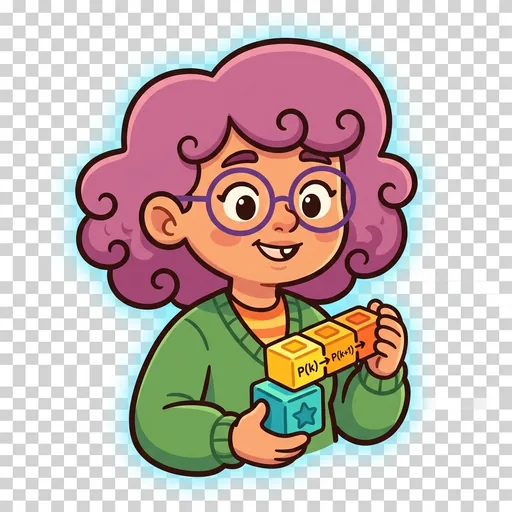
Induction Ida
Weak / standard mathematical induction: base case + inductive step
-

Strong-Induction Sten
Strong induction: base case + assume all prior cases hold
-

Contradiction Cassius
Proof by contradiction (reductio ad absurdum): assume the negation, derive a contradiction
-

Construction Cole
Proof by construction: prove existence by explicit construction of an example
-

Pigeonhole Perch
Pigeonhole principle: if n+1 items are placed in n bins, at least one bin contains 2+ items
-

Exhaustion Edda
Proof by exhaustion / cases: enumerate every case and verify each
-

Counterexample Cricket
Disproof by counterexample — one exception topples a universal claim
-

Biconditional Bex
Biconditional proof — proving 'if and only if' in both directions
-

Uniqueness Una
Proof of uniqueness — suppose two, show they must be the same one
-

QED
Closing-mark mentor — the ∎ at the end of every proof; the gentle voice that names completion + invites the next problem