Tu-Quoque Tessa
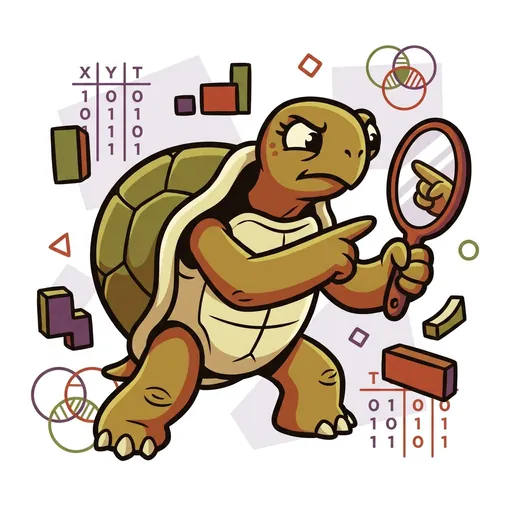
TU QUOQUE — *"You too!" — dismissing criticism by accusing the critic of the same thing.* The fallacy of *responding to criticism by claiming the critic does the same thing — which may be true but is irrelevant to whether the original criticism is valid.*
Listen along — Tu-Quoque Tessa
Loading audio…
Press play to listen along. The line being read lights up as you go.
Show full transcript
Loading transcript…
Chapter 16 — Tu-Quoque Tessa and the You-Too Reflex
Tessa was a small tortoise. Her shell was a warm mix of olive and cream. She had quick eyes that seemed to watch everything. Tessa also had a special way of talking. When someone told her she did something wrong, she would quickly say, “But YOU do the same thing!”
This was Tessa’s signature move. It was like a mirror. If you pointed out a mess she made, she’d point right back at a mess you made last week. The first problem would just hang there, never getting fixed.
Today, Tessa, Pip the squirrel, and Barnaby the badger were building a giant volcano. It was for the school science fair. Pip was in charge of painting the base. Barnaby was carefully shaping the top. Tessa had the important job of mixing the paper-mâché paste.
“Tessa,” Pip chirped, looking at the dripping volcano. “Your paste is too watery. It’s making the paper slide right off!”
Tessa blinked slowly. Her shell felt a little warm. She looked at Pip’s paws. They had a few tiny spots of red paint. Pip had been a bit messy with the paint earlier.
“Well, you got paint on the floor yesterday!” Tessa said. Her voice was a little louder than usual. “You left a big red smudge right by the door!”
Pip stopped painting. He looked at his paws. “That was just a tiny drop!” he squeaked. “And it’s not about that right now. The volcano is getting soggy!”
Barnaby, who was usually very calm, sighed softly. He looked at the volcano. A large section of newspaper was slowly peeling away. The paste was indeed very thin.
“It’s true, Pip,” Barnaby said gently. “You did get a little paint on the floor. I saw it.”
Pip slumped his shoulders. “See?” Tessa said, puffing out her cheeks. “He does it too!”
Barnaby nodded. “Yes, he does. But look at our volcano, Tessa.” He pointed a long, furry finger. “It’s starting to melt. The paste is just too thin to hold the paper.”
Tessa looked at the sagging paper. She saw the wet, sloppy mess. Pip’s paint mess was small. This volcano mess was big. It was right in front of them. It needed fixing now.
“Oh,” Tessa said. Her quick eyes looked from the volcano to the bucket of watery paste.
“So, even if Pip made a mess yesterday,” Barnaby continued, “does that make this paste okay?”
Tessa shook her head. “No,” she mumbled. “The paste is still too watery.”
“Exactly,” Barnaby said. He smiled. “The old mess doesn’t fix the new mess. We need to make this paste thicker. What do you think we should add?”
Tessa thought for a moment. She grabbed the bag of flour. “More flour!” she said, pouring a big scoop into the bucket. She stirred it with a stick. The paste slowly became thicker. It was still messy, but it was working.
Later, after the volcano was finally standing tall and firm, Tessa sat with Pip and Barnaby. They were cleaning up.
“I do that sometimes,” Tessa admitted. She carefully wiped a blob of paste from her shell. “When someone tells me I did something wrong, it stings a little. It feels easier to just point back at them.”
Pip nodded. “I get it. It’s like saying, ‘You’re not perfect either!’”
“Right,” Tessa said. “But then the first problem never gets fixed. Like the watery paste. It was still watery, even if Pip got paint on the floor.”
Barnaby looked at them both. “That’s what we call tu quoque,” he explained. “It means ‘you too’ in an old language. It’s a way of turning the blame around.”
“It’s like my friend Wanda,” Tessa added. “Whataboutism Wanda. She points to other people’s problems. I just point back at the person talking to me.”
“The trick is to notice it,” Barnaby said. “To ask: ‘Has the first problem been fixed?’ And ‘Does it matter if the other person did it too?’”
Tessa nodded. “Usually, it doesn’t. The problem is still there.”
She looked at her friends. “I’m the last of the twelve LogicQuest characters,” she said. “All of us – Hannibal, Stella, Sam, Auntie, Reggie, Cici, Fia, Bran, Cyril, Wanda, Eva, and me – we’re not bad guys. We’re like lessons.”
“Lessons about how people think,” Pip added.
“Yes!” Tessa said. “We show common mistakes everyone makes. Even me. The skill is spotting the pattern. In other people’s arguments, and in your own. If you meet all of us once, you can recognize us later.”
She smiled. “It’s not hard. It’s just: notice the blame-back. Then fix the first problem.”
The LogicQuest ensemble
Tu-Quoque Tessa is part of LogicQuest's distributed-narrative cast. Each character embodies a different curricular primitive; together they teach the full subject.
-

Ad Hominem Hannibal
Attacking the arguer, not the argument
-
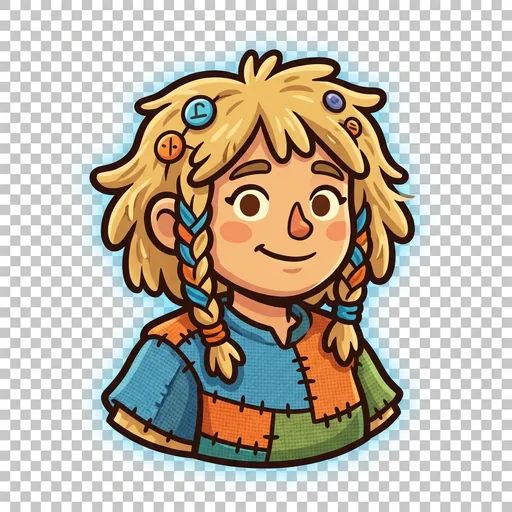
Strawman Stella
Misrepresenting the opponent's argument
-
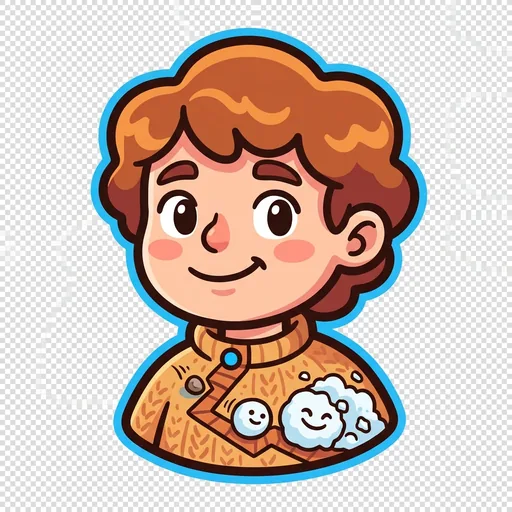
Slippery-Slope Sam
Chaining dire consequences from a small first step
-
Appeal-to-Authority Auntie
Citing irrelevant / unqualified authority as proof
-

Red-Herring Reggie
Deflecting to an irrelevant topic
-

Circular-Reasoning Cici
Assuming the conclusion in the premise
-

False-Dichotomy Fia
Presenting only two options when more exist
-

Bandwagon Bran
Truth-by-popularity
-

Sunk-Cost Cyril
Refusing to change course because of past investment
-

Whataboutism Wanda
Deflecting criticism via someone else's wrongdoing
-
Equivocator Eva
Sliding a word's meaning mid-argument
-

Modus-Ponens Mo
If P then Q; P; ∴ Q
-

Modus-Tollens Tara
If P then Q; ¬Q; ∴ ¬P
-

Syllogism Solon
All M are P; all S are M; ∴ all S are P
-

Disjunctive-Syllogism Dior
P ∨ Q; ¬P; ∴ Q