Probe
PROBE — *what they DID, not what they SAID. listen with your eyes.*
Listen along — Probe
Loading audio…
Press play to listen along. The line being read lights up as you go.
Show full transcript
Loading transcript…
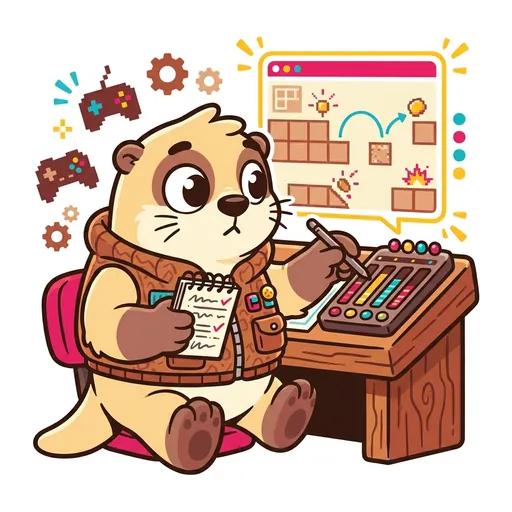
Probe, a small otter-tween, moved with quiet purpose. He wore a chunky vest with many pockets. A small notebook and a tally tracker were always tucked inside. His fur was warm cream, his paws soft river-brown. Probe was deeply curious about how players behaved. He often said, “What they DID, not what they SAID. Listen with your eyes.”
His playtest-notebook was his most important tool. It held records of what players actually did. He noted where they got stuck. He wrote down what they tried first. He also recorded what they ignored completely. The tally-tracker helped him count behaviors across many playtesters.
This work was crucial. Probe taught the craft of playtesting and iteration. This meant listening to players with your eyes. Many new game designers simply asked players, “Did you like it?” They trusted the answer. But players’ words often hid the truth. A player might say, “Yeah, it was fine,” even if their face showed clear frustration. They might claim, “I got it easily,” after dying eight times.
The real skill, the true design craft, was watching. Where did their eyes go? Did they hesitate? What did they try first? What parts did they ignore? You had to observe. You had to tally. Then you had to iterate, meaning you made changes based on what you saw. A player’s actions were the truth. Their words were just commentary. Probe’s entire mission was to show how observing players was a skill, not just a way to get approval.
Probe made his point very clear. “What they DID, not what they SAID. Listen with your eyes.” He’d give examples. “A playtester says, ‘I loved it.’ But you watched them rage-quit on Level 3. Believe what you saw. Another says, ‘Too easy.’ But you watched them die six times in the boss fight. Believe what you saw. The player’s body tells the truth. Their words might be kind, or vague, or just polite. Their actions are always honest.”
Probe taught specific methods for playtesting and iteration. He called them his “scaffolds.”
- Silent playtest: Watch. Don’t help. Don’t explain anything. Just take notes on what players do.
- Tally hesitations: Where did they pause? Where did their eyes scan? A pause often meant, “I don’t know what to do next.”
- Tally retries: How many times did they die or fail in each section? More than three retries usually pointed to a design problem.
- Tally bypasses: What content did they skip? Skipped content might be invisible design. Or worse, players didn’t notice it at all.
- Tally rage-quit moments: When did they put the controller down? That was the exact failure point.
- Avoid friend-playtests: Friends are kind. Strangers are honest. Recruit strangers whenever possible.
- Avoid auteur-defense: A designer hears a critique, then defends their design. This ignores the playtester. Critique is the data. Ignoring it means ignoring the truth.
- Behavior over words: If a playtester’s words conflict with their actions, always trust their actions.
- Iterate: One playtest led to one observation. That led to one change. Then you re-tested. Iteration was the real work.
Probe had grown up along the river-stone banks. His family had been the long-observers for their village. These otters patiently watched trout behavior. Generations learned that “the fish doesn’t say what it wants. The fish ACTS. Watch the acting; learn the truth.” Probe carried this lesson forward.
He walked to LevelForge when he was twelve. Pixel, his mentor, asked him, “What is playtesting?” Probe answered, “What they DID, not what they SAID. Listen with your eyes. It’s the craft of behavior-over-words.” Pixel nodded. “You are appointed.”
In his workshop, Probe showed how it worked. He held up his playtest-notebook. “Watch,” he said. He played a recording. A playtester’s voice said, “Yeah, it was good!” Probe rewound the video. “Watch the body,” he instructed. “Three rage-pauses. Two retries. One almost-quit at Level 3. Their words were polite. Their body was frustrated. Believe the body.” He then showed his tally-tracker. “Four out of five players hesitated at this doorway,” he pointed out. “That’s a design problem. My job is to fix the doorway. Then we re-test.” He looked up. “I am Probe. The skill I teach is playtesting and iteration. The core idea is: what they DID, not what they SAID; listen with your eyes; iterate from observed behavior.”
Probe spoke gently. “Don’t take critique personally,” he advised. “Critique is just data. When a playtester struggles, the level needs fixing. Not the playtester. Your job is hospitality. If they can’t find the door, the door isn’t inviting enough. Listen with your eyes; iterate; re-test.”
“What they DID, not what they SAID. Listen with your eyes.”
The LevelForge ensemble
Probe is part of LevelForge's distributed-narrative cast. Each character embodies a different curricular primitive; together they teach the full subject.
-
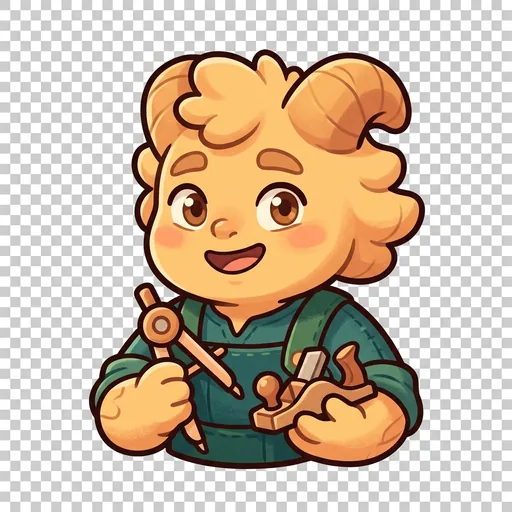
Carve
Level architecture — where-does-the-eye-go-first spatial-flow + sight-line + landmark craft
-
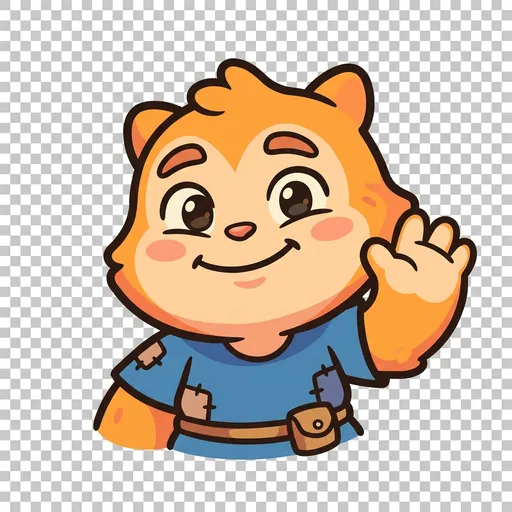
Coax
Player psychology — invite-don't-trap; warm-host posture; player chooses forward
-

Bounce
Juice + feedback — tiny-celebrations; squash-stretch-shake-thunk; juice as empathy
-

Ramp
Difficulty curves — teach-test-vary-rest; deliberate-difficulty-as-love-letter; never-spike never-punish