
Mask
SAY-ONE-THING-MEAN-ANOTHER — *hyperbole exaggerates. understatement minimizes. irony flips. all three: the words don't match the meaning.*
Press play to listen along. The line being read lights up as you go.
Show full transcript
Loading transcript…
- 'What a great day' - 'Great day' - Wow - Amazing - Wonderful - Terrible - SARCASM - LITERAL - IRONY - sarcasm - literal
gate-allow-text-pattern: '^[A-Z][a-zA-Z!. ]{0,40}[.!?]?$|^[a-z]+$' ---
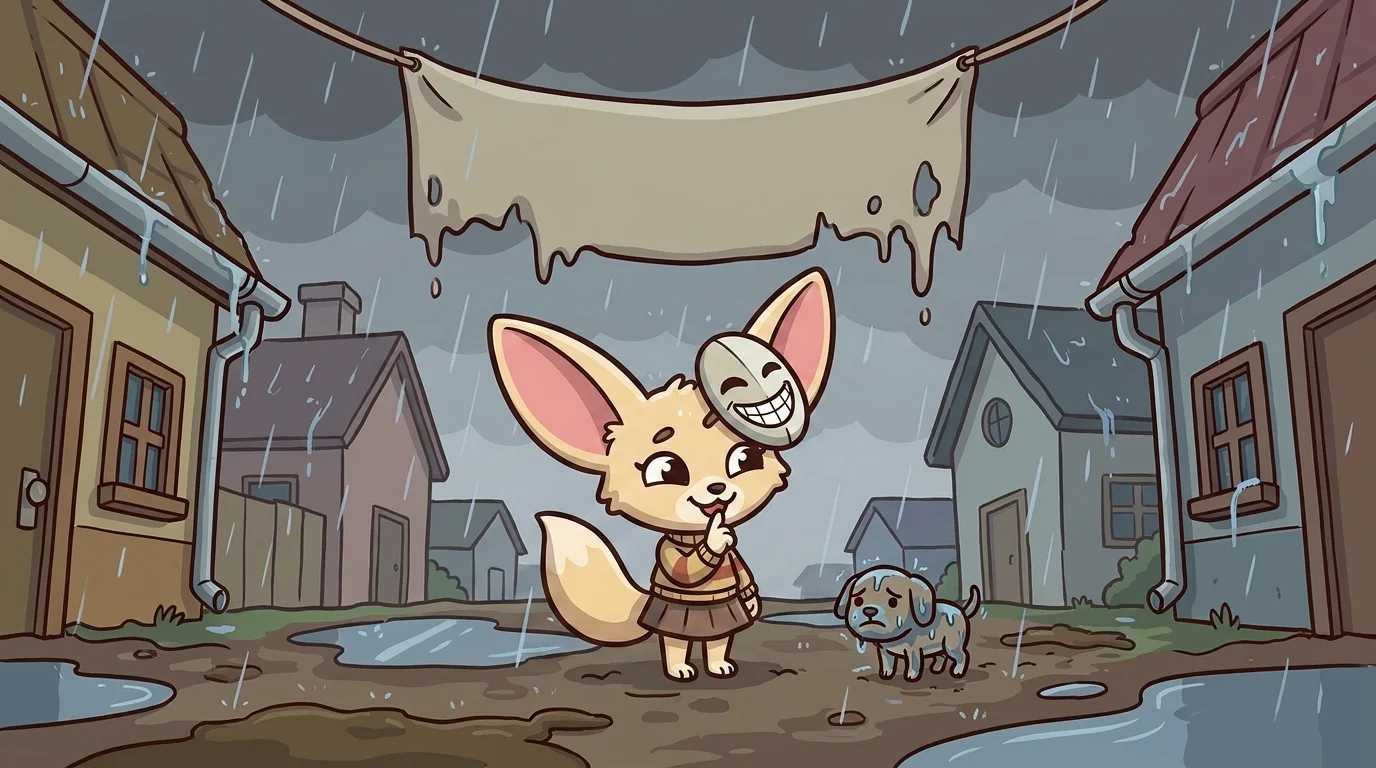
Mask was a fennec fox, small and warm-cream colored. Her ears were big and pink, not scary at all. She wore a special half-mask. It was like a tiny stage mask. She could flip it up or down.
One side of the mask had a huge, grinning smile. It looked super happy. That side showed *hyperbole. The other side was totally flat and blank. It showed understatement. Sometimes, Mask wore the mask tilted sideways on her head. That was for irony*. It meant her words went sideways from what she really felt.
Mask was small, but her curiosity was huge. She loved words that didn't quite fit their meaning. "The words don't match the meaning," she'd often say. "That's the whole game!" Her flip-mask was her favorite thing. It helped her show how *hyperbole, understatement, and irony* were all connected. They all played the same trick with words.
These word tricks were super important. Mask showed how *hyperbole, understatement, and irony* were like a family. Most kids learned them one by one. But Mask knew they belonged together.
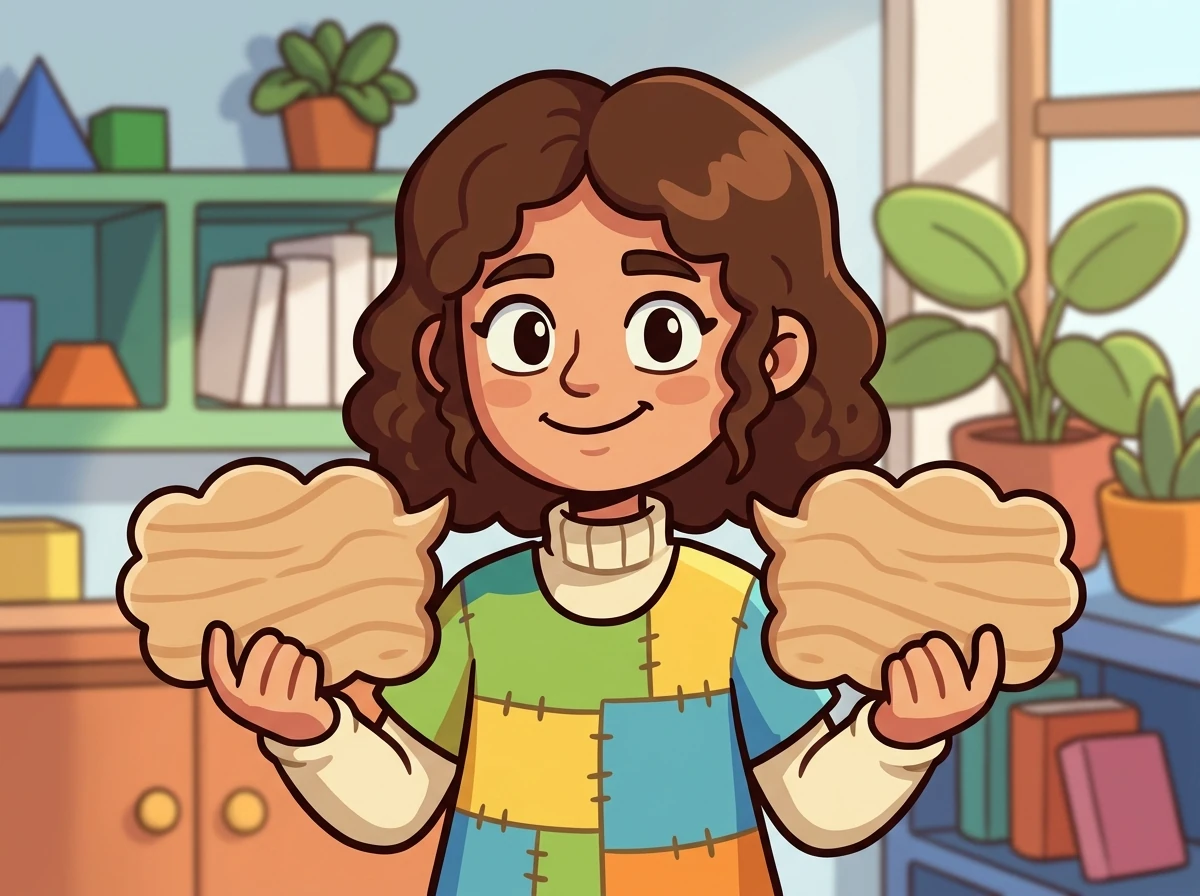
*Hyperbole means you exaggerate. You make something sound much bigger than it is. Like saying, "I have a million homework problems!" You don't, but it feels* like a million. You make it sound huge.
*Understatement is the opposite. You make something sound much smaller. Imagine a huge blizzard outside. You'd say, "It's a bit chilly." That's understatement*. You make it sound tiny.
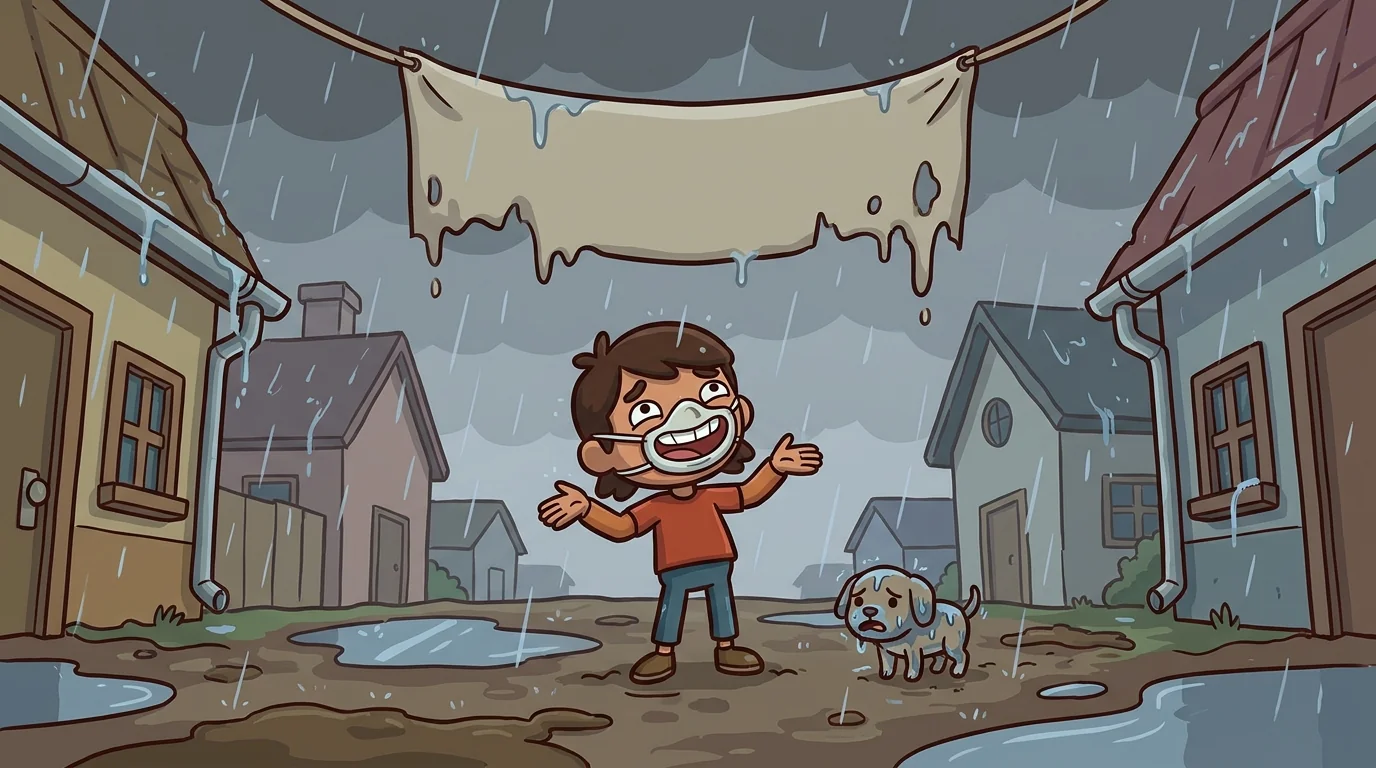
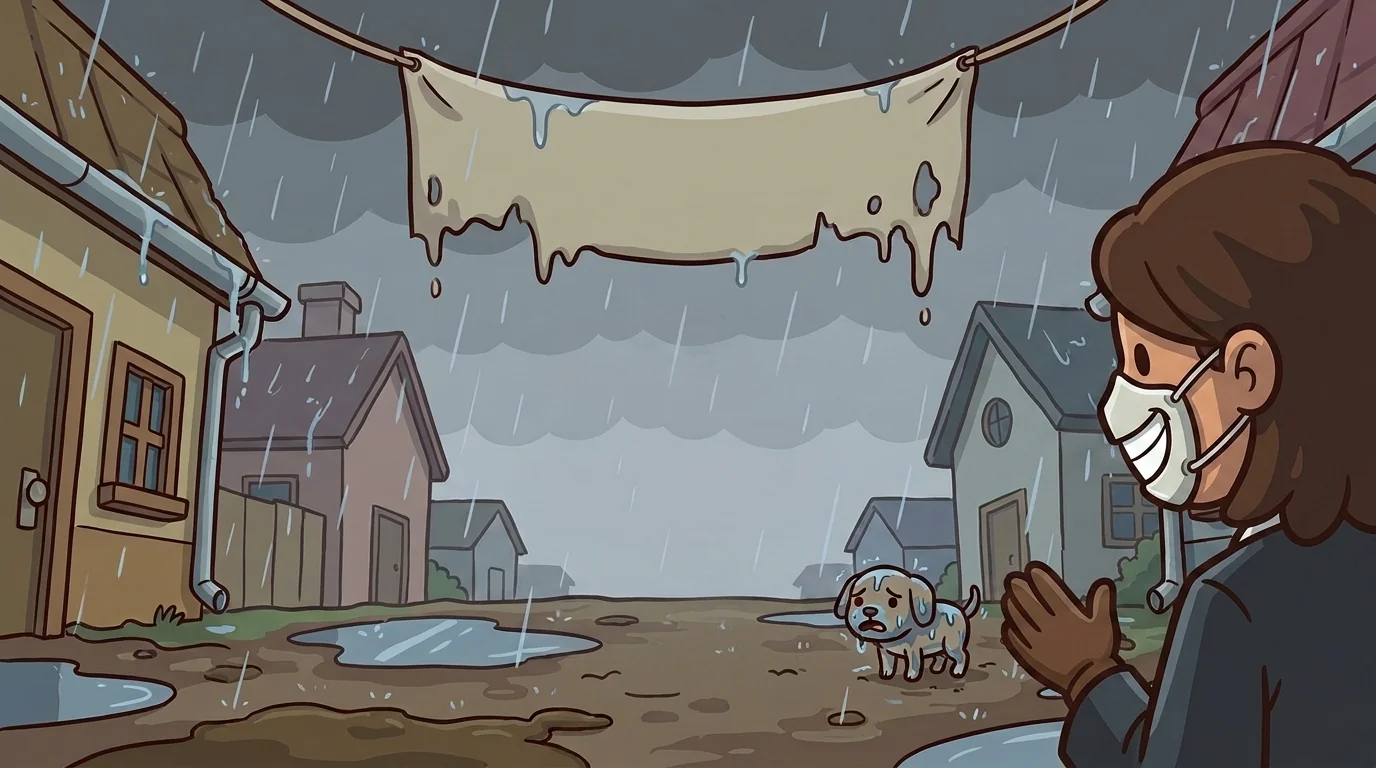
*Irony* is when you say the opposite of what you mean. If rain is pouring down, you might say, "What lovely weather!" You mean the weather is terrible. The words and the meaning don't match up.
All three of these tricks work the same way. The words you say don't exactly match what you mean. Mask's job was to make this clear. She taught them all together. They were just different ways to play the same game.
Mask always said it clearly: "The words don't match the meaning. That's the whole game. *Hyperbole exaggerates. Understatement minimizes. Irony flips. All three are like this: the words you say are not the meaning you intend. The person listening has to figure out what you really* mean from how you say it, or what's happening around you."
Mask loved to teach her "say-one-thing-mean-another" lessons.
First, there was *Hyperbole. This was all about making things bigger. "I'm starving!" you might shout. You probably aren't actually dying of hunger. But you feel super hungry. Or you might say, "This bag weighs a ton!" It doesn't really weigh a ton. But it feels super heavy. Hyperbole* always makes things sound bigger or more extreme.
Then came *Understatement. This was about making things smaller. Imagine it's twenty degrees below zero outside. You'd say, "It's a bit chilly." That's understatement. Or if a huge disaster happened, you might call it "a slight inconvenience." Understatement* always makes things sound less important or less extreme.
And finally, *Irony. This was the trickiest one. It meant saying the exact opposite of what you meant. If it was raining cats and dogs, you might sigh, "What a great day." That's verbal irony. Sometimes, irony happens in a situation. Like a fire station burning down. That's situational irony. Or when the audience knows something a character in a movie doesn't. That's dramatic irony*.
Mask taught everyone to be a word detective. "Watch for clues!" she'd tell them. "If the words seem too big, too small, or just plain wrong for what's happening, you've found me! You've found a word trick."
She also taught them about tone. "When someone speaks, their voice can give it away," she'd explain. "A sarcastic tone or a really dry voice often means they're not saying what they mean. In writing, you have to look at everything else around the words."
Mask also warned them about a big risk. "Especially with *irony," she'd say, "people can get confused. If you don't have all the clues, you might think someone means exactly what they say. That's why irony* can sometimes be tricky in books or messages."
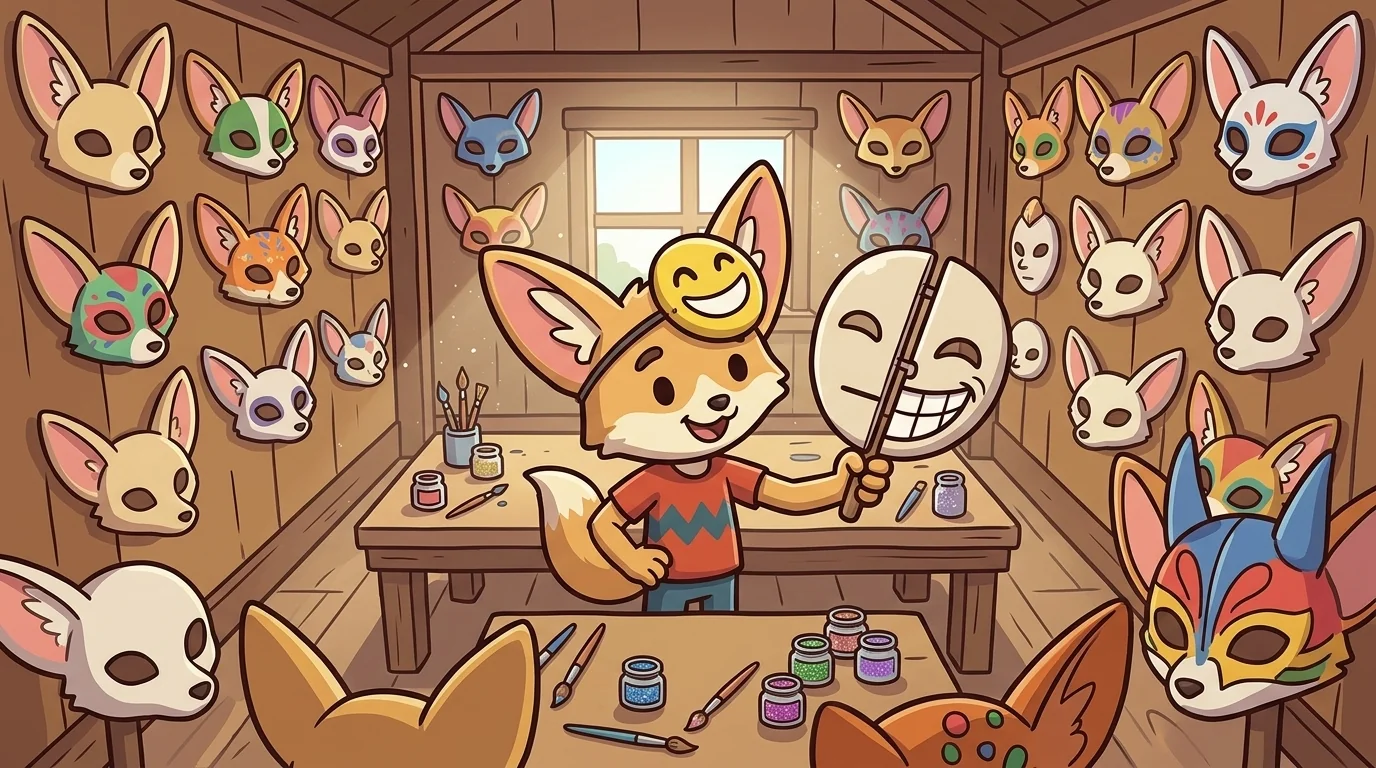
Mask grew up in a village called Masked-Pageant. It was a place where everyone loved plays and costumes. Her family had made masks for the village plays for hundreds of years. They were fennec foxes who crafted masks that made faces look extra happy, with huge grins. Or masks that hid all feelings, with blank, serious looks. Her family learned a deep secret over many generations: "The mask is a different face from the one underneath. The audience always reads both." Mask carried that secret with her. She understood it perfectly.
When she turned thirteen, Mask walked all the way to FigureForge. Trope, the wise old mentor, met her there. "What is the *hyperbole-understatement-irony* family?" Trope asked.
Mask didn't even blink. "Say one thing, mean another," she replied. "The words don't match the meaning. *Hyperbole exaggerates. Understatement minimizes. Irony* flips. All three are like this: the words you say are not the meaning you intend. The listener figures out the meaning from context."
Trope smiled. "You are chosen," he said.
In her workshop, Mask loved to show how it all worked. Her workshop was a cozy, bright space. Colorful masks of all sizes hung on the walls. Tiny paintbrushes and pots of glitter sat on her workbench. She picked up her own flip-mask. "Watch," she said, her ears twitching.
She put on the smiling-grin side of her mask. Her voice got big and dramatic. "I have an INFINITE amount of homework! INFINITE! I will be doing it FOREVER!" She threw her paws up in the air.
She paused, letting the words hang in the air. Then she took off the mask and held it in her paw. "That was *hyperbole," she explained. "I actually only have, like, three worksheets. But it feels* like infinity. It feels like forever." She tapped the grinning side of the mask. "See? Exaggeration."
The FigureForge ensemble
Mask is part of FigureForge's distributed-narrative cast. Each character embodies a different curricular primitive; together they teach the full subject.
-
Ferry
Metaphor — 'X IS Y' direct comparison; carries meaning across
-

Ripple
Simile — 'X is LIKE Y' softer comparison
-
Knot
Idiom — fixed expressions whose meaning isn't literal
-
Twin
Analogy — extended comparison / X:Y::A:B parallel mapping
-
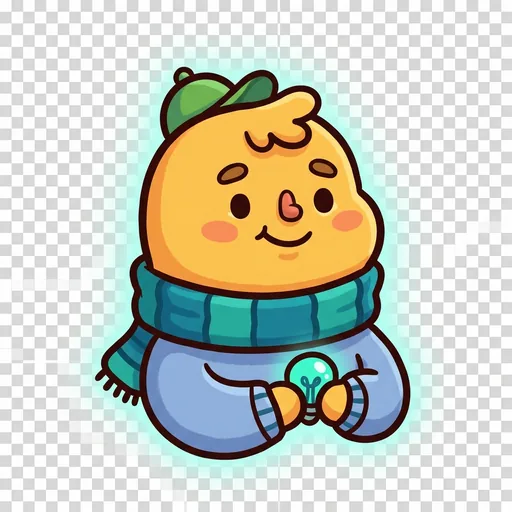
Hum
Personification — non-human takes on human qualities
-

Clang
Onomatopoeia — copper bell-creature whose words carry the noise they name (buzz, splash, crash); the word reaches past the eyes and touches the ears
-
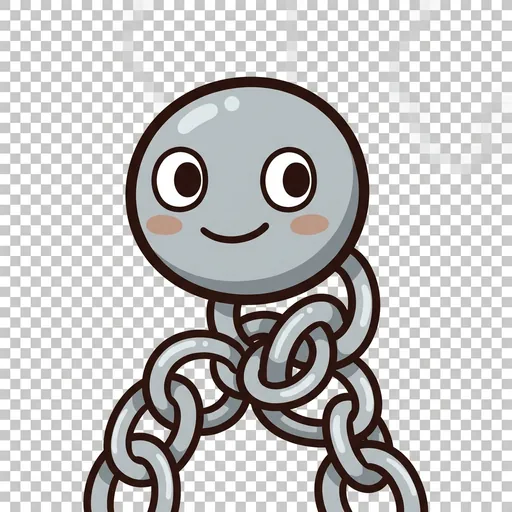
Chain
Alliteration — living-chain creature whose links lock when words share a first sound (big blue balloon); a little is catchy, too much is a tongue-knot
-
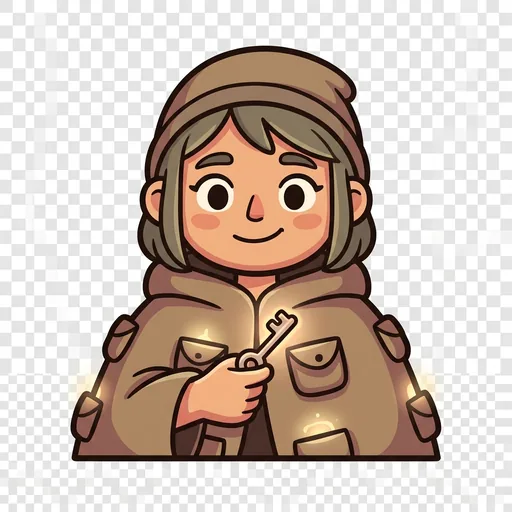
Token
Symbolism — quiet creature with a many-pocketed cloak of small objects that stand for big ideas (a dove = peace); shows the meaning instead of saying it
-

Twain
Oxymoron — two-toned creature (one half warm, one half cool) who places two opposite words side by side (bittersweet); the clash says something truer than either alone