Knot
IDIOM — *fixed expressions whose meaning isn't literal. you can't untie them word-by-word.*
Press play to listen along. The line being read lights up as you go.
Show full transcript
Loading transcript…
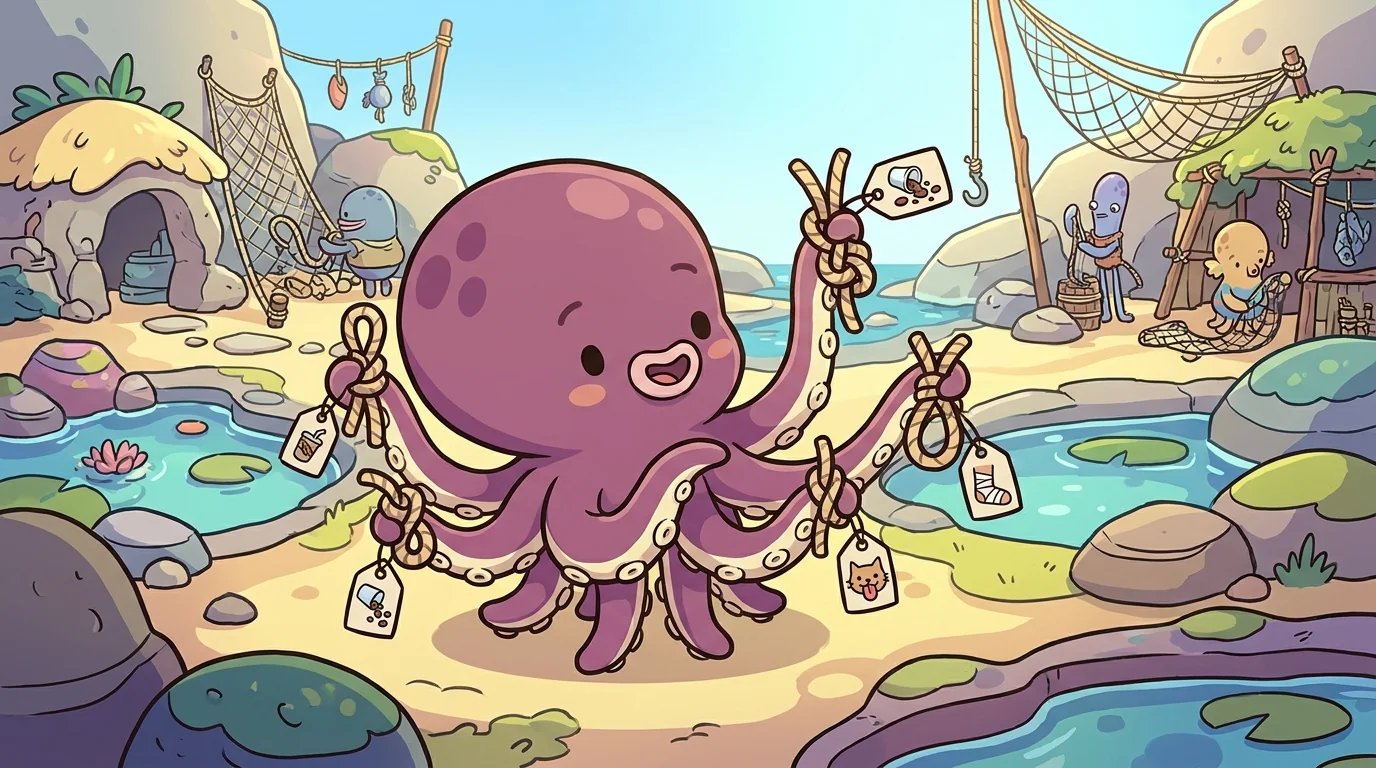
Knot was a small octopus-tween. He had a chunky, soft head. Eight friendly arms wiggled. They were not scary tentacles. Knot was warm purple with cream suckers. He loved words. Especially strange ones.
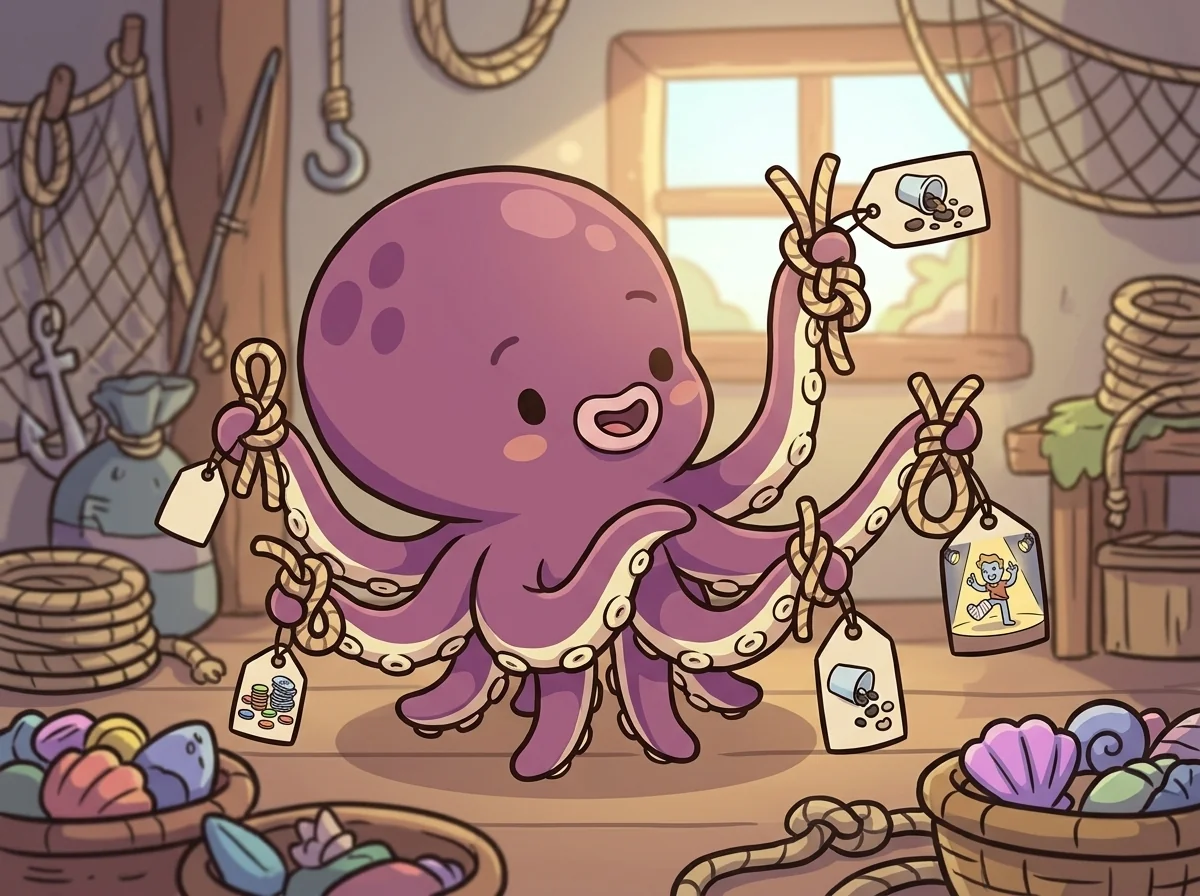
He carried a collection of rope-knots. Each knot had a label. The label showed a famous saying. These sayings were called *idioms*. You could not untie their meaning. Not word-by-word, anyway.
One knot said, "Spill the beans." It meant to tell a secret. Another knot read, "Break a leg." That meant good luck. A third knot was labeled, "Cat got your tongue?" It asked why someone was quiet. The words themselves did not tell you the meaning. That was the whole point. *Idioms* were fixed phrases. Their meaning was just agreed upon. It wasn't built from the words.
Knot taught about *idioms*. They were fixed expressions. Their meaning was not literal. You could not untie them word-by-word. "Break a leg" did not mean to snap a bone. "Spill the beans" had nothing to do with actual beans. The meaning was just known. Everyone who spoke the language understood it.
Knot lived in the tidepool-village. His family made knots for fishing boats. They tied nets and rigging. Each knot had a purpose. Each had a name. Knot's family learned something important. The knot's name did not tell you how to tie it. You had to learn each one. Language was the same way. Knot carried that lesson forward.
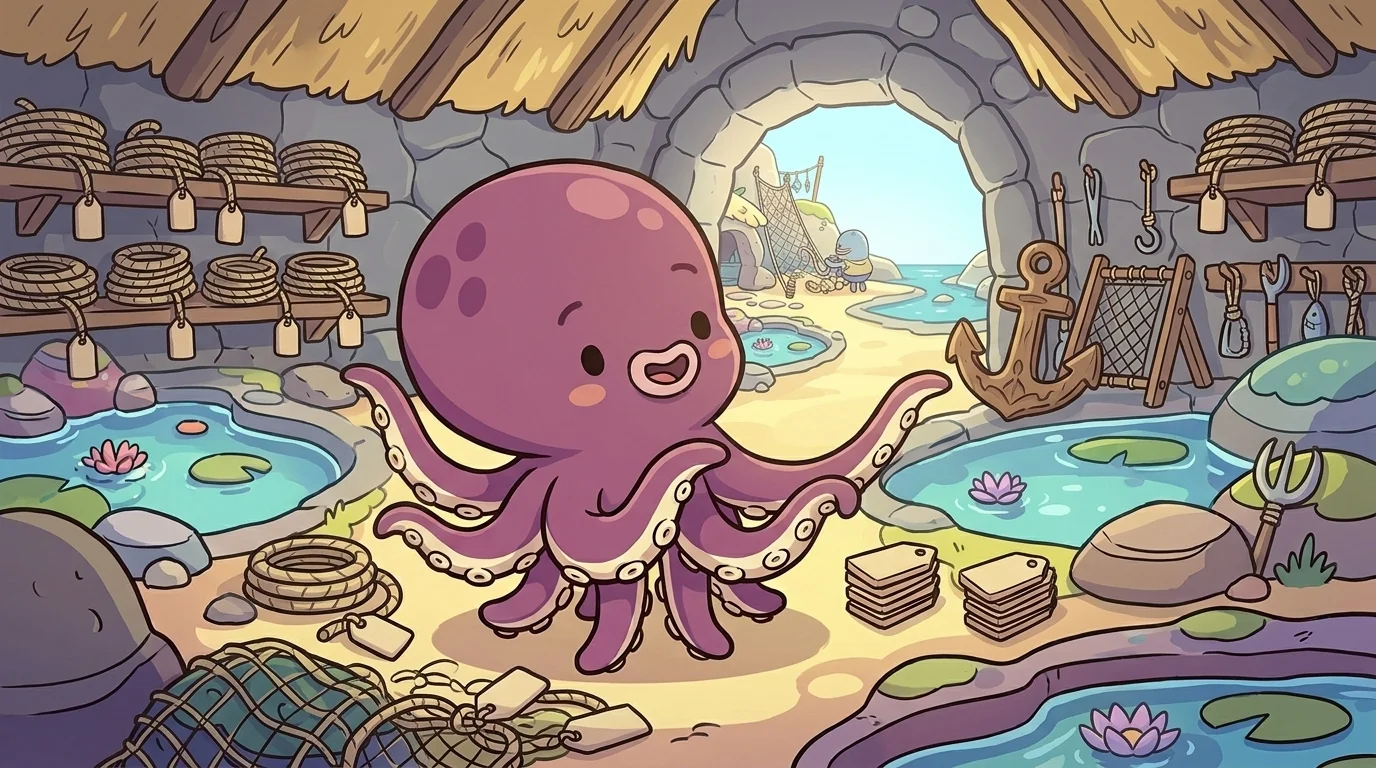
One sunny afternoon, Knot was in his workshop. Sunlight streamed through a shell window. Dozens of rope-knots lay on his bench. Each one had a tiny label. He hummed a little tune. A young student named Pip poked their head in.
"Knot?" Pip asked. "Can I ask you something?"
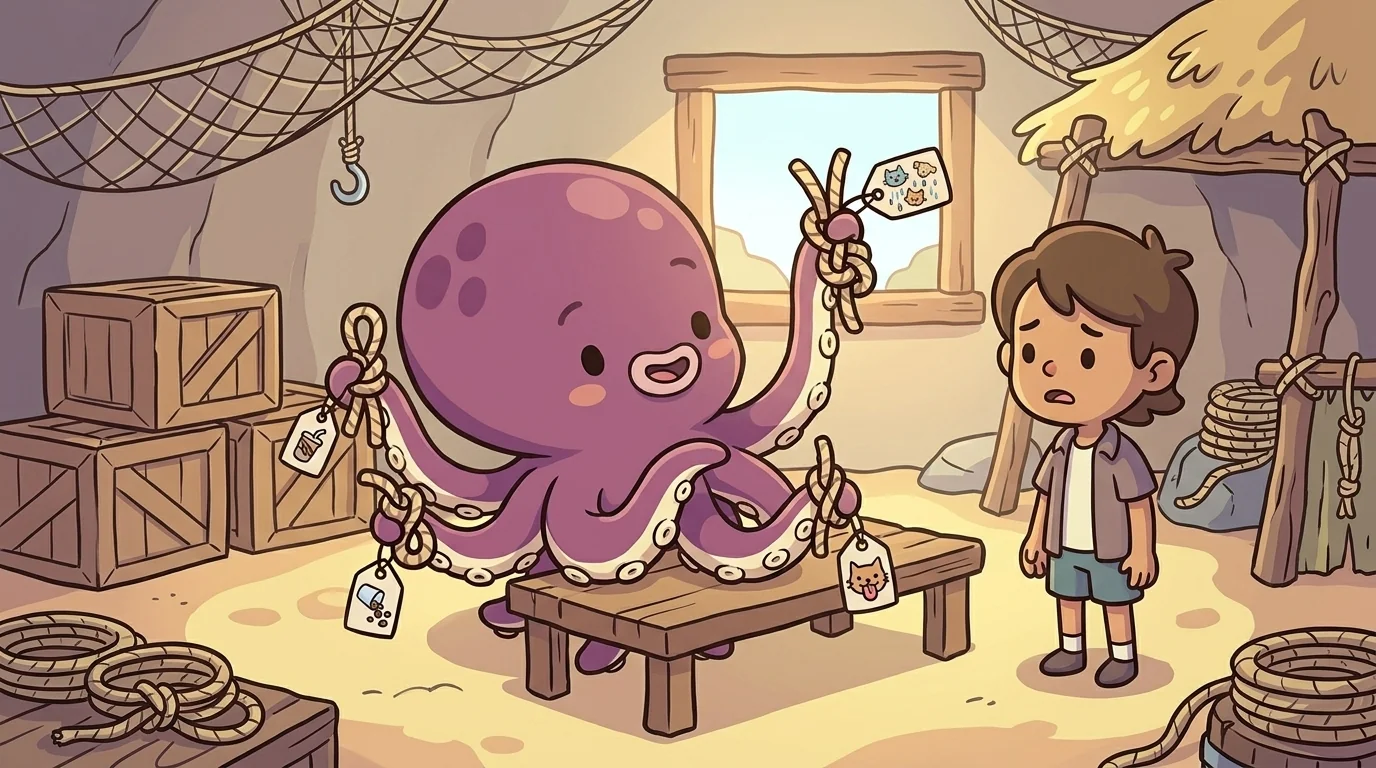
Knot looked up. His eyes were wide and curious. "Of course, Pip! Come in, come in."
Pip stepped inside. They looked worried. "My friend just told me something. They said, 'It's raining cats and dogs!' I looked outside. No animals were falling. What did they mean?"
Knot smiled gently. "Ah, Pip. You've found an *idiom*!" He picked up a knot from his bench. Its label read: "It's raining cats and dogs."
"See this knot?" Knot asked. "It's a phrase. It doesn't mean animals are falling. It means it's raining really, really hard."
Pip blinked. "But why cats and dogs?"
"That's the funny thing about *idioms*," Knot said. "Sometimes, we don't know why. The origin is lost. We just know what it means." He put the knot down.
"So, if a phrase sounds weird," Pip said slowly, "but everyone says it anyway... it's probably an *idiom*?"
"Exactly!" Knot beamed. "That's your first detective trick. Trust the weirdness. It's a signal."
Knot picked up another knot. This one said, "Cost an arm and a leg."
"This means something is very expensive," Knot explained. "It doesn't involve actual body parts. Imagine buying a new shell-phone. If it 'cost an arm and a leg,' it was super pricey."
Pip giggled. "That would be a terrible deal!"
"It would!" Knot agreed. "But the words are just a picture. The real meaning is different."
Knot showed Pip a knot labeled "Break a leg." "This is a wish for good luck," he said. "Especially before a show. Some people think it came from old theater superstitions. Actors would wish each other bad luck to trick evil spirits."
"That's wild!" Pip said.
"And this one," Knot continued, holding up "Spill the beans," "might come from ancient Greek voting. They used beans to vote. Spilling them would reveal the results early."
"So some *idioms* have cool stories," Pip said.
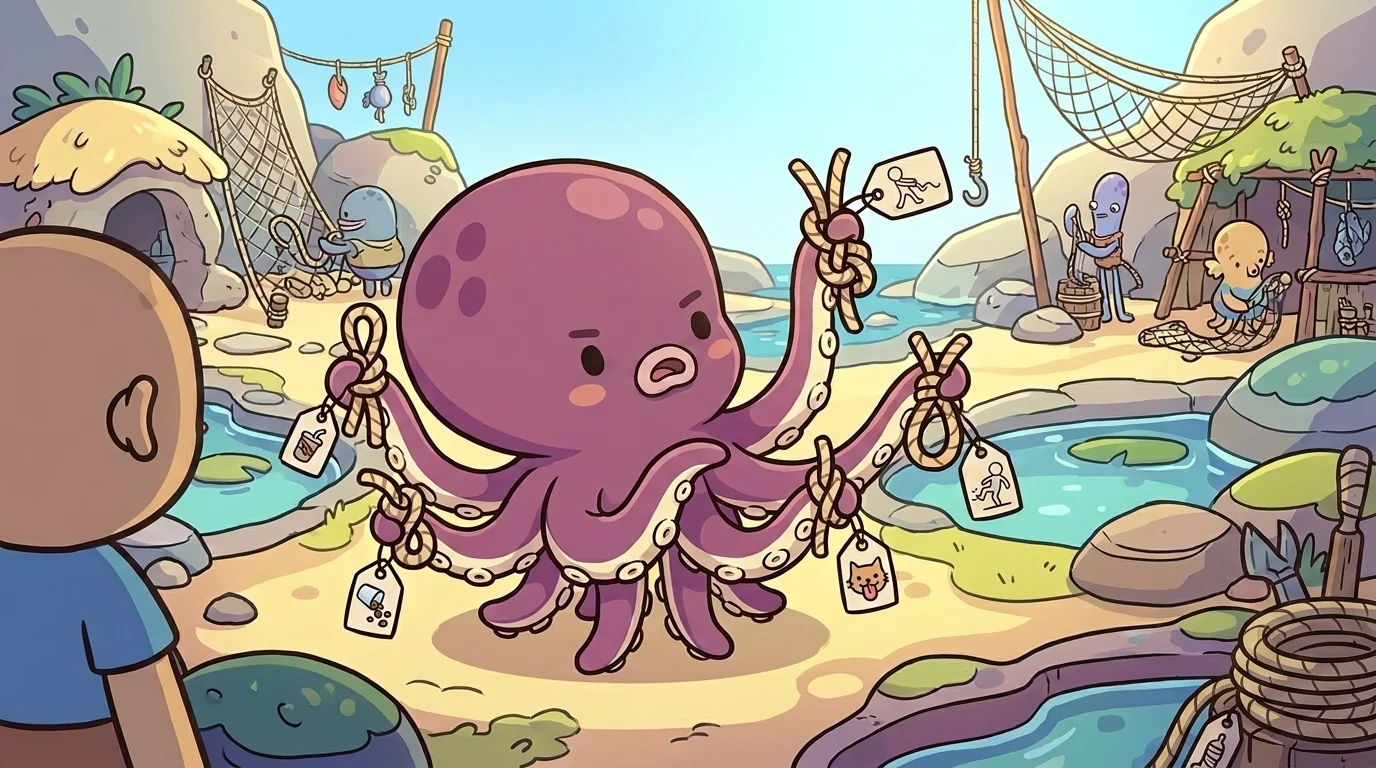
"Some do," Knot nodded. "But many don't. The main thing is this: *idioms* are like cultural fingerprints."
Pip tilted their head. "Cultural fingerprints?"
"Yes," Knot said. "Think about it. English *idioms* don't translate directly. If you told someone in another language, 'It's raining cats and dogs,' they would be very confused. They might even grab an umbrella and a net!"
Knot picked up a knot labeled "Pulling someone's leg." "This means you're just teasing them. But if someone from a different country heard it, they might think you were actually trying to trip them."
"Oh!" Pip understood. "So, knowing *idioms* is like knowing secrets of a language."
"It is," Knot said. "And because of that, we must be kind. Never think someone is 'uneducated' if they don't know an *idiom*."
Knot looked very serious. "They might be from a different culture. They might be learning English. Many English *idioms* are only used in America. Or only in Britain. Or just in certain regions."
"So, it's not their fault," Pip said.
"No, it's not," Knot confirmed. "Don't tease anyone for missing an *idiom. Idioms* just don't travel well. That's how they are."
Knot showed Pip one last thing. "If you hear a strange phrase often, and it doesn't make sense literally, what do you do?"
Pip thought for a moment. "Look it up?"
"Exactly!" Knot cheered. "Look it up in an *idiom* dictionary. If it's there, you've found a Knot!"
Knot remembered his own journey. He had walked to FigureForge when he was twelve. Trope, his mentor, had asked him a question. "What is an *idiom*?"
Knot had answered right away. "It's a fixed expression. Its meaning isn't literal. You can't untie it word-by-word. Like 'Spill the beans.' Or 'Break a leg.' Or 'Cat got your tongue?' The meaning is just agreed upon. It's not built from the words."
Trope had smiled. "You are appointed," he said.
Now, Knot looked at Pip. "I am Knot," he said. "The big lesson I teach is *idiom. Your job is to recognize the weird phrase. Then look it up. Then accept its agreed-upon meaning. You don't have to figure out idioms* from scratch. You have to learn them."
Pip nodded. "I get it now. Thanks, Knot!" They left the workshop, already looking for more strange phrases.
Knot smiled. His work was important. He helped kids untangle the knots of language. Not by pulling them apart, but by understanding their secret meanings.
The FigureForge ensemble
Knot is part of FigureForge's distributed-narrative cast. Each character embodies a different curricular primitive; together they teach the full subject.
-
Ferry
Metaphor — 'X IS Y' direct comparison; carries meaning across
-

Ripple
Simile — 'X is LIKE Y' softer comparison
-
Twin
Analogy — extended comparison / X:Y::A:B parallel mapping
-
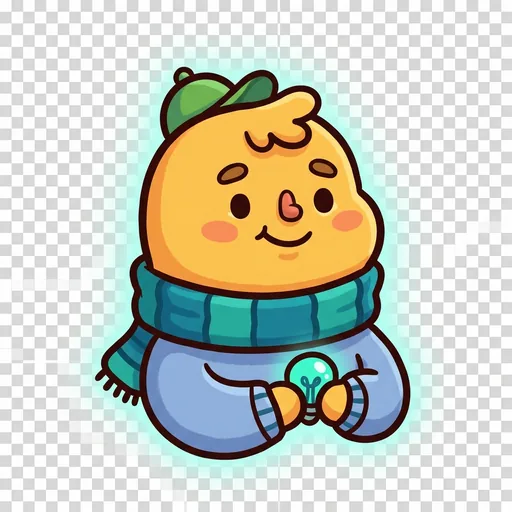
Hum
Personification — non-human takes on human qualities
-
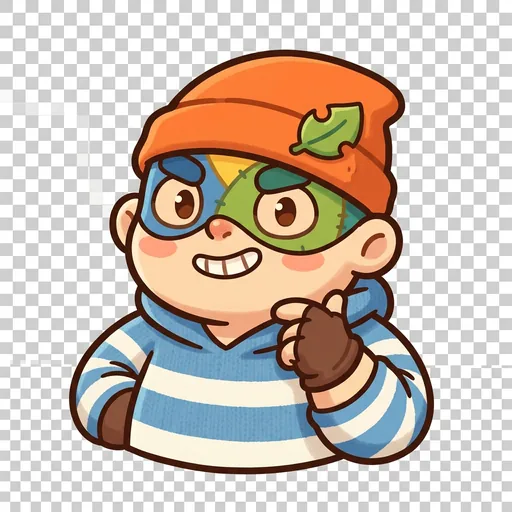
Mask
Hyperbole + understatement + irony cluster — say one thing, mean another
-
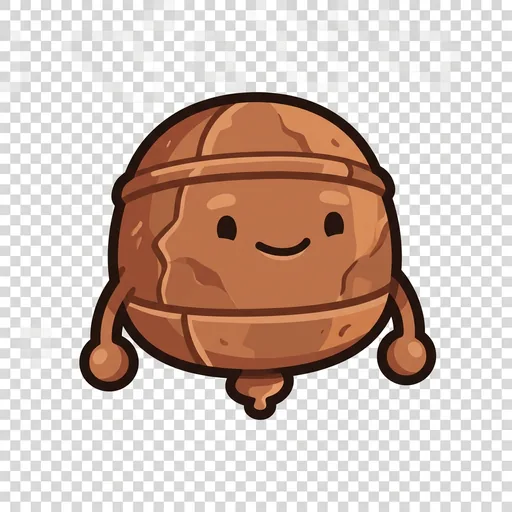
Clang
Onomatopoeia — copper bell-creature whose words carry the noise they name (buzz, splash, crash); the word reaches past the eyes and touches the ears
-
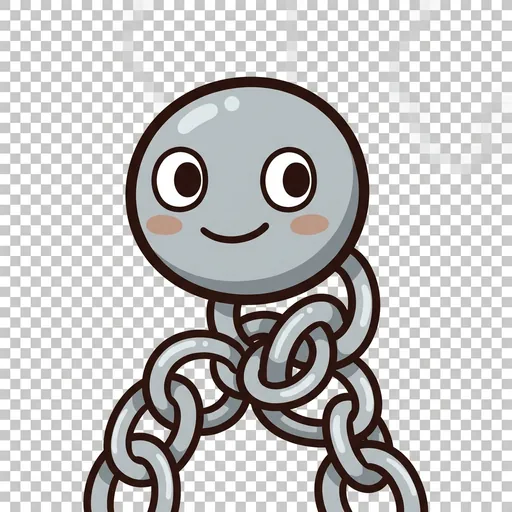
Chain
Alliteration — living-chain creature whose links lock when words share a first sound (big blue balloon); a little is catchy, too much is a tongue-knot
-
Token
Symbolism — quiet creature with a many-pocketed cloak of small objects that stand for big ideas (a dove = peace); shows the meaning instead of saying it
-

Twain
Oxymoron — two-toned creature (one half warm, one half cool) who places two opposite words side by side (bittersweet); the clash says something truer than either alone