
Listen
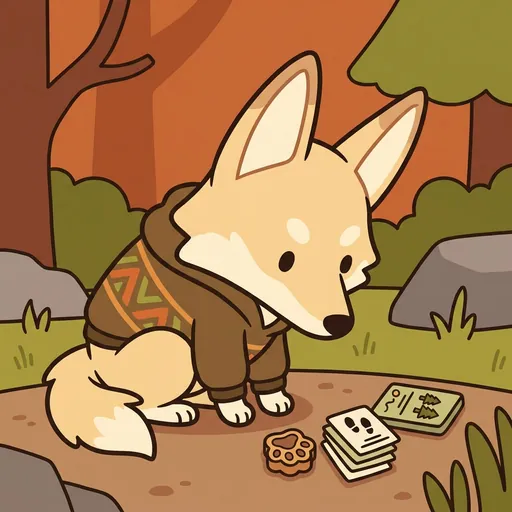
LISTEN — this trail isn't mine; it was here first.
Listen along — Listen
Loading audio…
Press play to listen along. The line being read lights up as you go.
Show full transcript
Loading transcript…
Chapter 5 — Listen and the Trail That Was Here First
At the mouth of the old ridge trail, a coyote-tween named Listen crouched low and did the strangest thing a hiker can do. They stopped walking, tipped one ear toward the trees, and simply listened.
Behind them, three younger hikers bounced on their heels, ready to charge up the path. “Come on,” one of them huffed. “It’s just a trail. Let’s go.”
“It’s not just a trail,” Listen said, without opening their eyes. “Somebody made this. Somebody walked it so many times the ground remembers their feet. Hear that?” They pointed with their chin at the packed dirt, the worn smooth stones, the way the path curved gently instead of cutting straight up the slope. “This bend is old. Whoever cut it knew that going straight up wears the hill out. They went easy on it. On purpose.”
The young hiker frowned at the ground, then at the bend, and slowly the impatience drained out of their shoulders.
“We didn’t find this trail,” Listen said, standing and brushing dirt from their tunic. “We arrived on it. It was here first — long, long before us. So we walk it the way you’d walk through someone’s home when they’ve stepped out for a minute. Quiet feet. Nothing taken. Nothing left behind.” They took one careful step onto the path, then looked back with a grin. “Now we can go. Slowly.”
And they went, single file, listening the whole way up.
Listen learned to listen because of a spring.
When they were small, they’d found a hidden spring at the end of a scrubby side path — a little pool of cold, clear water under a mossy rock. It felt like theirs. They ran to it every day. They stacked the pretty stones into towers. They snapped off the bright flowers to carry home. They carved their name into the soft bark of the tree beside it.
By the end of the summer the pool had gone muddy and small. The moss was scuffed bare. The flowers didn’t come back. The little spot they loved most in the world looked tired, and it was their doing — every stacked stone, every picked flower, every scratch in the bark.
Listen sat by the ruined pool and felt something they didn’t have a word for yet. Not just guilt. Something heavier and quieter — the ache of having taken from a place that had only ever given, and calling it mine the whole time.
An old trail-tender found them there. She didn’t scold. She just sat down beside them and looked at the muddy water for a long while.
“You loved it,” she said finally.
Listen nodded, miserable.
“Loving a place and keeping a place aren’t the same,” she said gently. “This spring was here before you were born. It’ll be here after. You were never its owner, little one. You were its guest.” She dipped a hand in the cloudy water. “A guest listens first. A guest asks, what was here before me, and how do I leave it whole? You didn’t ask. That’s all. Now you know to.”
Listen didn’t fix the spring that day — some things need years, not sorries. But the heavy feeling turned into something they could carry. It had a shape now: I am a guest here.
They walked to Trailforge at twelve, because a place that studied the outdoors ought to understand the part that isn’t about you.
Way, the mentor who kept the trailhead, met them at the gate. Way didn’t ask them to prove they were fast or strong or brave. Way asked one question. “What’s the first thing you do on a new trail?”
Listen didn’t answer with words. They crouched down, laid one palm flat on the packed earth of the path, and went still — ear tipped forward, eyes half-closed. For a full minute they didn’t move. Then they stood and pointed. “Somebody’s been maintaining this. See the little drains cut across it, so the rain runs off instead of washing the whole path down the mountain? That’s care. Somebody’s caring for this trail. It isn’t ours.”
Way looked at the tiny water-bars cut into the trail, at the coyote-tween who’d noticed them in sixty seconds of silence.
“The first thing I do,” Listen said, “is remember I got here late.”
“You belong here,” Way said.
Listen’s corner of Trailforge was full of small cards and a worn field notebook, and hikers came to them before every trip.
A boy came in one morning, backpack half-packed, in a hurry. “I just need the fast way up Bald Ridge,” he said. “Where do I cut across?”
Listen slid a card across the table instead. On it were seven simple lines — plan ahead; stay on the durable path; pack out everything, even the crumbs; leave what you find; go easy with fire; give wildlife its space; be kind to the others sharing the trail.
“There’s no cutting across,” Listen said. “Cutting across is how a trail turns into a scar. The path is where it is because someone figured out, over a long time, the one way up that doesn’t hurt the hill.” They tapped the card. “Leave what you find — that’s the hard one for most folks. See a perfect stone, a wildflower, an old arrowhead in the dirt? You want to keep it.”
“What’s wrong with keeping one stone?”
“Nothing, if you’re the only one who ever passes.” Listen tilted their head. “But a thousand people will walk Bald Ridge this year. If each takes ‘just one,’ the ridge goes bare. So we leave it — for the next guest, and the one after, and because it was never ours to pocket.” They gave a small, dry smile. “The land was full before we showed up. Our whole job is to leave it just as full.”
The boy looked at the card for a long moment. Then, quietly, he repacked his bag — slower this time — and put the trail snacks in a pouch he could seal, so nothing would blow away.
“Ask the trail before you take from it,” Listen said as he left. “It’s been answering that question a lot longer than we’ve been asking.”
That evening the boy came back down, dusty and thoughtful, and sat on the step by Listen’s door.
“I kept thinking about it the whole way up,” he admitted. “About being a guest. It felt kind of… small. Like I didn’t matter as much.”
Listen thought about the spring. About the muddy water and the picked flowers and the old tender’s hand in the pool.
“It’s not smaller,” they said softly. “It’s lighter. When you stop trying to own a place, you stop having to carry it. You just get to be in it — walking easy, taking nothing, leaving it whole for whoever comes next.” They looked out at the ridge, gone gold in the last light. “There’s a feeling that comes with that. Sort of open, sort of grateful. Like the trail let you pass, and you thanked it by leaving no mark at all.”
The boy sat with that for a while. Then he nodded, slow, and Listen watched his breathing settle — the hurry gone out of him, the quiet gone in.
They didn’t say the rest out loud, but they felt it, warm and steady in their chest: you were here first, and I was only ever passing through — and it feels good, so good, to walk this gently.
The TrailForge ensemble
Listen is part of TrailForge's distributed-narrative cast. Each character embodies a different curricular primitive; together they teach the full subject.
-
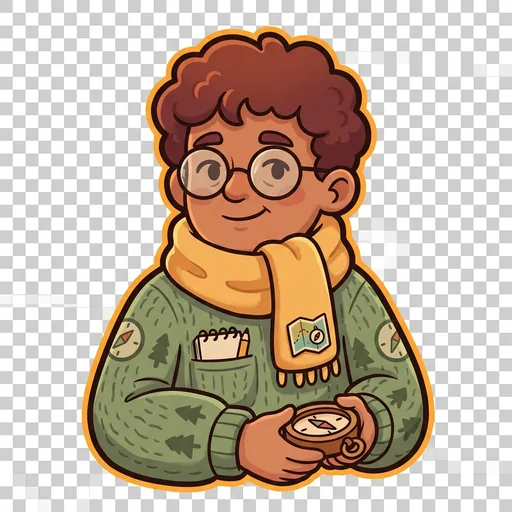
Way
Navigation + orienteering — reading-what's-already-there orientation; 'Stop. Look. Find one thing you know. Now you have a starting point.'
-
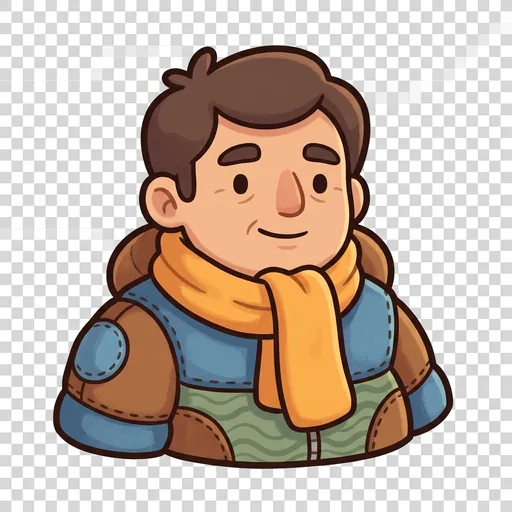
Shelter
Shelter-building + warmth — three-walls insulation (wind / cold-ground / rain)
-

Watch
Weather reading + observation — sky-as-conversation-already-happening; notice the moment it changes
-
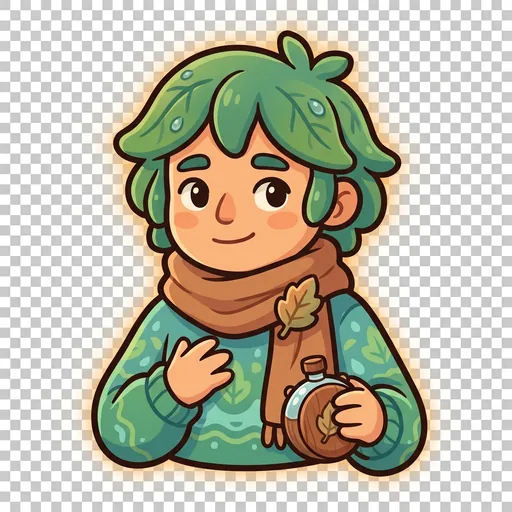
Tend
Water + plants + body-care — survival-as-attentiveness to body priority-order (water first, then warmth, then food); DELIBERATELY shared design with CreatureCare + ForgePortal Tend