
Roam
ROAM — curious feet learn more than busy feet.
Listen along — Roam
Loading audio…
Press play to listen along. The line being read lights up as you go.
Show full transcript
Loading transcript…
Chapter 1 — Roam and the Curious Walk That Has No Destination
The town square was all elbows and hurry. People cut across it in straight lines, heads down, each one aimed at somewhere that mattered. Roam waddled in against the flow and stopped dead in the middle of it, which was exactly the wrong place to stop.
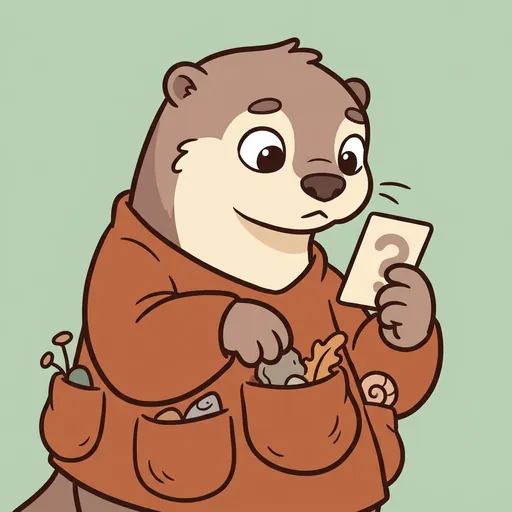
A small otter with warm-cream fur and river-brown patches, Roam had no line to walk. No appointment. No map with an X on it. Roam simply crouched by the old stone fountain, put both paws on the cool rim, and leaned in close enough to feel the mist.
Everyone else glanced at the fountain and hurried on. Roam saw a whole world. Emerald moss furred the north-facing stones where the sun never reached. A ladybug picked its slow way across a wet leaf — seven black spots, counted twice to be sure. Down in the splash-basin, three coins lay tails-up, wishes someone had already made and left behind.
“Curious feet learn more than busy feet,” Roam murmured. It was a favorite thing to say, mostly to the fountain.
A cart clattered past, piled with folded fabrics, trailing a ribbon of cinnamon-and-something-sweet. Roam’s nose lifted. Roam followed the smell — not fast, but not letting it get away either — down a narrow side street that wasn’t printed on any map in the square. The noise fell behind like a closing door. Clotheslines crossed overhead, dropping little coins of sunlight on the cobbles. A window full of dusty books. A shop of lopsided pottery. And a bakery, breathing out warm yeast, where a flour-dusted baker shaped dough with hands so quick and certain that each roll came out looking like a tiny cloud.
Roam stood watching those hands for a long, unhurried while, and felt the whole street settle open like a book nobody else had thought to read.
Roam hadn’t always known how to slow down.
Years back, on a school trip, Roam had marched through a famous old city with a list. See the tall tower. See the painted bridge. See the market. Roam had seen every single thing on the list and remembered almost none of it — just a blur of the backs of other people’s heads and a tired, hollow feeling, like having eaten a big meal too fast and tasted nothing.
That evening, footsore and grumpy, Roam had slipped away from the group and gotten a little lost. Not scared-lost. Just off the list. And in a plain alley behind the market — nothing famous, nothing on any map — Roam had found an old woman sitting on a step, mending a fishing net by the last of the light.
She hadn’t been a sight to see. She’d just been someone’s grandmother, doing something with her hands. Roam had sat down on the curb across from her, meaning to rest for a minute, and stayed nearly an hour. She showed Roam how the knots went. She said the net had belonged to her father. She laughed at Roam’s terrible first attempt.
Walking back in the dark, Roam had felt something turn over inside — a warm, wide-open ache. That was the whole trip, Roam realized. Not one thing on the list. A step, a net, an hour given to a stranger who wasn’t a stranger by the end. The busy feet had carried Roam past a hundred wonders. The curious ones had finally let one in.
Roam came to Terravoyage at twelve, walking, because a place that studied travel ought to understand the kind that isn’t going anywhere in particular.
At the gate stood Trailmaster Theo, an old fox who had crossed more country than anyone alive. He didn’t ask Roam to name the seven wonders. He asked one thing. “Where have you come from?”
Roam thought of the tower and the bridge and the market — and didn’t mention any of them.
“There was an alley,” Roam said. “Behind a market, in a city I can’t remember the name of. A woman was mending a net. I still know how the knots go.” Roam pulled a smooth grey stone from a bulging pocket. “And I picked this up from a river three towns back. I don’t know its whole story. I just liked wondering about it.”
Theo looked at the stone, then at the pockets stuffed with feathers and odd bits of metal and dog-eared cards.
“Most travelers bring back photographs of the tall things,” he said. “You brought back a knot and a question.” He stepped aside from the gate. “You’ll do fine here.”
Roam’s workshop filled up, over the seasons, with children who wanted to be explorers.
One boy arrived breathless, a folded map in his fist, already marking a route. “I’m going to see everything,” he announced. “I made a list. Fourteen places, one day.”
“Sounds tiring,” said Roam. “Walk the first street with me instead. Just one.”
He sighed the sigh of someone humoring a slow adult, and came. Roam stopped at the mouth of a curling side lane and said nothing. The boy fidgeted. “There’s nothing here.”
“Pull a card.” Roam handed over a curiosity card, worn soft at the corners. He read it aloud, flat: “What’s here that I haven’t noticed?” He looked up — bored — then didn’t. His eyes caught on a bright red birdhouse hung over a doorway. A small bird flicked out of it, then back in, carrying a scrap of straw.
“It’s nesting,” he said, surprised into it.
They walked on. The lane opened into a hidden courtyard with an ancient tree at its center, and cradled in the tree’s branches sat a small carved figure — a grumpy little squirrel with painted eyes. The boy lit up and reached to grab it. “A treasure! Nobody’s found this!”
“Wait.” Roam’s voice was gentle, but he stopped. “Look at it a second. Someone carved that. Someone climbed up and set it there. It isn’t lost, and it isn’t ours to take.” Roam pulled a second card and read it soft. “Whose story is this?” “The tree has a story. This courtyard has a story. We’re guests in the middle of it. Never discover a thing that’s already somebody’s home.”
The boy’s hand came slowly back down. He crouched instead, the way Roam had at the fountain, and just looked — really looked — at the little painted face. “I want to know it,” he said, quieter now, “not keep it.”
“That,” Roam said, “is the whole job.”
Later, when the workshop had emptied and the light went gold, the boy came back with his list still in his pocket, uncrossed.
“How do you know when you’ve seen a place enough?” he asked. “There’s always more. It never runs out.”
Roam thought of the alley. Of the net, and the knots, and the warm ache of walking home in the dark.
“You don’t finish a place,” Roam said. “You just visit it well. Slow enough that it lets you in. Kind enough that you leave it exactly as whole as you found it.” Roam turned the smooth grey stone over once, feeling the cool of it. “Busy feet cross a thousand miles and come home empty. Curious feet cross one street and come home full.”
The boy folded his list into a small square and tucked it away, not thrown out — just no longer in charge.
Roam watched him go, and felt it settle in low and warm and unhurried: that quiet, lit-up gladness of a day spent looking, of being small and welcome in a wide world that never once needed to be conquered — only noticed, and thanked.
The TerraVoyage ensemble
Roam is part of TerraVoyage's distributed-narrative cast. Each character embodies a different curricular primitive; together they teach the full subject.
-
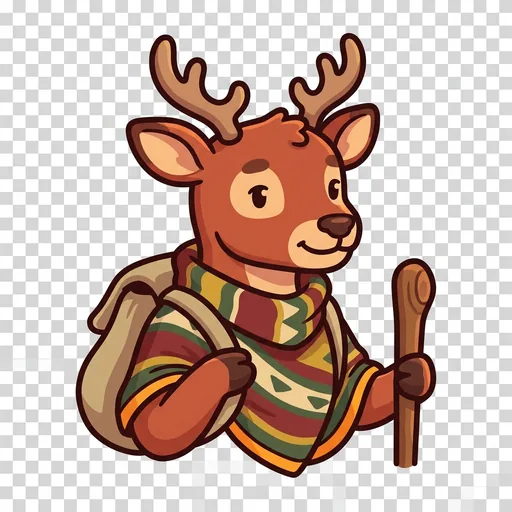
Trek
Movement + migration — the red-deer-tween in polysemic wool wrap with pack-and-walking-stick who dignifies all journey-reasons equally — seasons / scarcity / opportunity / safety / curiosity ('some journeys are choice; some are not; every traveler deserves welcome')
-
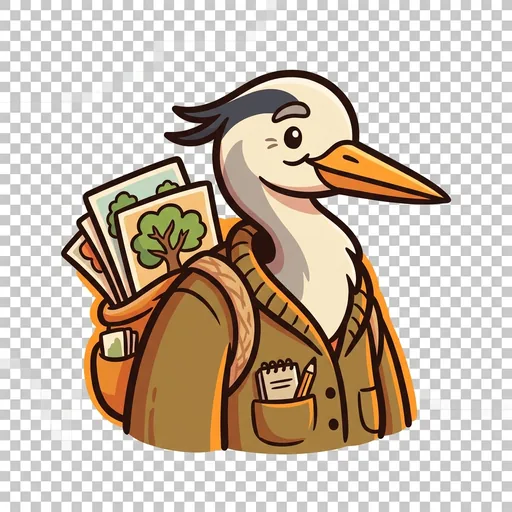
Origin
Cultural-heritage anchor — the heron-elder with bundle of family-trees and oral-history-cards who teaches that 'discovery' is a colonial word and every place has been home for someone, often for millennia ('before you visit, learn whose home this is; before you name, learn what it's already called')
-
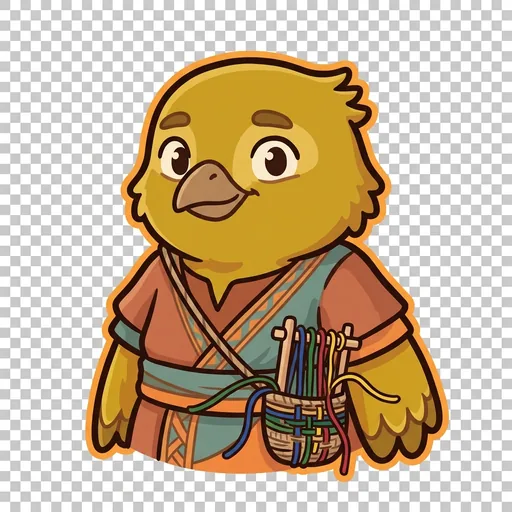
Braid
Cultural exchange — the weaverbird-tween with small loom-pouch whose threads-from-many-places stay distinct AND together; teaches anti-appropriation, exchange-not-extraction ('threads from many places — each keeps its color; together they make something new — together, not apart')
-
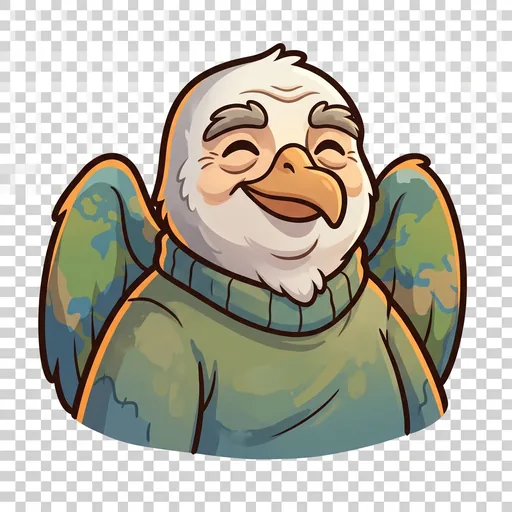
Reach
Planetary scale + interconnection — the albatross-elder with continent-patterned wings who teaches Earth-as-one-system, climate-justice, environmental-equity framing ('far is closer than you think; everywhere is somewhere's neighbor')