Origin
ORIGIN — *before you visit, learn whose home this is; before you name, learn what it's already called.*
Listen along — Origin
Loading audio…
Press play to listen along. The line being read lights up as you go.
Show full transcript
Loading transcript…
Chapter 3 — Origin and the Question Before Every “Discovery”
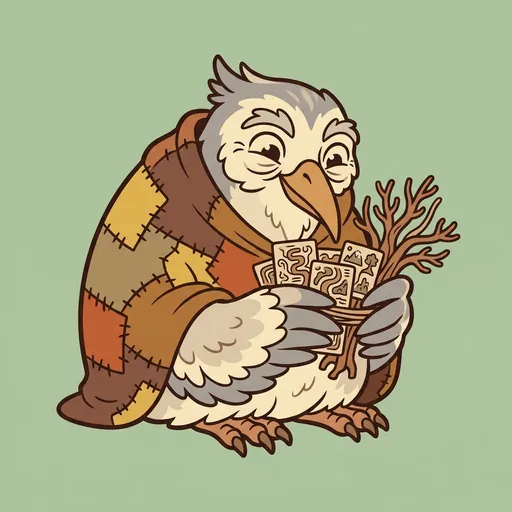
At the edge of the Whispering Valley, an old heron named Origin stood very still and did the slowest thing there is. She read the land.
A young traveler had just crashed up the ridge behind her, flushed and grinning, a little sun-flag clutched in one fist. The waterfall glittered. The ferns shimmered. It looked, to the young one, like a place no eyes had ever touched.
Origin did not look at the falls first. She lowered her long neck to the ground and read it — the faint groove of a path worn smooth, the smaller stones lined along its edge on purpose, the old carvings on a boulder where someone, long ago, had etched birds and swirling water. She read the land the way you read a page that someone else has already filled.
“You’ve found something wonderful,” Origin said gently, without turning. “Which means someone found it first.”
The young traveler — Pip — froze with the flag half-raised. “How can you tell?”
“The path tells me.” Origin touched a smooth stone with one long toe. “Stones don’t line themselves up. Someone knelt here and set each one. And these—” she tipped her beak at the carvings “—these are older than either of us. This place has been read a thousand times before your feet arrived.” She straightened, unbundling a small stack of worn cards tied with string. “So before I name a place, I ask what it’s already called. Before I visit, I ask whose home it is. That’s the first thing I ever learned to do — and it took me a long, embarrassing while to learn it.”
Origin had not always been so careful. That was the part she didn’t like to remember.
When she was young, she had crossed a whole river valley in one bright afternoon and stuck a marker of her own into the mud — found by me — proud as anything. She had felt enormous. She had felt like the map itself.
Then an evening came when the people who lived along that river gathered by their fires, and she overheard them, quiet and tired, talking about the strange young heron who had marched through their gardens as if the ground were empty. As if the fences were nothing. As if their grandmothers’ grandmothers had not walked those same paths and named every bend of the water.
Origin’s face had gone hot. Her wings had felt too big for her body. She had wanted to sink into the reeds and vanish. It wasn’t that anyone had shouted — no one had. It was worse than shouting. It was the small, sad way they said she didn’t even ask.
That night she pulled her own marker out of the mud and held it, heavy and shameful, in her wing. And a slow thought arrived, the way the tide arrives — not all at once, but certain: the valley was never empty. It was only empty of my asking. The hot-faced feeling didn’t leave. But it changed into something she could carry. It became a question she would ask everywhere, for the rest of her life.
She came to the traveler’s academy late, older than most who arrive, with grey already softening her feathers.
The keeper of the gate did not test her wingspan or her speed. He asked her one thing. “You’ve traveled far. What do you carry home from a new place?”
Origin thought of the river, and the fires, and the marker she still kept in her bundle to remind herself. She set it on the ground between them — an old marker with the words found by me scratched out.
“I used to carry places home like they were mine to keep,” she said. “Now I carry the names other people gave them first. And I carry the questions I forgot to ask when I was young.” She looked up. “I don’t discover anything. I’m always the last one to arrive.”
The keeper looked at the crossed-out marker for a long moment. “Then you already know the thing this place exists to teach,” he said. “Come in.”
Origin’s students came to her full of the same bright certainty she’d once had.
Pip was a fine example — flag out, heart racing, ready to plant it. So Origin didn’t lecture. She knelt beside the hidden path and let Pip see it too.
“Look with me,” she said. “What do you notice?”
Pip crouched. “There’s… a path. Little stones along it.” A pause. “Someone made that.”
“They did. What else?”
“The carvings.” Pip’s voice dropped. “They’re really old.”
“Older than ‘new to me,’” Origin said softly. She opened her bundle and turned a card so Pip could see a drawing — figures walking among willows, generations of them. “The people who live here have many names for this valley. Many stories. They’ve read this land longer than anyone can count. Do you still think you found it?”
Pip looked at the little flag. It had felt so light a minute ago. Now it felt like the heaviest thing in the pack.
”…No,” Pip said. “I think I just… walked into somewhere that was already loved.”
Origin’s whole face crinkled warm. She did not take the flag away. She waited until Pip lowered it on their own, and folded it, and tucked it deep in the pack.
“That’s it,” she said. “That’s the whole craft. You don’t stop traveling. You just start arriving gently. First you learn whose home this is. Then you learn what they call it. Then — only then — you ask if you may visit, and you listen to the stories that are already here.” She rose on her long legs. “‘Discovered’ is a small, proud word. The better words are learned, and asked, and thank you.”
Later, when the light was gold and low, Pip came back with a quieter question.
“When you stand at a new place,” Pip said, “and it looks empty and wide open… how do you remember it isn’t?”
Origin looked out over the valley for a while before she answered.
“I feel it here,” she said, and touched her own chest with the tip of one wing. “There’s a little pull, right before I take or name anything — a held breath, like the moment before you knock on a door that isn’t yours. I used to rush past it. Now I stop and let it be there. That pull is respect trying to reach me before my feet do.” She glanced down at Pip. “Every place has been someone’s home, often for longer than either of us can imagine. When you feel that quiet knock-before-you-enter feeling — that’s not you being slow. That’s you being kind.”
Pip nodded slowly, and Origin watched the last of the flag-proud stiffness go out of the young one’s shoulders — replaced by something softer, something that looked a great deal like care.
She didn’t say the rest out loud. But she felt it, settled and warm all the way to her long feet: the gentlest travelers are the ones who remember they arrived last — and are glad of it.
The TerraVoyage ensemble
Origin is part of TerraVoyage's distributed-narrative cast. Each character embodies a different curricular primitive; together they teach the full subject.
-
Roam
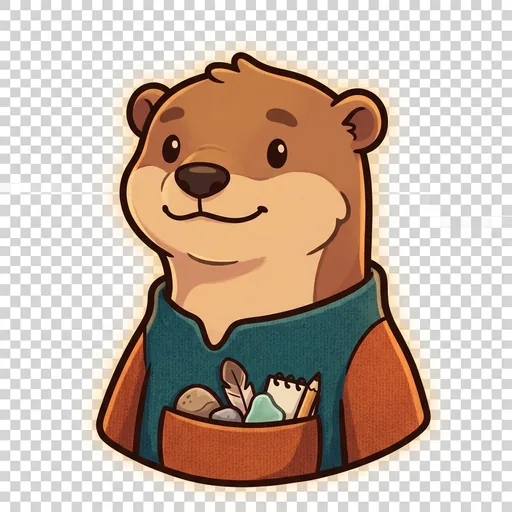
Open exploration + curiosity — the otter-tween with pocket-tunic full of found things who teaches that curiosity-without-destination is a valid mode ('curious feet learn more than busy feet')
-
Trek
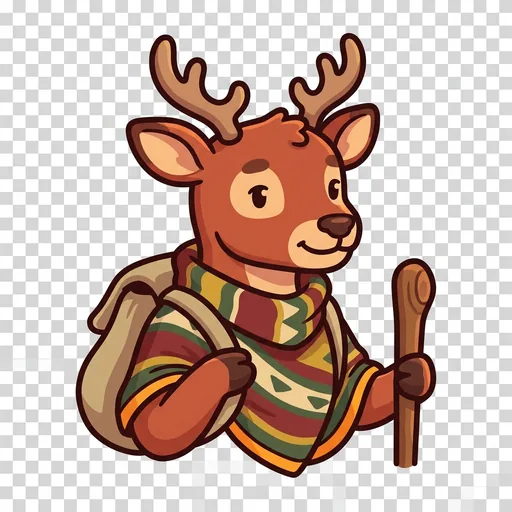
Movement + migration — the red-deer-tween in polysemic wool wrap with pack-and-walking-stick who dignifies all journey-reasons equally — seasons / scarcity / opportunity / safety / curiosity ('some journeys are choice; some are not; every traveler deserves welcome')
-
Braid
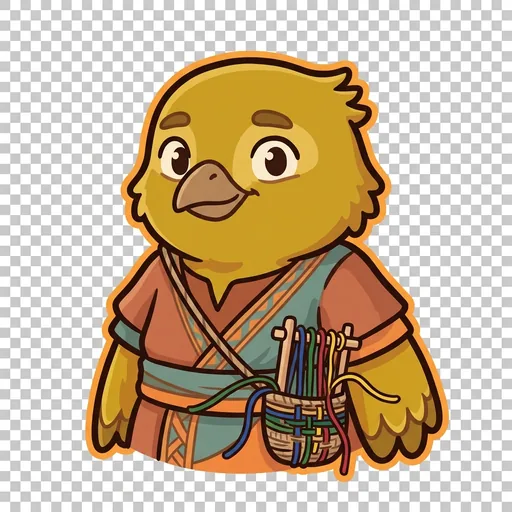
Cultural exchange — the weaverbird-tween with small loom-pouch whose threads-from-many-places stay distinct AND together; teaches anti-appropriation, exchange-not-extraction ('threads from many places — each keeps its color; together they make something new — together, not apart')
-
Reach
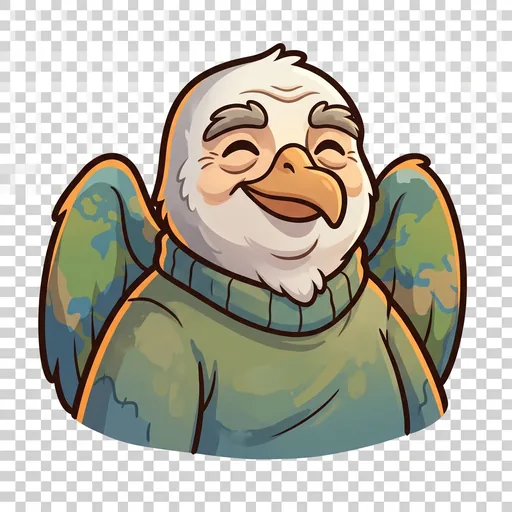
Planetary scale + interconnection — the albatross-elder with continent-patterned wings who teaches Earth-as-one-system, climate-justice, environmental-equity framing ('far is closer than you think; everywhere is somewhere's neighbor')