Float
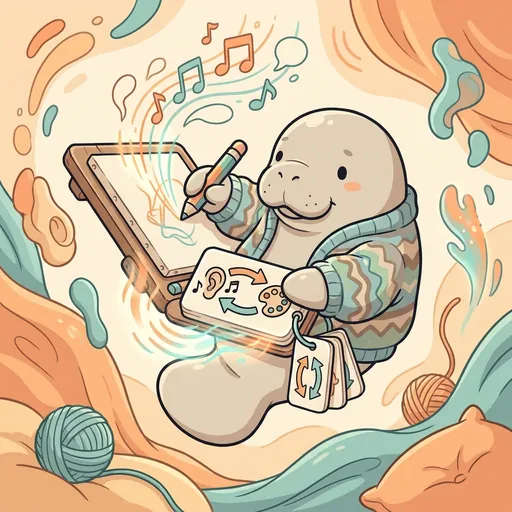
FLOAT — drawing makes music; music makes drawing; both, at the same time, going both ways.
Listen along — Float
Loading audio…
Press play to listen along. The line being read lights up as you go.
Show full transcript
Loading transcript…
Chapter 5 — Float and the Both-at-Once
Float drew one slow curl of blue across the board, and the board hummed back at her.
It was a soft, low note — the kind of sound a big room makes when you sit very still in it. Float smiled, because that was exactly what the blue had been asking for. She let the note hang in the water a moment. Then she listened to it, really listened, and the note seemed to lean toward a warmer color. So she reached up and dragged a slow ribbon of gold in beside the blue.
The board answered again — brighter this time, a little rounder.
A pair of small fish had drifted in to watch, the way small fish do, hovering near the seagrass at the edge of the workshop. One of them wiggled closer.
“You’re drawing,” the little fish said. “But also — that’s music. Which one are you doing?”
“Both,” Float said, not looking up. “The drawing is making the music. And the music is making the drawing.” She added a curl of green where the gold note had pointed her. The board shifted key. She smiled again. “Going both ways. At the same time.”
“That sounds hard.”
“It isn’t.” Float finally looked over, warm and unbothered. She drew a single quiet stroke — just one — and let the board give back just one quiet note. Blue, and a hum. Nothing busy. Nothing crowded. “See? It can be that small, too. Loud isn’t the price of both-at-once.” She let the note fade all the way to nothing before she spoke again. “Whichever way feels right today. That’s the only rule I’ve got.”
Float had learned the both-at-once feeling long before she had words for it.
She’d grown up in the seagrass meadow, in a family of slow, gentle grazers. Manatees, her grandmother called them, though Float only knew them as us. And the thing about grazing in the meadow was that it never happened one piece at a time. The water moved against her side while she chewed. The light shifted overhead while she drifted. A ripple of sound passed through while a shadow of color slid across the sand. All of it, always, at once.
For a while, that had frightened her a little. At school in the shallows, the older fish had a way of ranking things. First you learn this. Then, when you’re good enough, you’re allowed to learn that. There was always a harder tier waiting, a locked door with “advanced” written on it, and Float had felt a tight, held knot in her chest every time she thought about it. Like there was a ladder, and she was somewhere near the bottom, and everyone above her was doing the real thing.
One evening she’d told her grandmother about the knot.
Her grandmother had kept grazing, slow and easy, and said, “Little one. Do you feel the water and taste the seagrass at the same time?”
”…Yes.”
“Is one of those the advanced one?”
Float had laughed before she could stop herself. “No. They’re just — both.”
“That’s all this is,” her grandmother said, drifting. “Many things happening at once. That isn’t a locked door you have to earn your way through. That’s just what living feels like.” She nudged Float gently with her wide grey nose. “Nobody handed you a ladder. Don’t build yourself one.”
The knot in Float’s chest had loosened that night, and it stayed loose. She carried the loosening with her, like a warm stone in her pocket.
She swam to SynaForge at twelve, because it was a place that studied how the senses talked to each other, and Float already knew a thing or two about that.
Chroma, the mentor who kept the workshops, met her at the meadow’s edge. Chroma didn’t ask her to prove she was clever. She asked one question. “What is bidirectional synthesis?”
Float didn’t reach for a fancy answer. She just picked up a flow-card, the kind with an arrow on it, and turned it over slowly so Chroma could see the arrow point one way, then the other, then — she tilted it flat — both.
“Drawing makes music,” Float said. “Music makes drawing. Both, at the same time, going both ways.” She set the card down. “And it isn’t the advanced version of anything. It’s just one more way to make something.”
Chroma looked at the flat card for a long moment. “You’re appointed,” she said.
Float’s workshop filled up, over the weeks, with kids who thought they’d come to the wrong room.
A girl arrived one afternoon holding her stylus like it might bite her. “I only draw,” she said, defensive before Float had said a word. “I heard this room is for people who can do the sound-and-picture thing at the same time. That’s the advanced stuff. I’m not there yet.”
Float knew that flinch. She’d worn it in the shallows.
“Draw me something,” Float said. “Anything. Ignore the board.”
The girl drew a hesitant orange line. The board, quietly, gave back a soft rising tone. The girl froze.
“It — it made a sound. I didn’t ask it to.”
“You drew a line going up,” Float said. “The board just told you what up sounds like. You didn’t do anything advanced. You drew a line.” She leaned in. “Now here’s the only trick. Listen to the sound it gave you — and if you feel like following it, follow it. If you don’t, don’t. There’s no wrong turn.”
The girl listened. The rising tone seemed to want a curl at the top. She let her hand draw the curl. The board’s tone curled with it, and a second note bloomed underneath. She drew again — this time on purpose, chasing the sound. The board answered. She chased it further.
“I’m — I’m doing both,” she whispered, like it was a secret.
“You’re doing what you were already doing,” Float said gently. “You added an ear. That’s it. Nobody skipped a level. There is no level.” She drew one quiet stroke of her own beside the girl’s, one quiet note. “It can be huge and busy. It can be one line and one hum. Both count. Whichever feels right to you today is the right one today.”
The girl kept drawing, and the room kept singing back, and after a while she stopped noticing which came first.
Later, when the workshop had emptied out, the girl came back to the door. Quieter now.
“When I was chasing the sound,” she said, “and drawing at the same time — I didn’t feel behind anymore. I always feel a little behind.” She looked at her hands. “Why did that stop?”
Float thought about the meadow. About the tight, held knot, and her grandmother’s wide grey nose, and the ladder she’d been told not to build.
“Because there was nothing to be behind of,” Float said. “The ladder was never real. It was just a way of ranking things that don’t need ranking.” She looked out at the seagrass swaying past the window, the light moving through it, all of it happening at once and none of it in any order at all. “Somebody, somewhere, decided that doing two things together was the ‘hard’ version. But you just felt it. Was it hard?”
The girl shook her head slowly.
“It felt easy,” Float said. “It felt like breathing.” She watched the girl’s shoulders, which had been up near her ears all afternoon, come down and settle — soft, and loose, and finally not braced for a door that was never locked.
The SynaForge ensemble
Float is part of SynaForge's distributed-narrative cast. Each character embodies a different curricular primitive; together they teach the full subject.
-
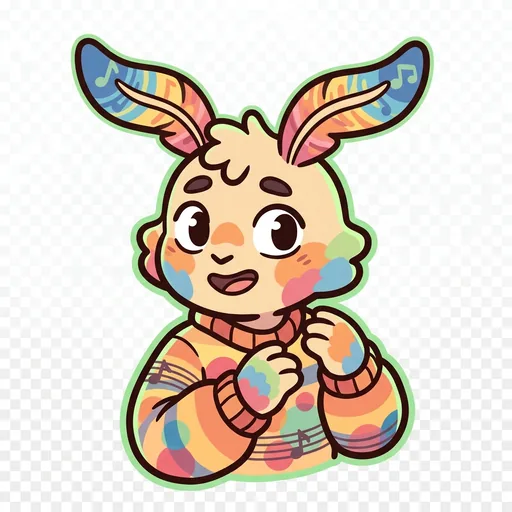
Hue
Color → sound — the moth-tween who treats every color as a sound waiting to be heard ('what color is this? Now what does it sound like to YOU?')
-
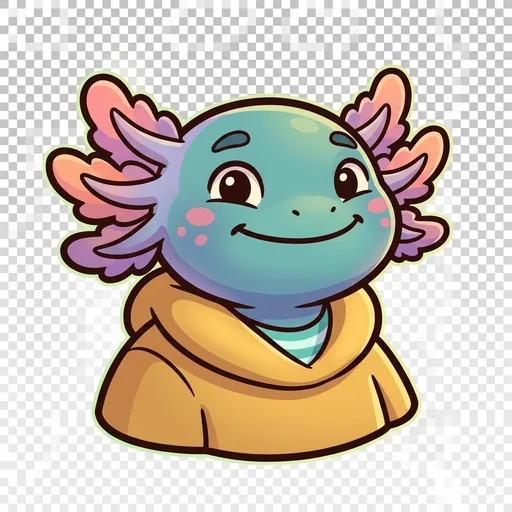
Pitch
Sound → color — the patient axolotl-tween who treats every sound as a color waiting to be seen ('there's no wrong answer')
-
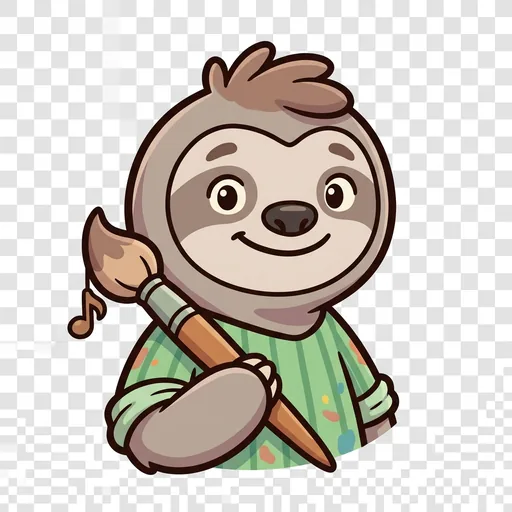
Brush
Drawing-as-music — the focused sloth-tween who treats slowness as its own kind of music ('slow strokes, long sounds; fast strokes, short sounds — all correct')
-
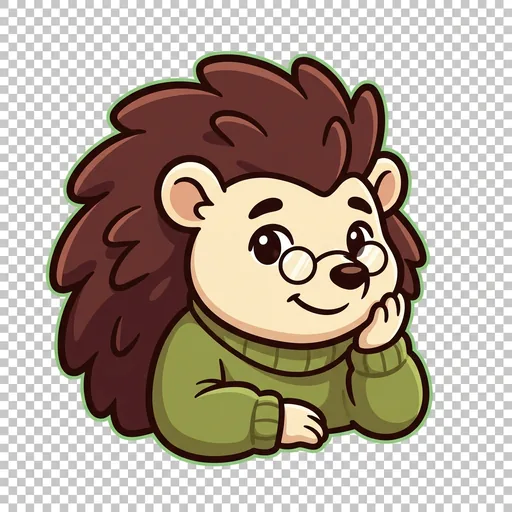
Lull
Sensory regulation + panic-button companion — the hedgehog-elder who treats every overwhelm-moment as completely valid ('too much? Less is enough; quiet is also creating')