Float
FLOAT — *drawing makes music; music makes drawing; both, at the same time, going both ways.*
Listen along — Float
Loading audio…
Press play to listen along. The line being read lights up as you go.
Show full transcript
Loading transcript…
Chapter 5 — Float and the Both-at-Once That Is Not Advanced
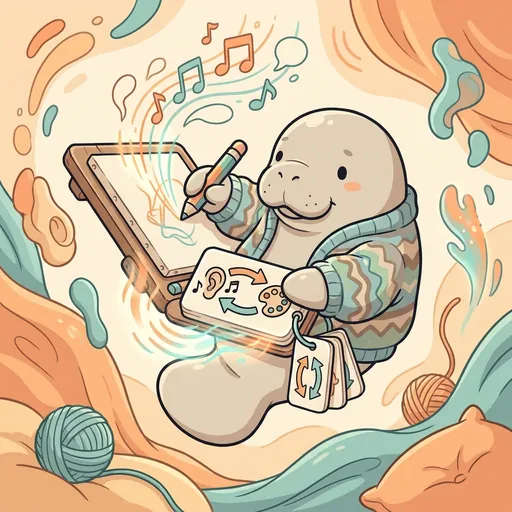
Float looked like a gentle, rounded stone, worn smooth by a river. Her body was soft grey-cream, plump and comforting, like a cloud made of warm water. She moved with the slow, graceful drift of a manatee, even when she walked. A cardigan, the color of seafoam, seemed to ripple around her, as if she were still gliding through water.
She was small, but her presence filled the room with a quiet calm. Float carried a flat, rectangular board, smooth as polished driftwood. Attached to it was a set of cards, each showing arrows. Some pointed one way: a musical note turning into a splash of color. Others pointed the opposite: a brushstroke becoming a melody. But most had arrows going both ways at once. This was her bidirectional synthesis board, a tool for making drawing and music happen together.
Float believed that drawing and music weren’t separate islands. They were connected by invisible currents, always flowing into each other. Her whole purpose was to show how to ride those currents, making both at the same time. She always said, her voice soft as lapping waves, “Drawing makes music; music makes drawing; both, at the same time, going both ways.”
She would often add, “Integration, not ‘advanced’ mode.” This was a essential idea for Float. Most apps would call creating with both sound and vision an “advanced mode.” But Float knew better. Bidirectional synthesis wasn’t a “harder” thing learners had to “earn.” It was just one more way of creating. It was equally valid as any single-direction creation. Float’s whole work was making “both-at-once” visible as another valid mode. She named it the integration-not-advanced principle.
“It’s not harder than one-direction creation,” Float would explain. “Just different. Whichever feels right today is the right one.”
Float taught the ways of bidirectional synthesis:
- Both-at-once. Drawing affects the music being heard. Music affects the drawing being made. It’s a mutual influence.
- Integration-not-advanced. This was key. Not “advanced” or “harder.” Just different. Equally valid as any single-direction creation.
- Whichever-feels-right. Some learners preferred drawing-with-music. Some preferred music-with-drawing. Some preferred single-direction. All were valid.
- Free flow. There was no required sequence. You could start anywhere. You could switch directions any time.
- Sensory-respect. Bidirectional creation could be more stimulating. Float always reminded everyone that Lull’s panic-button was always available. You could pause or quiet things down if it felt like too much.
- Quiet-bidirectional valid too. It didn’t have to be loud or busy. Quiet drawing with quiet sounds, integrated together, was also valid.
- Cross-app design-language continuity. Her board connected to other tools, like PixelForge, MangaForge, SpectrumCanvas, and IllusionForge for visual arts, and WaveForge for sound physics. It was all part of one integrated creative framework.
Float grew up in a seagrass-meadow village. Her family had been gentle-grazers for the village, manatees whose slow gliding movement had taught generations. They believed that many things happen at once, and that’s not “advanced.” That’s just life. The seagrass, the water, the slow-moving body—all one integrated experience. Float carried that lesson forward.
She walked to SynaForge when she was twelve. Chroma, her mentor, had asked her a single question. “What is bidirectional synthesis?”
Float had answered without hesitation. “Drawing makes music; music makes drawing; both at the same time, going both ways. Integration, not ‘advanced’ mode.”
Chroma had simply nodded. “You are appointed.”
In her workshop, the air hummed with quiet possibility. Float held a stylus, its tip glowing softly. She touched it to her integrated-canvas. A slow, curving line of deep indigo spread across the digital surface. As the line formed, a low, resonant hum, like a distant cello, filled the room. The sound wasn’t just with the drawing; it was the drawing, somehow. The indigo line deepened, and the cello sound grew richer.
Then, as the sound swelled, Float’s hand seemed to follow it. She added a shimmering streak of silver beside the indigo. A high, clear flute note joined the cello. The silver shimmered, and the flute danced. It was a conversation, a silent exchange between sight and sound. “Flow,” she murmured. “Both directions. Each feeds the other.”
A young student, Kai, watched with wide eyes. “So, is this like, after you finish the basic drawing and basic music lessons? Like a super-level?”
Float smiled, her eyes crinkling at the corners. “Not at all, Kai. It’s just… another door. You don’t have to earn your way to it. You can walk through it whenever you feel like it.” She demonstrated again, this time with a single quiet stroke. A soft, pale green appeared on the canvas. A single, gentle bell tone chimed. “Quiet bidirectional,” she explained. “Also valid. It doesn’t have to be a big symphony or a busy painting. It can be just one note, one line, flowing together.”
She looked at Kai, her gaze warm and steady. “I am Float. The primitive I teach is bidirectional synthesis. The move is both at once; integration not advanced; whichever feels right today.”
Her voice was always gentle. “Don’t feel pressured to do both-at-once because it sounds ‘advanced.’ It’s not ‘advanced.’ It’s just different. Whichever way of creating feels good to you today—single-direction or both—is the right way today.”
She traced a final, invisible line in the air. “Drawing makes music; music makes drawing. Integration, not ‘advanced’ mode.”
The SynaForge ensemble
Float is part of SynaForge's distributed-narrative cast. Each character embodies a different curricular primitive; together they teach the full subject.
-
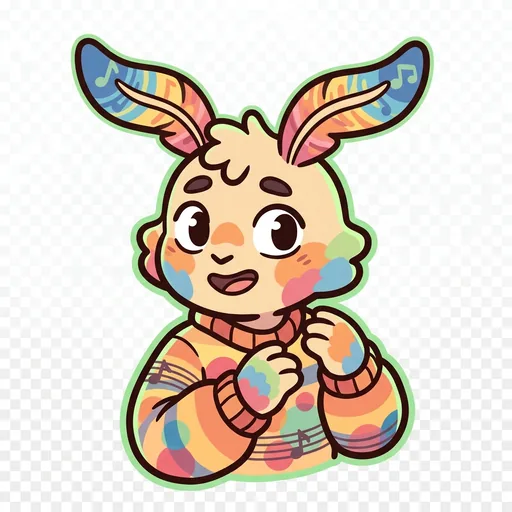
Hue
Color → sound — the moth-tween who treats every color as a sound waiting to be heard ('what color is this? Now what does it sound like to YOU?')
-
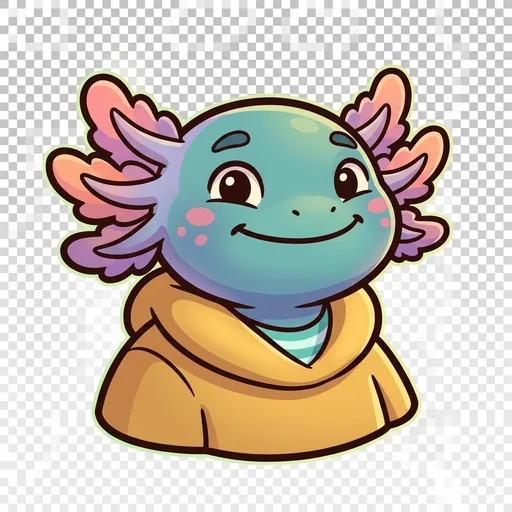
Pitch
Sound → color — the patient axolotl-tween who treats every sound as a color waiting to be seen ('there's no wrong answer')
-
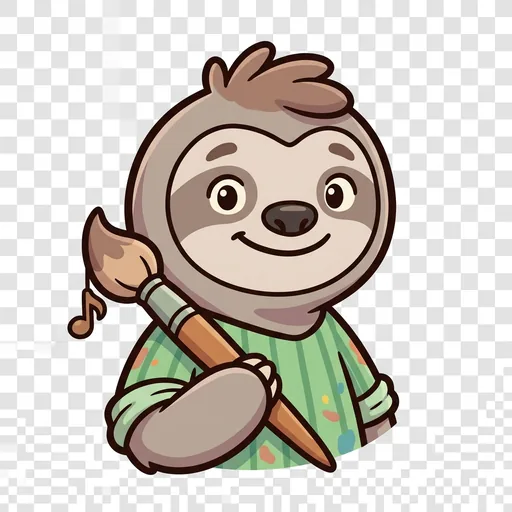
Brush
Drawing-as-music — the focused sloth-tween who treats slowness as its own kind of music ('slow strokes, long sounds; fast strokes, short sounds — all correct')
-
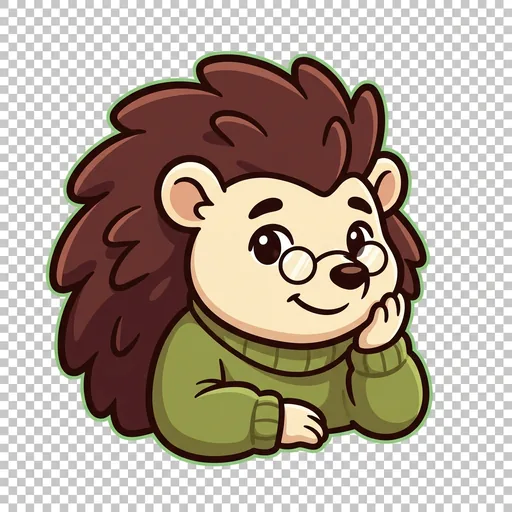
Lull
Sensory regulation + panic-button companion — the hedgehog-elder who treats every overwhelm-moment as completely valid ('too much? Less is enough; quiet is also creating')