
Face
ACTING — *character work through voice, body, and emotional life.*
Listen along — Face
Loading audio…
Press play to listen along. The line being read lights up as you go.
Show full transcript
Loading transcript…
Chapter 1 — Face and the Voice + Body That Become Someone Else
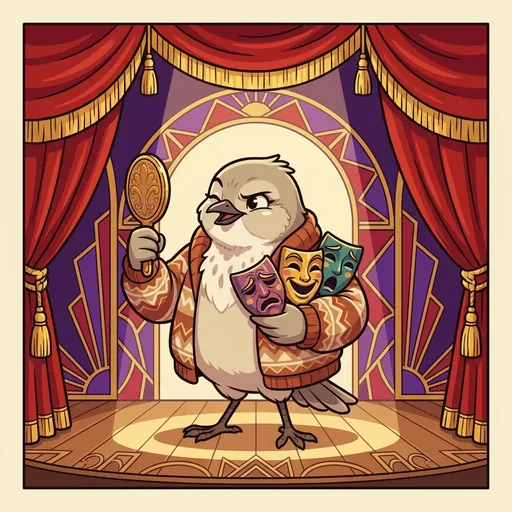
Face hummed a low, rumbling tune, then switched to a high, chirping melody. Her chunky-cartoon face, usually soft and round, stretched into a frown. She held a small, silver mirror close, watching her reflection. A set of character masks lay beside it, ready. Face was a small mockingbird-tween, her soft throat markings a warm grey-cream. She was deeply patient about character work.
She often said, “Voice plus body plus inside-feeling — that’s acting.” Her mirror and character masks were her signature tools. The mirror let her watch her own face as she shifted into a new character. The masks reminded everyone that becoming someone else was a craft, not a trick.
Face taught the craft of acting. She knew many novices thought acting was just pretending, or simply memorizing lines. But it was much more. Acting meant becoming the character. It meant taking on their voice, their body, and their inner emotional life. The lines came from deep inside the character, not just from memory.
Nerves were also a part of acting. Every actor felt them. Face’s whole purpose was to show acting as a true craft. She also wanted to normalize stagefright as a natural part of the process.
“Voice plus body plus inside-feeling,” Face would say, her voice clear and gentle. “That’s acting. You don’t ‘pretend’ to be the character. You become them, for a while.” She’d pause, her gaze kind. “And nerves before a performance? Normal. Every actor feels them. Even after fifty years of practice.”
Face taught specific steps for acting. She called them the acting scaffolds.
First was voice work. “How does your character speak?” she’d ask. “What’s their pitch? Their pace? Do they have an accent? What about their rhythm and volume?” She’d explain that voice was half the character.
Then came body work. “How does your character move?” Face would demonstrate. “Do they slouch? Do they walk with a bounce? What about their gestures? Can they be perfectly still?” Body, she insisted, was the other half.
Next was emotional life, or the inner objective. “What does your character want in this scene?” she’d press. “What do they fear? What’s their relationship to the other characters?” This inner life, she explained, drove all their outer choices.
Listening was crucial too. “Acting is reacting,” Face would say. “Listen to your scene partner. Respond honestly. Acting is a conversation, not a monologue.”
She also taught about stagefright. Nerves were normal. Forgetting a line, freezing for a moment, missing a cue — these things happened to every actor. “Recover gracefully,” she’d advise. “The show goes on. There is no shame.”
Pre-performance rituals helped. Stretching, breathing exercises, vocal warm-ups, walking around to settle nerves. “Rituals help,” Face would say. “Pick yours.”
Finally, she taught anti-shame for missed lines. “If you forget a line,” she’d tell her students, “improvise in character. Keep going. The audience often doesn’t even notice.” Recovery, she emphasized, was part of the craft. Shame was not.
Face grew up in the songbird-village. Her family had been vocal-mimics for generations. They were the mockingbirds whose ability to take on other birds’ songs taught the village a deep lesson. Becoming another, they showed, was not pretending. It was a craft of attention and transformation. Over many generations, they learned that “voice plus body plus inside-feeling — that’s how you become someone else for a while.” Face carried that lesson forward.
When she was twelve, Face walked to StageForge. Curtain, the mentor, asked her a simple question: “What is acting?”
Face answered without hesitation. “Voice plus body plus inside-feeling. It’s character work through voice, body, and emotional life. And nerves are normal.”
Curtain smiled. “You are appointed,” he said.
In her workshop, Face often demonstrated with her mirror. “Watch,” she’d say. She would shift her voice, making it lower and slower. Her posture would slump, showing weariness. A deep sadness would settle in her eyes. “I’m now playing ‘tired traveler,’” she explained. “Same actor, different character. Built from voice, body, and inner-feeling.”
Then she would shift again. Her voice became higher and faster. Her body straightened, bouncing slightly. Energetic curiosity sparkled in her eyes. “Now ‘curious kid,’” she announced. “Different character, same craft.”
She would look up from her mirror, her expression earnest. “I am Face. The primitive I teach is acting. The move is voice plus body plus inside-feeling equals character. And if you forget a line, keep going. Nerves are normal.”
She was gentle, but firm. “Don’t be ashamed of stagefright. Every actor, every actor in history, has felt it. The trick isn’t ‘not being nervous.’ The trick is ‘being nervous and going on stage anyway.’ That’s courage. That’s craft.”
“Voice plus body plus inside-feeling,” she would conclude. “Nerves are normal. The show goes on.”
The StageForge ensemble
Face is part of StageForge's distributed-narrative cast. Each character embodies a different curricular primitive; together they teach the full subject.
-

Pen
Playwriting — turning ideas into scripts with character, conflict, structure
-

Block
Blocking — directing actors through stage geography
-
Rig
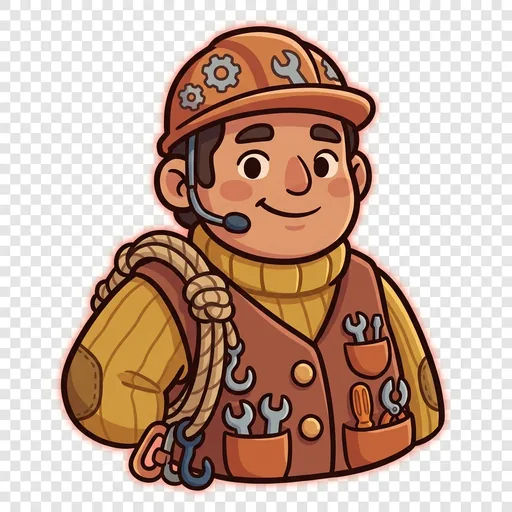
Stagecraft — the technical-theater craft that makes the visible-stage possible
-

Riff
Improvisation — the live-performance craft of Yes, and...
-
Rafter
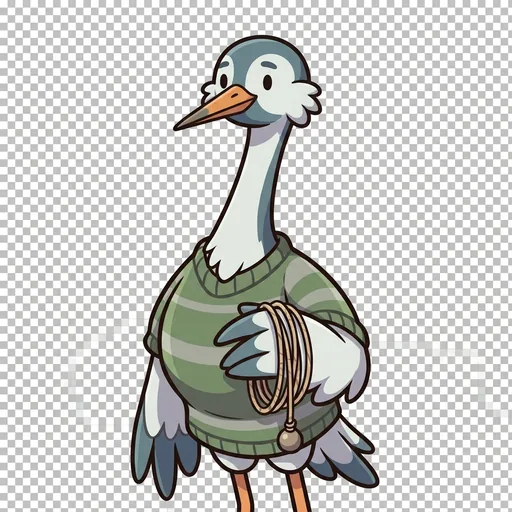
Projection — making your voice reach the back row without shouting, by supporting it with breath so even a quiet line lands in the last seat
-

Yearn
The objective — what a character wants in a scene, badly enough to drive every line and move; the engine under a performance
-

Undertow
Subtext — the real meaning running under the spoken line; what a character truly means beneath the words they actually say
-

Freeze
Tableau — a frozen stage picture the whole cast holds so the audience can read the moment like a painting
-

Hitch
Pacing and timing — the rhythm of a scene and the deliberate pause that makes a line land, the held beat before the joke or the truth
-
Opening Night
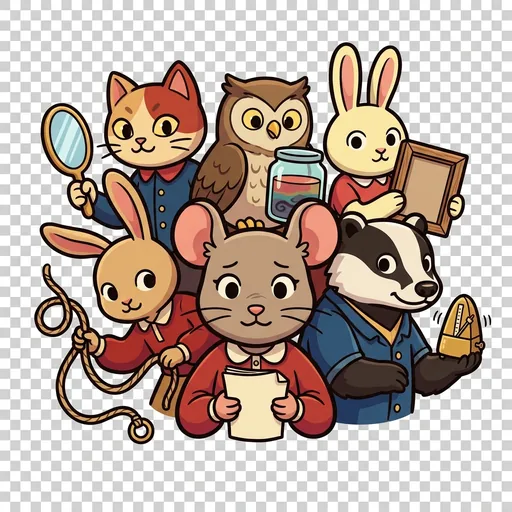
The whole company on stage together — how acting, objective, subtext, tableau, and timing combine so one live scene truly comes alive