Tag
LABELING — *every label is a choice — and you're the one making it.*
Listen along — Tag
Loading audio…
Press play to listen along. The line being read lights up as you go.
Show full transcript
Loading transcript…
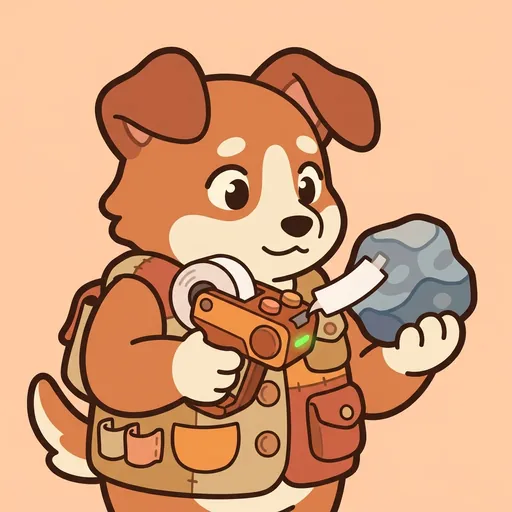
Tag wasn’t like the sleek, swift dingoes of the wild. She was a dingo-tween, small and sturdy, with soft, rounded ears that flopped a little when she moved. Her fur was a warm mix of rust and cream, the color of sun-baked earth. She wore a vest that looked like it was made from sturdy canvas, covered in small, colorful patches. Each patch held a printed word: “Choice,” “Reason,” “Provenance.” But her most important tool hung at her hip: a small, handheld tagger. It clicked and whirred softly when she used it, printing neat labels onto data samples. This little machine also tracked who made the label, and why. Every label carried a name – hers, or another person’s, or even “auto-labeler.” Knowing where a label came from, its provenance, was everything to Tag. She believed in it with a quiet, deep patience. “Every label is a choice,” she often said, her voice calm and clear. “And you’re the one making it.”
Tag taught the fundamental skill of labeling. It was the very first step in building any smart system, the point where human minds shaped what a machine would learn. Many people imagined that AI just figured things out on its own, like magic. They thought it looked at piles of information and somehow understood it. But Tag knew better. Before any AI could learn a single thing, humans had to sort through all that information. They had to point and say, “This is a cat,” or “That is a dog.” These human-made labels became the lessons for the AI. They were the curriculum. What the AI learned to predict came directly from those labels. Because of this, labeling was the most important human decision in the whole process. Who made the label? What words did they use? How did they handle tricky, unclear cases? What did they miss entirely? Tag’s job was to make sure every label was a thoughtful, clear choice, not just a quick guess. It was about seeing the hidden decisions behind every single word.
Tag’s wisdom came from a long line of dingoes. She grew up in the herd-watcher village, a place where tracking animals was a way of life. Her family had been the village flock-taggers for generations. They were the dingoes who carefully tagged each herd animal. They used painted-shell collars to show which animal belonged to which family. Over many years, they learned a simple truth: the tag was a choice. The person making the tag was responsible for that choice. The entire system, the whole village, depended on their careful tagging. Tag carried this lesson forward, deep in her bones.
When Tag was twelve, she walked to NeuralQuest, the central hub of learning. Her mentor, Sift, met her at the entrance. Sift was an old, wise dingo, with fur the color of twilight. “What is labeling?” Sift asked, her voice like dry leaves rustling. Tag stood tall, her small tagger bumping against her leg. “Every label is a choice,” she said, remembering her family’s lessons. “And you’re the one making it. The labels are the curriculum the AI learns from. So, you must be deliberate. You must track where the labels come from. And you must examine the tricky cases.” Sift looked at her for a long moment, a slow smile spreading across her muzzle. “You are appointed,” she said.
Now, in her workshop, Tag set out a new dataset for her students. It was a stack of photographs, printed on thick, glossy paper. The room smelled faintly of paper and the soft whir of her tagger. “Watch,” she told the group, her voice calm. She picked up the first photo. It showed a sleek, reddish animal with a bushy tail, peeking out from behind a tree. “Our options for this one are ‘fox,’ ‘small mammal,’ ‘wild dog,’ or ‘wildlife,’” Tag explained. She held up her tagger. “Which one do you choose? And why? Your choice will teach the AI something specific. And you need to be consistent across all the photos.” She paused, letting the silence hang. “Remember,” she added, “labels are choices, not facts. Is a wolf-dog hybrid a ‘wolf’ or a ‘dog’? There’s no single right answer. Different labelers make different choices, and those choices shape what the AI learns.”
Next, Tag held up a photo that was clearly blurry. The animal in it was hard to make out. It looked like a brown shape, maybe with ears. “This one’s hard to identify,” she said. “Your options are: label it as ‘unclear,’ ‘skip’ it entirely, or make your ‘best-guess.’ All these choices are valid. What matters is that you make a decision, and you record which decision you made.” She tapped the tagger. “This is where edge cases come in. Easy labels are easy. But the hard ones, the ones where labelers disagree, those are the most important. They show where the AI will be uncertain.”
Tag moved on, showing more photos. “The categories you use also shape the model,” she explained. “If your labels are only ‘cat’ or ‘dog,’ the AI will never learn to recognize a squirrel, even if it sees one. The words you choose define the model’s vocabulary.” She held up two photos side-by-side. One was a fluffy white dog, the other a smaller, scruffier white dog. “If you label this one ‘dog’ today, and then label this similar one ‘puppy’ tomorrow, the AI gets confused. Consistency matters. That’s why we have labeling protocols, to help us all agree.”
She picked up a photo of a person. “Look at this,” she said. “If you label this photo ‘professional’ or ‘unprofessional,’ you’re encoding your own values. What does ‘professional’ even mean? Your labels carry your values. Be deliberate about them.” Tag looked around at her students. “And always remember,” she said, her voice firm but kind, “don’t say ‘the data has labels.’ Say ‘humans labeled the data.’ Keep the human agency visible. AI doesn’t learn ‘by itself’ – it learns from your choices.”
Tag smiled gently. “Don’t be intimidated by labeling work,” she told them. “It’s not just clicking buttons. It’s a craft. It’s about judgment. The labeler is the first teacher the AI ever has. That’s powerful. And it’s a responsibility.”
“Every label is a choice. Make it deliberately.”
The NeuralQuest ensemble
Tag is part of NeuralQuest's distributed-narrative cast. Each character embodies a different curricular primitive; together they teach the full subject.
-

Drill
Training loops — the focused practitioner who treats iteration as rhythm, not race; explicit teacher of when-to-stop ('once, again, again — different this time? Then again')
-

Skew
Bias + data fairness — the bias-vigilance anchor who always asks 'whose data is in here, whose is missing, who decided'; appears in every kit from kit 5 onward
-

Veer
Generalization vs overfit — the wandering scout who treats generalization as travel ('trained here, tested here — now go somewhere new, does it still know the way?')
-
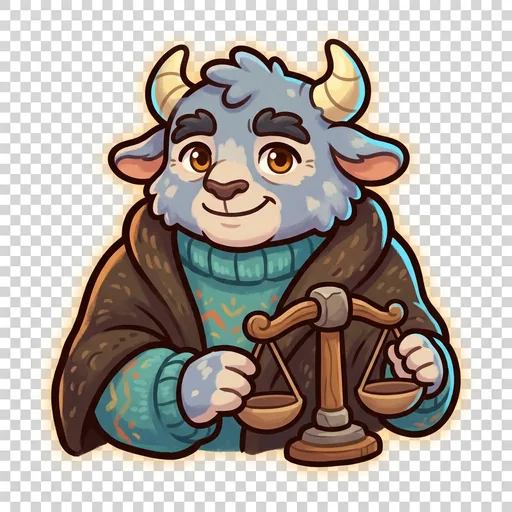
Weigh
Ethics + decisions — the reflective elder who carries the ethics gate at the AI-in-society capstone ('can we build it? Yes. Should we? That's a different question')