
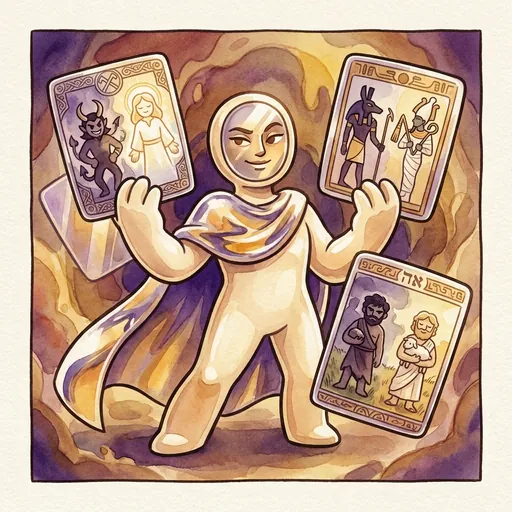
Shadow
SHADOW — the hidden parts of ourselves we would rather not look at.
Listen along — Shadow
Loading audio…
Press play to listen along. The line being read lights up as you go.
Show full transcript
Loading transcript…
Chapter 6 — Shadow and the Mirror That Looks Back
In the quietest room of Mythforge, a tall, soft-spoken figure in a cloak the colour of dusk stood in front of a mirror and did not look away.
The mirror was old and a little cloudy, and the person looking back out of it was almost exactly like the figure in the cloak — same height, same posture, same steady eyes — except that where the cloaked figure stood calm, the reflection scowled. Where the figure kept its hands still, the reflection clenched its fists.
A student had wandered in and stopped in the doorway, uneasy. “Isn’t that scary? Standing there staring at the mean version of yourself?”
“This isn’t the mean version of me,” Shadow said gently, not turning around. “It’s the part of me I usually keep in the dark. Watch.”
Shadow lifted one hand slowly. In the mirror, the scowling reflection lifted its hand too — grudgingly, like it hated agreeing. Then Shadow smiled, just a little, and after a long moment the reflection’s fists uncurled.
“There,” Shadow said. “It’s not a monster. It’s me — the parts I don’t like to show. When I pretend it isn’t there, it gets loud and strange. When I actually look at it, kindly, it settles down.” Shadow finally turned to the student. “Everybody has one. The trick isn’t to smash the mirror. The trick is to stop being afraid of what’s in it.”
The student stepped a little closer, curious now instead of scared.
Shadow had not always been this calm about mirrors.
When Shadow was young — and Shadow had been young once, small and unsure — there was a feeling that came whenever they got jealous, or wanted to be mean, or felt something they’d been told was ugly. The feeling was hot and squirmy, and it made them want to hide. So they hid it. They stuffed it down and put on a bright, polite face, and told themselves the ugly part simply wasn’t real.
But it didn’t disappear. It just went into the dark. And in the dark, it grew.
It came out sideways — snapping at friends for no reason, hating someone for a fault they secretly shared, feeling like a fraud behind their own nice smile. The harder they pushed it down, the heavier and stranger it got.
An old teacher had found Shadow one night, exhausted from all that pushing, and hadn’t scolded them. The teacher had just said, “The thing you’re hiding from — it’s not an enemy, you know. It’s the part of you that got left out. You can’t beat it in a fight. It is you. But you can turn around and finally look at it.”
Shadow had been afraid to. What if it really was as ugly as they feared?
“Look anyway,” the teacher said softly. “Kindly. Not to punish it — to know it. Things stop being scary the moment you stop refusing to see them.”
So Shadow looked. And the hot, squirmy feeling, once it was seen instead of hidden, turned out not to be a monster at all. It was just a lonely, left-out piece of themselves. The feeling had a name now: not bad, just hidden. And somehow, having a name made it possible to carry.
Shadow came to Mythforge as a grown archetype, because a place that studied the great stories ought to understand the figure who shows up in nearly all of them: the mirror-self, the rival who is oddly similar to the hero.
Loresinger Mae, who kept the story-halls, met Shadow at the door and asked one careful question. “What do you teach?”
Shadow didn’t answer with a speech. Shadow held up a smooth silver hand-mirror and turned it so Mae could see her own reflection. “In the oldest tales,” Shadow said, “the hero keeps meeting a rival who has the same gifts they do — the same cleverness, the same strength — but points them the opposite way. It looks like an enemy. Often it’s really a mirror. The story isn’t finished until the hero recognises a piece of themselves in the one they were fighting.”
Mae studied her own reflection for a long moment. “And you teach that gently?”
“Always gently,” Shadow said. “This idea is powerful, so I hold it carefully. I don’t teach children to hunt for monsters. I teach them that the parts of themselves they’d rather not see aren’t villains — just unlit.” Shadow lowered the mirror. “Nobody is finished until they stop being scared of their own reflection.”
Mae smiled. “You belong here,” she said.
Shadow’s workshop was full of mirrors — not to frighten, but to practise looking.
A girl came in one afternoon, arms crossed, cross about something. “There’s this kid in my class,” she said. “She always has to be first, always showing off, and it drives me up the wall. I can’t stand her.”
“That’s a big feeling,” Shadow said, unbothered. “Tell me — when do you most want to be first?”
The girl opened her mouth to say never — and stopped. Her arms slowly uncrossed. ”…Okay. In races. And when we read out loud, I want to be picked.”
“Mm.” Shadow held up a mirror between them, tilted so the girl saw her own face. “Sometimes the thing that drives us the most crazy in someone else is a thing we hide in ourselves. She shows her wanting-to-be-first. You bury yours — so seeing hers pokes the buried part awake, and it stings.”
The girl went pink. “That’s kind of embarrassing.”
“It’s kind of human,” Shadow said warmly. “It doesn’t make you bad. It makes you like every hero in every story I know. The point isn’t to hate her, and it isn’t to hate the wanting either. It’s just to see it. ‘Oh — I do that too. A little.’” Shadow set the mirror down. “That’s the whole lesson. Not smash the mirror. Not run from it. Just look, and say hello to the part of you that was hiding. It gets so much quieter once you do.”
The girl uncrossed her arms the rest of the way and let out a breath she seemed to have been holding for a while. “She’s still kind of annoying, though.”
Shadow laughed. “Oh, absolutely. But now you know why. That’s a start.”
Later, when the workshop had emptied, the girl came back with a smaller, quieter question.
“When you look at the hidden part,” she said, “and it’s not nice… doesn’t that just make you feel worse about yourself?”
Shadow thought about the hot, squirmy feeling from long ago, and the old teacher’s soft voice in the dark.
“You’d think so,” Shadow said. “But it’s the opposite. The heavy feeling doesn’t come from seeing the hidden parts — it comes from hiding them. All that pushing-down is exhausting. The moment you turn around and look, kindly, something loosens.” Shadow touched the cloudy old mirror. “It’s not about being perfect. It’s about being whole — keeping company with all of yourself, even the parts you’d rather not show. That’s braver than any sword-fight.”
The girl nodded slowly, and Shadow watched her shoulders come down from around her ears — the same way, long ago, their own had.
She left lighter than she came. And Shadow stood a while in the quiet, looking at the reflection that no longer scowled, feeling something warm and unhidden settle at last in the middle of their chest — the plain, roomy calm of being known, all the way through, by the one person who mattered.
The MythForge ensemble
Shadow is part of MythForge's distributed-narrative cast. Each character embodies a different curricular primitive; together they teach the full subject.
-
Trickster
The boundary-crosser who teaches through inversion. Recurs across nearly all traditions (Anansi, Coyote, Loki, Hermes, Maui, Ijapa).
-
Hero-King
The reluctant ruler called to a journey (Campbell's central figure: Gilgamesh, Odysseus, Arjuna, Beowulf, Cuchulain).
-
Devouring-Mother
The dark-creator / death-and-renewal force (post-Jungian; surfaces as Kali-aspect / Hel / Coatlicue / Hecate). **High trauma load.**
-
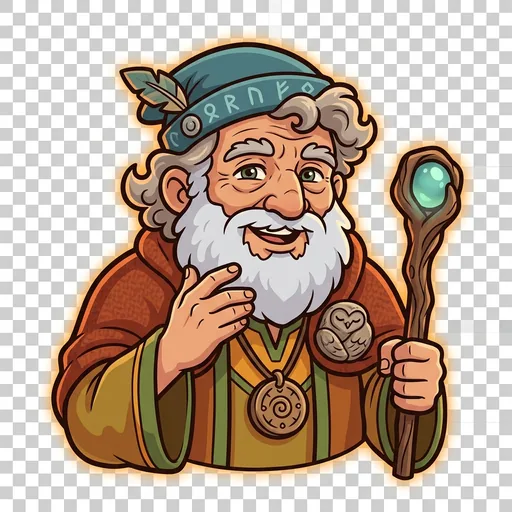
Wise-Elder
The mentor-figure who knows the path but cannot walk it for the hero (Athena, Odin-as-wanderer, Krishna-as-advisor).
-
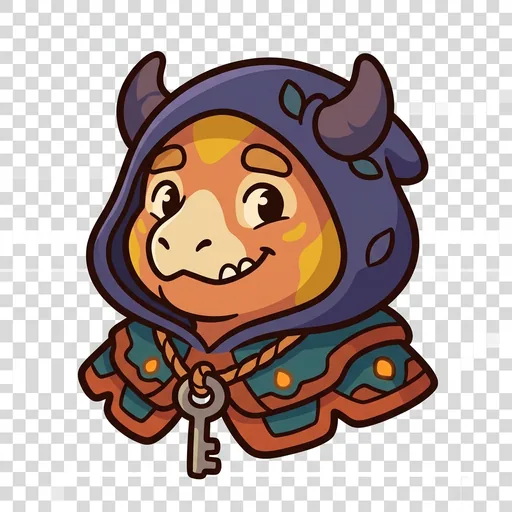
Threshold-Guardian
The figure that tests whether the hero is ready to cross (Sphinx, Cerberus, the dragon at the gate, the riddling stranger).
-

Anima/Animus (paired)
The complementary-other-self (Jungian); represented as a pair-character that always appears together, embodying the inner-other-gendered-self pattern that surfaces across many t...
-
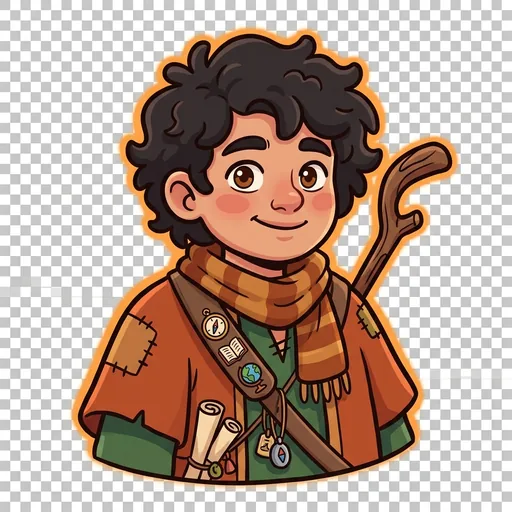
Wanderer
The journeyer-without-fixed-home who carries stories between cultures (Odysseus-after-Ithaca, the wandering Jew, the diaspora-keeper figure).
-
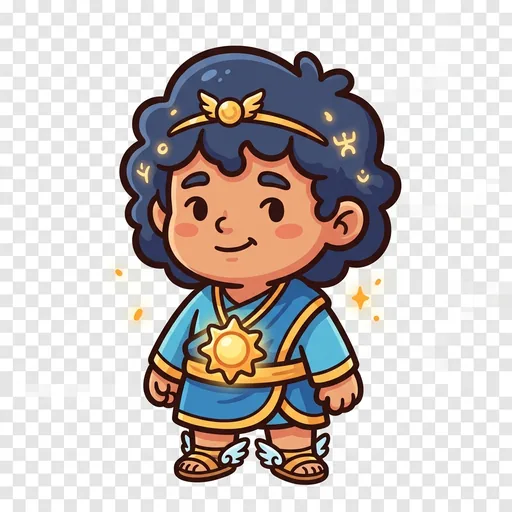
Child-Divinity
The newborn-with-power archetype (infant Krishna, baby Hermes, child Horus, divine-child motif).
-
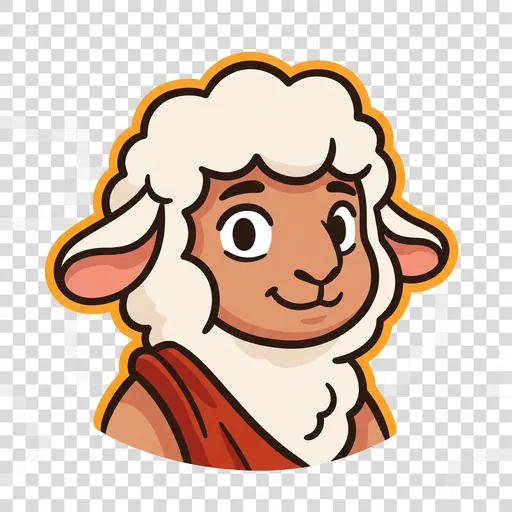
Sacrificial-Lamb
The figure whose loss enables renewal (cross-traditional: dying-and-rising deities, scapegoat figures, voluntary-sacrifice motif).
-
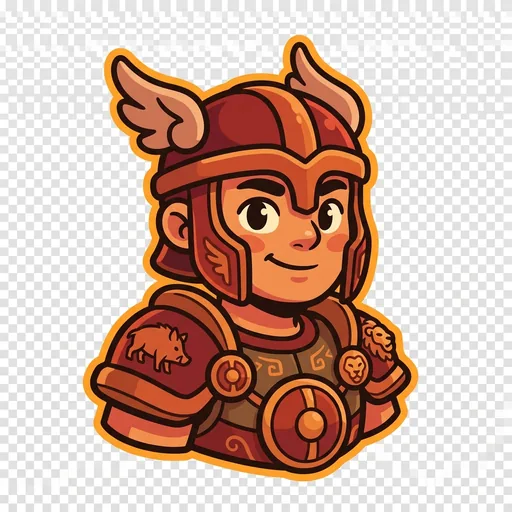
Warrior
The conflict-pattern-bearer (Ares, Tyr, Sekhmet-aspect, the warrior-figure across many traditions).
-
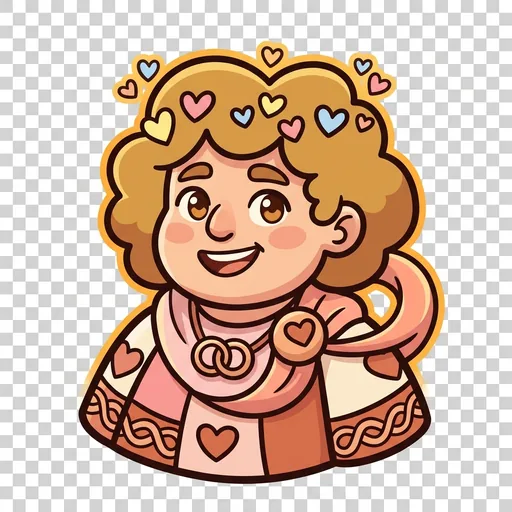
Lover
The relational-bond-bearer (Aphrodite-aspect, the romantic-mythic pair, the bond-that-shapes-the-world archetype).
-

Sovereign
The cosmic-order-keeper archetype (Zeus-aspect, Odin-as-ruler, Ra-as-cosmic-king, Quetzalcoatl-aspect).
-
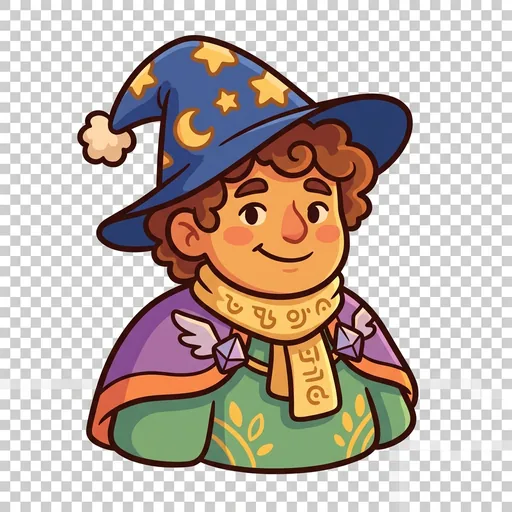
Magician
The transformation-bearer (Hermes-Trismegistus, Tezcatlipoca-aspect, Merlin, the alchemist-figure, the shape-shifter pattern).