

Bubble
SPEECH BUBBLE — the shape around the words tells you the voice before you read a single letter. oval speaks, cloud thinks, burst shouts, dotted whispers, zigzag crackles, wavy sings.
Listen along — Bubble
Loading audio…
Press play to listen along. The line being read lights up as you go.
Show full transcript
Loading transcript…
Chapter 2 — Bubble and the Shape That Carries the Voice
In the corner of the MangaForge lettering studio, a small koi-fish-tween named Bubble was drawing empty balloons. No words in them — just the outlines. An oval. A puffy cloud with three little bubbles trailing off it. A spiky burst like a firework. A ring of soft dashes.
An apprentice named Ren watched over her shoulder, confused. “You’re drawing bubbles with nothing inside. Isn’t the whole point the words?”
“Half the point,” Bubble said, without looking up. Her fins flowed as she inked the last one — a wobbly, wavy outline that looked like it was underwater. “Watch. I’ll put the same words in each.”
She wrote I’m fine in all four.
I’m fine, in the calm oval. I’m fine, in the puffy cloud. I’m fine, in the jagged burst. I’m fine, in the ring of soft dashes.
Ren read them left to right and his face changed at each one. The oval sounded like a normal answer. The cloud sounded like a private thought nobody heard. The burst sounded almost angry — I’m FINE. And the dotted one sounded so small and quiet it made his chest ache a little.
“They’re the same two words,” he said slowly.
“They’re four completely different feelings,” said Bubble. “And you heard every one of them before you thought about it. That’s the shape talking. The shape is the tone of voice — you just get to see it.”
Bubble had learned that near the village koi-pond, when she was very small and couldn’t read yet.
Her family were bubble-watchers. Down in the green water, the older koi taught her that the pond was always talking, if you knew how to look. Round, lazy bubbles drifting up meant a fish was calm and just breathing. A hard, fast burst of little ones meant startled — something moved wrong. A slow trickle from a fish tucked under the reeds meant tired, or hiding.
“You don’t hear us,” her grandmother had told her, resting fin to fin in the cool dark. “But you can see how we feel. The shape of the bubble comes up before any of us decides to make it. Fear looks one way. Calm looks another. The feeling arrives first.”
Little Bubble had spent whole afternoons just reading the water — knowing which fish was scared, which was content, which was lonely, all without a single word. It gave her a strange warm feeling, like being let in on a secret everyone was speaking but nobody was saying. The shape was the first word. She never forgot it.
She swam upriver to MangaForge at twelve, because a place that turned feelings into pictures ought to understand the pond.
Sensei Sora met her at the studio door. She didn’t ask Bubble to prove she could draw. She asked one thing. “What is a speech bubble for?”
Bubble didn’t answer in words. She picked up a brush, drew a spiky burst-balloon, and left it empty. Then she drew a soft dotted one beside it, also empty. She looked up at Sora and pointed — first at the burst, then at the dots — and, without saying anything, made her eyes go wide and alarmed, then dropped them shy and quiet.
Sora watched the little performance and understood: the loud one, then the small one. The balloons had spoken with no words in them at all.
“You belong here,” Sora said.
Bubble’s workshop was full of empty balloons, and apprentices always came in expecting to learn about words.
A girl named Mei arrived one morning frustrated, holding a page of her own. “Everyone talks the same in my comic,” she said. “It’s boring. My character’s whispering a secret and yelling across a canyon and thinking to herself, and it all looks exactly the same.”
Bubble looked. Every line sat in a plain oval. “Read me the whisper,” she said.
Mei read it.
“Now — did you drop your voice just now?”
”…Yeah. It’s a secret.”
“So drop the shape too.” Bubble sketched a new balloon around the secret — an outline of soft, broken dashes. “Dotted edge means the reader lowers their inside-voice to read it. The quiet is built into the border.” Then she found the canyon-yell and drew it a jagged burst with sharp points. “Spikes mean loud. The reader flinches a little before they even read it.” Then the thought — a puffy cloud with a trail of small bubbles pointing back at the character’s head. “No pointer to the mouth means the words never left her head. It’s private.”
Mei stared at her own three lines, suddenly sounding completely different. “I didn’t change a single word.”
“You didn’t have to,” said Bubble. “The words were always fine. The shapes were doing nothing — so every voice came out flat.” She grinned, fins fanning. “Oval for plain talk. Cloud for thoughts. Burst for shouts. Dots for whispers. A crackly zigzag for a voice through a radio or a phone. A wavy underwater outline for singing, or dreaming, or someone very weak. Give each voice its shape, and your reader hears the whole cast — even in total silence.”
Later, when the studio had emptied, Mei came back with a quieter question.
“When it’s just a shape with nothing in it yet,” she said, “how do you already know what it’s going to feel like?”
Bubble thought about the pond — the dark water, the bubbles rising before any fish chose to make them, her grandmother’s fins resting against hers.
“Because that’s how feelings actually work,” she said. “They show up before the words do. You know someone’s about to cry, or about to laugh, before they say anything — you just feel it coming off them.” She touched the empty burst-balloon on the page, the one with no words in it, still somehow loud. “A speech bubble is just that made visible. The shape is the feeling arriving first, and the words catching up after.” She looked at the little wavy outline drying in the corner, and her smile went soft. “The nicest part isn’t the drawing. It’s that a reader on the other side, who’s never met you, feels exactly what you felt — quiet, or loud, or scared, or brave — just from the line you drew around it. You handed them the feeling, and they caught it.”
Mei looked at her flat plain page one more time, and it didn’t look flat anymore. It looked like a room full of voices waiting to be shaped.
The MangaForge ensemble
Bubble is part of MangaForge's distributed-narrative cast. Each character embodies a different curricular primitive; together they teach the full subject.
-

Panel
The panel — the rectangular frame that contains a single moment of story (the atomic unit of sequential art)
-

Sweep
Speed lines / motion lines — the directional line-bursts that convey speed, impact, and energy direction
-
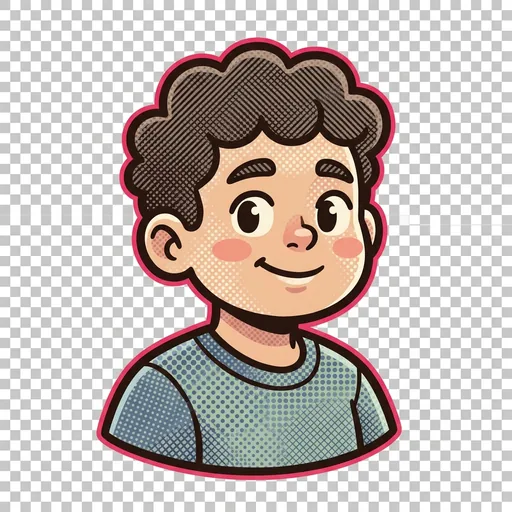
Tone
Screentones — the halftone dot/line patterns laid over an area to convey shadow, mood, and emotional register (the manga-specific shading vocabulary)
-

Splash
The splash page — the full-page or near-full-page impact image that marks a story climax (the moment the page breaks its grid to give one image all the space)
-
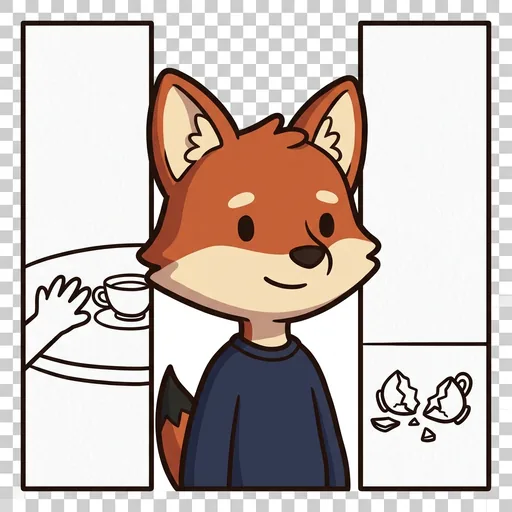
Lapse
The gutter — the empty space between two panels where your own mind fills in what happened; closure, the invisible half of comics
-
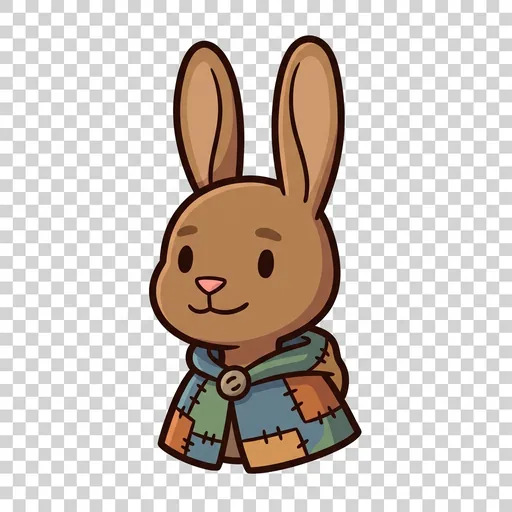
Segue
The transition — how one panel flows into the next, guiding your eye and your sense of time from moment to moment
-
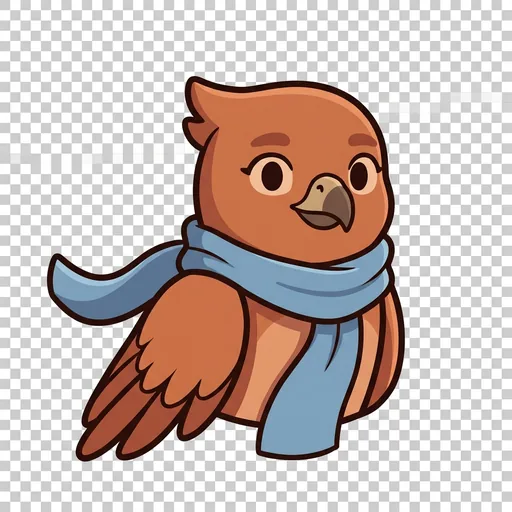
Vista
The establishing shot — the wide opening panel that shows you where you are before the story zooms in close
-

Jolt
The reaction beat — the panel that catches a character reacting, so a surprise or a feeling truly lands
-

Boom
The sound-effect lettering — onomatopoeia drawn right into the art, so you can see a sound as much as hear it
-
The Layout
The whole page coming together — how the establishing shot, panels, transitions, gutters, and sound-effect lettering arrange to guide one reader eye through one moment of story