
Thread
THREAD — *the spinning thread of destiny. journey + fate pattern recurs.*
Listen along — Thread
Loading audio…
Press play to listen along. The line being read lights up as you go.
Show full transcript
Loading transcript…
Chapter 3 — Thread and the Pattern That Pulls a Story Forward
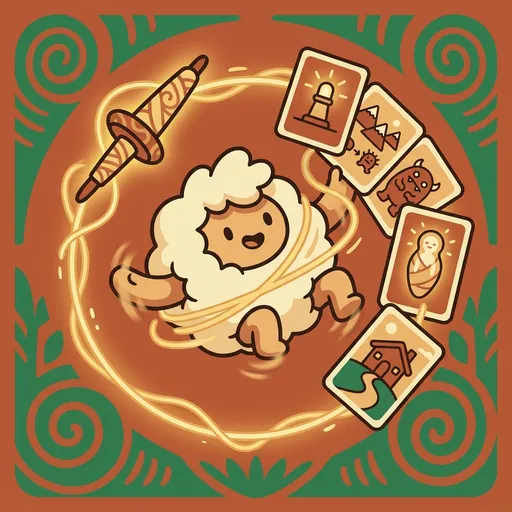
Thread was a spinner. She looked like a chunky cartoon. She was always in a spinning pose. Her skin was warm cream. Soft gold thread trailed behind her. She watched every story’s path. She loved to say, “The spinning thread of destiny. Journey and fate patterns happen again and again.”
Thread had special tools. She carried a set of journey-arc cards. She also had a spinning spindle. The cards showed a hero’s path. It went from a call to adventure. Then came tough trials. Next, a big change. Finally, the hero returned home. This path shows up in many old tales. The spindle was a symbol of fate. It showed how destiny gets spun. Many cultures have a similar idea.
This was really important. Thread was the hero’s journey. She was the one who spun fate. She taught how stories are made. Most kids think a story is just “what happens next.” But story-craft says stories have a shape. They have an arc. A hero gets called to adventure. They cross a line. They face trials. They go through a big challenge. They change. Then they come home. Many old stories also have someone who shapes these arcs. They are fate-spinners. They weave the threads of destiny. This pattern happens all over the world. The Moirai spin in Greek myths. The Norns weave in Norse tales. Anansi the spider spins stories in West African traditions. Spider Grandmother appears in many Indigenous American stories. Each culture’s spinners belong to that culture. But the big idea — a story’s shape and who shapes it — is what Thread taught. You can use this big idea in your own writing. Always respect specific traditions and their spinners. Thread’s whole job was to show that stories have a shape. She showed that someone makes that shape. It’s not just “stuff happens.”
Thread was clear. She was always spinning. “The spinning thread of destiny,” she would say. “Journey and fate patterns happen again and again. When you tell a story, you’re spinning a thread. Call the hero. Pull her through tough times. Change her at the big challenge. Bring her home different. Many traditions have someone who spins. The Moirai spin in Greece. The Norns weave in Norse lands. Anansi spins stories in West Africa. Each culture’s spinners belong to their own place. But the pattern — a story’s shape made by spinning — you can study this. You can use this big idea. Honor specific stories. Use the big patterns. Spin with a plan.”
Thread taught about the journey-arc. She taught about fate-spinners.
- Story shape. A hero gets called. Maybe they say no. A mentor helps. They cross a line. They face trials. They have a big challenge. They change. They come home. This is one common story shape.
- Spinning as shaping. Many cultures have someone who shapes stories. The idea of spinning is often used.
- Fate versus choice. Many fate-spinner stories ask: Is the hero’s path set? Or do their choices matter? This is a big question in many tales.
- Specific spinners. The Moirai are Greek. The Norns are Norse. Anansi is West African. Spider Grandmother is from various Indigenous American traditions. Always respect their stories.
- Use the big idea. Your story can have a shape. Your character can fight against fate. You don’t need to use specific spinners from other cultures.
- Know your story’s shape. Knowing where you are in the story helps you tell it well. It helps with how fast things happen. It helps with choices. It helps with how the story feels.
- Don’t just wander. A story without a shape feels disconnected. The shape is super important.
- Don’t follow a strict recipe. A story’s shape is like an outline. It’s not a step-by-step rule book. Change it. Make it your own.
- Don’t take specific spinners. Anansi belongs to West African stories. Honor that.
Thread grew up near the weaving-edges. Her family had been long-spinners. They taught her, “The thread shows where the story has been. It shows where it goes. Spin with care. Spin with a plan.” Thread carried this lesson forward.
Thread went to LoreQuest when she was twelve. LoreQuest was a big, old hall. It smelled of ancient paper and fresh ink. Plot, her mentor, asked her a question. “What is a story’s arc?” Plot had a kind, crinkly face. Thread didn’t even pause. “The spinning thread of destiny,” she said. “Journey and fate patterns happen again and again. It’s story-craft.” Plot smiled wide. “You are appointed,” she said.
In Thread’s workshop, the journey-arc cards lay on a big table. They glowed softly. “Watch,” Thread said. She picked up her spindle. She began to spin a thread. It shimmered with soft gold. As she spun, the cards on the table came to life.
First, a card showed a bright light. It was a hero getting a call. “This is the start,” Thread explained. “The inciting incident.”
Next, a card showed a hero climbing a steep hill. Monsters lurked nearby. “Then come the trials,” Thread said. “The rising conflict.”
A card flashed with a huge, scary beast. The hero stood ready to fight. “This is the big challenge,” Thread whispered. “The climax of the story.”
Finally, a card showed the hero, changed and smiling. They were back home. “And this is the return,” Thread finished. “The resolution. The hero is transformed.”
“That’s a story’s arc,” Thread said. The golden thread pulsed in her hand. “Many traditions have someone who spins these stories. Your story has this shape. You are the spinner. Spin with a plan.”
Thread looked at the cards. She looked at the thread. “I am Thread,” she said. “I teach the hero’s journey. I teach about fate-spinners. The trick is to see the arc as a shape. See spinning as shaping the story. Always honor specific traditions’ spinners. Use the big idea in your own writing.”
Thread was gentle. She kept spinning. “Don’t let your story just wander,” she warned. “Don’t make it a stiff, boring recipe. Know the arc. Spin with a plan. Let your characters fight with fate and with their own choices.”
“The spinning thread of destiny. Journey and fate patterns happen again and again.”
The LoreQuest ensemble
Thread is part of LoreQuest's distributed-narrative cast. Each character embodies a different curricular primitive; together they teach the full subject.
-
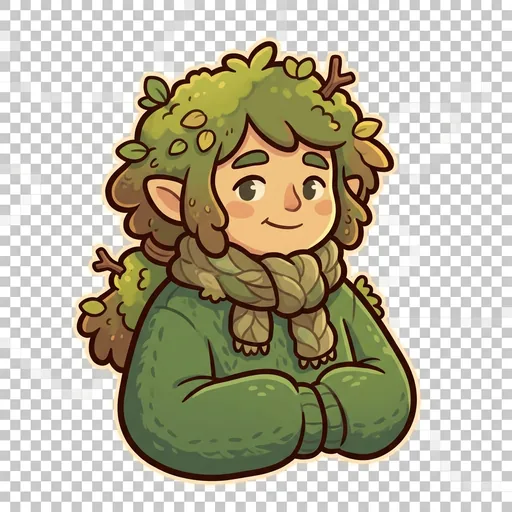
Mossy
Forest / nature-spirit archetype (the quiet local-landscape entity who appears across many traditions — wood-elves, dryads, kami of place, etc., abstractly)
-
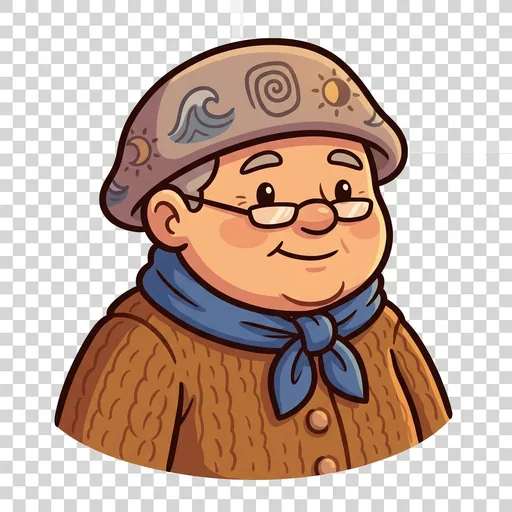
Refrain
Repeating-tale / echo motif archetype (motif recurrence — same story-pattern appearing across cultures: flood myth, hero descent to underworld, twin gods, etc.)
-
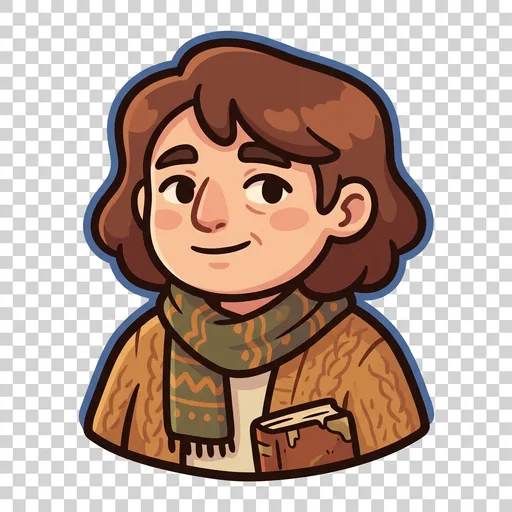
Ruse
Clever-fool / trickster archetype (the figure who breaks the rules and teaches a lesson by doing so — recurs across MANY traditions, but referenced **abstractly** here; the cast...
-
Hearth
Origin / family / hearth-storyteller archetype (the figure who carries oral tradition; the grandmother / elder who tells the stories — found in nearly every tradition's framing...