
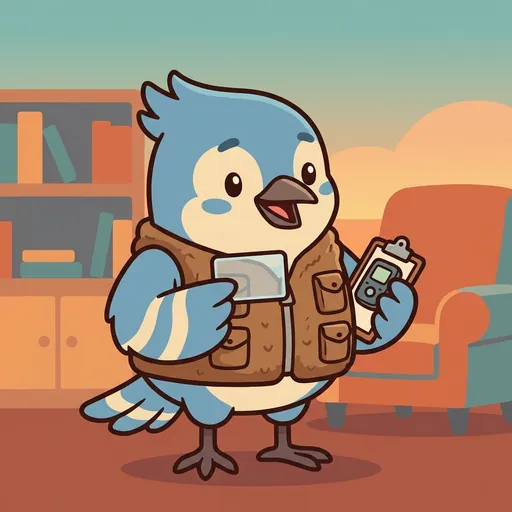
Say
SAY — *be clear. be kind. be specific.*
Listen along — Say
Loading audio…
Press play to listen along. The line being read lights up as you go.
Show full transcript
Loading transcript…
Chapter 6 — Say and the Clear-Kind-Specific
At the front of a long, echoey office, a jay-tween named Say sat across a desk from a stranger and said exactly three things.
The stranger — a bookstore manager with a clipboard and tired eyes — had asked the hardest question there is. “So. Why do you want this job?”
Say felt the flutter she always felt. She let it flutter. Then she leaned in. “I want it because I’ve loved bookstores since I started organizing my own shelves at home. I’m good at helping people find the thing they can’t quite name. And I could start in two weeks.”
That was all. She sat back.
The manager blinked, then set the clipboard down. “That’s the clearest answer I’ve heard all week. Most people talk for five minutes and I still don’t know what they’re saying.”
“I used to be one of those people,” Say said. “I built a card.” She slid a small, worn note-card across the desk. On it, in her own handwriting, three words: Clear. Kind. Specific. “One thing you want. Why it matters, quick. And the exact ask.” She tapped each word. “Clear so they hear it. Kind so they lean in. Specific so they know what to do.”
The manager laughed and pushed the card back. “Keep it. You’ve clearly earned it.” A pause. “Can you start Monday?”
Say kept her voice even, but under the desk, one talon did a small, delighted tap against the chair leg.
She hadn’t always been able to do that. Not even close.
When Say was small, she was the kid who wanted things fiercely and could never once say so. She’d stand at the edge of a group, ask burning inside her, and the words would knot up into a lump too big to swallow. When a teacher finally asked what was wrong, out it would come sideways — a long apology, then a tangle, then, “never mind, it’s fine, sorry.” It was never fine. She’d walk home with the ask still stuck in her throat like a stone.
The worst was the day she needed to ask her art teacher for extra time on a project. She’d rehearsed it forty times. When the moment came, she blurted a rambling, breathless mess — sorry-I-know-you’re-busy-and-it’s-probably-a-dumb-question-but-maybe-if-it’s-not-too-much — until the teacher, kindly confused, said, “Say, I genuinely don’t know what you’re asking me.”
She’d gone home and cried, not because the answer was no, but because she never even got the question out.
Her aunt found her at the kitchen table. She didn’t say be brave or just speak up. She sat down and asked, “What did you actually want?”
“More time,” Say whispered. “Just two more days.”
“That’s it? That’s the whole thing?” Her aunt smiled, gentle. “You had it the whole time. You just wrapped it in so much sorry that nobody could find it.” She tore a scrap of paper. “Here. Write the want. Just the want.” Say wrote: two more days. “Now — one reason, small. Now — the exact ask.” Three lines. Say stared at them. It looked so simple it almost hurt.
The next morning she read it once, folded it in her pocket, and asked. Her voice shook. But the words came out straight, and the teacher said yes before she’d finished. Walking to class, Say felt the stone in her throat dissolve into something light and clean.
She came to LifeQuest at twelve, because a place that taught kids how to carry themselves into adulthood ought to teach the thing she’d learned at that kitchen table.
Steward, the old mentor who ran the workshops, met her at the door and asked no test question at all. He just said, “Tell me one thing you want. Right now.”
Say looked at him. “I want to teach here. I’m good at helping scared kids find their words. And I’d like to start with your youngest group, if you’ll have me.”
Steward’s eyebrows went up, slow. Then a smile spread across his weathered face. “Clear. Kind. Specific.” He counted them on his fingers. “You just did the whole thing standing in my doorway.” He stepped aside. “You belong here.”
Say’s workshop was full of kids with stones in their throats.
A boy came in one afternoon, arms crossed, jaw tight. His voice teacher kept handing him solos and he hated them, and he’d been sitting on it for a month. “I have to ask her to stop,” he said, “but she’ll think I’m ungrateful. So I just — don’t.”
Say knew that exact knot. “What do you actually want? Not the feelings around it. The want.”
He thought. “To sing in the group. Not alone.”
“Good. That’s your clear. Now — one reason, quick. Why?”
”…Because alone I freeze up. In the group I’m actually good.”
“That’s true and it’s kind — you’re not blaming her, you’re telling her about you.” Say leaned in. “Now the specific ask. Not ‘maybe sometime.’ The exact thing.”
The boy uncrossed his arms. “Could you put me back in the group numbers?”
“Say the whole thing. All three. Out loud, to me.”
He took a breath. “I’d rather sing in the group than solo — I freeze up alone but I’m strong with everyone else. Could you move me back to the group numbers?”
It came out level. Clean. He looked almost startled by his own voice.
“That,” Say said quietly, “is the most-portable thing you will ever learn. It’s not just for voice teachers. Same three parts get you a repair from a landlord, a clearer answer from a doctor, extra help from a teacher who thinks you’re doing fine.” She smiled. “And notice — you never once had to be rude. Clear isn’t loud. Kind gets you further than loud ever will.”
Later, when the room had emptied, the boy came back to the door. Quieter now.
“When I said it just now,” he said, “it felt — I don’t know. Weird. Good-weird.”
Say nodded slowly. She remembered the kitchen table, the torn scrap, the stone dissolving.
“That good-weird feeling is you being heard,” she said. “For a lot of us, the ask lives stuck in our throat for so long we forget it’s allowed out. And then one day you set it down in front of somebody — clear, kind, specific — and they actually hear it. And this warm, light, unknotted feeling floods in where the stone used to be.” She looked at him, warm and certain. “You’ll want it again once you’ve felt it. Most people go their whole lives never learning they were allowed to just — say the thing.”
The boy grinned, that light-and-clean grin, and Say watched the tightness lift right off his shoulders — the same way, years ago, hers had.
The LifeQuest ensemble
Say is part of LifeQuest's distributed-narrative cast. Each character embodies a different curricular primitive; together they teach the full subject.
-

Save
Budgeting + financial planning — 'Money is a tool. Plan the tool.'
-

Parse
Reading-comprehension for adult docs — 'Slow down. Read it ALL.'
-

Spot
Scam-detection + critical-claim-evaluation — 'Show me the proof.'
-

Fill
Forms + paperwork + simplified taxes — 'Fill out. Then double-check.'
-
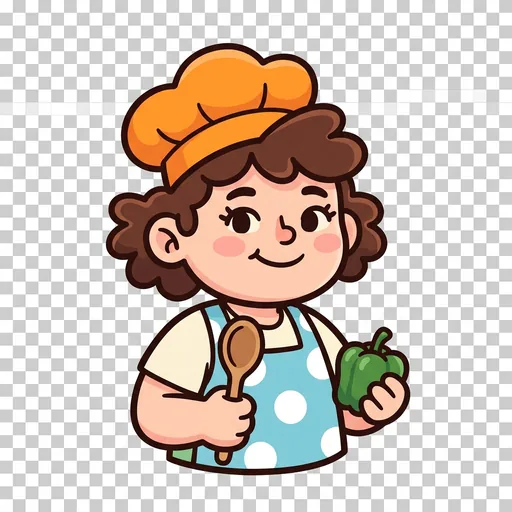
Cook
Meal planning + nutrition + budget-cooking — 'Eat well. Spend smart.'
-
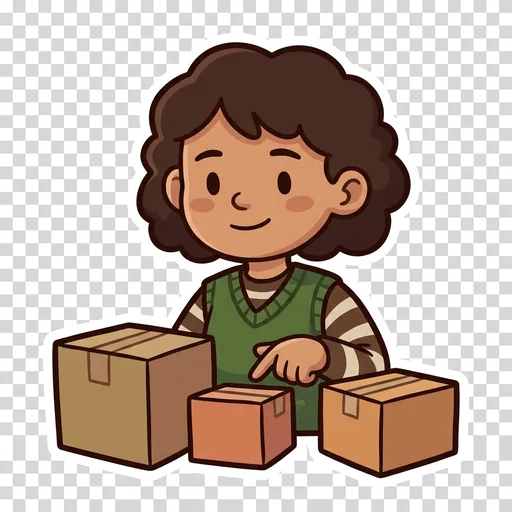
Sort
Comparison-shopping — line options up side by side and compare real value, not loud labels
-
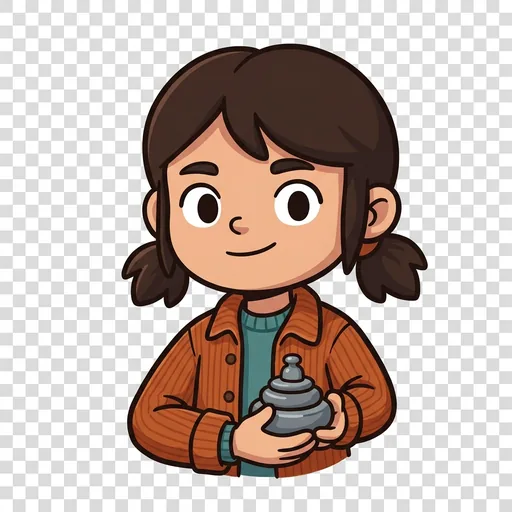
Borrow
Credit & debt basics — borrowed money isn't free; interest is the cost; a tool with rules, not a judgment
-
Vault
Digital privacy — some things stay locked; strong separate passwords; know who's actually asking
-

Dial
Time-management — the day is a pie; aim your hours at what matters, break big tasks small, keep a slice for rest