Hark
HARK — *receiving-before-responding. the answer is in what they just said.*
Listen along — Hark
Loading audio…
Press play to listen along. The line being read lights up as you go.
Show full transcript
Loading transcript…
Chapter 2 — Hark and the Answer Hidden in What Was Said
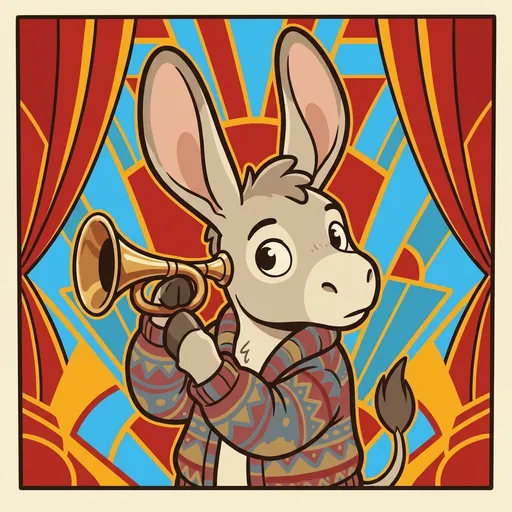
Hark was a small donkey. He was not silly at all. Hark had big, soft ears. He wore a cozy cardigan. It was made for listening. He always carried a small ear-trumpet. It was an old-fashioned hearing aid. He held it up when people spoke. It reminded everyone to listen first.
Hark was warm and gray. His ears were extra-large. He was very patient. He loved to hear what people said. His favorite saying was, “The answer is in what they just said.” That ear-trumpet was his special thing. He held it up. It helped him focus. It helped him hear every word.
This was super important. Hark taught about listening in improv. Improv means making things up on the spot. Listening means you get ready to hear. You don’t just wait to talk. Most new players just wait for their turn. They plan their own lines. That is not real listening. Real improv listening means you soak up everything. You hear their words. You notice their tone. You see their body language. You look for clues. These clues are your “response-fuel.” They hide in what your partner says. Hark’s job was to show this. He made improv listening easy to see. He also linked it to the “Ear” game from EnsembleQuest.
Hark was very clear. “The answer is in what they just said,” he would say. “Listen for the gift. It is hidden in their offer.” He gave an example. “Your partner might say, ‘I haven’t slept since the bears arrived.’ Your clues are right there. ‘Bears arrived.’ ‘Haven’t slept.’ Use those details. Build your next line from them.”
Hark taught simple rules for improv listening:
- Hear the small details. What names did they use? What places? What things? What actions? These are your clues. They are your response-fuel.
- Notice how they feel. Is your partner tense? Excited? Confused? You should respond to their feelings. It is just as important as their words.
- Don’t plan your next words. If you plan your line, you are not listening. You must stay in the moment. Your answer will come from what you hear.
- Say it back if you get lost. You can say, “Wait, did I hear you right? You said the bears arrived?” This buys you time. It also shows you heard them.
- It’s like the Ear game. This kind of listening is like the “Ear” game. You learned it in EnsembleQuest. It’s the same idea. But now, it’s for improv.
- Listening helps your partner shine. You cannot make your partner look good. Not if you didn’t hear them. Listening lets you build on their ideas.
- Never talk over someone. Do not interrupt. Wait for them to finish. Hear their whole idea. Then you can build on it.
Hark grew up in the village travel-yard. It was a busy place. His family had always been “traveler-listeners.” They were the village donkeys. Their big ears helped them. Their patient ways helped them too. They were the best at talking to people. They carried messages. They learned a big lesson. It took many generations. “The message is in the messenger’s words,” they said. “Listen first. Carry second.” Hark carried that lesson forward. He remembered it every day.
He walked to ImprovQuest when he was twelve. Riff was the mentor there. Riff asked him a question. “What is listening in improv?” Hark thought for a moment. He looked at Riff. “It’s hearing before you answer,” Hark said. “The answer is in what they just said. The small details and their feelings. Those are your clues. They are your response-fuel.” Riff smiled. “You are appointed,” Riff told him. Hark felt very proud.
In his workshop, Hark showed everyone how it worked. “Watch closely,” he said. He held up his ear-trumpet. He made a big show of it. “Partner,” he called out. “Please give me an offer.” A volunteer stepped forward. She looked a little nervous. “My bicycle has been talking to me at night,” she said. Hark paused. He looked at the volunteer. He looked at the floor. He thought about her words. He named the details he heard. “Bicycle. Talking. At night.” He tapped his ear-trumpet. “Those are my response-fuel,” he said.
Then Hark built his own line. “YES, AND it’s been complaining about the rust,” he said. “The rust I keep meaning to fix. I knew this would happen eventually.” The volunteer giggled. Hark turned to the class. “Did you see?” he asked. “I built from HER details. Bicycle. Talking. Night. My answer made her idea better. We both looked good.” He smiled. “I am Hark,” he said. “I teach improv listening. My move is simple. Receive THEIR offer. The answer is hidden in their words.”
He spoke gently. “Don’t plan your line,” Hark warned. “Not while your partner is talking. That is a trap. Just listen completely. Your answer will come. It will emerge from what you hear. Listening is a short pause. It’s only half a second. But that pause makes good improv possible.” He nodded slowly.
“The answer is in what they just said,” Hark reminded everyone. “Listen first. Build second.”
The ImprovQuest ensemble
Hark is part of ImprovQuest's distributed-narrative cast. Each character embodies a different curricular primitive; together they teach the full subject.
-

Give
Yes-and / offer-acceptance — make-your-partner-look-good cooperative posture (the gift-orb metaphor)
-

Don
Character work + physicality — body-finds-voice, find-ONE-thing approach
-
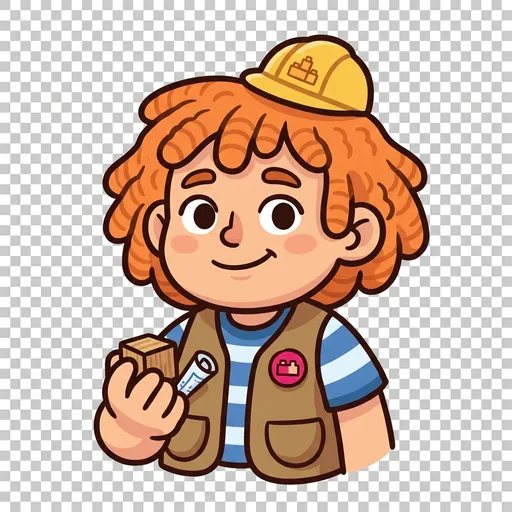
Lay
Scene-building + narrative — patient platform-before-plot foundation-laying (who/where/what/why)
-

Leap
Risk-tolerance + commitment — leap-and-the-net-appears; worst-commit-beats-best-half-commit