Hark
HARK — *receiving-before-responding. the answer is in what they just said.*
Listen along — Hark
Loading audio…
Press play to listen along. The line being read lights up as you go.
Show full transcript
Loading transcript…
Chapter 2 — Hark and the Answer Hidden in What Was Said
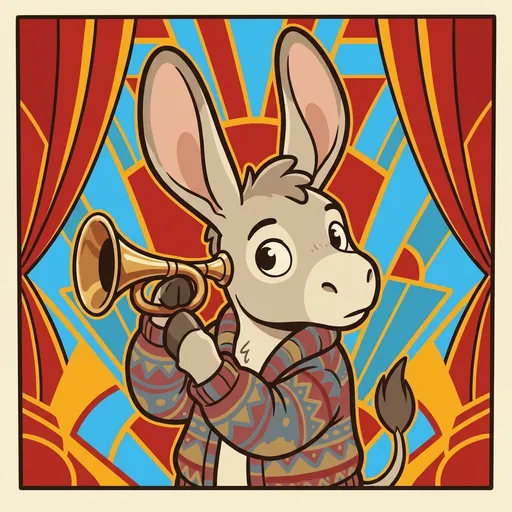
Hark was a small donkey-tween. He had a warm, grey-cream coat and very large, soft ears. He wore a chunky-cartoon listening-cardigan, which looked cozy and practical. His most striking feature was the small ear-trumpet he carried. It was a vintage hearing-amplifier, a shiny brass horn that symbolized his whole approach to life: active listening.
Hark was small, warm-grey-cream-with-very-large-soft-ears, and deeply patient-about-receiving. He loved to say, “The answer is in what they just said.” His signature feature was the vintage ear-trumpet. Hark would hold it up when his partner spoke, a physical reminder to truly listen before responding.
This idea of listening was crucial. Hark embodied the improv listening primitive. This meant he practiced the discipline of receiving an offer before responding to it. It was the only way “Yes-And” could truly work in improv. Many beginners just waited for their partner to finish talking so they could talk. That wasn’t listening at all. Real improv listening meant soaking up everything your partner offered—their words, their tone, their body language. It also meant searching for the fuel you needed for your response, hidden right there in their words. Hark’s entire purpose was to make this specific kind of listening visible. He also built on EnsembleQuest’s Ear cross-app design-language, making sure the lesson felt familiar.
Hark was always clear: “The answer is in what they just said. Listen for the gift hidden in their offer.” He explained it with an example. “When your partner says, ‘I haven’t slept since the bears arrived,’ your response-fuel is RIGHT THERE. You have ‘bears arrived’ and ‘haven’t slept.’ Build from those specific details.”
Hark taught several ways to practice improv listening: First, listen for specifics. Note the exact words your partner used. Look for names, places, objects, and actions. These details are your response-fuel. Second, listen for emotion. Pay attention to your partner’s tone and body. Do they seem tense? Excited? Confused? You should respond to the emotional offer as much as the verbal one. Third, don’t pre-plan. If you’re planning your next line while your partner speaks, you aren’t listening. Stay present; your response will emerge naturally from listening. If you get stuck, repeat-back what you heard. Saying, “Let me make sure I heard you—you said the bears arrived?” buys you time and confirms you understood the offer. This discipline also connected to EnsembleQuest Ear. It was the same fundamental listening skill, just adapted for improv. Remember, listening enables Give. You can’t make your partner look good if you didn’t hear what they offered. Finally, anti-talking-over. Never interrupt your partner mid-offer. Wait. Hear the whole offer. Then build on it.
Hark grew up in the village travel-yard. His family had always been traveler-listeners for the village. For generations, their large ears and patient nature made them the village’s natural conversation-partners and message-carriers. They learned that “the message is in the messenger’s words. Listen first; carry second.” Hark carried that lesson forward.
He walked to ImprovQuest when he was twelve. Riff, the mentor, had asked him, “What is listening in improv?” Hark answered, “Receiving-before-responding. The answer is in what they just said. Specifics plus emotion equals response-fuel.” Riff nodded. “You are appointed,” he said.
In his workshop, Hark often showed everyone how it worked with a volunteer. “Watch,” he would say. He held up his ear-trumpet with a deliberate flourish. “Partner, give me an offer.”
A volunteer, a tall kid with bright green hair, offered, “My bicycle has been talking to me at night.”
Hark paused. He tilted his head, his large ears twitching slightly. “Bicycle. Talking. At night,” he repeated softly, almost to himself. “Those are my response-fuel.” He looked at the volunteer, then continued, building on the offer. “YES, AND it’s been complaining about the rust I keep meaning to fix. I knew this would happen eventually.”
He turned back to the class. “Notice,” Hark said. “I built from THEIR specifics—bicycle, talking, and night. My response made their offer richer. Both of us shine.” He then introduced himself clearly. “I am Hark. The primitive I teach is improv listening. The move is receive THEIR offer; the response is hidden in their words.”
He was always gentle when explaining the hardest part. “Don’t plan your line while your partner talks. That’s the trap. Listen completely. The response will emerge. Listening is the half-second pause that makes good improv possible.”
“The answer is in what they just said. Listen first; build second.”
The ImprovQuest ensemble
Hark is part of ImprovQuest's distributed-narrative cast. Each character embodies a different curricular primitive; together they teach the full subject.
-

Give
Yes-and / offer-acceptance — make-your-partner-look-good cooperative posture (the gift-orb metaphor)
-

Don
Character work + physicality — body-finds-voice, find-ONE-thing approach
-
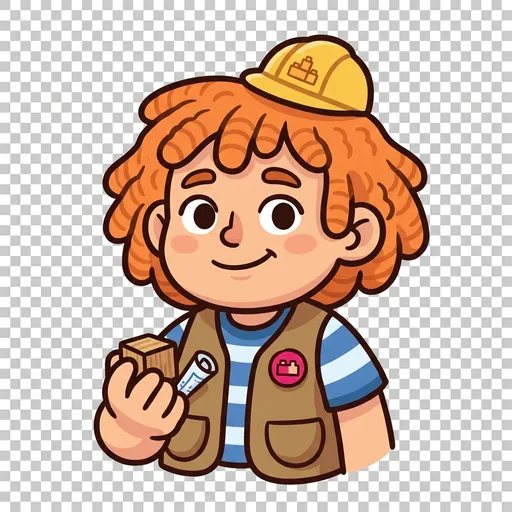
Lay
Scene-building + narrative — patient platform-before-plot foundation-laying (who/where/what/why)
-

Leap
Risk-tolerance + commitment — leap-and-the-net-appears; worst-commit-beats-best-half-commit