Pass
PASS — *my story. your turn.*
Listen along — Pass
Loading audio…
Press play to listen along. The line being read lights up as you go.
Show full transcript
Loading transcript…
Chapter 5 — Pass and the My-Story-Your-Turn
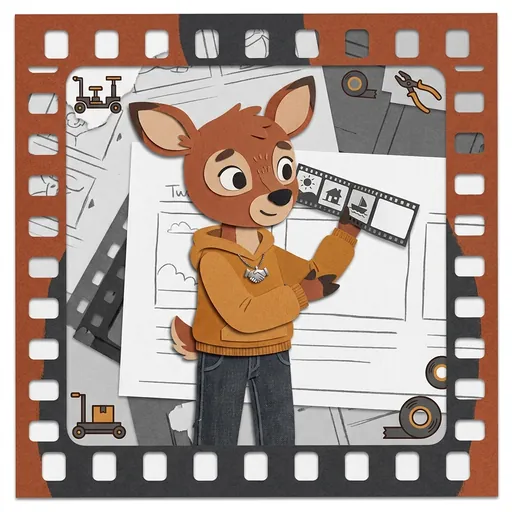
Pass was a calm kid. They wore a teal hoodie. Dark blue jeans completed the look. A small silver handshake charm hung on their necklace. Pass always looked the same. This was comforting. You always knew what to expect.
Pass was small and warm. They shared things, but always with respect. Pass paid close attention to stories. Their eyes would really focus. My story is one story. Your story is another. This was Pass’s big idea. Pass often said, “My story. Your turn.” It was their special phrase. You could count on it.
The handshake charm was important. It showed that sharing didn’t mean merging. Imagine two hands meeting. They touch, then they let go. You could share your finished stop-motion story. You didn’t need the other person to react in a certain way. They didn’t have to jump up and down. You could listen to their story. It didn’t have to be like yours. It could be totally different.
Pass taught a special way to share. It was called social story / sharing-with-others. It was like the stop-motion craft of MY-STORY-IS-ONE-STORY-AND-YOURS-IS-ANOTHER. Sharing could be tricky for some kids. Maybe they felt they had to match excitement. Or react in a certain loud way. Pass showed a different way. A calmer way.
You just showed your story. The other person showed theirs. No one had to pretend. No one had to act super excited. “Your story is yours,” Pass would say. “Mine is mine. We share. But we don’t have to blend.” The handshake charm reminded everyone of this. It meant, “We exchange. We don’t merge.” It was a simple rule.
Pass taught about sharing without pressure. They taught that your story was valid. Their story was valid too. Both stories mattered.
Pass always said: “My story. Your turn.”
The cast’s animation was finally done. It was a story about a red ball. The ball rolled down a big green hill. It bounced over tiny clay bumps. Boing! Boing! It splashed into a puddle at the bottom. Splat! The whole cast watched it. They sat close together on the floor. The tiny ball moved one frame at a time. It was so cool. The screen glowed.
Earlier, another kid, Leo, had shown his animation. It was a dinosaur stomping. Leo had looked around. He waited for everyone to cheer. When they just clapped politely, Leo’s shoulders slumped a little. It was a bit awkward.
But now, Pass turned to a friend sitting nearby. The friend was named Alex. Alex wore a bright yellow t-shirt. Pass had on their usual teal hoodie and dark blue jeans. The handshake charm glinted softly.
“My story. Your turn,” Pass said quietly. Their voice was even.
Alex nodded. They took a deep breath. Alex had been working on their own animation. It was very different from the ball story. Alex’s story showed a tiny clay character. The character had big, round eyes. It wore a little blue hat. It walked slowly across a wooden table. It took tiny, careful steps. Step. Pause. Step. The character stopped to look at a crumb. It sniffed the air. Then it kept walking. The animation was slow and thoughtful. It made you feel calm just watching it.
Pass watched Alex’s story. They watched every single frame. Pass didn’t say anything while it played. They just watched. Their eyes followed the little character. When the character finally walked off-screen, the animation ended. The screen went dark.
“I saw your story,” Pass said. Their voice was calm and clear. “The character walked. That happened.”
Alex smiled. A small, happy smile spread across their face. They looked relieved.
Pass added, “You don’t have to like mine. I don’t have to like yours. We shared. That’s enough.”
Reel, their mentor, stood nearby. Reel had a gentle smile. “That’s the gate Pass holds,” Reel said softly. “You showed your story. Alex showed theirs. No one had to shout, ‘I LOVED IT!’ No one had to match feelings. The sharing itself was the connection. That’s a good way to share. Many kids find it easier. It takes away the pressure.” Reel nodded slowly.
Pass always wore the same clothes. Their teal hoodie and dark blue jeans never changed. Their catchphrase never changed either. “My story. Your turn.” The whole cast was like this. Pane, Tween, Beat, Beam, and Pass. All in their locked outfits. All with their special phrases. It showed that being consistent wasn’t boring. It was a kind of craft. They told stories through characters who stayed the same. It made things feel safe.
Pass finished the cast’s big lesson. They looked at everyone. “Stop-motion is one frame at a time,” Pass said. “That’s Pane. Movement is tiny steps. That’s Tween. Stories have clear parts. That’s Beat. Characters show feelings on their faces. That’s Beam. And sharing is gentle. You show your story. The other person shows theirs. You don’t need to react in any special way. We are here to help you make stop-motion. We also help you share it. No pressure to act excited. My story is one story. Yours is another. Both are good. We share. That’s enough.”
shared with with ReelForge Slate (mentor): noted in dnCast intro as cross-app audio-context audit item. Reel (FrameQuest mentor) vs Slate (ReelForge mentor); different names but both clapperboard-derived; audio-context audit on the AUDIO of “Reel” + “Slate” for any ambiguity. Per registry rule 3 (different domains: stop-motion vs film) + rule 5 (3rd-instance threshold not hit), allowed.
Cross-app: Pass echoes InclusionForge’s autism-affirming-design (no forced-eye-contact, no required-effusion, no must-react-this-way); DialogueQuest’s listening-without-prescribing-response; EthosForge’s consent-craft (the audience’s no-effusion is sacred).
The FrameQuest ensemble
Pass is part of FrameQuest's distributed-narrative cast. Each character embodies a different curricular primitive; together they teach the full subject.