Click
VOICE / SIGNATURE — every well-built character has a distinctive voice (word-choice, sentence-length, rhythm, vocabulary, attitude) that makes them sound *only like themselves.* Voice is the character's signature.
Press play to listen along. The line being read lights up as you go.
Show full transcript
Loading transcript…
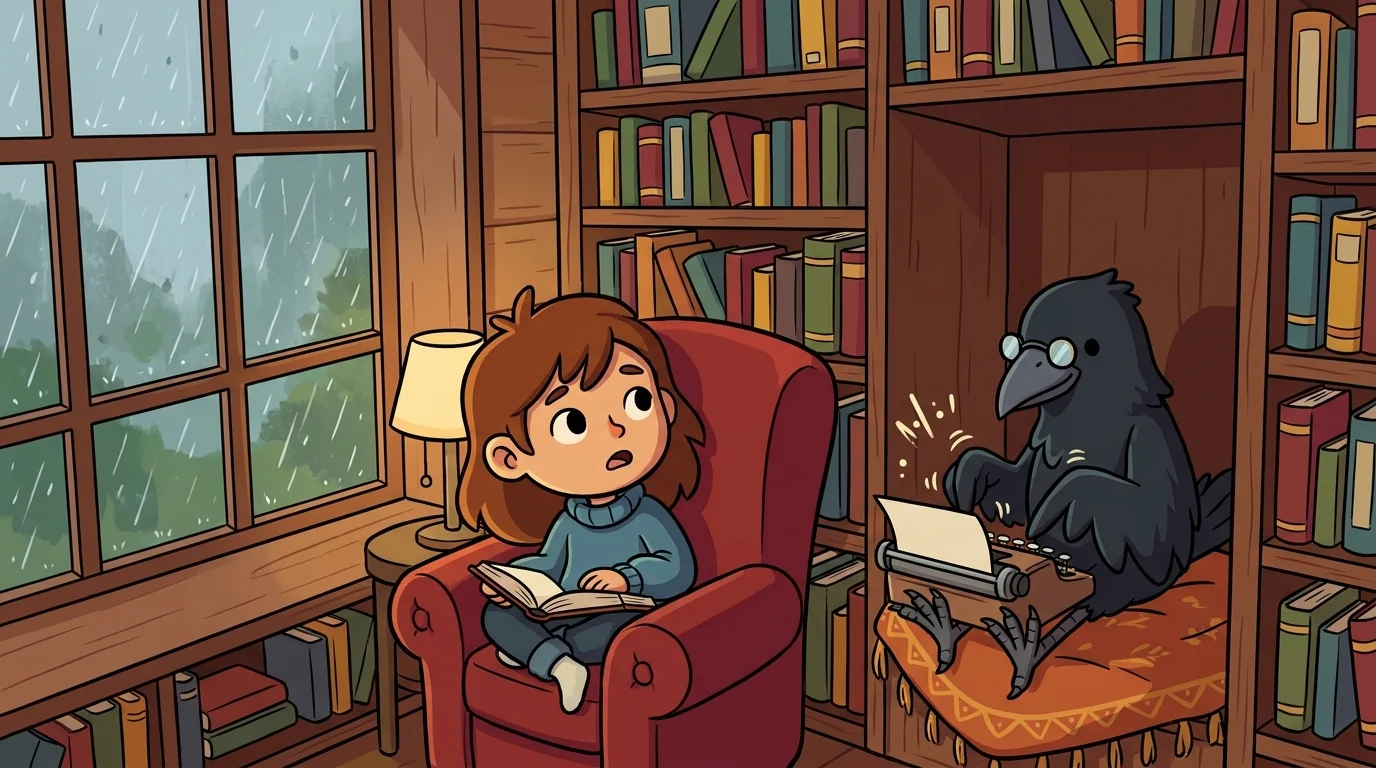
Ink first met Click on a rainy Tuesday. Rain drummed a soft rhythm on the cottage roof. It was the perfect afternoon for getting lost in a book.
Ink was curled up in his favorite armchair in the library. The room was small, but its shelves were packed with stories. He was just getting to the good part when a new sound joined the rain.
Click-clack. Click. Click-clack-clack.
It was sharp and clear, like tiny metal shoes tap-dancing. It came from the corner of the room. Ink lowered his book. He’d never heard that sound in the cottage before.
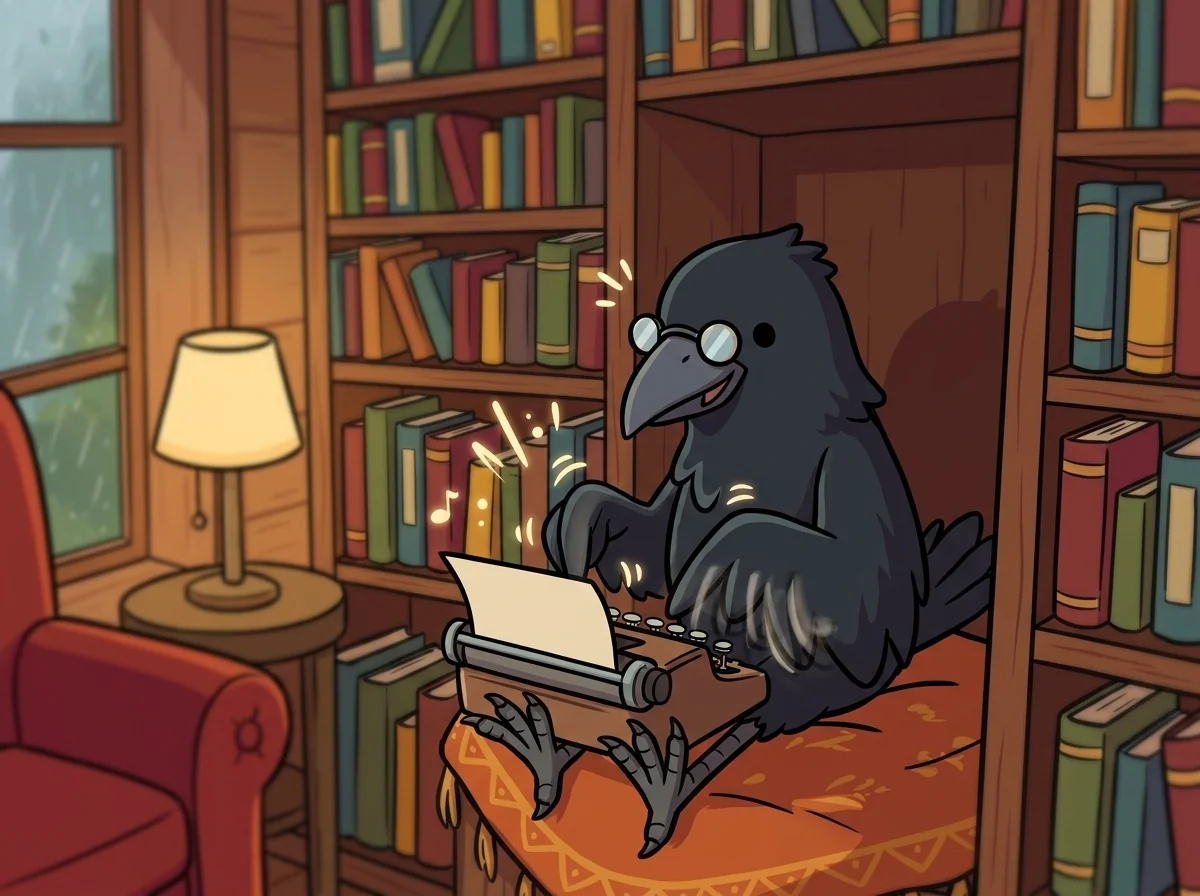
Tucked in the corner was a young raven. He wore a pair of small, round glasses perched on his beak. He sat on a low cushion with a little typewriter balanced on his knees. His sharp claws tapped away at the keys.
Ink listened closely. This wasn't just random typing. The clicks came in patterns. They had a beat, a rhythm you could almost tap your foot to. It was music made of letters.
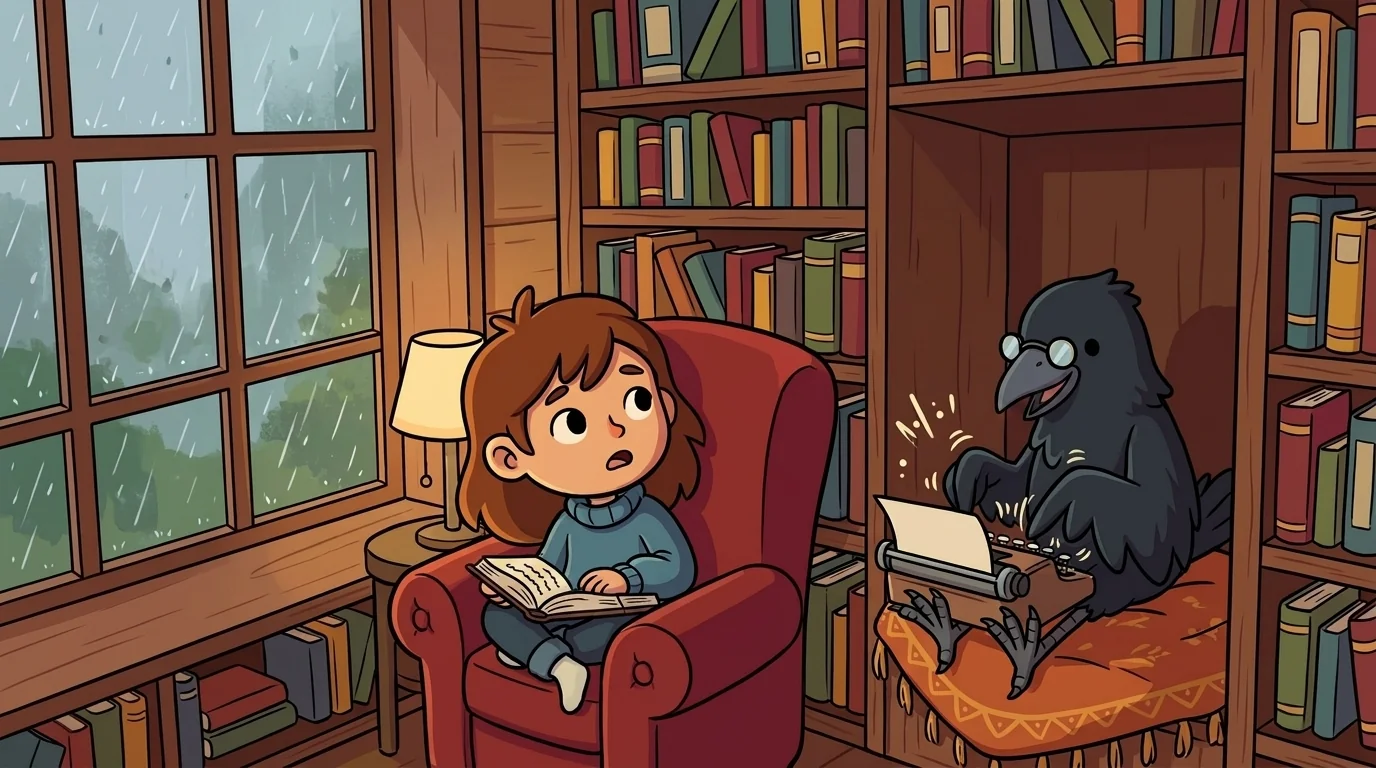
"Hello?" Ink said, trying not to startle him.
The raven looked up. His movements were quick and exact. "Hello," he said. His voice was quiet and crisp, just like the sound of his typewriter. "I am Click. I'm typing dialogue."
"Dialogue for who?" Ink asked.
"For different characters," Click said. "Listen."
Click’s claws flew across the keys.
Click-CLICK-click-CLICK-click. The sound was warm and round, like a friendly laugh.
Then he typed a second line. Click... pause... click... pause... click. This time, the clicks were small and careful, like someone tiptoeing across a creaky floor.
He typed a third. Click-click-CLICK-click... pause... click-CLICK. This one was a jumble of fast and slow, a rhythm that couldn't sit still.
"The first line was Beacon," Click explained. "The second was Crouch. The third was Eight. It's the same idea, but it feels different coming from a different mouth. The typewriter sounds different for each one. The sound is their voice."
Ink’s jaw dropped. He had never thought of it that way. "You can actually hear a character's voice in the rhythm of the words."
"Exactly," Click said, polishing his glasses. "*Voice is percussion.* The words you choose have a rhythm. The length of your sentences creates a beat. When you put it all together, you get a special sound. That's a character's voice-signature. A good one is so clear, you know who’s talking without even seeing their name."
Ink knew his students had to see this. "Would you... would you come to my classroom?"
Click nodded once, a sharp, decisive movement. "I'll bring the typewriter."
And that’s how Click joined the class.
He sits on his cushion in the corner, his little typewriter always ready. When a student reads a piece of dialogue they've written, Click types along. The whole class listens to the sound.
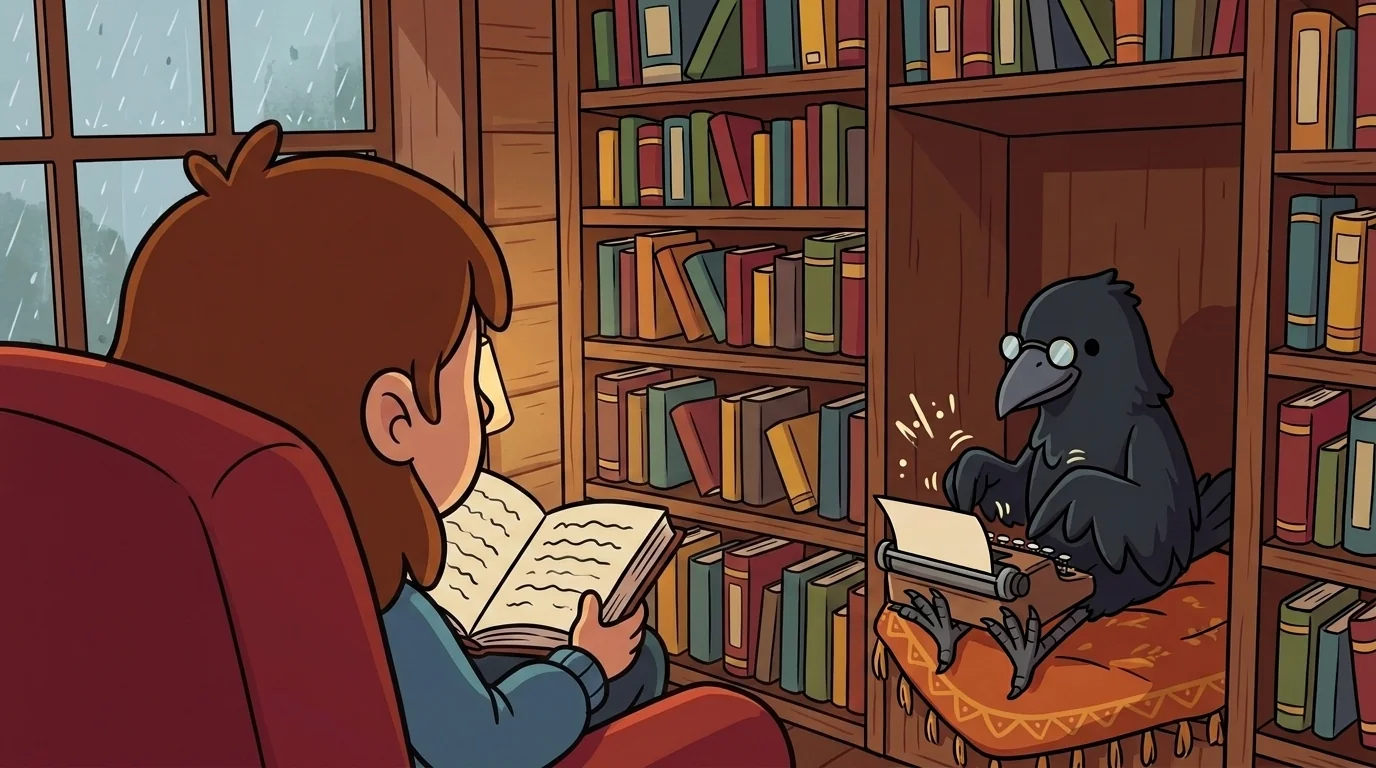
If a student writes a line for Beacon, the typewriter goes click-CLICK-click-CLICK-click. Warm and round. Perfect.
But what if the line is supposed to be for Crouch, the quiet one? If the student wrote a long, loud sentence, the typewriter's clicks will sound all wrong. They'll be fast and jumbled instead of slow and careful. The students hear the mistake right away. Click never has to say a word. The typewriter does all the talking.
During his lesson on character voice, Ink points to the corner. "This is our expert, Click," he says. "His typewriter helps us hear what a character sounds like. Remember his big idea: *Voice is percussion.*"
Ink reminds them. "Beacon's voice is warm and round. Crouch's is small and careful. Eight's voice is all over the place, full of different rhythms. You can hear the difference."
He looks around at the students. "When you write for your characters, ask yourself one question. Does this sound like something ONLY my character would say? If the answer is yes, you've found their voice. If anyone could say it, you need to keep listening."
At first, many students write dialogue that sounds generic. Any character could say it. So Ink has them read their lines aloud. As they read, Click types.
The typewriter clatters with the wrong rhythm. The student winces. They can hear it doesn't fit.
So they try again. They change a word here, shorten a sentence there. They read the new line. Click types. This time, the rhythm is closer. It takes a few tries, but soon the voice settles. It becomes something unique.
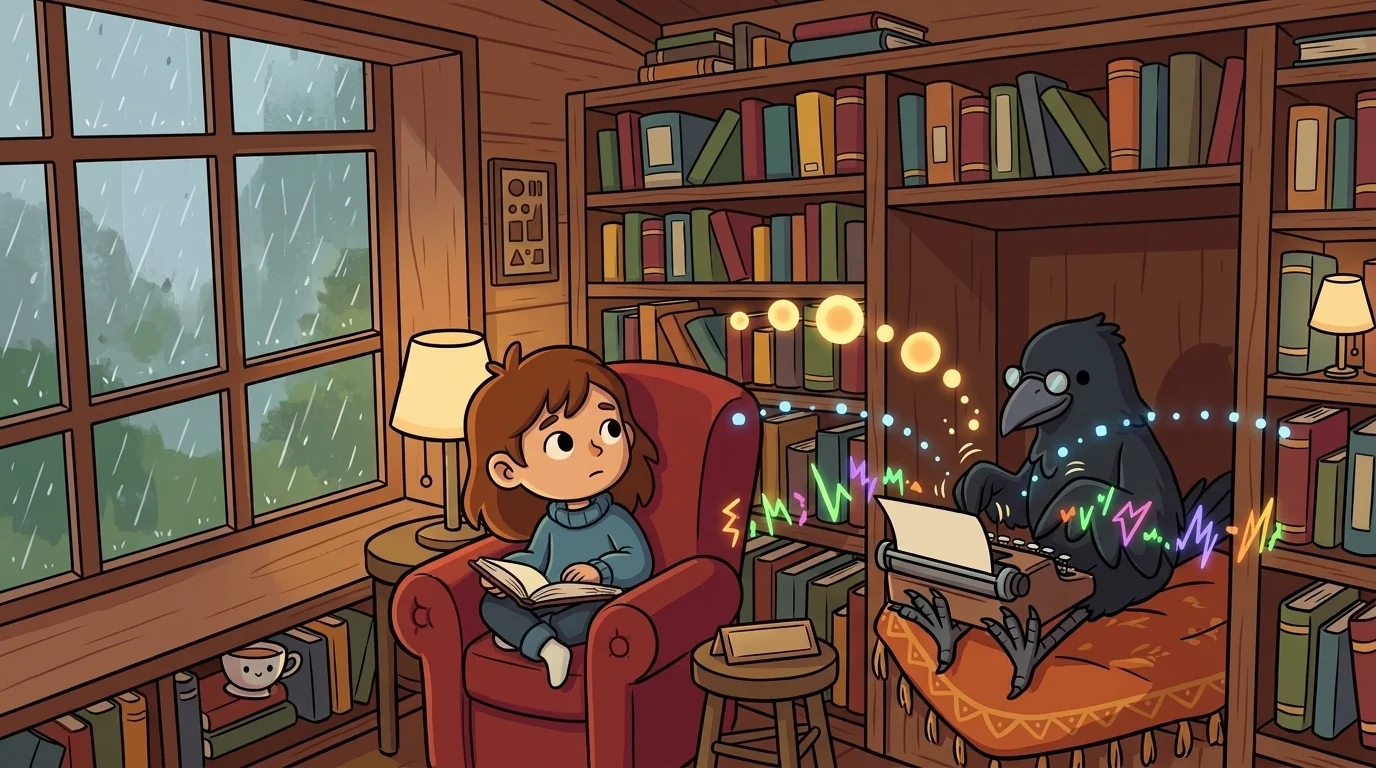
To finish the lesson, Click gives a final performance.
He types a line for Beacon: click-CLICK-click-CLICK-click. Warm and round.
He types one for Crouch: click... pause... click... pause... click. Small and careful.
And one for Eight: click-click-CLICK-click... pause... click-CLICK. Wild and unpredictable.
The students don't just understand. They can hear it. The voices are completely different.
Sometimes a student will ask Ink, "Is it hard to write a good character voice?"
Ink just smiles and quotes Click. "It's not about being hard. It's about listening for the percussion. Read your character's lines out loud. Does the rhythm sound like them, and only them? If you can't tell who's talking from the words alone, their voice needs a stronger beat."
The CharacterForge ensemble
Click is part of CharacterForge's distributed-narrative cast. Each character embodies a different curricular primitive; together they teach the full subject.
-
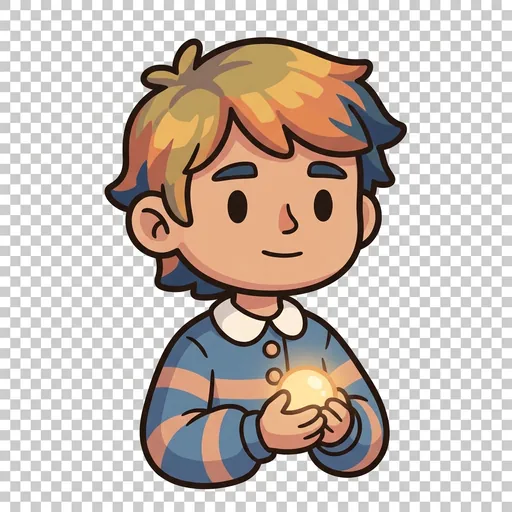
Beacon
Want / engine — moth-tween who walks toward a small floating warm-light she can never quite reach (the want IS her motion)
-

Crouch
Fear / brake — hedgehog-tween who tucks away from one specific wooden-door icon visible in every scene she appears in
-

Eight
Contradiction / depth — octopus-tween with eight arms in eight different directions (three forward / three back / two crossed)
-
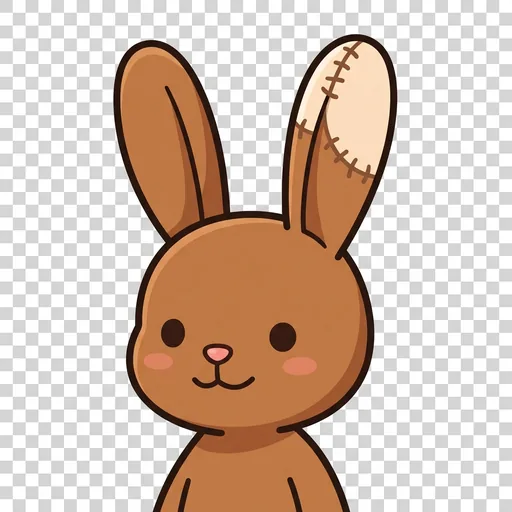
Patch
Backstory / the past — soft brown rabbit-tween with one mended patch on her ear from an old day; everything she does traces back to that healed-over moment
-
Snag
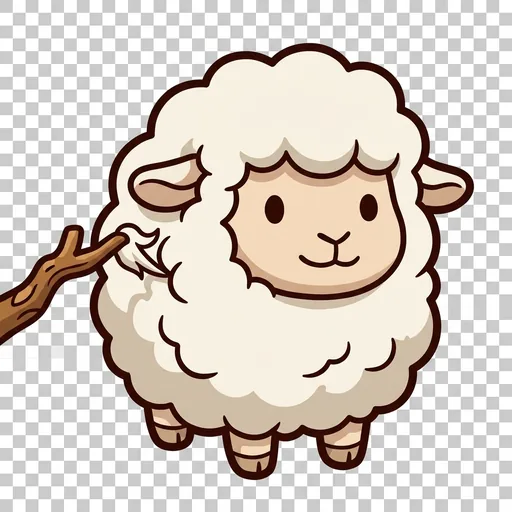
The flaw — round woolly sheep-tween who always takes the left path and snags his wool on the same branch (the repeated mistake that makes a character feel real)
-

Foil
The foil / contrast — thin silvery foil-tween who lies behind another character so their colors show brighter (you see someone best beside who they are not)
-

Molt
The change / arc — hermit-crab-tween who keeps a row of outgrown shells, smallest to largest (a character is not the same at the end as at the start)
-
Fidget
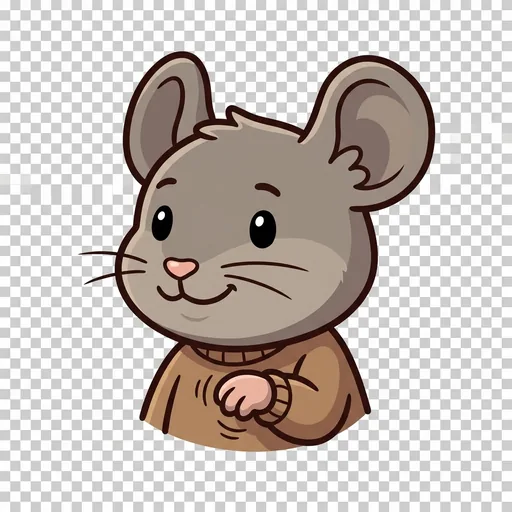
The tell / mannerism — quick grey mouse-tween who taps her paw twice before she speaks (the small repeated gesture that makes a character recognizable)
-

Worth
The stakes — sturdy badger-tween who carries one precious glowing bead in cupped paws (what a character has to lose is what makes us care)