
Sprout
SPROUT — food becomes you. digestion converts; absorption distributes.
Press play to listen along. The line being read lights up as you go.
Show full transcript
Loading transcript…
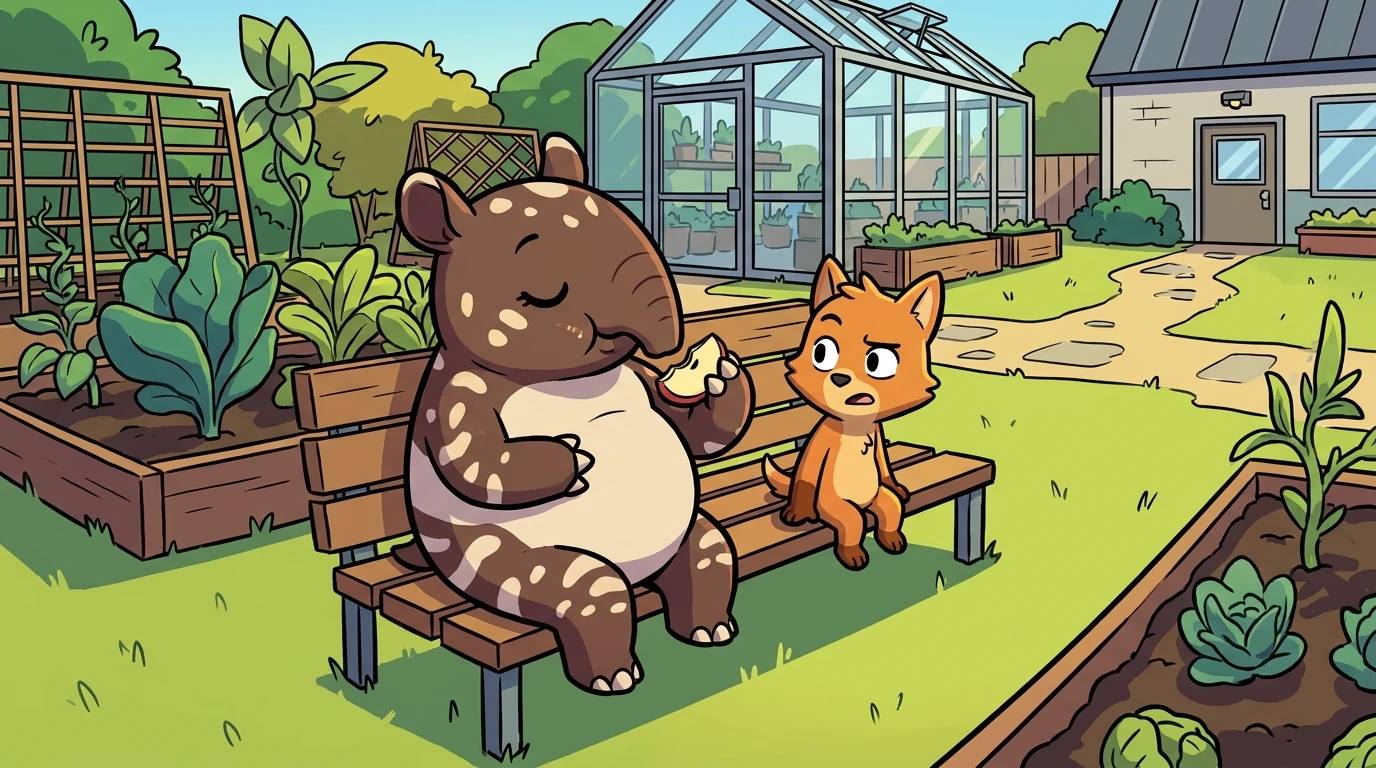
In the back garden of the Bioforge lab, a small tapir-tween named Sprout sat with a slice of apple in her hoof and did not eat it right away.
She turned it over. She sniffed it. She took one careful bite and chewed it far longer than seemed strictly necessary — twenty chews, maybe thirty — until the apple stopped being a chunk and became a soft, wet paste on her tongue.
A younger student watched from the bench, baffled. "You chew like you're being paid by the hour."
"I'm not chewing," Sprout said around the mouthful. "I'm starting the journey."
The student raised an eyebrow.
Sprout swallowed, then pressed a hoof flat against her own round middle. "This apple is about to travel thirty feet without ever leaving me. Down my throat. Into my stomach, where it gets churned and splashed with acid. Then into a long, folded tube where the good stuff — the sugar, the little bits of the apple that will become me — soaks straight through the walls into my blood." She grinned. "It takes a day. Maybe two. The apple stops being an apple and starts being Sprout."
"That's disgusting," the student said, delighted.
"That's breakfast becoming a person," Sprout said. "Every cell in me was lunch once. So I chew slow. I like to give the apple a proper send-off."
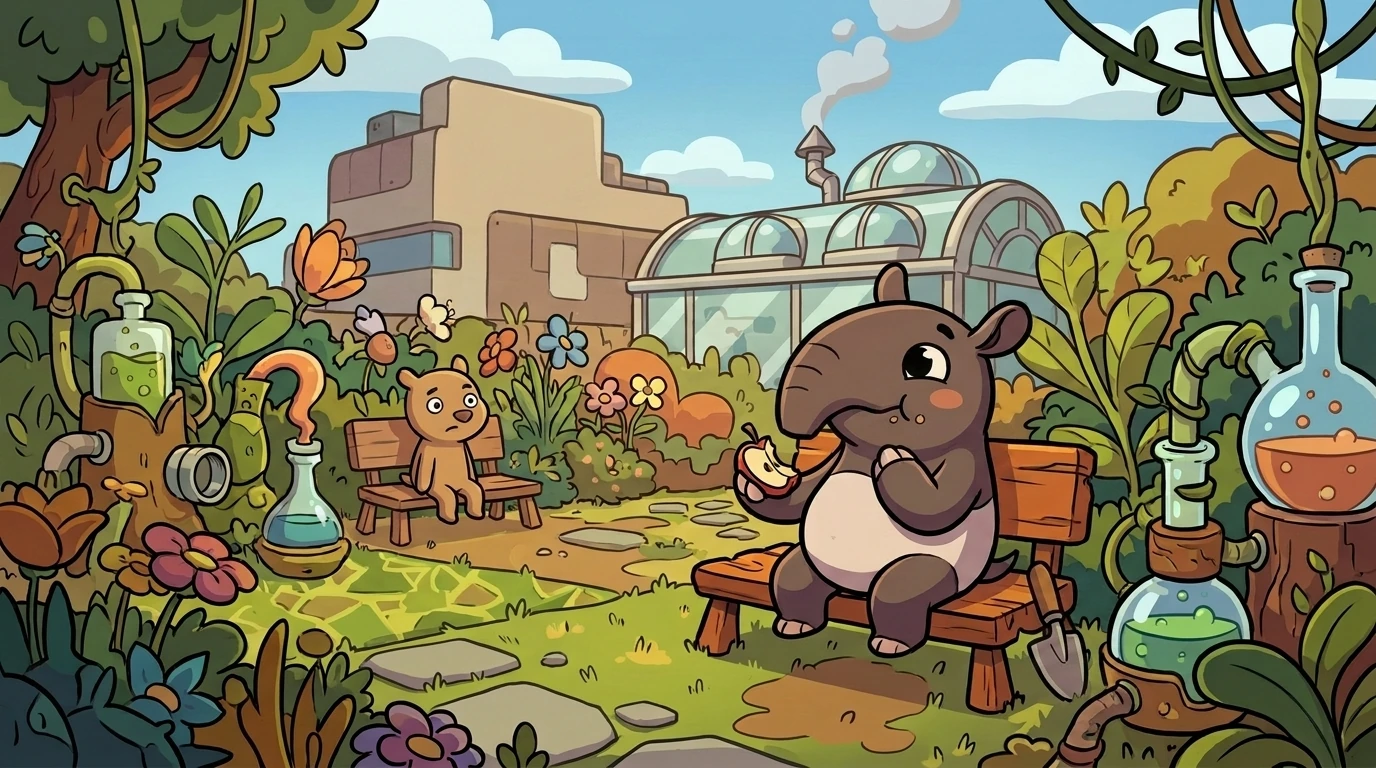
Sprout had not always trusted her own middle.
When she was smaller, she'd overheard some older kids talking about food the way you'd talk about an enemy — this food was "bad," that one you had to "earn," another you were supposed to "burn off" like it was a stain. She'd started eyeing her plate with suspicion, feeling a tight, ashamed knot every time her stomach growled, as if being hungry were something to apologize for.
An elder tapir named Marsh had found her one evening pushing food around her plate, not eating, stomach loud and unhappy.
Marsh hadn't lectured. She'd just sat down and said, "Your belly's talking. What's it saying?"
"That I'm hungry," Sprout mumbled. "But I don't think I'm supposed to be."
Marsh had laughed — not unkindly. "Little one, that growl isn't a problem. That's a body that works. Hunger is your cells asking for the parts to keep building you. You don't earn food and you don't pay it back. You're a garden. Gardens get watered." She'd tapped Sprout's plate. "Everything on here is going to take a long trip through you and come out as bone and blood and the muscle you'll use to climb tomorrow. That's not a debt. That's just how a body stays a body."
Sprout ate that night without the knot. The hungry feeling had a different name now: building. And building, it turned out, was something she could sit with warmly instead of fighting.

She came to Bioforge at twelve, drawn to the lab because it studied how living things actually work — and nobody there flinched from the beautiful, churning insides of that question.
Whisk, the mentor who ran the anatomy workshops, met her at the door with a bowl of soup and one test. "Tell me what happens to this soup."
Sprout didn't answer with a list. She took a slow spoonful, held it a moment, and swallowed. Then she started walking — tracing a line with one hoof from her mouth, down her throat, past her chest, curving down and around and around her own belly, all the way to the small of her back.
"It goes here first — chewed, wet, mixed with spit that's already starting to break the bread down." She pressed her stomach. "Then here, and it gets churned like laundry and soaked in acid until it's a warm slush." Her hoof traced the long coil. "Then the real work — this whole folded tube, longer than the room. This is where the soup soaks through the walls into my blood. The good parts leave the tube and go join me." She reached her back. "And what's left over keeps going, out the far end. Nothing wasted. Nothing rushed."
Whisk watched her trace the whole thirty feet and said quietly, "You belong here."
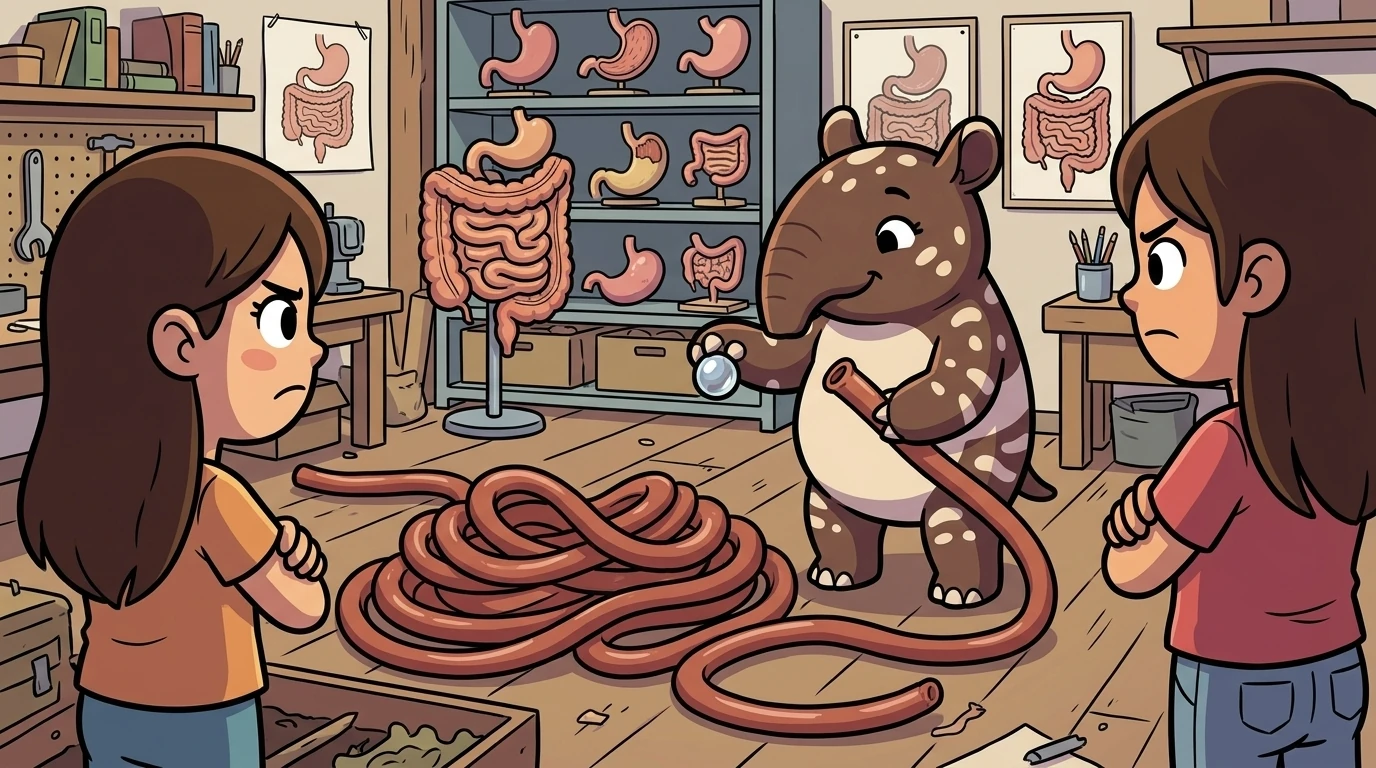
Sprout's workshop was full of stomachs — models, drawings, a coiled rubber tube she could stretch across the floor to show its true length.
A girl came in one afternoon, arms crossed, upset. "I ate a big lunch and now my stomach is all loud and busy and weird. I feel like I did something wrong."
Sprout knew that exact worry. She'd carried it once, on a bad evening with a full plate.
"Loud how?" she asked. "Growly? Gurgly?"
"Gurgly. Like it's mad at me."
"Come here." Sprout laid the long rubber tube out across the floor, all thirty feet of it, coiling it into a folded heap the size of a small dog. "That's the tube inside you. That gurgle isn't anger — that's work. Your stomach is squeezing, your gut is rippling, pushing the food along like toothpaste in a hose. The busy feeling is a whole factory running." She dropped a marble in one end of the tube and tilted it so it rolled the whole length. "See how it travels? Every squeeze moves your lunch a little farther, and all along the way the walls are pulling out the parts that'll build you — the fuel, the little repair-kits, the stuff your muscles want."
"So the loud part is... good?"
"The loud part is your body taking excellent care of you." Sprout tapped the girl's arm, gently. "And you've got tiny helpers in there too — billions of them, little living partners that live in your gut and help finish the job. They eat what you can't and they keep you healthy. You're never doing this alone. You're a whole community in there, all working on the same lunch."
The girl uncrossed her arms and pressed a curious hand to her own stomach, listening.
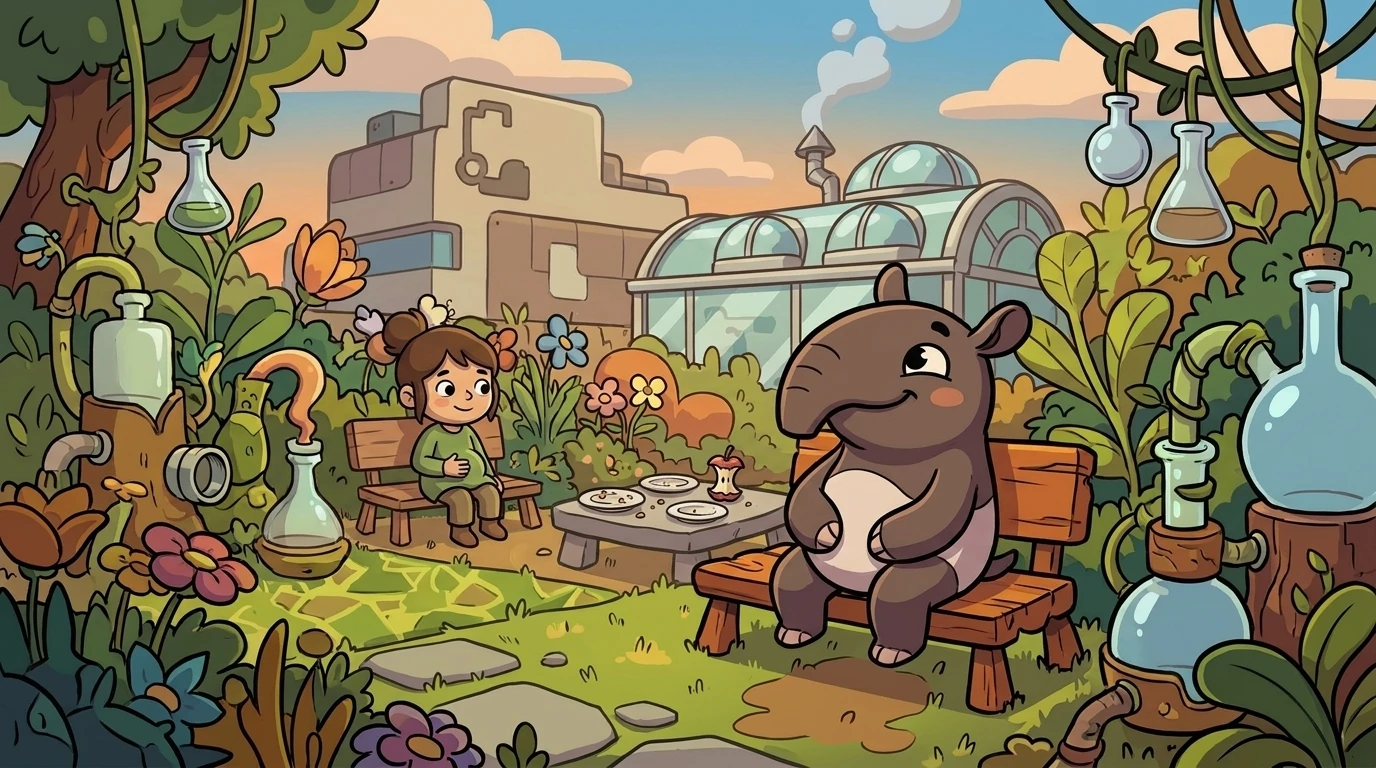
Later, when the workshop was empty, the girl came back with a smaller, quieter question.
"If the food turns into me," she said, "then... am I just made out of everything I've ever eaten?"
Sprout thought about Marsh, and the growling belly, and the plate she'd finally eaten without shame.
"Yes," she said, warm and certain. "Every bit of you was a meal once. The apple, the soup, the bread — it all took the long trip and stayed. You're not something separate from what you eat. You're built from it, slowly, quietly, one bite at a time."
The girl went still, and Sprout watched something settle in her — the same soft, un-knotted calm that had settled in Sprout years ago at Marsh's table.
"So the next time your belly gets loud," Sprout said, "you don't have to feel like you did something wrong. That warm, busy, working feeling? That's just you, becoming more of yourself. It's the kindest thing your body knows how to do."
The girl smiled, one hand still resting on her middle, feeling it work — and Sprout smiled back, glad, always glad, to send a good meal on its long way home.
The BioForge ensemble
Sprout is part of BioForge's distributed-narrative cast. Each character embodies a different curricular primitive; together they teach the full subject.
-

Pump
Cardiovascular (heart, blood, vessels)
-

Bellows
Respiratory (lungs, oxygen exchange)
-

Flicker
Nervous (brain, signals, reflexes)
-

Strand
Muscular (contraction, movement)
-

Beam
Skeletal (bones, levers, support)
-

Ward
The immune system: recognizes what does not belong, sends defenders to fight germs, and remembers each one for next time.
-

Courier
The endocrine system: sends slow chemical messages through the blood that tell faraway body parts to grow, rest, or fuel up.
-

Mantle
The skin: a living wall that keeps the outside out, holds your warmth, feels the world by touch, and heals itself.
-

Sieve
The kidneys: filter the blood clean, keep the good stuff, and balance the body's water so the inside stays just right.