Throw
THROW — *step-rotate-release. the body remembers what the mind teaches.*
Listen along — Throw
Loading audio…
Press play to listen along. The line being read lights up as you go.
Show full transcript
Loading transcript…
Chapter 1 — Throw and the Step-Rotate-Release
The frisbee wobbled through the air, spinning wildly off course before tumbling into the tall grass. Cheer groaned, throwing their hands up in exasperation. “I can’t throw this thing!” they declared, frustration clear in their voice. “It just goes wherever it wants.”
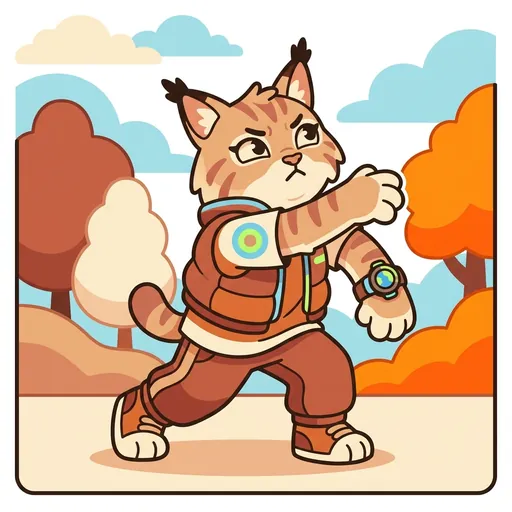
Throw, a careful-bobcat-tween with a small, bright orange target-marker clipped to her practice vest, watched from the edge of the yard. Her loose, layered athletic clothing shifted as she leaned forward, her eyes tracking the frisbee’s erratic flight. She had a way of observing things, quiet and intense, like a predator studying its prey, but with a gentle curiosity.
“It’s not the frisbee’s fault,” Throw said, her voice calm and even. She walked over, picking up the disc. “It’s how you’re moving your body.”
Cheer slumped. “But I am moving my body. I’m trying really hard.”
Throw shook her head. “Trying harder won’t fix it. You’re not stepping correctly.” She held the frisbee, not to throw it, but to demonstrate. “The primitive I teach is overhand projection. It’s about sending something exactly where you want it to go.” She paused. “The move is step-rotate-release. The body remembers what the mind teaches.”
Cheer looked skeptical. “What does that even mean?”
“It means,” Throw explained patiently, “that there’s a specific shape to a good throw. It’s not about strength. It’s about the sequence of your body’s actions.” She turned sideways, demonstrating the motion slowly. “Watch. First, you step with the foot opposite your throwing arm. If you throw with your right hand, you step with your left foot.” She took a deliberate step forward. “Then, you rotate your hips, then your shoulder, creating power.” Her torso twisted smoothly. “Finally, you release the object at eye-level, snapping your wrist flat, and follow through.” Her arm extended, wrist flicking, as if releasing an invisible frisbee.
“See?” Throw asked, turning back to Cheer. “It’s a shape. Not just a random movement.”
Cheer watched, then tried to mimic the motion without the frisbee. Their hips rotated stiffly, their arm flailed a little. It looked less like a smooth sequence and more like a collection of separate parts.
“Okay,” Throw said, sensing Cheer’s struggle. “Let’s break it down. You throw with your right hand, right?” Cheer nodded. “So, step with your left foot first.”
Cheer focused, taking a step. It felt awkward. “Like this?”
“Good,” Throw encouraged. “Now, as you step, start turning your hips. Imagine you’re winding up a spring.”
Cheer tried again, taking the step, then twisting their hips. It was a small improvement, a tiny shift in coordination. Throw handed them the frisbee. “Now, put it all together. Step, rotate, release.”
Cheer took a deep breath, concentrating. They stepped with their left foot, turned their hips, and then their shoulder, releasing the frisbee. It still wobbled, but less violently this time. It flew a few feet further than before, landing with a softer thud.
A small spark of surprise lit Cheer’s eyes. “Hey,” they said, “it didn’t go completely sideways!”
“Exactly,” Throw affirmed. “You’re getting the shape. That’s what matters. Form before force. Practice the shape. Talent is a story; shape is the truth.”
Cheer tried three more throws, each one a little smoother, a little straighter. The frisbee began to glide, cutting through the air instead of tumbling. On the fifth throw, it soared, a perfect arc, landing gently near a distant tree. Cheer’s mouth fell open. “I can throw!” they exclaimed, a wide smile spreading across their face. “I actually can throw!”
Throw nodded, a quiet satisfaction in her expression. “You always could. You just hadn’t practiced the SHAPE yet. There’s no such thing as ‘can’t-throw.’ Only ‘haven’t-practiced-yet’.”
Coach Echo, who had been observing from a bench nearby, walked over, a gentle smile on her face. “That’s the whole curriculum right there,” Echo said quietly, her gaze sweeping over the two kids. “Cast on a SHAPE, not a TALENT.” She understood that the feeling of learning, of mastering a new movement, was a powerful thing. It wasn’t about being ‘good at sports’ or ‘athletic.’ It was about understanding that every body could learn, every skill was trainable, and practice was the path to discovery.
The ActiveForge ensemble
Throw is part of ActiveForge's distributed-narrative cast. Each character embodies a different curricular primitive; together they teach the full subject.
-

Kick
Lower-body projection — foot-language with five-different-parts-of-foot for different kicks
-

Dodge
Spatial-perception + agility — read-the-space-and-move-EARLIER not-faster; perception-game not speed-game
-
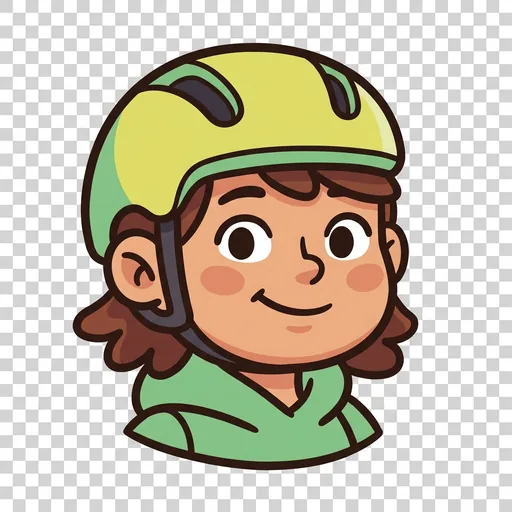
Roll
Tumbling + safe-fall + parkour-shoulder-roll — visible adaptive-PE helmet signals all-bodies-belong
-
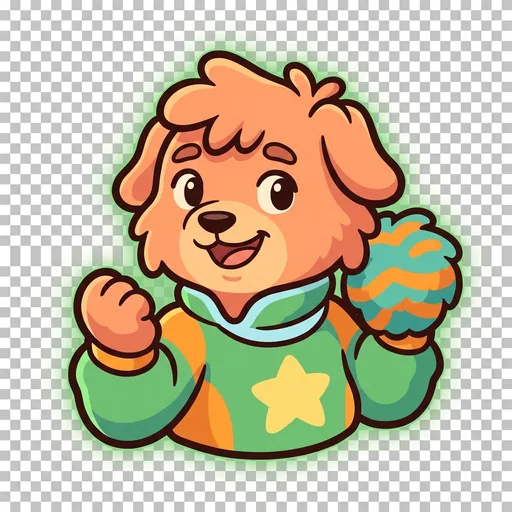
Cheer
Sportsmanship + bystander-presence-in-play — learnable-skill not personality-trait