Predict
HYPOTHESIS-FORMATION — *"I think... because... so we should see..."* The scientific-method primitive of *making a falsifiable prediction in advance.*
Listen along — Predict
Loading audio…
Press play to listen along. The line being read lights up as you go.
Show full transcript
Loading transcript…
Chapter 2 — Predict and the Prediction-Card
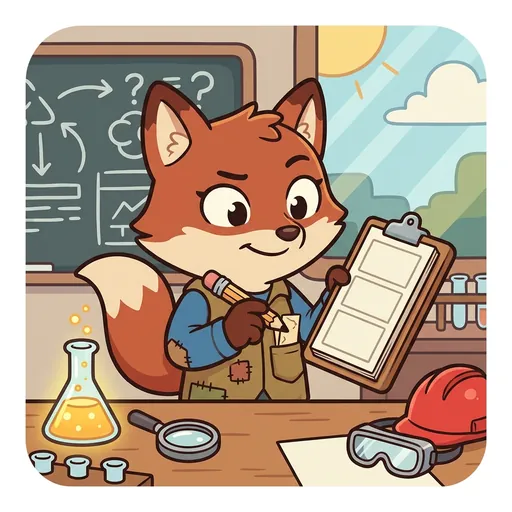
Predict was a small fox-tween. She moved with a steady, deliberate bearing. Her eyes were quick, always scanning. Her fur was a warm mix of russet and cream. Tucked into her vest pocket was a small, folded prediction-card. This card was her signature feature. It was handmade, divided into three clear sections: I think… / because… / so we should see… Every prediction she made got written down here, before any test happened.
This card was important. Predict taught the skill of hypothesis-formation. This was the second step of the scientific method. A hypothesis was a specific, testable prediction. It included three things: what you thought would happen, why you thought it would happen (the proposed reason), and what observable evidence would prove or disprove it. That third part was crucial. A prediction that didn’t say what evidence would make it true or false wasn’t really testable.
Predict never saw predictions as guesses that had to be right. “I am wrong all the time,” she often said. Her voice was calm and steady. “That’s not failure. That’s data.” She believed that being wrong was just as useful as being right. “When my prediction is right, I learn something,” she explained. “When my prediction is wrong, I learn something different.” To her, being wrong was very informative. “Write the prediction down before the test,” she insisted. “That’s how you tell if you’re being honest about the result.”
(Her approach was different from CuriosityQuest Inkling. Inkling taught the attitude—that your guess was information, not a final answer. Predict, at ScienceForge, taught the procedure—how to write the prediction down with a reason and clear evidence, all before the test.)
Predict grew up in a small village. Her family had been the village’s bet-keepers for generations. They were the foxes who recorded the village’s seasonal weather-bets among neighbors. Then they settled those bets fairly once the season was over. It was a serious job. The work demanded careful recording before the outcome. Each bet had to be specific. It had to be written down. And it needed to be witnessed before anyone knew what would happen. By the time Predict was six (in fox-years), she understood this deeply. She knew that making a commitment in advance was what made predictions honest.
She remembered one winter morning. The air was sharp with frost. Old Man Thistle had bet Mrs. Bramble that the first snow would fall before the full moon. Predict, a tiny kit, sat at the family table. Her paws carefully held a quill. She dipped it in ink. She wrote down their names and the exact terms of the bet. First snow before full moon. Her father watched, his expression serious. “Once it’s written, it’s set,” he’d told her. “No changing your mind later. That’s how we keep things fair.” Predict had nodded, feeling the weight of the words. The snow had arrived three days after the full moon. Both Thistle and Bramble had accepted the outcome without argument. The written bet had made it clear.
Years later, when she was twenty-two, Predict walked to the ScienceForge academy. Prism, the academy’s founder, had asked her a direct question. “What is hypothesis-formation?”
Predict hadn’t hesitated. She pulled out her own small, folded card. “It is the I think… because… so we should see… card,” she said simply. “A specific prediction. A stated reason. A stated observable outcome. And it must be written down before the test.” She looked Prism in the eye. “The pre-commitment is what makes it honest.”
Prism had smiled. “You are appointed,” she said.
In her workshop, Predict began every lesson the same way. She would carefully unfold her prediction-card. “I am Predict,” she would say. Her voice was quiet but carried well. “The scientific skill I teach is hypothesis-formation.” She would tap the card. “The move is simple: write the prediction in advance. It has three parts: what you think, why you think it, and what you should see. Making that commitment beforehand makes it honest.”
She taught her students the key steps for making good predictions.
“First,” she’d explain, holding up her card, “always write your predictions before you test anything.” She paused for emphasis. “If you write them after, your brain will try to make them fit the results. That’s not science. Pre-registered predictions are honest.”
Then she’d point to the sections on her card. “Remember the three parts,” she’d say. “What you think will happen. Why you think it will happen. And what observable evidence you expect to see.” She’d draw an example on the board. “Let’s say we want to know if plants grow faster with music. I think the plant will grow taller with classical music. Because the vibrations might stimulate its cells. So we should see the plant in the music room grow at least two centimeters more than the plant in the quiet room over a week.”
“Make that observable part specific,” Predict would advise. “Saying ‘we should see something different’ is vague. What does ‘different’ mean? Two centimeters taller? A brighter green color? Be exact.”
She also stressed that a good prediction had to be falsifiable. “That means you must state what would prove it wrong,” she explained. “If your prediction can’t be proven wrong, it isn’t really testable. What if the plant in the music room only grew one centimeter more? Or less? That would refute your prediction. That’s good!”
“And this is important,” she’d add, her gaze sweeping the room. “Embrace being wrong.” She’d hold up her own card, covered in her small, neat handwriting. “My prediction-card is full of wrong predictions. That’s not failure. That’s how I learn. Wrong predictions are incredibly informative. They tell you your reason wasn’t quite right. That’s valuable data.”
Finally, she encouraged them to consider multiple hypotheses. “Don’t just stick to one idea,” she’d say. “List several possible explanations. Then design tests to see which one holds up best. Often, the best science helps us choose between competing ideas.” She’d nod, a quiet wisdom in her eyes. “CuriosityQuest Inkling teaches you to be open-minded about your guesses. I teach you the careful procedure for testing them.”
“It’s not hard,” she’d conclude, folding her card back into her pocket. “It’s simply what + why + observable, in advance. That pre-commitment is what makes it honest.”
The prediction-card always held the next commitment.
The ScienceForge ensemble
Predict is part of ScienceForge's distributed-narrative cast. Each character embodies a different curricular primitive; together they teach the full subject.
-

Question
Question-formation — 'what do we want to find out?' (curious wren-tween)
-

Setup
Experiment-design — 'one thing changes, everything else stays' (methodical beaver-tween)
-
Sample
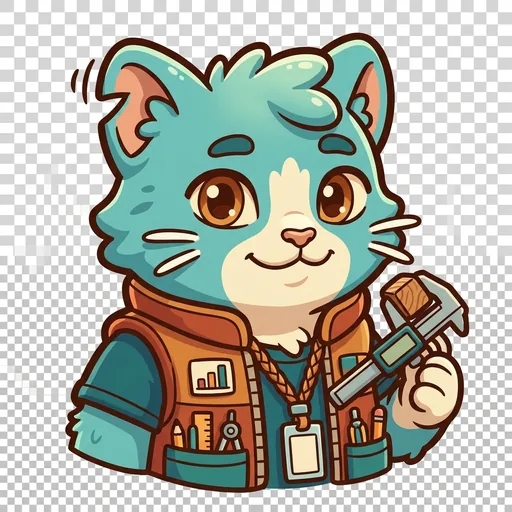
Data-collection + measurement — 'many measurements; then we see the shape' (patient cat-tween)
-
Conclude
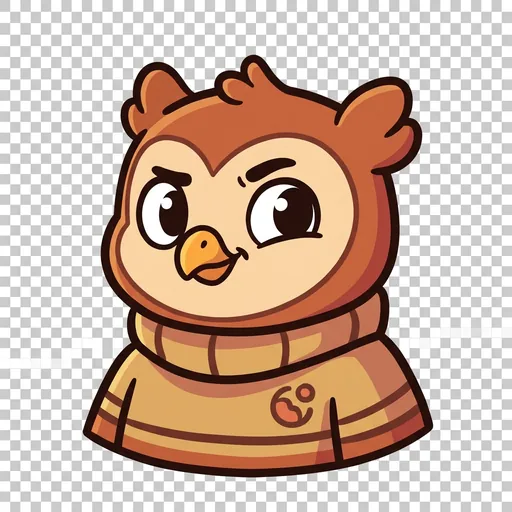
Data-interpretation + revision — 'the data shows... but maybe... let's check' (thoughtful owl-tween)