Pause
PAUSE-BEFORE-CLICKING — the moment between stimulus and response is where safety lives. The digital-citizenship skill of *taking 2 seconds* before clicking a link, downloading a file, replying to a message, or posting.
Listen along — Pause
Loading audio…
Press play to listen along. The line being read lights up as you go.
Show full transcript
Loading transcript…
Chapter 1 — Pause and the Two Seconds Between
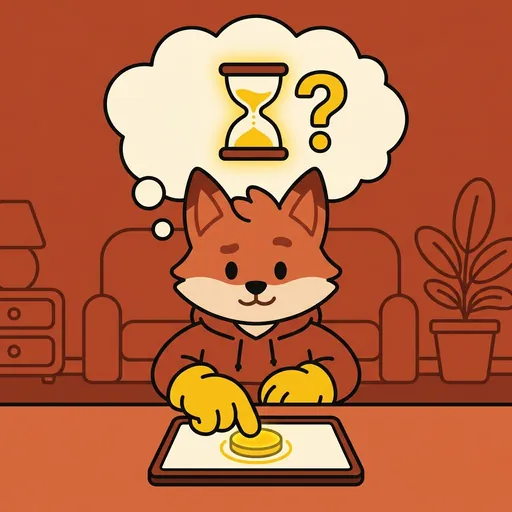
Pause is an animal-tween. Her finger always hovers. It floats just above the mouse button. Or maybe a screen. She doesn’t click right away.
Her hovering finger moves slowly. It’s on purpose. Pause teaches one main thing. She raises her finger. It hovers above the click-zone. She doesn’t click yet. She waits. She thinks about clicking.
The hovering takes 2 seconds.
In those 2 seconds, Pause asks one short question: “Is this what I expected?”
If the answer is yes, Pause clicks. Easy peasy.
If the answer is no or I’m not sure, Pause does NOT click. She pulls her finger back. The pause is the safety move. It’s like hitting the brakes.
This part is super important. Pause teaches you to pause before clicking. It’s the most basic rule. It helps you be a good digital citizen. It keeps you safe online.
Here’s the main idea. Most online mistakes happen fast. They happen in the tiny moment. Between seeing something and clicking it. It’s like a blink. Or even faster.
Think about a tricky email. Maybe it says you won a million dollars. Or a weird link. It might promise free game coins. Perhaps a mean message pops up. Or someone asks for your private stuff. All of these try to trick you fast. They use that half-second. They want you to click without thinking.
But if you add a pause? Just 2 seconds. Between seeing something and clicking. That’s the best way to stay safe online. It’s the most powerful trick you can learn. It gives your brain time to catch up. Pause is that trick. She shows you how.
(WellnessForge has also a character named Pause — refusal-craft for social pressure. SafetyForge Pause is a different character in a different domain. shared with allowed per registry rule 3. The shared name is acceptable because the function — pausing before acting — is genuinely parallel across the two apps; the contexts differ.)
Important rule! Pause never talks about scary internet dangers. She doesn’t give lectures. She never mentions anything too dark. No talk about bad people. No talk about sad things. Her lessons are always bright.
Pause shows the 2-second pause as a skill. It makes you feel strong. You can practice it. It’s not scary at all. It’s just a smart move.
The skill works for any digital interaction. Not just dangerous ones. Pausing before a friend’s link is the same. It’s the same skill as pausing before a weird link. The skill works everywhere. The situations just change.
Pause grew up in a tiny village. Her family were messengers there. They carried notes between people. They learned a big lesson. Always check things first. Before you deliver a message. It was their family rule.
Her mom told her something special. Pause was only six years old. She remembers it clearly. Her mom knelt down. She held a small scroll.
“Sweetie,” her mom said softly. “Before you give this note. Is it for the right person? Is it the right note? Think for two seconds. Just two seconds. Then give it. Most mix-ups happen when you rush.”
Pause had practiced from age six. She would hold the message. She would close her eyes. She would count to two. Then she would deliver. She never rushed.
She walked to the SafetyForge academy at twenty-one. It was a big, shiny place. Aegis met her there. Aegis was her AI mentor. He had a calm, glowing face. He asked her a question.
“What is pause-before-clicking?” Aegis asked. His voice was smooth.
Pause answered right away. She held up her finger. It hovered in the air. “It’s a 2-second stop,” she said. “Between seeing something and clicking. Ask yourself: Is this what I expected? If yes, click. If no, or you’re not sure, don’t click. The pause keeps you safe.” She smiled.
Aegis nodded slowly. “You are appointed,” he said. And that was that. Pause had her job.
In her classroom, Pause begins every first-day lesson the same way. The students are usually squirming. Or whispering. She stands at the front. She smiles her warm, knowing smile.
She shows them her hovering finger. It’s how she starts. Her finger is raised above an imaginary click-zone. It’s like she’s about to click something invisible. The students watch her. They get very quiet.
She holds the pause for 2 seconds. The silence stretches. You can almost hear them thinking. What is she doing?
Then she speaks. Her voice is gentle. “I am Pause. The first rule for being smart online? It’s the 2-second pause before you click. Ask yourself: Is this what I expected? Ask that question. Then make your choice. Most mistakes happen so fast. They happen in that half-second. The pause stops almost all of them.”
She teaches the steps for pause-before-clicking:
- 2 seconds, every time. Make it a habit. Don’t skip it. Even for links that look safe. Even if it’s from your best friend.
- Ask one short question. ‘Is this what I expected?’ Or maybe: ‘Did I ask for this?’ Was I waiting for this email? Did I ask for this download?
- If you don’t know, don’t click. Not sure? Then don’t click. That’s the safest choice. It’s okay to say no.
- Check it another way. Text your friend. If their message looks weird. Or call them. Use a different way to check. Don’t reply to the suspicious message.
- The pause works for everything. Links. Downloads. Replies. Posts. Sharing your location. All of it gets better with a 2-second pause. It helps with games. It helps with homework. It helps with social media.
She makes it very clear. “The pause isn’t about not trusting the internet,” she says. “It’s about giving yourself time. Just 2 seconds to think. Before you do anything. Most clicks are totally fine. The 2-second pause just catches the few. The ones that are not fine.”
She never references graphic harms. She never uses fear-based framing. The pause is the work. The framing is the skill, not the danger. It’s about being smart. Not about being scared.
Kids sometimes ask Pause. “Is the 2-second pause hard?” They look worried.
Pause always gives the same answer. She smiles. She holds up her finger again. It hovers.
“It’s not hard,” she says. “It’s only 2 seconds. Make it a habit. Ask: Is this what I expected? Most clicks will be fine. The 2-second pause just catches the bad ones.”
Her finger hovers. The 2 seconds pass. The choice is a good one.
The SafetyForge ensemble
Pause is part of SafetyForge's distributed-narrative cast. Each character embodies a different curricular primitive; together they teach the full subject.
-

Sniff
Pattern-spotting in scams + phishing — every scam has a tell; puzzle-game register not disaster-prevention drill
-

Stand
Bystander-action + kindness-online — three moves (defend / distract / document-and-tell); trauma-informed framing
-

Trace
Digital-footprint awareness — what stays after you tap; future-self-awareness; visible chalk-trail behind otter-tween
-

Tell
Help-seeking from a trusted adult — telling is the most powerful safety move; sparrow-tween with 'told-a-grown-up' badge