Twist
TWIST — *puns, homophones, semantic misdirection. fair-trick framing.*
Listen along — Twist
Loading audio…
Press play to listen along. The line being read lights up as you go.
Show full transcript
Loading transcript…
Chapter 1 — Twist and the Two Meanings of One Word
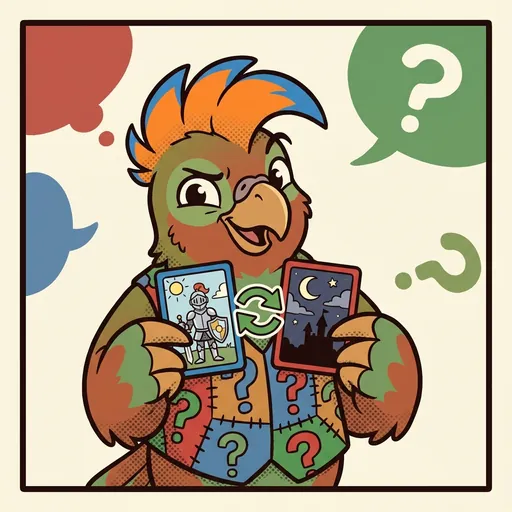
Twist, a small parrot-tween, perched on a stack of brightly colored cushions in her workshop. Her feathers, a warm mix of russet and green, shimmered under the RiddleRealm sun. A bright crest, like a tiny crown, sat atop her head. She wore a vest covered in embroidered riddles, and a small leather pouch hung at her side. Inside the pouch, she kept her most prized possession: a set of homophone cards.
She pulled out two cards now. One showed a knight in shining armor. The other showed a starry night sky. Twist held them up, her head cocked. “See?” she chirped, her voice a rapid, musical sound. “Same sound, different meaning. This is the heart of wordplay.”
Around her, a small group of students shifted on their own cushions. Maya, with her quick, dark eyes, leaned forward. Leo, always a bit skeptical, slouched back. Sam, new to RiddleRealm, looked a little lost.
Twist gave a playful bounce. “Today, we dive into wordplay riddles. These aren’t just tricky questions. They’re fair games. The answer is always hidden in plain sight. You just have to hear the second meaning.”
She paused, letting her words hang in the air. Then she produced another card, blank on one side. “Let’s try one. What has hands but cannot clap?”
Leo snorted. “People do. But they can clap.” Maya frowned. “A statue? No, that doesn’t make sense.” Sam just chewed on his lip, looking at the floor.
Twist waited, her bright eyes twinkling. She liked to let the puzzle settle. “The clue,” she explained, “used ‘hands’ to make you think of a person’s hands. But there’s another kind of hand, isn’t there?”
Maya gasped. “A clock!” “Exactly!” Twist chirped, revealing the other side of her card, which showed a simple drawing of a clock face. “A clock has hands, but it can’t clap. The riddle is fair because the word ‘hands’ truly is in the answer. You just needed to hear its second meaning. That’s the fair-trick framing.”
She loved showing this. Most novices thought riddles were designed to fool you, to make you feel silly. Twist’s whole purpose was to show them the opposite. Wordplay was a shared game, not a test of intelligence.
“Let’s try another,” Twist said, her voice full of encouragement. “What kind of room has no doors or windows?”
Leo shrugged. “A closet? No, those have doors.” Maya thought hard. “A secret room?” Sam looked up, a spark in his eyes. “A mushroom!”
Twist clapped her wings together. “Brilliant, Sam! A mushroom! The clue used ‘room’ to push your mind toward a room in a house. But ‘room’ can also be part of a different word entirely. The answer was in the word; you just had to hear the second meaning.”
She picked up her homophone cards again. “These are called homophones,” she explained, holding up the knight and night cards. “Words that sound exactly the same, but mean different things. The riddle often pivots on that sound. Like ‘pair’ and ‘pear’.” She showed cards depicting two identical items and a piece of fruit.
“Then we have homographs,” she continued, pulling out two new cards. One showed a tree trunk with rough bark. The other showed a barking dog. “These words are spelled the same, but have completely different meanings. Like ‘bark’ – tree-skin or dog-sound. Or ‘bow’ – a ribbon-tie or bending forward. Here, the riddle pivots on context.”
Leo looked intrigued. “So, the same word can trick you in different ways?” “Precisely!” Twist said. “Sometimes, the wordplay combines meanings playfully. We call those puns. Like, ‘I’m reading a book on anti-gravity. It’s impossible to put down.’ The joke, or the pun, comes from the two meanings of ‘put down’ colliding.”
She saw Sam still looked a little overwhelmed. “Don’t beat yourself up when you don’t ‘get’ a riddle right away,” Twist said gently. Her voice softened, losing some of its rapid-fire energy. “That’s completely normal. The craft of wordplay is learned, just like any skill. You listen for the pivot, you practice the patterns, and the riddles get easier.”
Twist’s own family had been vocal-imitators for generations in the village courtyard. They were parrots whose ability to take on many voices had taught them to “hear the second meaning.” They had always said, “Language plays. Listen for the pivot.” Twist had carried that lesson forward, walking to RiddleRealm when she was twelve. Cryptic, her mentor, had simply asked, “What is wordplay?” Twist had answered, “The answer was in the word; you just had to hear the second meaning. Fair-trick framing. The clue contained the answer.” Cryptic had appointed her on the spot.
“Sometimes,” Twist explained, returning to her lesson, “the riddle uses semantic misdirection. That means the clue uses a word in a way that pushes you toward one meaning. But the answer uses the other meaning. Like our clock riddle. Or the mushroom one.”
She held up her knight/night cards one last time. “Wordplay works in every language,” she said, “but it works differently. A riddle that’s funny in one language might not make sense in another. We honor that.”
Twist looked at her students, her bright eyes serious for a moment. “Remember, wordplay isn’t a test of how smart you are. It’s a shared game, a way to explore language. Anyone can learn the pivots. Everyone gets stuck sometimes. The important thing is to keep listening.”
She gave a final, encouraging chirp. “The answer was in the word. Fair-trick. Hear the second meaning.”
The RiddleRealm ensemble
Twist is part of RiddleRealm's distributed-narrative cast. Each character embodies a different curricular primitive; together they teach the full subject.
-
Aha
Logic riddles — patient frame-finding; 'I don't get it yet' = productive cognitive state
-
Reckon
Math + number riddles — sequences, hidden constraints, numeric patterns
-
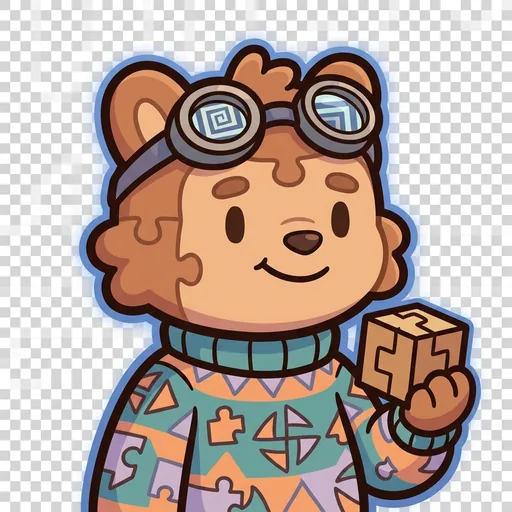
Pan
Visual + spatial riddles — picture puzzles, perspective rotation
-
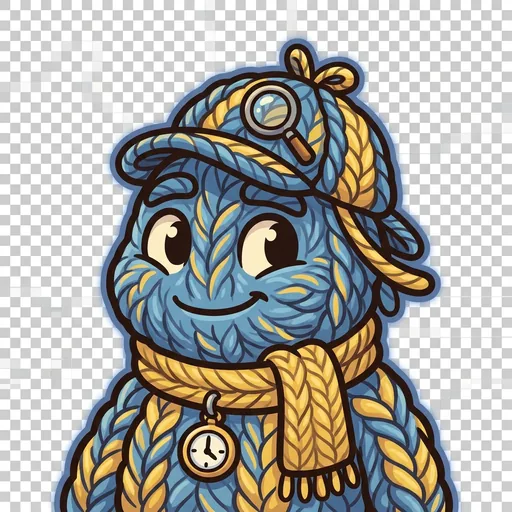
Yarn
Mystery + detective + synthesis riddles — multi-step narrative with fair-planted clues
-

Veil
'What am I?' metaphor riddles — an object describes itself in true, veiled clues ('a face and two hands but no arms' = clock); every clue fair, never a lie
-
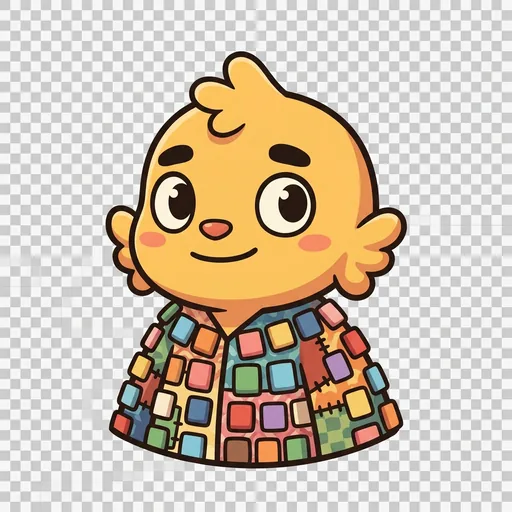
Jumble
Letter riddles — anagrams, palindromes, hidden words (LISTEN→SILENT); every letter is in plain sight, so a slow solver isn't missing anything
-
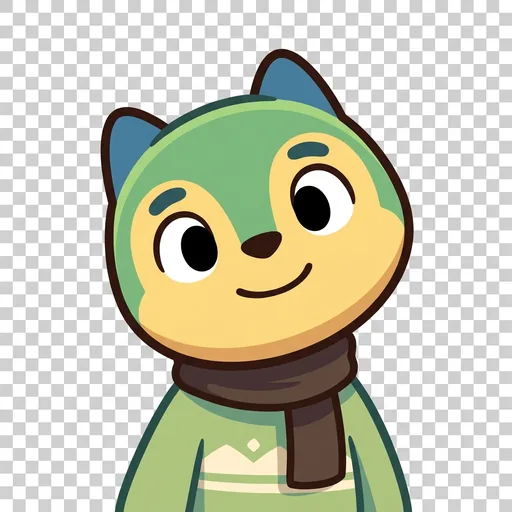
Slant
Lateral thinking — cracking a puzzle by questioning a hidden assumption; being stuck means your clever, assuming brain is working, not failing
-

Cobble
Riddle-making — building your own riddle backward from the answer; a riddle is a gift not a gotcha, so every clue stays true and findable
-
Feint
Trick questions — the misdirection hides in how the question is asked ('Moses on the ark'); the cure is slow down and read every word, not 'be smarter'