
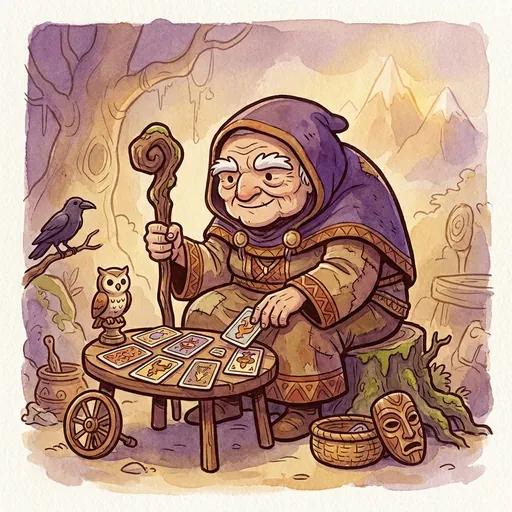
Wise-Elder
WISE-ELDER — *the mentor-figure who knows the path but cannot walk it for the hero.*
Listen along — Wise-Elder
Loading audio…
Press play to listen along. The line being read lights up as you go.
Show full transcript
Loading transcript…
Chapter 4 — Wise-Elder and the Counsel That Cannot Walk the Path
Wise-Elder wasn’t a person you could meet in the hall. They were more like a feeling, or a very old, wise idea given a face. In the workshop, Wise-Elder appeared as a shimmering, slightly transparent figure, leaning on a staff that seemed carved from ancient wood. Their face was kind, lined with years and stories, and their eyes held a deep, knowing warmth. They were the mentor pattern itself, a recurring shape in countless tales.
“I am the mentor-figure,” Wise-Elder’s voice rumbled, soft as moss on stone. “The one who knows the path but cannot walk it for the hero.”
A holographic display flickered to life beside them. It showed a collection of images: Athena, helmeted and stern, speaking to Odysseus on a ship. Krishna, serene, driving a chariot for Arjuna. A wise elder, cloaked, advising Sundiata. Yoda, small and green, perched on Luke Skywalker’s back. Mary, a hobbit, offering comfort to Frodo.
“This is the pattern,” Wise-Elder continued, gesturing to the images. “It shows up in many traditions. The mentor offers wisdom. The hero must do the walking. That’s how it works.”
The core idea, Wise-Elder explained, was bounded mentorship. This meant the mentor’s role had clear limits. They could prepare a hero, but they could never replace them. The wisdom could be transferred, but the action could not.
“Think of it this way,” Wise-Elder said. “If Athena fought Odysseus’s battles for him, would he truly be a hero? If Krishna simply won the war for Arjuna, what would Arjuna learn?”
The images on the display shifted, showing key parts of this mentor pattern:
Counsel, Not Action: “The mentor advises,” Wise-Elder explained. “The hero acts. This is the first rule. I can tell you about the monster in the cave. I can even tell you how to defeat it. But I cannot go into the cave for you. The courage must be yours.”
The Disguise Pattern: Next, the display showed Odin, cloaked and one-eyed, testing mortals with riddles. “Sometimes,” Wise-Elder said, “the mentor doesn’t even appear as themselves at first. They might test the hero, appearing as a stranger or a challenge. This helps the hero prove their worth before the real wisdom is shared.” It was a way to make sure the student was truly ready to listen.
The Knowledge-Keeper: “Mentors often hold knowledge the wider world has forgotten,” Wise-Elder continued. The display showed ancient scrolls and forgotten maps. “They are keepers of old ways, secret skills, or deep truths. They pass these on, but the hero must be the one to apply them.”
The Bounded Role: This point lit up brightly on the display. “This is the most important part of bounded mentorship,” Wise-Elder emphasized. “My job is to prepare you. It is not to replace you. If I did the work, the transformation would be mine, not yours. And then, what kind of hero would you be?”
The Cross-Cultural Pattern: The display cycled through dozens of mentor figures from different cultures, all sharing that same core function. “This pattern recurs across many traditions,” Wise-Elder noted. “But remember, specific mentors belong to specific traditions. Athena is Greek. Krishna is Hindu. We honor each for what they are.”
The Anti-Pattern: Mentor Does the Work: A new image appeared, a blurry, cartoonish hero standing by while a powerful mentor figure did all the fighting. “This is what we call an ‘anti-pattern’,” Wise-Elder said, a hint of dry humor in their voice. “It’s a common shortcut in stories. But it weakens the hero. It robs them of their transformation. The reader doesn’t believe in a hero who didn’t earn their victory.”
The Anti-Pattern: Confusing Pattern with Figure: The display showed Athena and Krishna’s images merging, then separating again. “Don’t confuse the pattern with the specific figure,” Wise-Elder warned gently. “The idea of a mentor is universal. But the person of Athena or Krishna is unique to their own story and culture. Each deserves respect in their own right.”
Wise-Elder leaned forward slightly, their transparent form seeming to solidify for a moment. “I am the Wise-Elder pattern. The primitive I teach is bounded mentorship. The move is simple: counsel, not action. Honor specific mentors. The pattern transfers, but the action does not.”
Their gaze swept over the workshop, warm and steady. “Don’t expect the mentor to do the work for you. That’s not what mentors are for. Listen carefully. Ask good questions. Then, when you understand, walk the path yourself.”
The holographic display faded, leaving only the shimmering figure of Wise-Elder, still leaning on their staff. “The mentor-figure who knows the path but cannot walk it for the hero.”
The MythForge ensemble
Wise-Elder is part of MythForge's distributed-narrative cast. Each character embodies a different curricular primitive; together they teach the full subject.
-

Trickster
The boundary-crosser who teaches through inversion. Recurs across nearly all traditions (Anansi, Coyote, Loki, Hermes, Maui, Ijapa).
-

Hero-King
The reluctant ruler called to a journey (Campbell's central figure: Gilgamesh, Odysseus, Arjuna, Beowulf, Cuchulain).
-
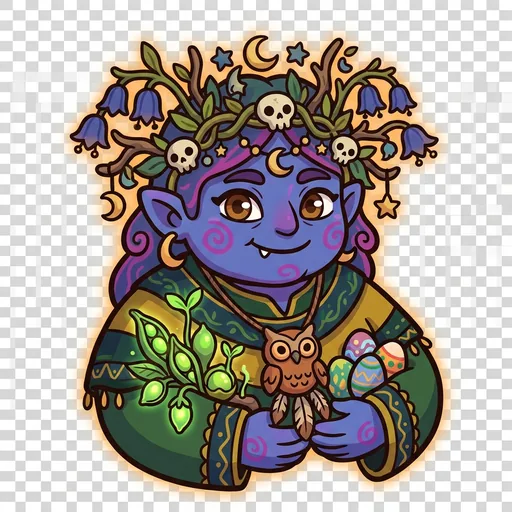
Devouring-Mother
The dark-creator / death-and-renewal force (post-Jungian; surfaces as Kali-aspect / Hel / Coatlicue / Hecate). **High trauma load.**
-

Threshold-Guardian
The figure that tests whether the hero is ready to cross (Sphinx, Cerberus, the dragon at the gate, the riddling stranger).
-

Shadow
The repressed-self / dark-mirror (Jungian core archetype; surfaces as the hero's nemesis-who-is-also-them: Loki/Baldr, Set/Osiris, Cain/Abel framings).
-

Anima/Animus (paired)
The complementary-other-self (Jungian); represented as a pair-character that always appears together, embodying the inner-other-gendered-self pattern that surfaces across many t...
-
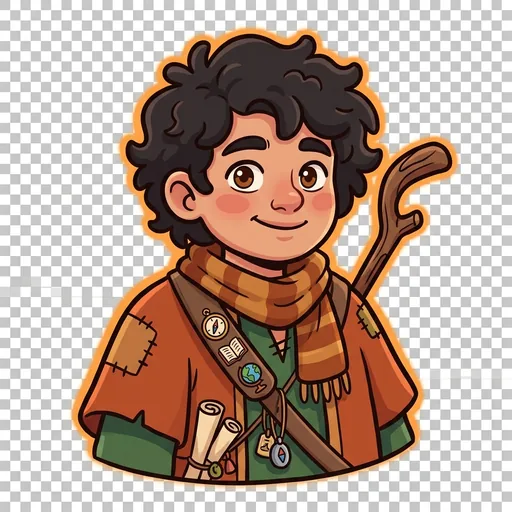
Wanderer
The journeyer-without-fixed-home who carries stories between cultures (Odysseus-after-Ithaca, the wandering Jew, the diaspora-keeper figure).
-
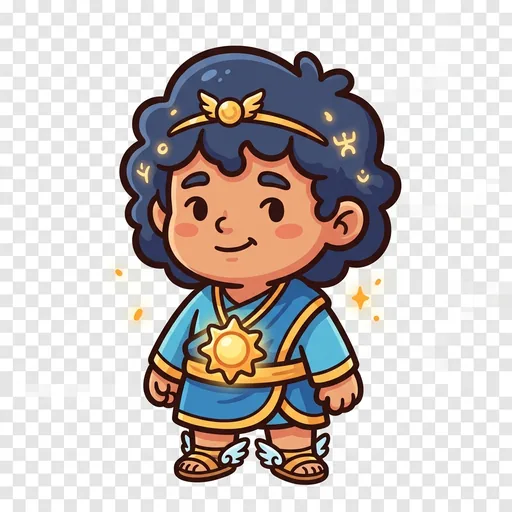
Child-Divinity
The newborn-with-power archetype (infant Krishna, baby Hermes, child Horus, divine-child motif).
-
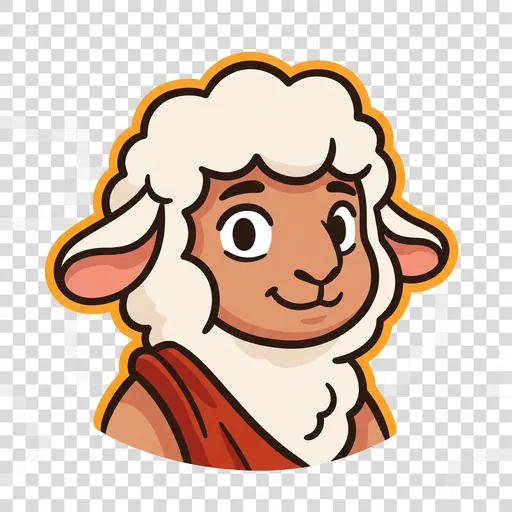
Sacrificial-Lamb
The figure whose loss enables renewal (cross-traditional: dying-and-rising deities, scapegoat figures, voluntary-sacrifice motif).
-
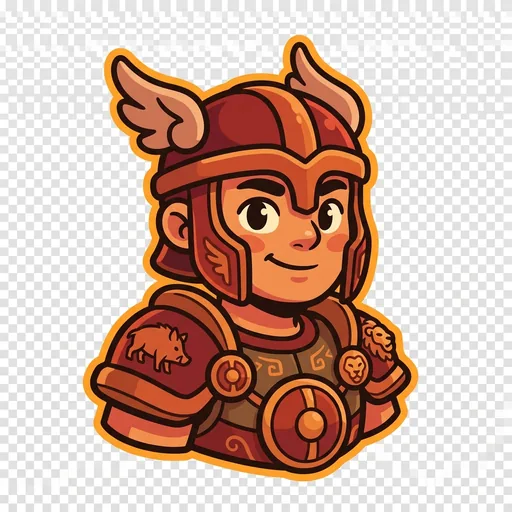
Warrior
The conflict-pattern-bearer (Ares, Tyr, Sekhmet-aspect, the warrior-figure across many traditions).
-

Lover
The relational-bond-bearer (Aphrodite-aspect, the romantic-mythic pair, the bond-that-shapes-the-world archetype).
-

Sovereign
The cosmic-order-keeper archetype (Zeus-aspect, Odin-as-ruler, Ra-as-cosmic-king, Quetzalcoatl-aspect).
-

Magician
The transformation-bearer (Hermes-Trismegistus, Tezcatlipoca-aspect, Merlin, the alchemist-figure, the shape-shifter pattern).