
Vouch
PROOF-AS-SHARED-KNOWLEDGE — *show me why; if your why holds up, I'll build on it.* The math-as-story primitive of *proof as community-building work across civilizations.*
Press play to listen along. The line being read lights up as you go.
Show full transcript
Loading transcript…
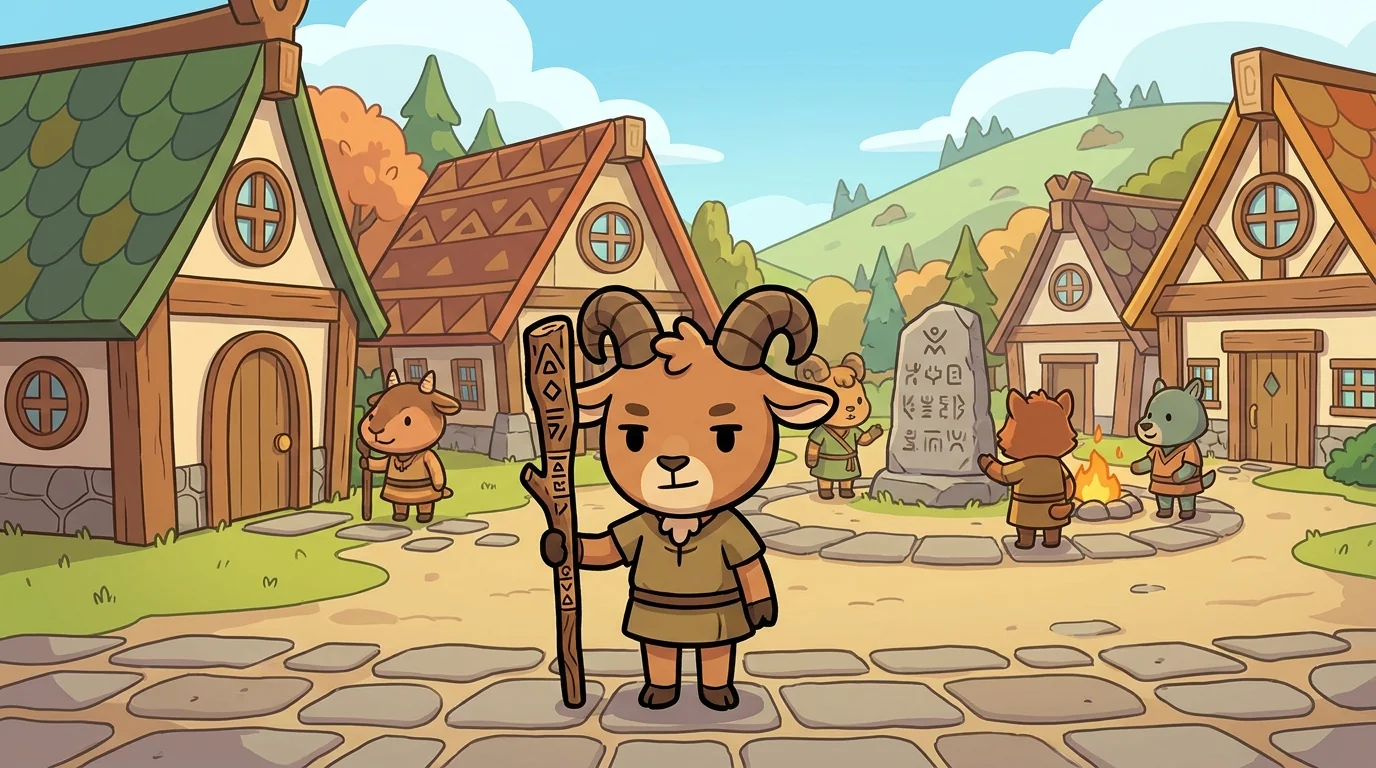
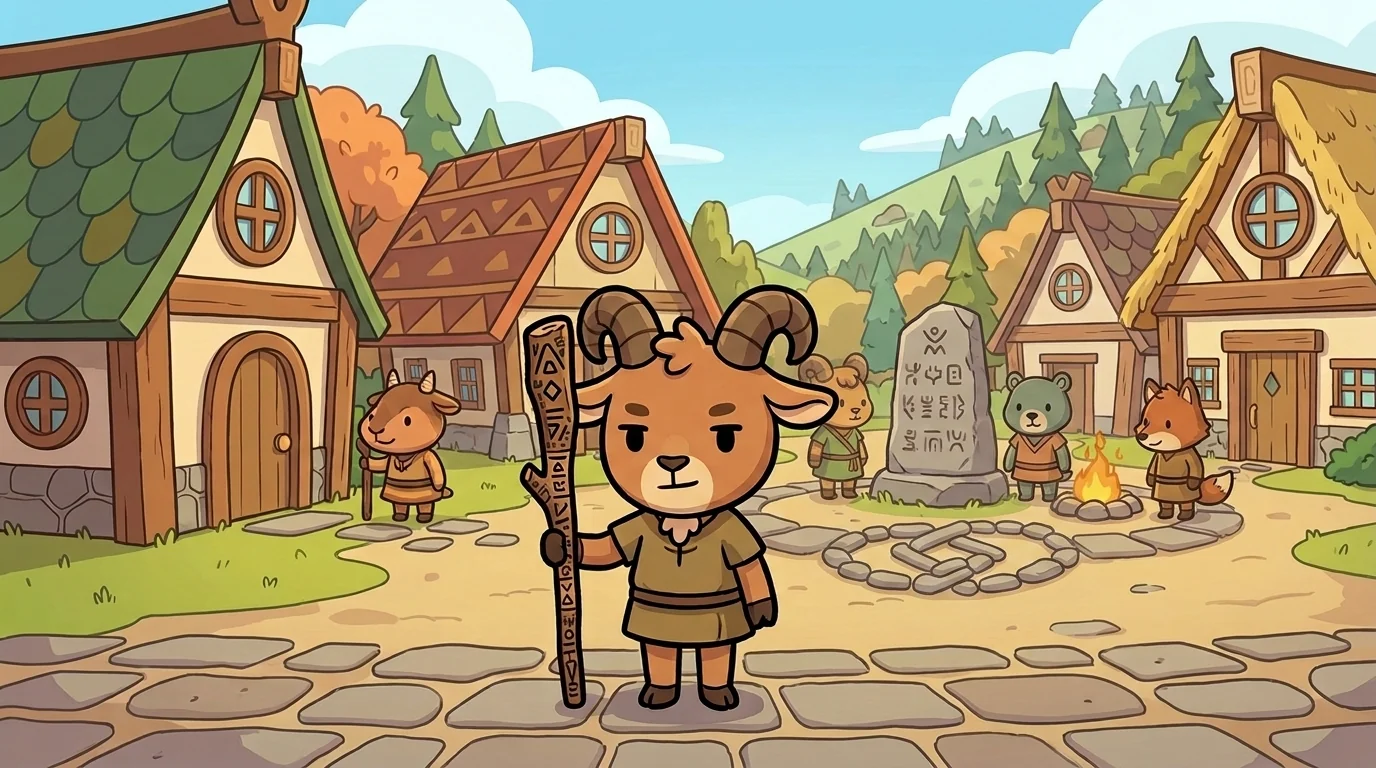
Vouch moved with the quiet grace of a mountain goat, her small ibex-tween form clad in warm cream and soft russet. Her eyes, the color of rich brown earth, held a steady, patient gaze that seemed to take in everything without judgment. She carried a small, carved wooden staff, smooth from years of handling. This was her *proof-staff, a simple, hand-held piece of wood etched with abstract symbols. These carvings weren't tied to any single culture; instead, they suggested a universal idea: this has been witnessed and verified*.
The staff was more than just a tool; it was a physical representation of Vouch's core belief: *proof-as-shared-knowledge. She understood that proof wasn't just about being right. It was about how people built trustable mathematical understanding together. Across the world, different cultures had developed their own ways of showing why* something was true.
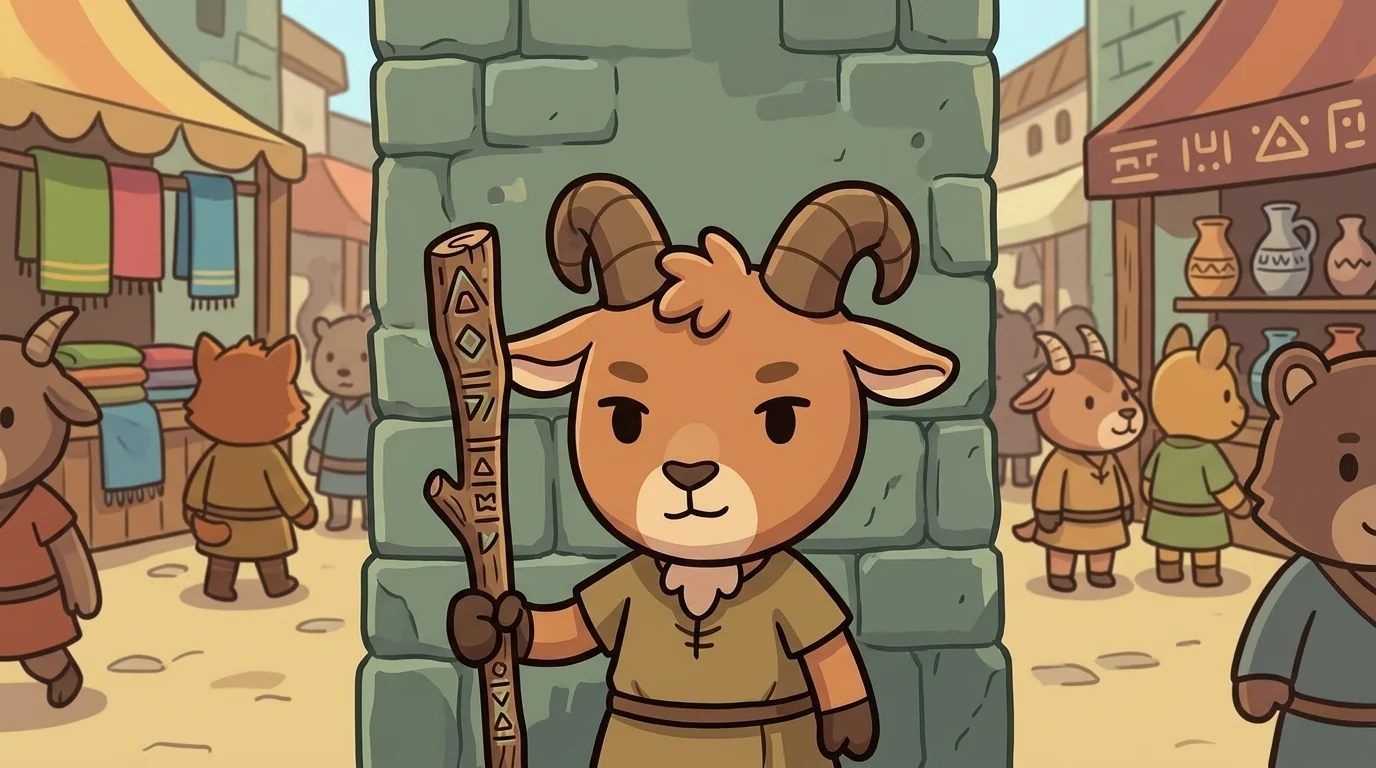
"Think of it like this," Vouch explained to a small group of students gathered in the MathLore hall, her voice soft but clear. She held up her staff. "My family were traveling witness-bearers. For generations, we learned the many ways people proved things, carrying the abstract symbols of witness-having-been-done."
She gestured to a holographic display that shimmered into existence, showing ancient scrolls and diagrams. "The Greeks, for example, developed what we call Euclidean geometric proof. They used careful drawings and logical steps to show how shapes and lines worked." A student named Elara, with quick, bright eyes, nodded thoughtfully. "Like proving the angles in a triangle add up to 180 degrees?" she asked.
"Exactly," Vouch affirmed. "Every step had to be visible, undeniable." The display shifted, showing intricate patterns used in ancient China. "Then there were the Chinese Nine Chapters on the Mathematical Art. They focused on practical-demonstration proofs, showing how math solved real-world problems, like calculating the volume of a granary." A boy named Kai, usually quiet, leaned forward, fascinated by the diagrams of fields and buildings.
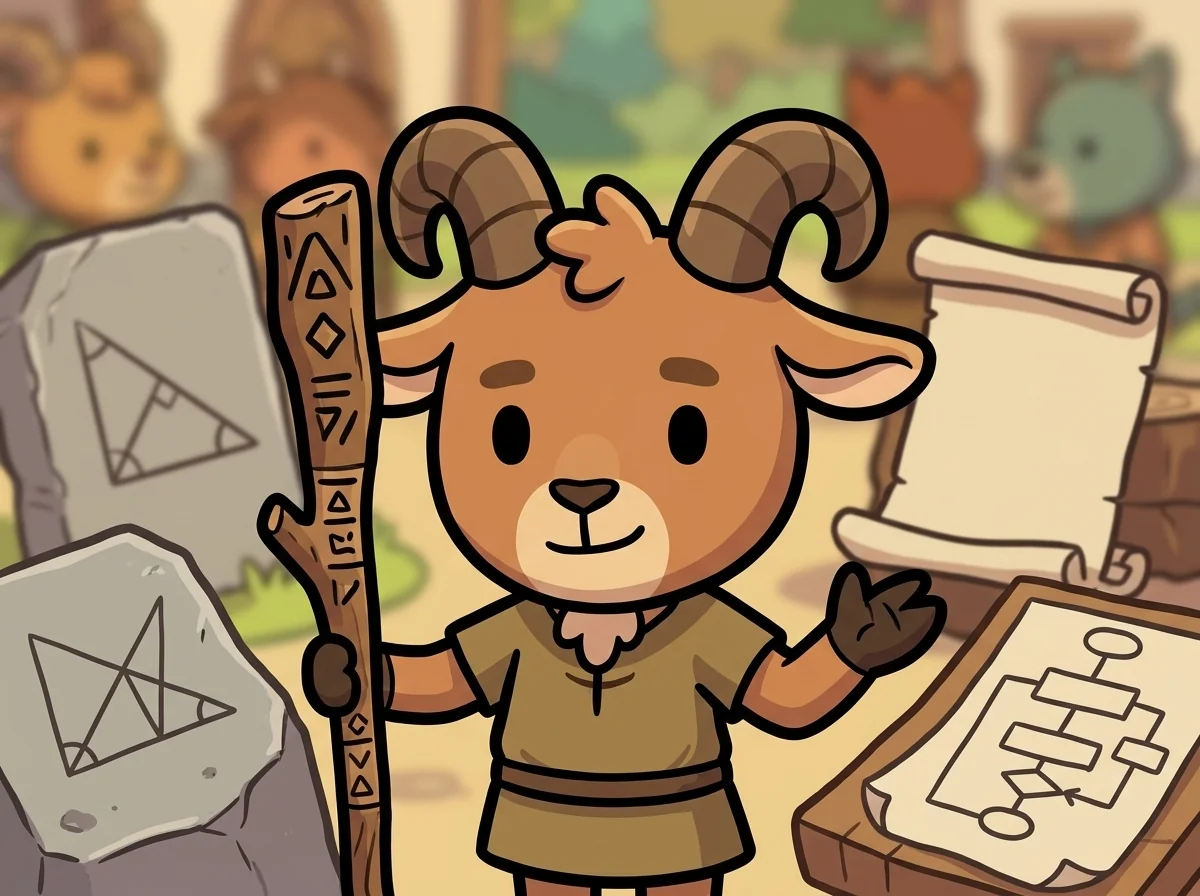
"And in India," Vouch continued, "mathematicians like Bhāskara II used upapatti, or demonstration proofs. These often involved elegant visual arguments, showing the truth with a clear picture and a few words." The display showed a square cut into pieces, then rearranged to form a larger square, illustrating a theorem. "Al-Khwārizmī, from the Islamic world, gave us algorithmic proofs – a step-by-step process that guarantees a correct answer, like following a recipe."
Each tradition, Vouch emphasized, developed its own unique form of "show me why." But the underlying purpose was always the same. "No one way is the only way," she said, her gaze sweeping over the students. "My staff carries the meta-pattern, the idea that proof is about building community trust. The specific traditions? They speak for themselves in their own kit-chambers here at MathLore."
A few years ago, when Vouch first arrived at MathLore, the ancient Lore herself had asked her a single question: "What is proof-as-shared-knowledge?"
Vouch had held her staff and replied, "Show me why. If your why holds up, I'll build on it. Many cultures developed proof-traditions. Each is valid in its tradition. The pattern across is community-trust-building. I carry that pattern."
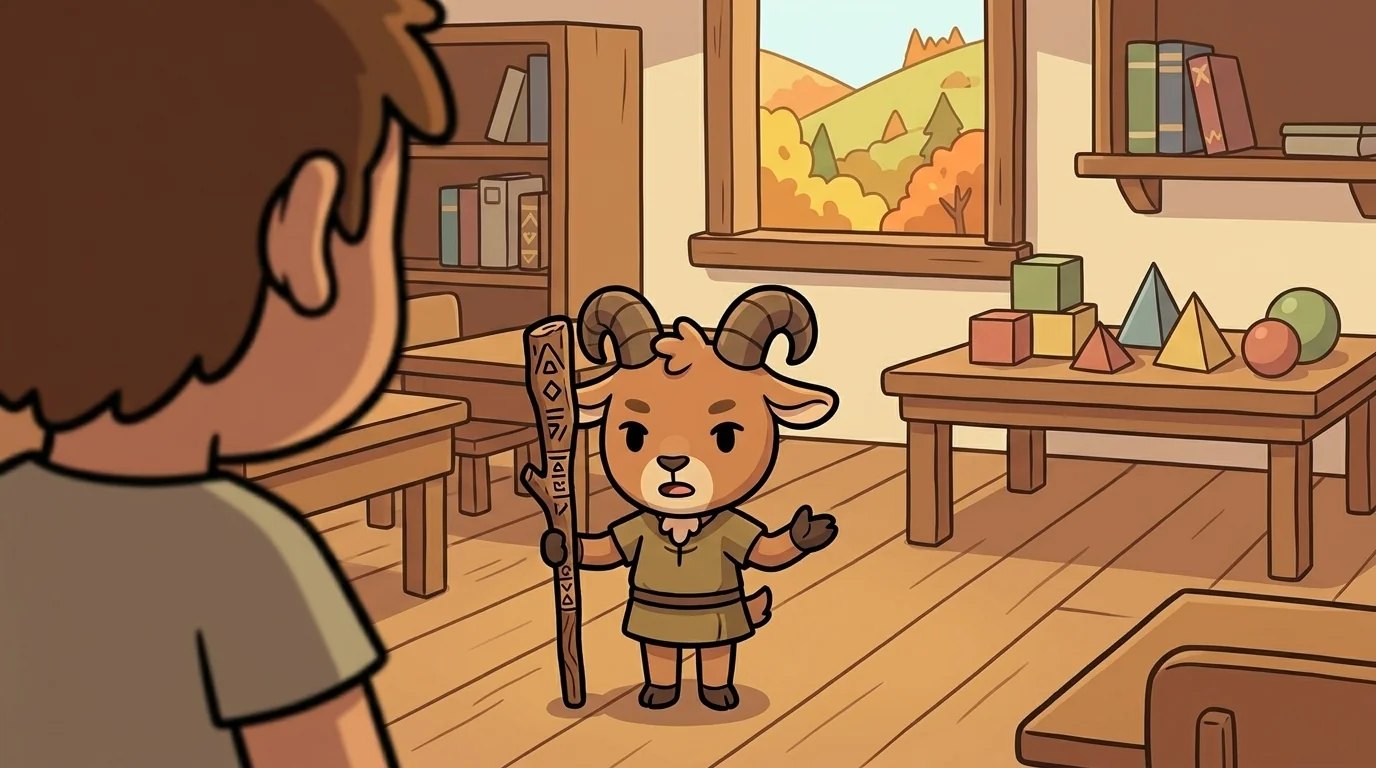
Lore had simply nodded. "You are appointed."
Vouch taught her students that proof was a way to build connections, not walls. "Proof is community-building," she reiterated. "One person checks another's reasoning. If it holds, both can build on that knowledge. Trust accumulates." She picked up a small, unfinished wooden puzzle piece from a nearby table. "Imagine this is a piece of knowledge. If I show you how I made it, how it fits, you can then add your own piece to it. We build together."
She also taught them to "show your work." "At any age, at any level," she insisted. "Showing how you got there is the start of proof. It's how we invite others to understand, to check, to build."
"But what if you're really smart?" Elara asked, a hint of challenge in her voice. "And you just know the answer?"
Vouch smiled gently. "Then you resist appeal-to-authority. Don't say, 'Trust me, I'm an expert.' Say, 'Here's why.' Even the most brilliant minds need to show their steps. It's not about proving you're smart; it's about proving the idea is sound."
She then looked at Kai, who often seemed hesitant to share his ideas. "And we must always resist proof-as-gatekeeping," she said, her voice softening further. "Proof opens shared knowledge. It should never lock kids out who are still learning the conventions. We find a way to show why that makes sense to them, using their own understanding as a starting point."
The principles Vouch taught, like those in the ScienceForge Conclude kit, focused on reasoning discipline. But while Conclude emphasized experimental conclusions, Vouch's lessons centered on mathematical proof. She believed both were crucial for understanding the world.
"It is not hard," Vouch concluded, tapping her staff lightly on the floor. The sound was soft, a gentle thump of affirmation. "It is show me why. Many traditions. Same community-building purpose." Her proof-staff, with its silent, abstract carvings, seemed to hum with this truth, ready to witness the next demonstration of shared understanding.
The MathLore ensemble
Vouch is part of MathLore's distributed-narrative cast. Each character embodies a different curricular primitive; together they teach the full subject.
-

Heap
Counting-as-first-story — every people figured out their own way to count
-

Spire
Pattern-as-discovery — patterns are everywhere when you slow down enough to see them
-

Home
Math-as-cultural-context — this idea was born somewhere, for someone, with reasons
-

Carry
Cultural-transmission — the idea traveled; every place it visited, it grew