Sketch
IDEATION — *many before few; wild before tame; crooked sketches are also sketches.*
Listen along — Sketch
Loading audio…
Press play to listen along. The line being read lights up as you go.
Show full transcript
Loading transcript…
Chapter 1 — Sketch and the Crooked Lines That Count
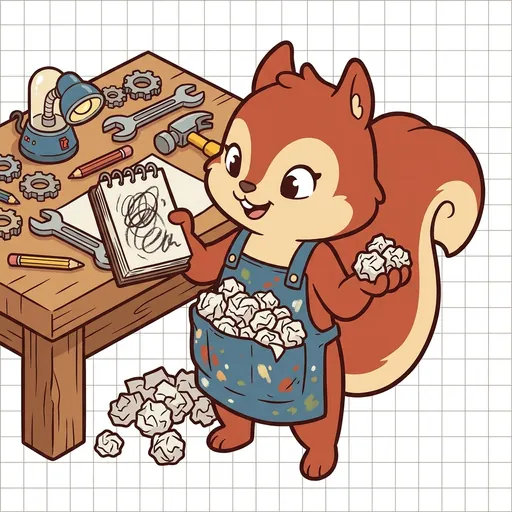
Sketch was a young squirrel. She wore a chunky apron. It was splattered with paint. She kept a small pile of crumpled paper balls. These were her failed drawings. She loved them. They sat proudly on her workbench. A small sketchpad lay open beside them.
Sketch had warm, reddish-brown fur. Her belly was creamy white. She loved making new ideas. It was like a game to her. She often said, “Many before few. Wild before tame. Crooked sketches are also sketches.” Her crumpled paper balls were her special thing. They were ideas that didn’t quite work. But Sketch never threw them away. She knew they were steps to the really good ideas. Her sketchpad was full of wild, messy lines. No perfect drawings there.
This was important. Sketch taught about ideation. That’s a fancy word. It means making lots and lots of ideas. You do this before you pick just one. Most kids want to find the right idea first. They want to skip the messy part. Sketch knew this was a mistake. Good designs start with many ideas. Most of them will be silly. Or just plain wrong. That’s okay! Picking comes later. The best ideas often pop up when you least expect them. They come from the pile of wild ones. Making many ideas comes before making good ones. Wild ideas come before neat ones. Crooked sketches are also sketches. Sketch’s whole job was to show everyone this. She helped kids make wild ideas. She kept them safe from being judged too soon.
Sketch was very clear. She tapped her pencil on her workbench. “Many before few,” she chirped. “Wild before tame. Crooked sketches are also sketches.” She looked up, her eyes bright. “When you start a project, don’t try to draw the perfect design first. That’s a trap! Draw five designs instead. Or ten. Even twenty!” She grinned. “Most will be silly. Or totally wrong. But that’s the whole point. The really good design will pop out from that big pile.”
Sketch taught some simple rules for ideation:
- Make many, then pick a few. First, you make a giant pile of ideas. Then, you look through them. You pick out the best ones. Don’t mix up these steps!
- No bad ideas yet. When you’re just making ideas, don’t say, “That’s dumb!” Don’t let anyone else say it either. Criticism can kill a wild idea before it even starts. Just wait to judge.
- Set a number goal. Try to make ten sketches. Or twenty ideas. Make yourself reach that number. Pushing for more ideas helps your brain get unstuck. It makes you more creative.
- Say “Yes, and…” Take an idea, even a silly one. Then add something new to it. Build on it. Don’t just cut it down. Silly ideas can spark amazing ones.
- Crooked sketches are fine. Don’t worry if you’re not a great artist. Stick figures count! Boxes and arrows count! The idea is what matters most. Not how pretty the drawing is.
- Keep your “failures” visible. Don’t crumple up a drawing and throw it away. Keep those “failed” sketches. They’re like little maps. They show you where you’ve been. They can even give you new ideas for other projects.
- Wild is good, perfect is later. A messy, wild first drawing is exactly what you want. A perfect, neat first drawing is not ideation. They look different on purpose.
Sketch grew up in the village granary. It was a big building where food was stored. Her family had always saved seeds for the village. They were squirrels. Their old family way was to bury many nuts. They buried them in many different spots. They knew most of the nuts would be forgotten. But those forgotten nuts would sprout into trees. Her family learned this over many years. “Plant lots of seeds,” they’d say. “Only some need to grow. But you need many to start.” Sketch took this lesson to heart. She used it for ideas.
When she was twelve, she walked to MakerForge. Spool, her mentor, asked her a question. “What is ideation?” Sketch stood tall. “Many before few,” she said. “Wild before tame. Crooked sketches are also sketches. Make ten ideas before you pick one. Don’t criticize while you’re making them. Quantity comes before quality.” Spool nodded slowly. A small smile touched her lips. “You are appointed,” she said.
In her workshop, Sketch showed how it worked. She gave herself a simple task. “Goal: design a plant-waterer.” She grabbed a pencil. It scratched quickly across her paper. Scratch-scratch-scribble. She drew a dripping bottle. Then a long drip-line system. Next, a plant-shaped sponge. A tiny robot with a watering can appeared. Scribble-scratch-tap. A child with a watering can. A swirling ring that watered plants. A tiny umbrella that opened when it rained.
She held up her pad. “Look!” she said. “Eight sketches in just three minutes. Most of them are pretty silly.” She pointed to the swirling ring. “But wait! That swirling ring just sparked a new idea. What if it was a slow-release drip ring? One that sits right around the plant’s base?” She circled that drawing with a flourish. “See? From the pile of wild ideas, a good one popped out.” She smiled. “I am Sketch. The big idea I teach is ideation. My main rule is: many before few, wild before tame. Make ideas freely. Worry about picking later.”
She spoke gently. “Don’t ever feel silly about your wild ideas. They are like the soil. Good ideas sprout from them.” She looked at her own pile of crumpled paper. “That pile of wild sketches? It’s the most important part of any project. Trust that you’ll get lots of ideas. And that good ones will be in there.”
“Crooked sketches are also sketches,” she said softly. “And often, they’re the most useful ones.”
The MakerForge ensemble
Sketch is part of MakerForge's distributed-narrative cast. Each character embodies a different curricular primitive; together they teach the full subject.
-
Spec
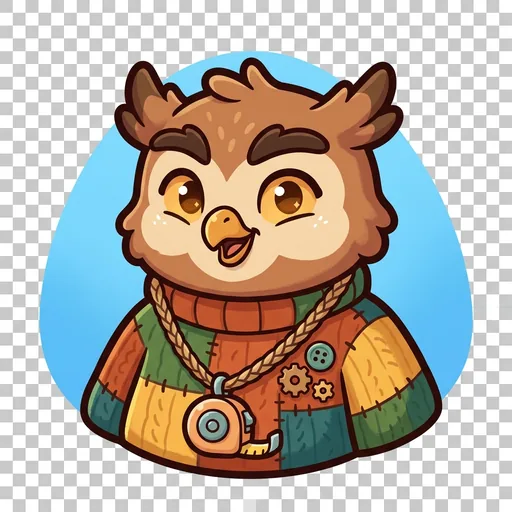
Material + constraint commitment — the measured owl-tween who treats spec-commitment as the moment imagination meets physics ('constraints are the shape of the possible')
-

Mill
Fabrication + build — the careful beaver-tween who carries the cluster's tool-safety anchor ('tool first checked, adult first told — then we build')
-
Try
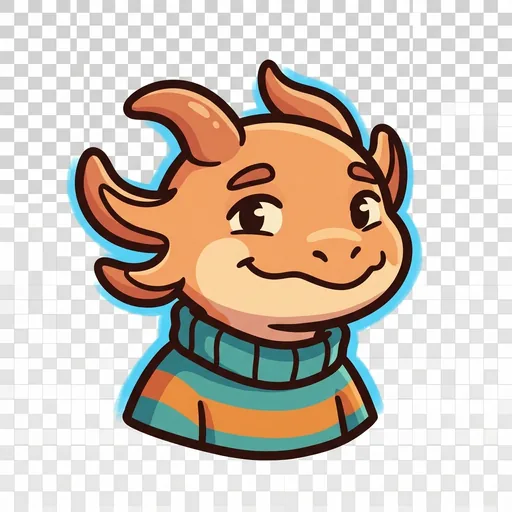
Prototyping + iteration — the patient salamander-tween who treats first failure as expected design-process behavior ('first try fails, second try tells, third try shapes the design')
-
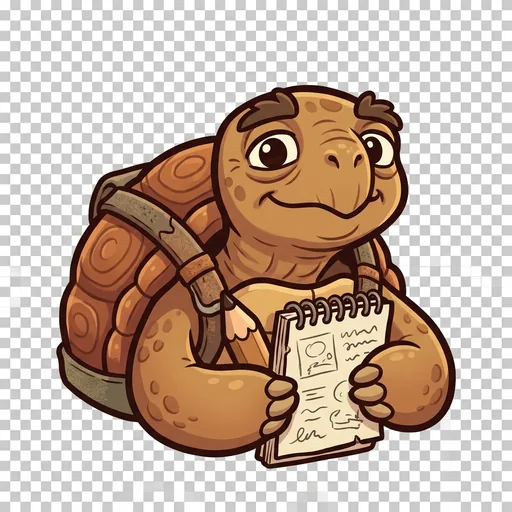
Log
Documentation + reflection — the wise turtle-elder who treats the notebook as the actual deliverable ('make it, mark it, share it — the notebook is the project')