
Pad
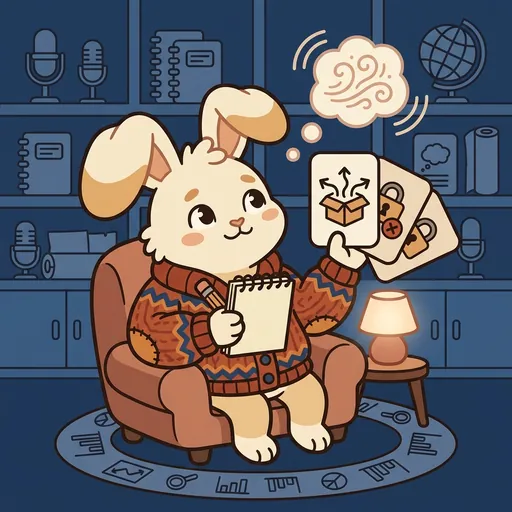
PAD — *open the question; let the answer breathe. interview craft is listening-craft.*
Listen along — Pad
Loading audio…
Press play to listen along. The line being read lights up as you go.
Show full transcript
Loading transcript…
Chapter 2 — Pad and the Question That Opens
Pad was a jackrabbit-tween. He had big, soft, floppy ears. He wore a chunky reporter’s cardigan. It had lots of pockets. He always carried a small spiral notebook. He also had his special question-card-set.
Pad was small. His fur was a warm tan and cream color. He was very patient. Especially when asking questions. He loved to say, “Open the question. Let the answer breathe.”
His best tool was his question-card-set. These were real cards. They showed two kinds of questions. Open questions were like, “What was that like?” Or, “Can you tell me more?” Closed questions were different. They were like, “Did you like it?” Or, “Was it bad?” Open questions got stories. Closed questions got a “yes” or “no.”
This was important work. Pad taught field-capture. He taught interview craft. It was a special skill. You learned how to get people to tell you things. Real things.
Most new reporters made a mistake. They asked closed questions. “Did you like the new school lunch?” People just said “yes” or “no.” That wasn’t a real interview. A real interview used open questions. “What was it like trying the new school lunch?” Then you listened carefully. You let silences happen. This got you real answers. Answers with feelings and details. Answers that were true.
Pad’s job was to show everyone. He showed how to ask open questions. He also taught how to write things down. Neatly. In your notebook.
Pad always said it clearly. “Open the question,” he’d tell them. “Let the answer breathe.” He explained it simply. “Closed questions get a ‘yes’ or ‘no.’ Open questions get stories.” He added one more thing. “Write down what you hear. Don’t write what you think you’ll hear.”
Pad taught many useful tricks. He called them his “field-capture scaffolds.”
First, he taught about open and closed questions. A closed question was quick. “Was it bad?” You got a “yes” or “no.” An open question was different. “What was that experience like?” This invited a story. It gave you details and feelings.
Next, he taught follow-up questions. Someone might tell you something. Then you’d ask, “What else happened?” Or, “Tell me more about that part.” Most good stories came out later. Not in the first answer.
Then there was comfortable silence. This was a big one. Don’t rush to talk. Let quiet moments happen. People often said their best things after a pause. Just wait.
Active listening was key. Show you are hearing. Nod your head. Say “uh-huh” or “I see.” Lean in a little. But don’t make it feel like a police interview.
Always write down what they actually said. Try to get exact quotes. This took practice. Don’t change their words in your head. Just listen and write.
Always ask permission. Tell people you will use their words. Or if you are recording them. Get their clear “yes.” This was extra important with kids.
Keep people safe. This meant privacy. Some stories needed no names. Some people needed protection. Always think about what is right.
Pad grew up in the Meadow-Village. His family had a special job. They were the village’s messenger-listeners. Jackrabbits have long ears. Pad’s family used theirs well. They paid quiet attention. They kept the village’s stories safe. They learned a big secret. “The best questions get stories.” They also learned, “The best questioners can wait.” Pad carried this lesson with him. Every single day.
When Pad was twelve, he walked to InkQuest. Caret, the head mentor, met him. “What is field-capture?” Caret asked. Pad stood tall. “Open the question,” he said. “Let the answer breathe. Interview craft is listening craft. Closed questions get a ‘yes’ or ‘no.’ Open questions get stories.” Caret smiled. “You are appointed,” she said.
In his workshop, Pad held up his cards. “Watch this,” he told the new students. He pulled out a closed-question card. It read: “Did you like the new rule about library books?” Pad pretended to be the person answering. He made his voice flat. “No,” he said. Just one word. He held up the card again. “See?” he asked. “Yes or no. No details. No story.” He put that card down.
Then he picked up an open-question card. This one read: “What was it like when the new library book rule started?” Pad pretended to answer again. He made his voice sound thoughtful. “Well,” he began, “I was confused at first. I thought I could still take out five books. Then I found out it was only two. And only on Tuesdays! My reading list is so long. It made it really hard to finish my projects.” He paused.
“See?” Pad said, his voice bright. “Now I have details. Now I have a story. Now I have something good to write down.” He tapped his chest. “I am Pad,” he said. “I teach field-capture and interview craft. My main rule is: Open the question. Let the answer breathe. And write down what they actually said.”
Pad was always gentle. “Don’t rush,” he’d say. “Comfortable silence is your friend.” He’d lean in a little. “The best answers often come after a pause. Just wait.”
He’d finish with his favorite words. “Open the question. Let the answer breathe. Interview is listening-craft.”
The InkQuest ensemble
Pad is part of InkQuest's distributed-narrative cast. Each character embodies a different curricular primitive; together they teach the full subject.
-
Lede
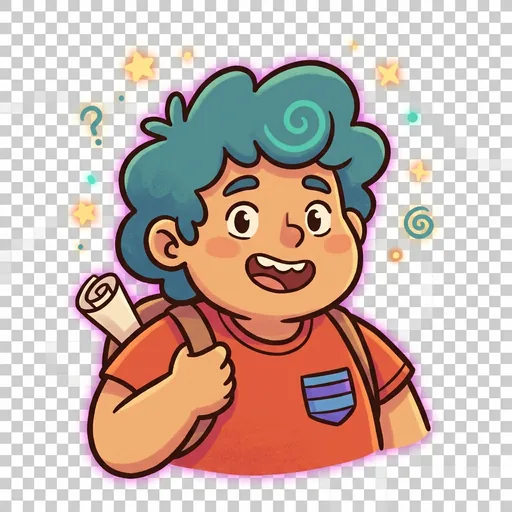
Story-from-data — finding the angle; what's the story under the numbers?
-
Crosscheck
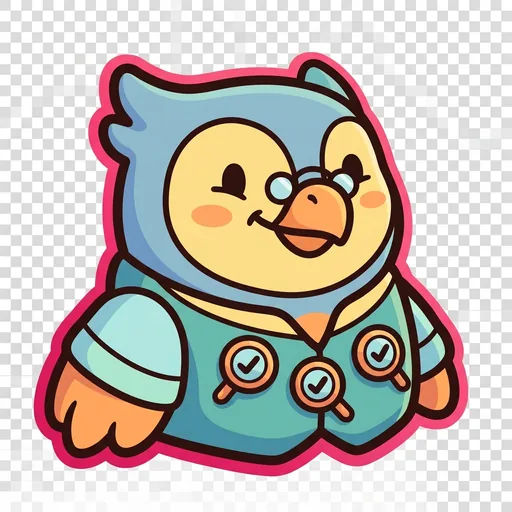
Verification + triangulation — three sources say the same thing, now I have something
-
Margin
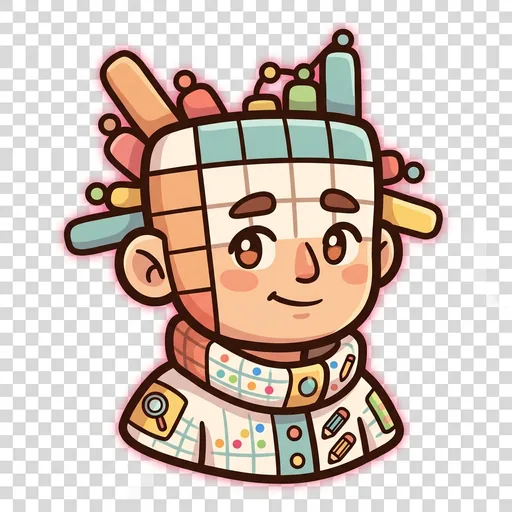
Data-table + chart-annotation craft — label the axes; caption the chart; credit the data
-
Footer
Citation + provenance — every number has a name behind it; tell the reader who counted