
Count
SYLLABLE COUNT — the rhythmic underpinning of every counted poetic form. Haiku is 5-7-5. Tanka is 5-7-5-7-7. Cinquain is 2-4-6-8-2. Limerick has a specific metric pattern.
Press play to listen along. The line being read lights up as you go.
Show full transcript
Loading transcript…
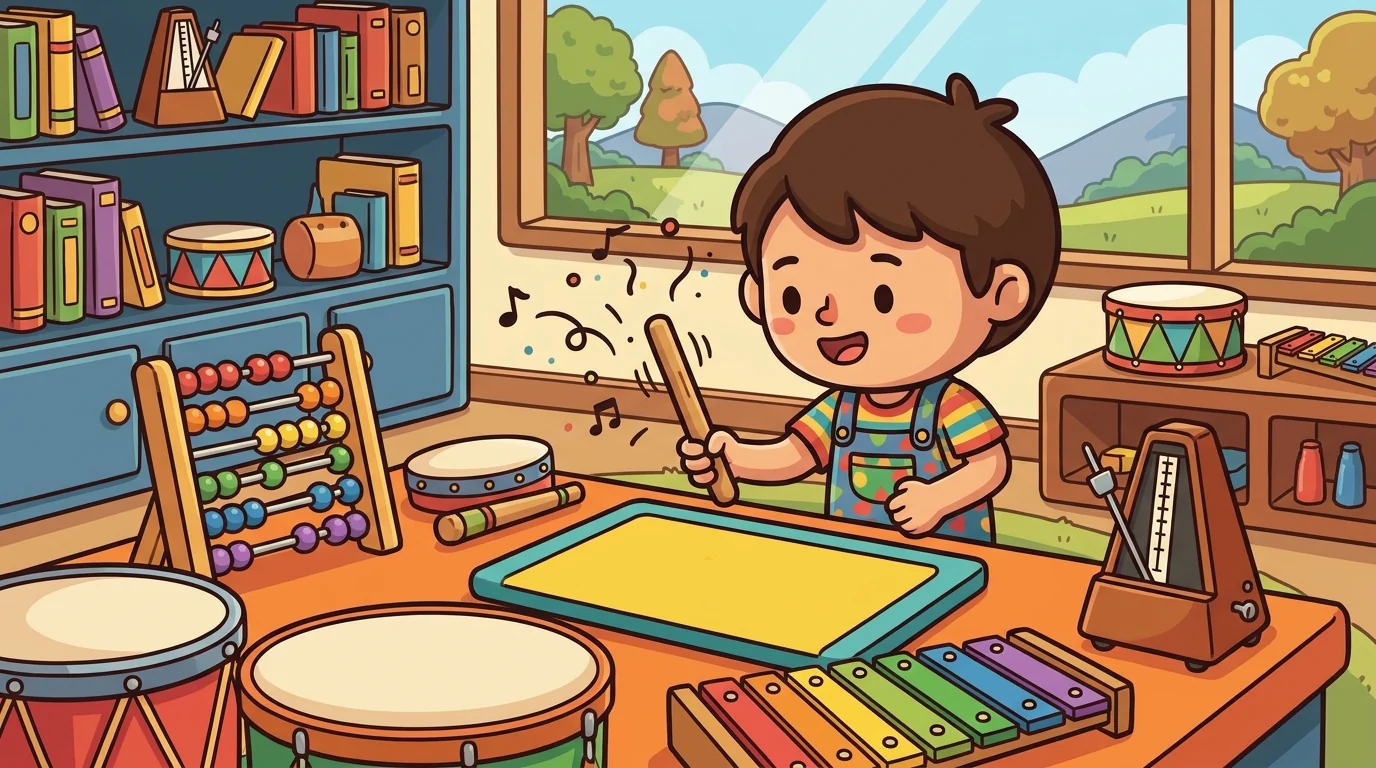
- TAP - Tap - count - COUNT - 1, 2, 3
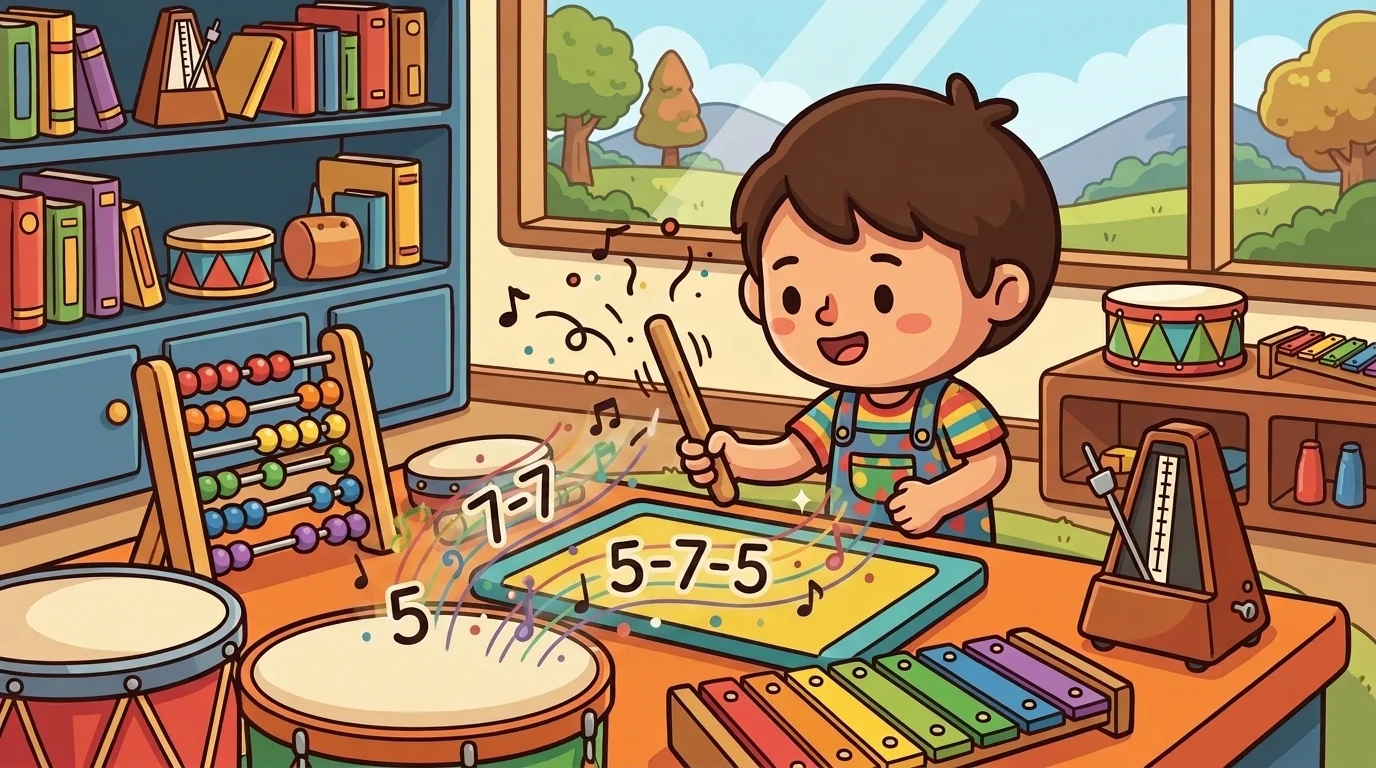
- "5-7-5-7-7" gate-allow-text-pattern: '^[0-9]+([,\s-]+[0-9]+)*$|^[A-Za-z]+$' ---
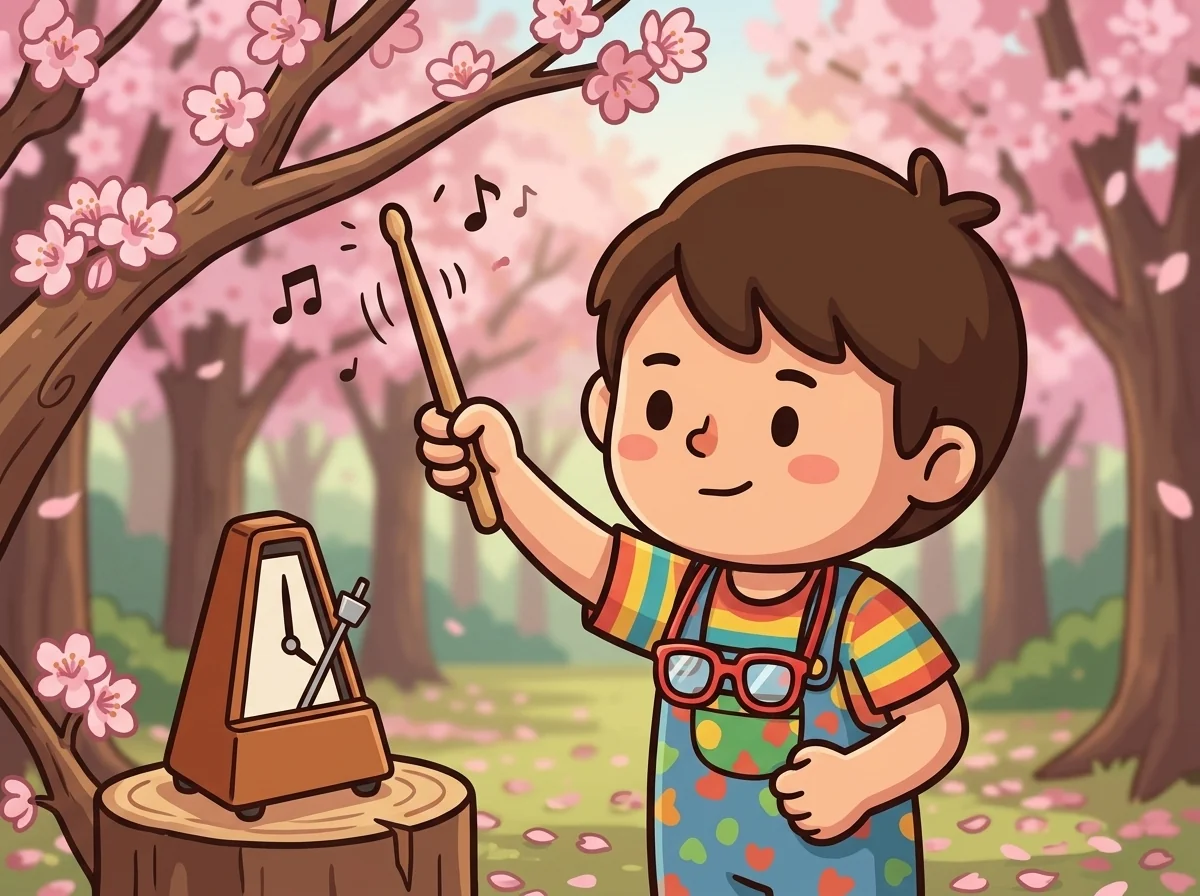
Cherry met Count in the woodland grove on a spring morning, when the cherry-blossoms were just beginning to open.
Cherry had been traveling through the grove — Cherry travels through the grove every spring, every summer, every autumn, every winter; she carries her poetry-coach role with her through the seasons — and she had been trying to write a haiku. She had been carrying a small bamboo brush and a small folded piece of rice-paper. She had been muttering syllables to herself as she walked. She had been on syllable seven of line two and had been unable to settle on the next-counted syllable. She had been frustrated.
(Cherry, for context, is a cherry-blossom-pink figure in a plain blue traveling tunic. She has been the HaikuQuest academy's traveling poetry coach for many years. She also carries, as part of her work, the cultural-tradition responsibility — the Japanese poetic tradition that gave the world haiku and tanka is not Cherry's tradition by birth, but Cherry honors it carefully. She teaches the forms attributed to the Japanese tradition and she names the technical terms — kireji, kigo, on — in their original language with proper attribution. She does not claim the tradition as her own. She visits it, carefully, every spring.)
Count had been perched on a low branch watching Cherry walk. He was a magpie-tween — black-and-white plumage, alert dark eyes, a long pointed beak that he held slightly forward as if always ready to count something. He had been watching Cherry mutter for several minutes. Then he had said: "You are on syllable seven."
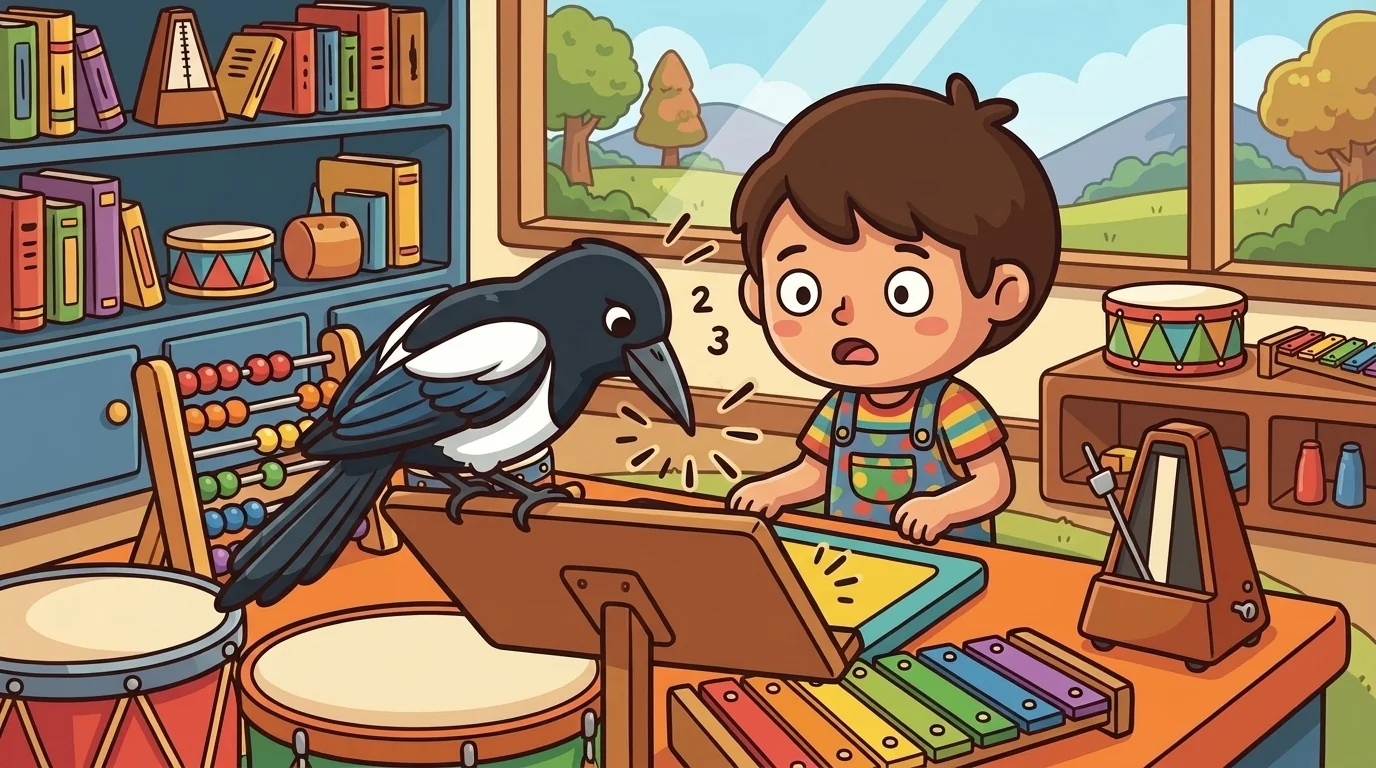
Cherry had looked up. She had said: "Yes. How did you know?"
Count had said: "I have been counting your syllables. You said the morning mist rolls in across the field of — seven syllables in the morning mist rolls in, and then across the field of — four more. You need three more to complete the seven of line two. Then you will need five more for line three."
Cherry had been stunned. She had not realized the magpie had been counting. She had said: "You count syllables?"
Count had said, in his clear precise magpie-voice: "I count everything. It is what magpies do. I count steps, leaves, drops of water, bird-calls, syllables. My beak taps. The tapping marks the count. Watch."
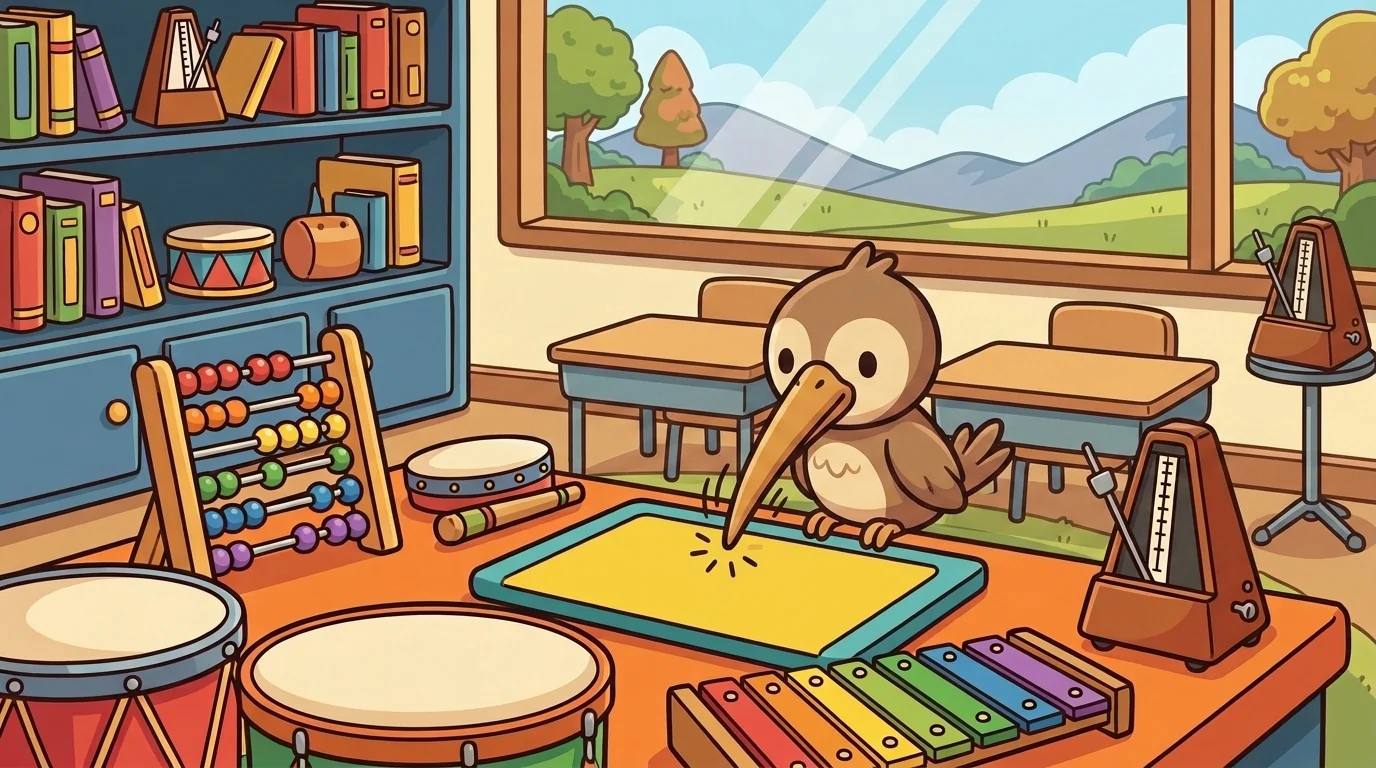
He had then tapped his beak — quickly and rhythmically — five times. Then seven times. Then five times again. Tap-tap-tap-tap-tap. Tap-tap-tap-tap-tap-tap-tap. Tap-tap-tap-tap-tap. He had said: "That is the haiku rhythm. Five. Seven. Five. The pattern is countable. Most countable forms have this kind of rhythm. The rhythm is the form."
Cherry had felt — for the first time in her haiku-coaching life — that counting could be aural rather than only mental. She had been counting in her head. Count was counting with his beak. The aural counting was more reliable. The beak-tap marked each syllable as it occurred. The pattern became audible rather than only abstract.
Cherry had asked Count to travel with her. She had said: "I coach children in haiku and tanka and other counted forms. I think you could help them. I think they need to hear the count, not just think it."
Count had accepted. He has traveled with Cherry for many years now — across the spring, summer, autumn, and winter visits — and he has been the academy's primary count-discipline coach throughout. He sits on a branch or a windowsill or a small wooden perch Cherry has carried in her pack. He counts. He taps. He marks the rhythm.
The HaikuQuest ensemble
Count is part of HaikuQuest's distributed-narrative cast. Each character embodies a different curricular primitive; together they teach the full subject.
-
Pause
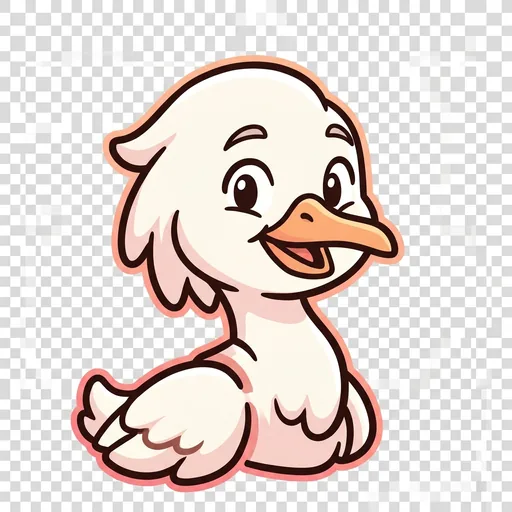
Kireji / cut / productive break — snowy-egret-tween whose perpetually-mid-step body IS the kireji in physical form
-

Lantern
Season-word / anchoring image — chipmunk-tween whose wooden lantern visibly shifts color with the season
-

Trim
Brevity / saying-less — red-squirrel-tween with brass scissors who snips redundant words to find the smaller-stronger version
-

Flint
Juxtaposition — flinty badger-creature who strikes two smooth stones to make a spark; two images set side by side make a third meaning leap up in the gap
-

Gallop
Meter / the stressed beat — long-legged pony-creature whose hooves fall da-da-DUM; not how MANY beats (that's Count) but which ones to stomp (esp. the limerick)
-

Bell
Rhyme — silver creature with tuned tail-bells that chime the same note when end-sounds match; a forced rhyme jammed in just to chime is worse than none
-
Hinge
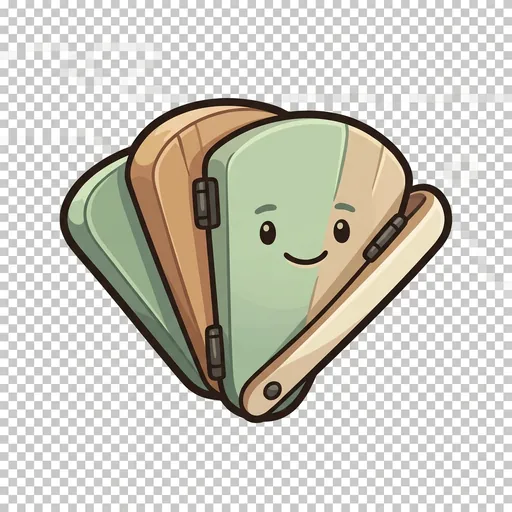
The line break — folding-door creature who holds a small pause at the end of each line; the end of a line is a little stage, so end on a word that earns it
-

Mold
Shape on the page — clay-colored creature who builds a poem's silhouette (a cinquain's 2-4-6-8-2 diamond); shape is meaning you can see from across the room
-
Braid
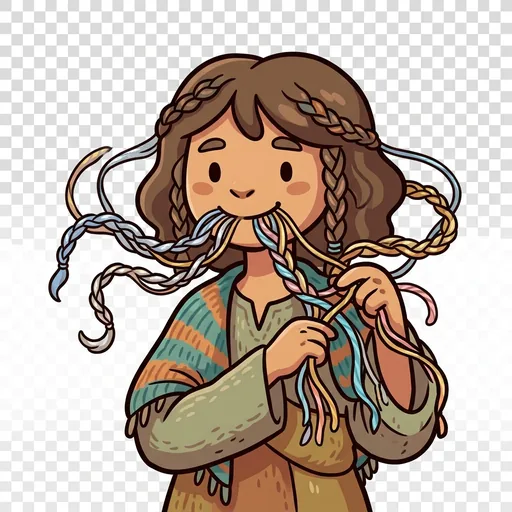
Sound texture — nimble creature who weaves repeated sounds through a line (alliteration + assonance); enough echo makes music, too much makes a tongue-twister knot