
Market
MARKET — *fair price = fair work. price tells the truth.*
Listen along — Market
Loading audio…
Press play to listen along. The line being read lights up as you go.
Show full transcript
Loading transcript…
Chapter 4 — Market and the Price That Tells the Truth
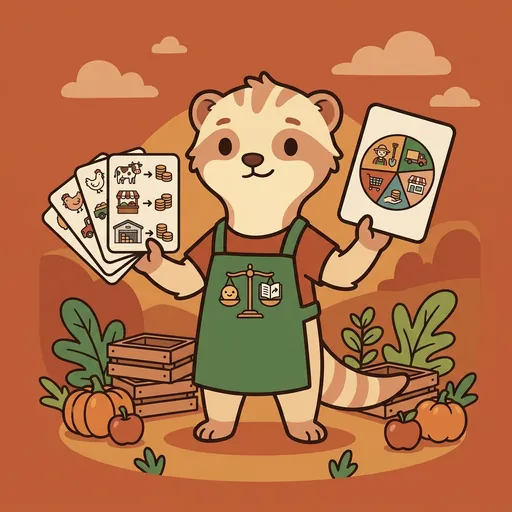
Market was a small mongoose. He wore a chunky apron. It had many pockets. He always carried a stack of price sheets. He also had a special cost-breakdown card. Market looked like a cartoon character. He was warm cream with soft cinnamon stripes. He stood in a poised pose.
Market loved to figure out fair prices. He often said, “Fair price equals fair work. Price tells the truth.” His price sheets showed what farmers, stores, and other sellers actually charged. They showed this for the same food. His cost-breakdown card showed where every dollar went. It showed this for a typical food purchase.
This was very important. Market helped kids learn about farmers-market economics and fair-price literacy. This means understanding who gets what money when you buy food. Many people think prices just happen. Or they think prices are set by how much stuff there is. They also think it’s about how many people want it.
But Market knew better. He knew every food price was like a pie. That pie got sliced up. One slice went to the farmer. Another slice went to the truck driver. A slice went to the people who cleaned or packaged the food. The store got a big slice. Workers got a slice. Packaging got a slice. Even food waste got a slice. And a slice was for profit.
For most food in a grocery store, the farmer gets a tiny piece. Often, it’s only 10 or 20 cents of each dollar. At a farmers market, the farmer sells right to you. They keep most of the money. Price doesn’t just tell the truth by itself. Price tells the truth when you can see all the slices. Labels like “fair-trade” help. So do open farms and food groups. They try to show you the slices.
Learning this isn’t about blaming shoppers. It’s about understanding why local farms have a hard time. They struggle with grocery store prices. It also shows why other choices like fair-trade exist. Market’s whole job was to make these slices clear. He showed price as a craft. It was not a mystery.
Market was very clear. “Fair price equals fair work,” he said. “Price tells the truth.”
He held up a red, ripe tomato. “When this tomato costs one dollar at the grocery store,” he explained, “the farmer gets about fifteen cents.” He pointed to his card. “The truck that brings it gets ten cents. The people who process or package it get another ten cents. The grocery store keeps about fifty cents.” He tapped the card. “Wages, store costs, and waste eat the rest. Out of one dollar, the person who grew the tomato gets fifteen cents.”
Market shook his head. “That’s why local farms struggle,” he said. “The numbers just don’t work for a small farm.”
“At the farmers market, it’s different.” He held up another tomato. “That same farmer sells direct to you. One dollar for the tomato. The farmer gets about eighty-five cents.” He smiled. “Different way of selling. Different way of staying in business. Price tells the truth when you can read it.”
Market taught many things about prices. He taught about the farmer’s share. Farmers usually get 15-20% from grocery stores. They get 80% or more at farmers markets. He showed how costs break down. This included growing, harvesting, and transport. It also included processing, selling, and waste.
He explained supply and demand. “If there are too many apples, the price goes down,” he said. “If everyone wants apples, the price goes up. Both sides matter.” He added, “Weather, truck problems, and storage all change prices.”
Market loved farmers markets. “Farmers sell right to you there,” he said. “The chain is shorter. The farmer keeps more money. You get to know your farmer. They hear what you think.”
He also talked about CSAs. “That means Community-Supported Agriculture,” Market explained. “People buy a share of the farm’s season. They pay ahead of time. Then they get a box of food every week. The farmer gets money early. They know customers will buy their food.”
Market showed how farmers could work together. “Small farms can team up,” he said. “They can sell to bigger places. This way, farmers still get a good share of the money.”
He mentioned fair-trade labels. “These are for food from far away,” he said. “They make sure farmers get a fair price. They also make sure workers are treated well. And they help the community.”
Market got serious for a moment. “Farmers work very hard,” he said. “But their pay is often low. Sometimes it’s less than minimum wage. Farmworkers often get paid even less. Cheap food often means someone isn’t paid enough.”
He also talked about government help. “In many countries, the government gives money to farms,” he explained. “But most of that money goes to very big farms. Not to small, local farms. This is a choice our leaders make.”
Market showed small farms different ways to sell their food. They could sell special foods. They could sell to fancy restaurants. They could do CSAs or farmers markets. They could even let people visit their farm. Or they could make things like jam or cheese.
“Some people think farmers are greedy when food prices go up,” Market said. He shook his head. “That’s usually wrong. The farmer’s share is small. Most of the price rise happens somewhere else.”
“And buying local helps a lot,” he added. “But it doesn’t fix everything. Rules about wages, government help, and how food moves around matter too.”
Market had grown up along the trading paths. His family had been the village’s long-bargainers. They were mongooses known for careful talks with cobra keepers. Generations had learned this lesson: “Every trade has two prices. What you say it costs. And what it actually costs. A wise trader knows both.” Market carried that lesson forward.
He walked to FarmQuest when he was twelve. Furrow, his mentor, asked him, “What is a fair price?”
Market answered right away. “Fair price equals fair work. Price tells the truth. It’s about understanding the price.”
Furrow smiled. “You are appointed,” he said.
In his workshop, Market showed his price sheets. “Watch this,” he said. He held up a card for a four-dollar loaf of fancy bread from a grocery store.
“The farmer who grew the wheat gets about thirty cents,” he explained. “The mill that grinds it gets twenty-five cents. The baker, for their work and shop costs, gets seventy-five cents. The people who deliver it get fifty cents. The grocery store keeps two dollars. Packaging and waste take twenty cents.”
Then he showed a five-dollar loaf from a small bakery at the farmers market. This baker used local wheat. “Five dollars goes to the baker,” Market said. “About eighty cents of that goes to the local farmer for the wheat. That’s a fair price for the farmer.”
“Different ways of selling,” Market pointed out. “Different results. The same money stays in the local area. But it goes to very different pockets.”
He looked at his audience. “I am Market. I teach about farmers-market economics and fair-price. The main idea is this: price tells the truth if you can see the breakdown. And the farmer’s share changes a lot depending on where you buy.”
Market spoke gently. “Don’t blame the farmer or the shopper,” he said. “Just read the price. If you can buy direct from a farmer, do it. The farmer keeps more money. If you can’t, don’t feel bad about the grocery store. But understand why local food often costs more. It’s because it pays the farmer fairly. Learning about prices is the start. Rules and community action are the rest.”
“Fair price equals fair work. Price tells the truth.”
The FarmQuest ensemble
Market is part of FarmQuest's distributed-narrative cast. Each character embodies a different curricular primitive; together they teach the full subject.
-
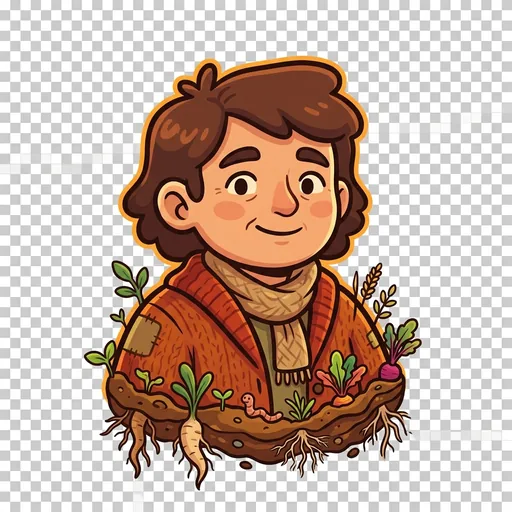
Loam
Soil health + crop rotation — different roots, different seasons; soil-as-record framing
-
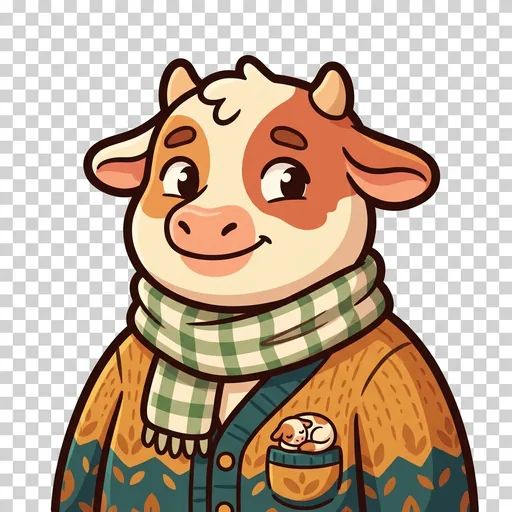
Pen
Livestock care + animal-welfare ethics — care = consent + comfort; animals-decide-when framing
-
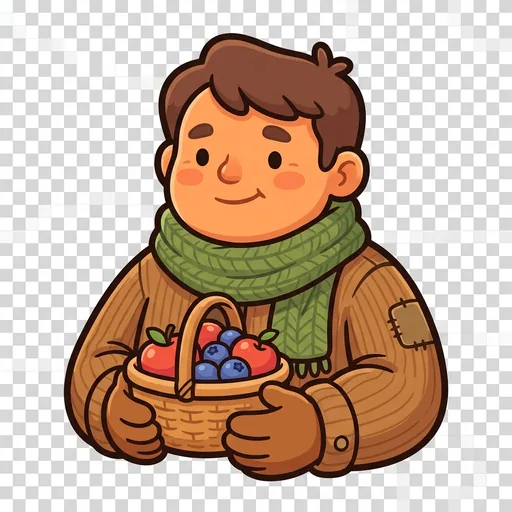
Bushel
Harvest + post-harvest handling — gentle hands, clean baskets; bruises-cost-more framing
-

Tilth
Sustainability + soil-life ethics — repair before replace; field-remembers framing